

France’s interior minister on Saturday condemned threats made against Catholics taking part in a Marian procession in the western suburbs of Paris.
Gérald Darmanin deplored what he said were “unacceptable acts” during a torchlight procession in Nanterre on Dec. 8, the solemnity of the Immaculate Conception.
“Freedom of worship must be able to be exercised in all serenity in our country,” he wrote on his Twitter account on Dec. 11, expressing “support for Catholics in France.”
The French daily Le Figaro reported that on Wednesday evening around 30 Catholics were due to depart from the chapel of Saint-Joseph-des-Fontenelles on an annual procession to the parish of Sainte-Marie-des-Fontenelles, around half a mile away, along a route approved by the local autho-rities.
Jean-Marc Sertillange, a permanent deacon at Sainte-Marie-des-Fontenelles, told Le Figaro: “But shortly after 7 p.m., and while we had advanced only a few hundred meters, a band of unknown people on the path verbally attacked us at the time of the first prayer station.”
The newspaper reported that the threats included cries of “Kafirs,” an Arabic term meaning “infidels,” and “Wallah [I swear] on the Quran I will cut your throat.”
“They then threw water on us, then grabbed one of the torches which they then threw in our direction,” Sertillange said.
When the police arrived, the group of around a dozen people, with three reported ringleaders, ran away. The procession resumed, heading directly to the parish without making further stops.
Nanterre, a commune of around 97,000 people, is located in the Hauts-de-Seine department in northern France.

Pope: New meeting with Russian Orthodox patriarch possible
Pope Francis said on December 6 there were plans for a possible second meeting with the head of the Russian Orthodox Church, after their historic 2016 encounter in Cuba became a landmark in mending relations severed by the 1,000-year-old schism that divided Christianity.
Francis said he planned to meet next week with the Russian church’s foreign envoy “to agree on a possible meeting” with Patriarch Kirill. The Pontiff noted that Kirill is due to travel in the coming weeks, but Francis said he was also “ready to go to Moscow” even if diplomatic protocols weren’t yet in place.
“Because talking with a brother, there are no protocols,” Francis told reporters as he travelled home from Greece. “We are brothers. We say things to each other’s face like brothers.”
The two churches split during the Great Schism of 1054 and have remained estranged over a host of issues, including the primacy of the pope and Russian Orthodox accusations that the Catholic Church is poaching converts in former Soviet lands.

Catholic Priests Survey Finds Lower Morale, ‘Conservative Shift’ Among U.S. Clergy
A new survey released this month suggests a more “pessimistic” view of the Catholic Church among U.S. priests today as compared to 2002, as well as an increasing perception of “more theologically conser-vative or orthodox” young priests as compared to their older counterparts.
A Nov. 1 report summarized findings from the 2021 Survey of American Catholic Priests (SACP), which comprised 54 questions posed to 1,036 Catholic priests in the United States.
“If the major story of the SACP had to be summarized briefly it would be noticeable conservative shifts among U.S. priests over the last two decades coupled with a turn toward pessimism about the current state and trajectory of the Catholic Church in America,” write the report’s three resear-chers.
When asked about politics, the priests surveyed were significantly more likely to describe themselves as “conservative” as compared to respondents in 2002, the researchers say. In addition, the percentage of priest respondents overall who view younger priests as “much more conservative” than older priests increased from 29% in 2002 to 44% in the new survey.
To track changes in answers over time, the survey reused questions from a 2002 poll of Catholic priests conducted by the Los Angeles Times, and also a few questions from a survey of priests from 1970.
The priests were contacted in late 2020 via two unconnected email lists, one provided by the Official Catholic Directory and one provided by an unidentified “Catholic NGO.” Despite the small sample size, the authors say the results they garnered from the two email lists are “reassuringly similar,” both to each other, and to the 2002 results.
The researchers analyzed the data they collected, classifying each priest by his self-described political persuasion. They also classified the priests into “cohorts” based on their ordination year.
Brad Vermurlen, the survey’s co-author and a sociologist with the University of Texas at Austin, wrote in an article announcing the study that researchers observed a “relatively conservative cohort of priests ordained prior to 1960” followed by “more permissive or liberal men ordained to the priesthood in the 1960s and 70s.”
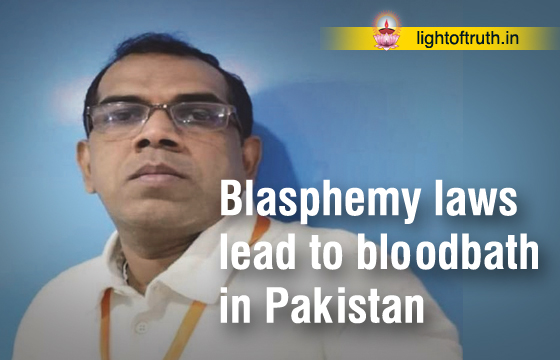
Blasphemy laws lead to bloodbath in Pakistan
As factory workers took selfies with the burning corpse of their manager, Farhan Idrees proudly spoke to local media about the alleged blasphemy. “Priyantha Kumara tore a paper from the wall. It was inscribed with the name of Hussain [grandson of Prophet Mohammad]. He threw it in the basket,” said Idrees, who appeared to be in his 20s. “We complained to the foreman and demanded an apology. He tried to run away. We went on strike and gathered people, protested and burned him.”
“Labaik Ya Rasool Allah” chanted the mob surrounding the remains of Kumara spread on road amid stones, bricks and sticks in front of Rajco Industries, a sportswear manufacturing company in Sialkot, Punjab province. Videos of his vandalized car and lynching went viral on social media on December 3.
Tahir Mehmood Ashrafi, Prime Minister Imran Khan’s special representative on religious harmony, disputes their claim.
“This man [Kumara] used to urge people to work efficiently. Our hearts are wounded. These three incidents were reported in the past year. We urgently send ulemas to avoid similar incidents. The United Ulema Board Punjab has reviewed 113 cases and often given relief to the innocent,” he told media.
“Ulema of all sects have condemned the killing. This is a test case. We ask for forgiveness from the people of Sri Lanka and the victim’s family.” Idrees was among more than 100 protesters arrested on charges of murder and terrorism. Both PM Khan and army chief General Qamar Javed Bajwa have strongly condemned the Sialkot incident and announced strict punishment for the suspects.
According to Pastor Iqbal Masih of the Presbyterian Church in Sialkot, local Christians avoided protests about Kumara’s murder. “We are not powerful enough to challenge them. Earlier there were rumors that he had converted to Christianity in a local church five months ago. There were no prayers for him either because he was a Hindu,” he told.
Philippines bans fireworks again at Christmas
The Philippine government has banned traditional firework celebrations over Christmas and New Year for a second straight year due to Covid-19 and safety fears.
The ban was based on the recommendation of the Health Department to avoid firework-related accidents during a time when medical services were being stretched because of the pandemic, national police chief General Dionardo Carlos said on Dec. 7.
Although the number of daily infections has dropped in the Philippines in recent weeks, authorities say they are mindful of the threat posed by the Omicron coronavirus variant despite there being no recorded cases there yet.
Those caught flouting the ban will face criminal and civil charges, Carlos said.
“The police fully support the Department of Health in pro-moting safety while celebrating the holiday season despite fire-work displays being a cultural tradition Filipinos are accusto-med to during personal and reli-gious events, especially during the New Year,” he added.
In 2020, the Health Depart-ment reported an 85 percent decrease in firework – related injuries thanks to the ban. There were also no fires linked to them either, according to the Fire Department.
“The country benefited from not using fireworks to celebrate Christmas. Nobody was hurt last year. No house was burned,” the police chief said.
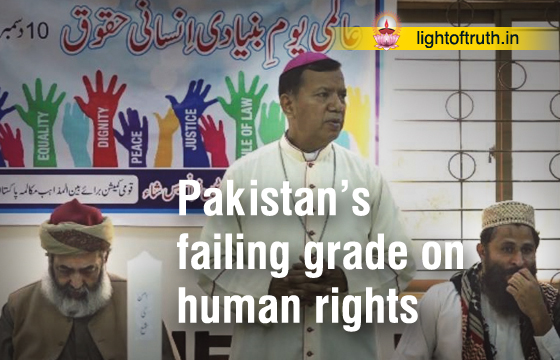
Pakistan’s failing grade on human rights
It only takes the events of one week to summarize the situation of human rights in Pakistan. “I went to speak and perform in Government College University Chiniot but I was not allowed on campus. I was told that intelligence agencies called Dr. Shahid Kamal (the vice-chancellor) and blocked my entry,” said Taimur Rahman, an associate professor at Lahore University of Management Scien-ces, in a Facebook post on December. 8.
“I have committed no crime. My only ‘crime’ is that I’m a progressive who stands on the side of the poor and downtro-dden. Please share my video to express solidarity and record your protest against this inex-plicable censorship of progre-ssive thought,” he appealed to netizens in a post viewed by more than 3,000 people.
The same afternoon, videos of several women being assault-ed, stripped and filmed in a market in Faisalabad, also in Punjab province, surfaced on social media. Their ordeal went on for an hour with none of the spectators attempting to inter-vene. The incident comes amid 16 Days of Activism against Gender-Based Violence, an annual international campaign that kicks off on November 25, the International Day for the Elimination of Violence against Women, and runs until Dec. 10, Human Rights Day.
Many netizens justified the action after the emergence of a new video showing the women stealing from a shop.

Myanmar kneeling nun among BBC’s 100 influential women
Sister Ann Rose Nu Tawng, the famous kneeling nun from Myanmar’s conflict-torn Kachin state who confronted security forces with fearlessness and courage, is among the BBC’s list of 100 influential and inspiring women of the year.
On the BBC website, a photo shows her clad in the white habit and veil of the St. Francis Xavier congregation. She was named along with Nobel laur-eates, professors and politicians.
Sister Nu Tawng inspired people around the world with her fearless acts of standing between security forces and unarmed young protesters during the military crackdowns in February and March.
The nun knelt before security personnel, pleading with them not to shoot unarmed civilians when security forces were preparing to crack down on protesters in Myitkyina, capital of Kachin state.
“Just shoot me if you want to,” said the Kachin nun, adding that “the protesters have no weapons and they are just showing their desire peacefully.”
The iconic gestures of the Kachin nun made headlines when photographs were published of her kneeling before police, shielding peaceful protesters and extending her arms begging the police not to shoot or hurt anyone.
Sister Nu Tawng’s brave act in confronting security forces went viral in late February when she was lauded worldwide as an icon of peace.
Her courageous acts also gained the attention of Pope Francis, who said in March: “I, too, kneel on the streets of Myanmar and say, ‘Stop the violence.’ I, too, spread wide my arms and say, ‘Make way for dialogue.’”

Nepal sentences pastor to two years for conversion
A court in Nepal has sentenced a Christian pastor to two years in jail and a fine of 20,000 rupees (US$166) for violating the Himalayan country’s repre-ssive anti-conversion law.
The sentence from the court in Dolpa district in Pokhara region of western Nepal on Nov. 30 came about a week after it found Pastor Keshav Raj Acharya from Abundant Harvest Church guilty of proselytization on Nov. 22, according to US-based International Christian Concern (ICC).
The evangelical pastor was first arrested on March 23 by police in Kaski district after a YouTube video of him went viral on social media. In the video he said that Covid-19 could be healed through Christian prayer.
“Hey, corona — you go and die. May all your deeds be destroyed by the power of the Lord Jesus. I rebuke you, corona, in the name of Lord Jesus Christ. By the power or the ruler of this Creation, I rebuke you … By the power in the name of Lord Jesus Christ, corona, go away and die,” he reportedly said in the video. Pastor Acharya denied uploading the video on the internet. He was released on bail about a month later.

Hindu activists intensify attacks on Indian Christian prayer meets
Hindu activists in India are stepping up disruption of Sunday prayer services under the guise of exposing forced religious conversions. Two such incidents were reported on Nov. 28. In national capital Delhi, activists of Bajrang Dal (Brigade of Hindu deity Hanuman) vandalized a newly inaugurated church in the Dwarka area.
Minakshi Singh, general secretary of Unity in Compassion, told: “The church was inaugurated on Tuesday and was holding its first Sunday service. It was started by Ankur Nirula Ministries based in Jalandhar.”
Singh alleged the police were biased against the minority community. They merely detained one of the attackers for about an hour or so and let him go after questioning.
News website The Quint quoted a police official saying: “We received information at 9.30am on Nov. 28 that a quarrel had broken out at Matiala Road and on inquiry it was found that a group of residents and local miscreants had vandalized the board that read ‘church’.”
The official said the police have registered two reports of offense, one against those who vandalized the church and another against those present inside the church for violating the Delhi Disaster Management Act guidelines.
The guidelines prohibit large gatherings in view of the ongoing Covid-19 pandemic.
The second incident was reported from the southern Indian state of Karnataka, where Bajrang Dal activists barged into a Christian prayer hall and forced the faithful out at Belur in Hassan district.
Police intervened and the situation was brought under control. A video of the incident circulating on social media showed a mob of 20 to 25 men sporting saffron scares arguing and jostling with the faithful, including women, inside the prayer hall.
Media reports said the prayer hall is run by the Life to the Nation’s Ministries. The environment of fear caused by the aggressive mob was palpable as the Sunday worshippers denied any religious conversion activities.

Bengaluru Christians rally against anti-conversion bill
The United Christian Forum of Karnataka on December 4 organized a peace rally in Karnataka capital of Bengaluru against a proposed anti-conver-sion bill and survey on Christian institutions in the southern Indian state.
The rally was initiated by the Archdiocese of Bangalore in collaboration with all Christian denominations and other Catholic dioceses in the state to condemn the government move to enact the bill and harass the minorities.
The proposed anti-Christian bill “is nothing but a license given to Hindu radical groups to attack Christians, and persecute them,” bemoaned Archbishop Peter Machado of Bangalore while addressing the rally.
The archbishop, who is the most vocal against the bill, said the minority Christians will never bow down before the government, nor remain afraid of its scare tactics. He called all Christians to unite and fight against the injustice meted out to their community, a tiny minority in the state.
Peace rally leaders Several political leaders, religious heads, Muslim leaders, priests, religious, pastors, and lay people attended the ally held in front of the Saint Xavier’s Cathedral in Bengaluru. The gathering, which was initially planned for 25,000 people, was reduced to less than 2,000 people because of the Coronavirus pandemic
Margaret Alva, a veteran Catholic leader and a prominent politician, lambasted the BJP government for playing party politics in bringing the bill when the state is faced with several problems.