The All India Catholic Union, the largest laity group in the country, has expressed concern over the aborted visit of Prime Minister Narendra Modi to Punjab. “The Catholic Union prays, as does every Indian citizen, for the long life of Narendra Modi and all others put in high offices of governance in India,” John Dayal, spokes-person of the union, told on Jan. 8.

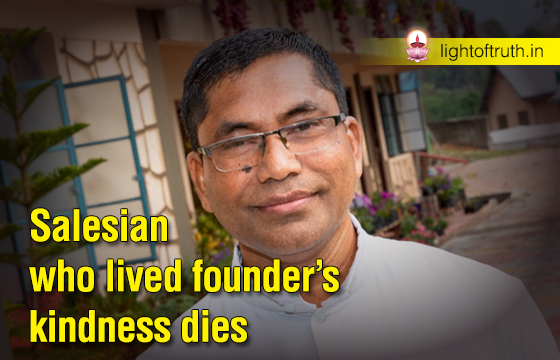
Salesian who lived founder’s kindness dies
Members of the Calcutta Salesian province has mourned the death of Father Samuel Sudorshon Mondol, a former director of Novices.
The Salesian priest died in Kolkata at 8.45 am on December 28, 2021. He was 49. Father Mondol “had been undergoing immunotherapy since two months for sicknesses related to his liver, and recently, the kidneys. Of late he was undergoing palliative care.

Asian dioceses can learn from German synodal path
The ongoing diocesan synods across the globe, preparing for the 2023 Synod of Bishops in Rome, can learn a few lessons from the explosive German synodal path on subjects detrimental to the long-cherished views of the hierarchical, clericalist, magisterial and male-dominated Catholic Church. The Asian Church especially has to follow thoroughly the outcome of the German synod path, which has taken up burning issues like clerical abuse for discussion. The lack of a power-sharing mechanism within the Asian Church was brought to the fore when a lay Catholic in the southern Indian state of Kerala challenged the Eastern-rite Cardinal George Alencherry’s authority to sell some pieces of land in Ernakulam-Angamaly Archdiocese.

Restoration of Teresa nuns’ FCRA license welcomed
Christians in India on January 8 expressed relief and joy over the federal government decision to restore the Missionaries of Charity’s license to receive overseas funds.
The “most welcome” news, says Sister Dorothy Fernandes, national secretary of the Forum of Religious for Justice and Peace, an advocacy group for Catholic religious, responding to the official nod for renewing the Foreign Contribution Regulation Act (FCRA) certificate of the congregation founded by Saint Mother Teresa of Kolkata.
The federal Ministry of Home Affairs on January 7 restored the 71-year-old congregation’s registration, which is mandatory to receive donations from overseas.
“If there is anyone serving selflessly the most unwanted of our society it’s the Missionaries of Charity Sisters and Brothers,” asserts Sister Dorothy, the Patna-based member of the Presentation congregation.
Brinelle D’Souza, chairperson of the Centre for Health and Mental, School of Social Work under the Mumbai-based Tata Institute of Social Sciences, too says the Teresa nuns work “with the poorest of the poor on issues where even the state is absent.”
Father Anand Mathew, a social activist in Varanasi, says the license restoration has brought “immense relief to so many of us.” The member of the Indian Missionary Society says he and other activists in Varanasi have been mobilizing the civil society to support the two homes managed by the Teresa sisters in the ancient city.
Sister Jessy Kurian, a Supreme Court lawyer, welcomed the news saying “finally justice is done.” The registration renewal shows that the government has not only recognized but reaffirmed the selfless service being rendered to humanity especially to Indian people by the Teresa nuns, she told Matters India.
The ministry December 25, 2021, stated that it had not renewed the Teresa congregation’s FCRA registration since it had received “some adverse inputs” about the nuns’ activities such as indulging in religious conversion. The registration was valid only until October 31, 2021, but extended it for two more months, the ministry added.
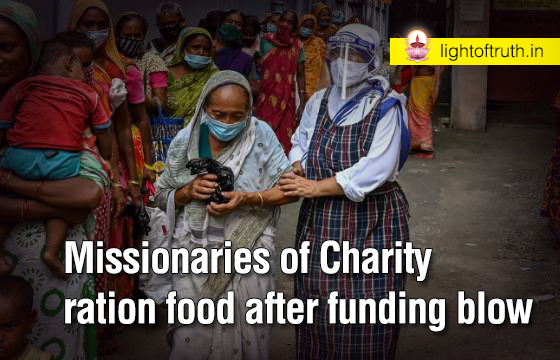
Missionaries of Charity ration food after funding blow
Since Christmas, the Missionaries of Charity have been strictly rationing the food and daily use items for their regular 600 beneficiaries at their motherhouse and Shishu Bhavan, a children’s orphanage, in Kolkata. On Jan. 2, the breakfast of tea, bread and eggs was cut short by an hour. “As long as you did it to one of these, my least brethren, you did it to me,” said Razia, a beneficiary of the Missionaries of Charity, as she waited for the nuns to give her the weekly provisions. She lives with her two sick children across the road from the motherhouse and says she visits the tomb of St. Teresa and prays for the “difficult times to pass.” Abdul Razzak, a 45-year-old beggar, stays put outside the motherhouse curled in his rags. He has been staying there since Christmas in hopes of getting his share of food and medicine. A few others like him sit along with him to receive their subsidy from the nuns. Since the pandemic began, they received their daily meal from the motherhouse, but now “sisters told us that we might not be able to collect the food any longer,” said the sick man.

Mother Teresa award for Denmark’s green initiatives
Denmark and its Prime Minister Mette Frederiksen have been honoured with the Mother Teresa Memorial Award for Social Justice for the year 2021.
India’s Harmony Foundation, which instituted the award in memory of Saint Mother Teresa in 2005, said it acknowledged Denmark as “one of the nations in the world which lives in harmony with nature” while also recognizing Frederiksen’s “exceptional leadership” in leading it “along the path of sustainable development.”
“Yes, Prime Minister Frederiksen is chosen for the overall performance of her country un-der her leadership in promoting green energy and other similar measures for saving the environment,” Abraham Mathai, found-er of the Harmony Foundation, told on Jan. 4.
The award, including a certificate of honour and trophy designed like the habit of the nuns of the Missionaries of Charity congregation founded by Mother Teresa, was sent to the prime minister’s office through courier, he said.
“Though a small country in terms of its geo-graphical vastness, Denmark is committed to being a frontrunner in all things green [and] is an inspiration for all,” said Mathai, a former vice-chairman of the minorities commission in the western Indian state of Maharashtra.
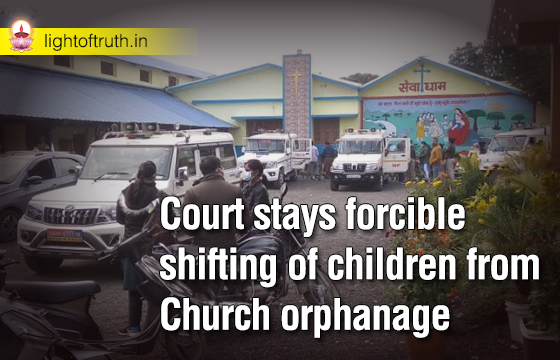
Court stays forcible shifting of children from Church orphanage
The Madhya Pradesh High Court has stayed the forcible shifting of orphans from St. Francis Orphanage in Sagar, a town in the central Indian state.
“Shifting of 44 orphan children from St. Francis orphanage was stopped after the Jabalpur bench of Madhya Pradesh High Court passed a stay order,” says a statement issued January 7 by Father Thomas Philip, the spokesperson of the Sagar Syro-Malabar diocese.
The priest says the Child Welfare Committee’s Sagar district unit came to the orphanage at 1 pm on January 6 along with local Sub Divisional Magistrate and police administration. The officials stated that the orphanage’s registration of had expired in 2020.
A video circulated in social media platforms show the children vehemently opposing the government officials saying that the orphanage was their home and that they did not want to go anywhere else.
“Meanwhile the Jabalpur bench of High Court passed a stay order asking the Child Welfare Committee to stop the shifting and reply to the court within two weeks ‘time,” the press statement said. The court also noted that the children were being shifted in extreme cold and during the “hard times of Covid-19 pandemic.”
The orphanage is managed by “Sevadhan,” a charitable institution under the diocese, that also manages hostels for Tribal boys and girl, a shelter home for physically and mentally challenged children and a Hindi medium school upto tenth grade.
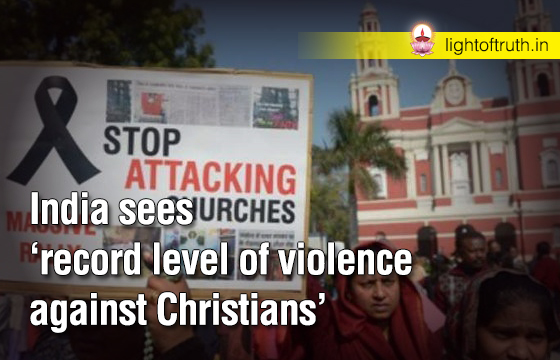
India sees ‘record level of violence against Christians’
India witnessed a record 486 incidents of violence against Christians during 2021, which ended on a violent note for the community that makes up only 2.3 percent of the country’s over 1.3 billion population.
Data collected by the United Christian Forum (UCF) showed an upward trend in such violent incidents over the last few years but 2021 was termed as the “most violent year” in the country’s history. The past two months witnessed over 100 incidents as if to warn the community during Christmas, it said.
The 486 incidents top the previous record of 328 incidents in 2019. They were also far more widespread than previously recorded with incidents reported in 20 states and two union territories.
The UCF in a press release said that violence against Christians has been increasing steadily since 2014 with 127 incidents in that year, 142 in 2015, 226 in 2016, 248 in 2017, 292 in 2018, 328 in 2019, 279 in 2020 (perhaps pandemic gave some relief to Indian Christians).
”In almost all incidents reported across India, vigilante mobs composed of religious extremists have been seen to either barge into a prayer gathering or round up individuals that they believe are involved in forcible religious conversions,” says the UCF’s latest report
The UCF attributed the high incidence of violence to “impunity.” Police recorded formal complaints in only 34 of the 486 cases due to which “such mobs criminally threaten, physically assault people in prayer, before handing them over to the police on allegations of forcible conversions.”
The UCF is an inter-denominational Christian organization that fights for the rights of members of India’s Christian minority. Its Convener A C Michael said the steady year-on-year increase in violence against a peace-loving community had escalated in the last quarter to alarming numbers.

China forbids foreigners from spreading religious content online
In the U.S. China rivalry that involves a complex mix of diplomacy, trade wars and sanctions, religion has come under increased pressure after the communist regime banned online propagation of religion by foreign nationals, purportedly to make religion more Chinese-oriented.
On Dec. 22, the Chinese government issued a new norm that proscribes all foreign institutions and individuals from spreading religious content online. China cited national security interests for enacting the new law, the first of their kind to monitor online religious affairs, reported ucanews.com.
The new rules, titled Measures for the Administration of Internet Religious Information Services, were made two weeks after Chinese President Xi Jinping attended a national religious work conference. In his address to that conference Dec. 4, Xi stressed making religions Chinese in orientation and developing them in the Chinese context.
The United States, the United Nations and others have criticized China’s repression of 1 million Uyghur Muslims, in Xinjiang province, where China allegedly is holding Uyghurs in detention camps.
Michelle Bachelet, U.N. high commissioner for human rights, has sought to visit Xinjiang for years to verify the prosecution of Uyghur Muslims on religious grounds, but a U.N. spokesman said so far, no such visit had been made possible by the Chinese government.
China denies abuses in Xinjiang and says its policies and detention camps are meant for vocational training and to curb Islamic extremism. The United States cited China’s arbitrary detention and forced sterilizations of Uyghurs — part of treatment the U.S. has called genocide — when it announced a diplomatic boycott of the Beijing Winter Olympics that being in February. The United Kingdom, Australia and Canada joined the diplomatic boycott, which still allows athletes to participate.
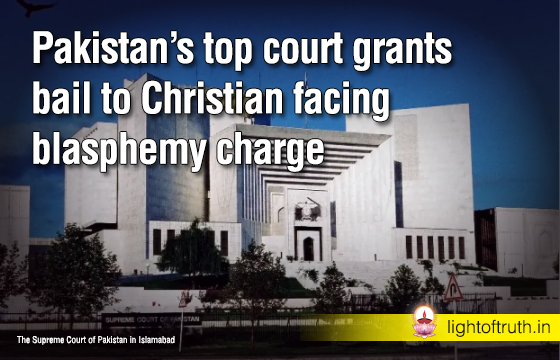
Pakistan’s top court grants bail to Christian facing blasphemy charge
The Supreme Court of Pakistan’s decision to grant bail to a Christian accused of blasphemy should give hope to others facing the charge, according to a prominent lawyer.
Saif ul Malook welcomed the court’s ruling on Jan. 6 that Nadeem Samson should be released on bail.
“It is a very important ruling, the first in the judicial history of Pakistan,” the lawyer said in a video call reported by the Jubilee Campaign, a non-profit promoting human rights.
Samson, identified as a Catholic by the United States Commission on International Religious Freedom (USCIRF), was arrested in 2017 and imprisoned in Lahore, Pakistan’s second-largest city, after a property dispute.
He was charged with insulting the Muslim Prophet Muhammad under Section 295-C of the Pakistan Penal Code.
The 42-year-old’s supporters believe that he was falsely accused of the crime, which is punishable by death in Pakistan, an Islamic republic in South Asia with a population of almost 227 million people.
Malook, who represented Asia Bibi, a Catholic mother acquitted of blasphemy in 2018, petitioned the Supreme Court at a hearing on Jan. 5 to break with the practice of denying bail to people accused of blasphemy.