
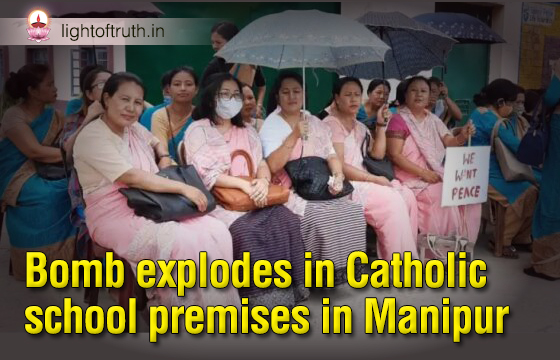
All Catholic educational institutions in Manipur will close June 7 to protest an explosion on the premises of a Church school in Imphal, capital of the north-eastern Indian state.
The decision was taken during an emergency meeting with the Catholic Educational Society Manipur (CESM) executives and Archbishop House Curia officials following the incident in one of the leading Christian missionary schools, said Rev Father Stephen Touthang, Director of CSEM.
A powerful bomb exploded June 5 inside Little Flower School.
According to Father Touthang, around 3:10 am on June 5 some unidentified miscreants exploded the bomb, damaging some portions of the school building, shattering window panes.
No one has claimed responsibility for the blast so far, the priest told reporters.
A sit-in-protest was held June 6 by the staff and students in front of the Little Flower School as a mark of protest. The pro-testers demanded the state government to ensure safety for the students and make the school a “violence-free zone.”
The protesters held placards with slogans that read among others, ‘We condemn the bomb attack on our school,’ ‘Allow us to grow without fear,’ ‘Ensure our safety,’ ‘Spare us, we just survived the pandemic.’
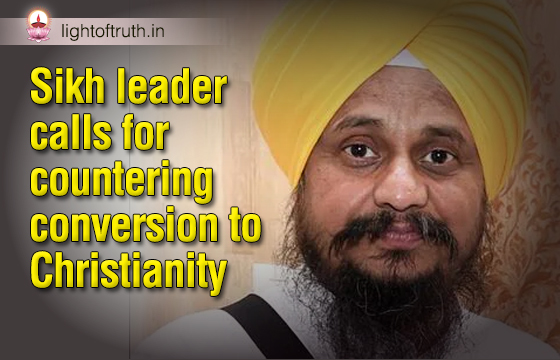
Sikh leader calls for countering conversion to Christianity
A top Sikh leader on June 6 expressed concern over churches and mosques being built in large numbers in rural Punjab and urged Sikh preachers to reach out and counter this trend of conversion, particularly in the state’s border areas.
Akal Takht (seat of power) acting jathedar Giani Harpreet Singh said at his customary address to the community at an event organized to mark the 38th anniversary of Operation Bluestar at Golden Temple, the holiest Sikh shrine, in Punjab’s Amritsar.
“Today, we (the Sikhs) are facing a lot of challenges. Christianity is being spread in Punjab on a large scale to weaken us (Sikhs) religiously. Churches and mosques are being built in large numbers in the villages of Pun-jab, which is worrisome for us,” he said added, “I appeal to Sikh preachers to launch a drive against this on a large scale and count-er this trend of conversion. Let us strengthen Sikhi in villages again.”
The Sikh leader also said the most affected was the border belt and called for paying special attention there. “This is the time to shed comforts of life and work tirelessly in this direction,” he added.
Meanwhile, Church of North India Bishop Pradeep Samantaroy dismissed Giani Harpreet Singh’s concern of conversion programs in Punjab.
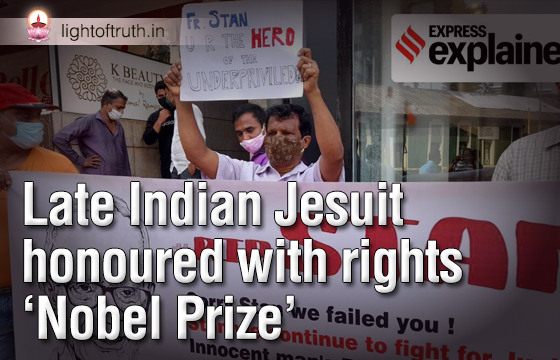
Late Indian Jesuit honoured with rights ‘Nobel Prize’
Father Stan Swamy, the late Indian Jesuit priest and tribal rights activist, has been posthumously awarded the Martin Ennals Award, regarded as the Nobel Prize for human rights defenders.
Eighty-four-year-old Father Swamy, who was arrested in the Bhima Koregaon case and died in custody in July 2021, was accorded the honour by the Martin Ennals Foundation based in Geneva, Switzerland.
Though the award was presented posthumously, the priest was chosen for it while he was still alive. “Father Stan was nominated for the award in spring 2021, but he sadly passed away before it could reach him,” said Hans Thoolen, chair of the award jury.
The jury wished to shine a light on the priest’s many contributions to human rights, which “cannot be eclipsed by his unjust incarceration by Indian authori-ties,” Thoolen added.
Father Xavier Soreng, a social activist and colleague of the late Jesuit, accepted the award in Geneva on June 2. Three other rights activists — Dr. Daouda Diallo from Burkina Faso, Pham Doan Trang from Vietnam and Abdul Hadi Al-Khawaja from Bahrain — were also honored.
Father Soreng narrated a brief life sketch of Father Swamy and his pioneering work for the welfare of the indigenous people of eastern India’s Jharkhand state. “It is true Father Swamy became an irritant in the eyes of the pro-Hindu Bharatiya Janata Party for his stand against uprooting indigenous peoples from their habitats and had to pay with his life”
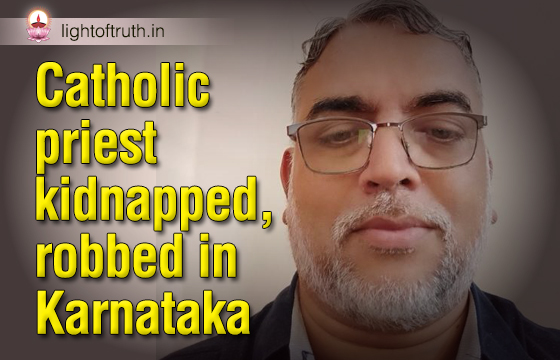
Catholic priest kidnapped, robbed in Karnataka
A Catholic priest says he has not overcome the trauma of kidnap and robbery even a week after the incident.
“I am alive today only because of God’s grace. I was afraid the gang would kill and bury me at a place that nobody would find out,” says Father Dominic Pulickapadavil, a member of the Society of Montfort Missionaries, who was kidnapped by an armed gang on June 1 near Madikkeri in the southern Indian state of Karnataka.
The 60-year-old priest, on transfer from Mysore to their mission in Kerala’s Kasargod district, was going to his new place in the car of his cousin Tomy Isaac, who lives in Mysore. “My cousin offered to drive me to the new place in his car. We had a pleasant journey to Madikkeri.”
However, when they were proceeding to Sulliya Road on the way to Kerala around 10:30 am, a gang of nine armed men overtook their car and blocked it. Masked men armed with gun and knives then broke the car’s windows and pulled out the priest.
The men, who spoke Tamil and Malayalam, snatch the priest’s mobile and laptop before pushing him to their car blindfolded. “I had no idea about my cousin. After a long distance, in a remote village, they brought my cousin by another car. We both were taken together to some remote places and somebody brought our car at Hirisave,” Father Pulickapadavil told Matters India June 8.

Filipino prelate gets another top Vatican post
Pope Francis has appointed Manila’s former archbishop Cardinal Luis Tagle as a member of the Congregation for Divine Worship and the Discipline of the Sacraments.
Cardinal Tagle’s appointment, along with several other leading churchmen including Myanmar’s Cardinal Charles Maung Bo, was announced by the Holy See’s press office on June 1.
The Congregation for Divine Worship forms the part of the Roman Curia — the administrative institution of the Holy See — that handles most affairs relating to liturgical practices of the Latin Church and some technical matters relating to the sacraments.
Its functions were originally exercised by the Sacred Congregation of Rites, set up in January 1588 by Pope Sixtus V. The current prefect is English Archbishop Arthur Roche, whom the Pope appointed as a cardinal on May 29.
Cardinal Tagle’s appointment to the congregation was welcomed by Filipinos around the world.
“Congratulations, Your Eminence! May the Lord be with you and guide you as you undertake yet another mission for the Roman Curia,” a group of Filipino domestic workers in Italy posted on social media.
On Dec. 8, 2019, Pope Francis named Cardinal Tagle as prefect of the Congregation for the Evangelization of Peoples, a post he still holds
Catholics living in the United States said the appointment showed yet again the pope had the utmost trust and confidence in the Filipino cardinal.
“Another appointment at the Vatican by Pope Francis? I am not surprised given his [Tagle’s] humility and love for the Church,” Arlyn Reyes from New York told.
On Dec. 8, 2019, Pope Francis named Cardinal Tagle as prefect of the Congregation for the Evangelization of Peoples, a post he still holds.
He is also the first Filipino to be afforded the title of cardinal-bishop, the highest rank within the College of Cardinals.
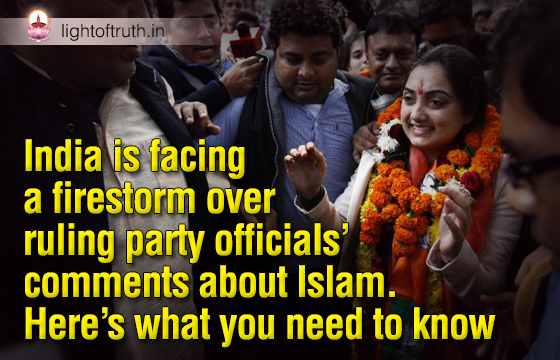
India is facing a firestorm over ruling party officials’ comments about Islam. Here’s what you need to know
India is trying to contain the diplomatic fallout as outrage grows in the Muslim world following derogatory comments made by ruling party officials about the Prophet Mohammed.
The United Arab Emirates, Malaysia, Oman, and Iraq are among at least 15 Muslim-majority nations to have condemned the remarks, which were described as “Islamophobic,” with several countries summoning India’s ambassadors.
The incident sparked protests in neighbouring Pakistan and prompted calls from around the region to boycott Indian goods.
India’s Hindu nationalist ruling Bharatiya Janata Party (BJP) disciplined the two officials involved, but the firestorm involving India’s major Arab trade partners is yet to die down.
Here’s what you need to know.
At the centre of the controversy is Nupur Sharma, now suspended national spokesperson for the BJP — the party of Indian Prime Minister Narendra Modi.
On May 26, Sharma made comments during a televised debate on an Indian news channel about the Prophet Mohammed that were widely deemed offensive and Islamophobic.

Thailand just decriminalized cannabis. But you still can’t smoke joints, minister says
On June 9 Thailand became the first country in Asia to decriminalize cannabis — but tough penalties will still apply to those who use the drug to get high, according to the minister who spearheaded the change.
Speaking to CNN in an interview ahead of the move, Thai Health Minister Anutin Charnvirakul said he expected legal cannabis production to boost the economy but cautioned that recreational use of the drug remains illegal. “It’s a no,” said Anutin, who is also a deputy prime minister. “We still have regulations under the law that control the consumption, smoking or use of cannabis products in non-productive ways.”
Under decriminalization, it is no longer a crime to grow and trade marijuana and hemp products, or use parts of the plant to treat illnesses. Cafes and restaurants can also serve cannabis-infused food and drinks — but only if the products contain less than 0.2% tetrahydrocannabinol (THC), the plant’s main psychoactive compound.
Harsh penalties remain in place under the Public Health Act, including up to three months in jail and an $800 fine for smoking cannabis in public.

One-on-one with priest leads Japanese atheist to baptism
Kazuhiro Sasahara met the priest suggested by his Catholic wife, a member of Kitami Church on Japan’s island of Hokkaido
One-on-one with priest leads Japanese atheist to baptism
Kazuhiro Sasahara was born into a family of the Buddhist Jodo Shinshu sect but considered him-self an atheist. Because his wife, whom he met as a student, was baptized as an infant, their wedding was held in a Catholic church and their three children were baptized as infants.
“I went to church once a year at Christmas and I didn’t say anything about the faith of my wife or children, leaving that to my wife. Besides going to church on Sundays, my wife doesn’t say much about her faith. However, compared to the beginning of our marriage, statues of Mary and crosses have multiplied all over the house,” said the 63-year-old Japanese man.
After his retirement from years as a principal of elementary and junior high schools, Sasahara engaged in after-school children’s classroom activities with the board of education until April of last year.
At that time, “I thought it might be better to have the same faith as my wife.” He did not believe in God’s existence, but as his remaining years “shortened” he wanted to go into the future “with the same attitude as my wife with whom I’ve shared life for so many years.”
His wife, a member of Kitami Church on Japan’s northern island of Hokkaido, suggested that he meet the parish priest, Father Masahiro Uesugi of Sapporo Diocese. Since July 2020, they have met once a month.
“At the time, I didn’t have any strong desire for baptism or to attend any study sessions,” said Sasahara. “I just wanted to talk with the priest. I talked about books I had read, movies I had seen, TV dramas, and the state of the world today, and the priest talked about his interests.”
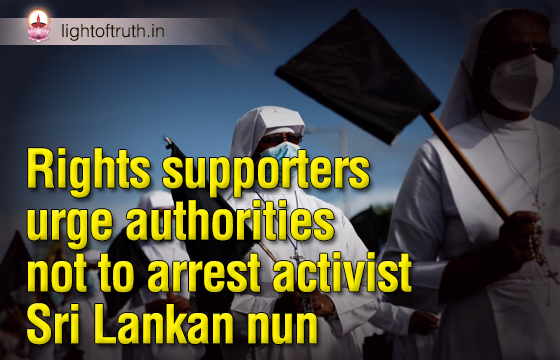
Rights supporters urge authorities not to arrest activist Sri Lankan nun
Activists called on Sri Lankan authorities not to arrest an activist nun who has supported anti-government pro-testers.
Sister Mary Sonali of the Congregation of the Apostolic Carmel was summoned by police June 7 to record a statement about an arson attack.
Shehan Malaka Gamage, a social activist and national convener of the Coalition of Catholic Lay Organizations, said June 8 that Sister Sonali was accused of aiding violence and inciting people to set fire to houses.
“We stand against the continuing state repression and the large number of arrests. Police have arrested many social activists to satisfy the needs of politicians and by now they have begun to touch the clergy as well. That is a very serious matter,” Gamage said.
“Several Buddhist monks were recently imprisoned on absurd charges but eventually the court released them. Even Father Cyril Gamini was prepared to be arrested in the same manner, but the police failed,” he said.
Father Gamini is former director of the National Catholic Center for Social Communications and has been an outspoken critic of how government agencies handled the investigation of the Easter 2019 attacks — including two on Catholic churches — that killed 279 people in three cities.
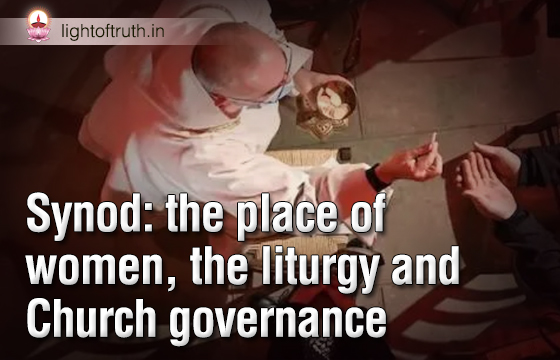
Synod: the place of women, the liturgy and Church governance
France has published its first synthesis of what Catholics who participated in the synodal process believe should be top priorities for their Church
“It is not only a question of women exercising much more responsibility in leadership, which must be done. Their place is also expected at the heart of sacramental life,” the document notes.
The exercise was tedious, given the magnitude of the expectations, dreams and regrets that more than 150,000 Catholics in France expressed over the last few months while participating in the synodal process.But Bishop Alexandre Joly of Troyes and his national team that is accompanying the Synod on Synodality were able to take the diocesan syntheses and turn them into a 10-page report, which was published on Thursday.The text is divided into three main chapters – the importance of “finding inspiration in the Word of God”, the urgency of “proposing meaningful and credible signs in society” and the need for “places of fraternal dialogue”. It is meant to help the bishops reflect further on the issues when they meet in an extraordinary plenary assembly June 14-15 in Lyon in the presence of lay invitees.The latter will have no decision-making power, but “for the first time” they will be able to participate “in all the working sessions of the assembly”, according to the French Bishops’ Conference (CEF).