
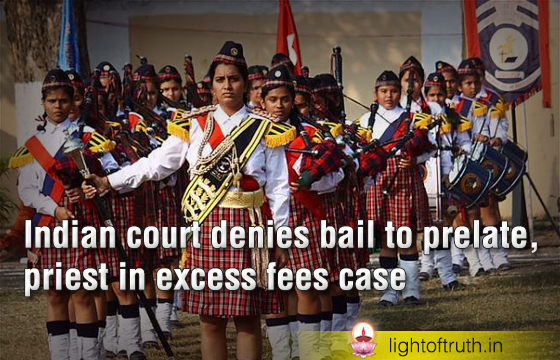
The top court in a central Indian state has granted bail to a woman school principal but denied it to a Protestant bishop, a Catholic priest, and 12 others accused of charging exorbitant school fees.
A single bench of Justice Maninder S Bhatti of Jabalpur High Court of Madhya Pradesh state has ordered the release of Soma George, principal of a Catholic school in Jabalpur. It also granted anticipatory bail to a Catholic priest named in the complaint but not arrested. This consideration, however, was not extended to Bishop Ajay Umesh Kumar James of Jabalpur Diocese of the Church of North India (CNI) and Fr Abraham Thazhathedathu of the Catholic Diocese of Jabalpur. Bail pleas of the bishop, the priest and the others were rejected because they were part of the decision-making process as members of the school management. “We are disappointed with the top court order,” said Fr Davis George, vicar general of Jabalpur diocese. The priest denied that diocesan schools were charging extra money from students. “We will file an appeal,” he told. A total of 22 persons from different institutions were arrested on May 27 after they were accused of charging exorbitant school fees. The state police cracked down on the schools following an allegation of charging excessive fees. The right-wing Bharatiya Janata Party runs the state government. Eleven private schools, including seven run by the Church, have faced the wrath of the district administration. The police registered cases against 51 persons, including the textbook seller, accused of selling books at outrageous prices.
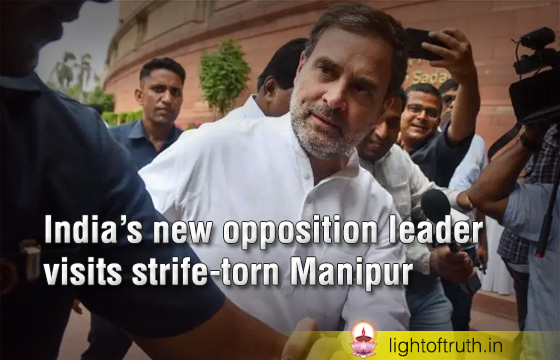
India’s new opposition leader visits strife-torn Manipur
Indigenous people in Manipur have sought the support of India’s new opposition leader, Rahul Gandhi, to end a 14-month-old sectarian strife in their northeastern state, where tribal Christians are pitted against dominant Hindus. Gandhi visited the violence-hit state on July 8 after being elected opposition leader on June 26. “We appreciate Rahul visiting us and taking stock of our plight,” a Christian leader, who sought anonymity, told. The constitutional post had remained vacant for a decade in the Indian parliament, which was dominated by Prime Minister Narendra Modi’s right-wing Bharatiya Janata Party. However, Modi’s party lost the majority in the just concluded general election and formed a coalition government. Gandhi was elected the leader of the opposition. “During previous visits, Gandhi was merely a parliamentarian. But now he is the opposition leader,” the Church leader observed. “Everything is in bad shape” in Manipur, noted the leader based in the sectarian strife-hit northeastern Indian state bordering civil war-affected Myanmar. A delegation from the Indigenous Tribal Leaders’ Forum (ITLF) called on Gandhi to seek his help to settle the sectarian violence that began on May 3 last year after a court move to confer tribal status on the prosperous Hindu Meitei community. The tribal status would help the Meiteis avail themselves of benefits under India’s affirmation action, something the tribal people from the state opposed. Gandhi visited several places, including relief camps in the worst-affected Churachandpur district, where the communal conflict originated. Visiting Manipur for a third time within 14 months, Gandhi lamented the plight of the displaced people, pegged at more than 50,000, and met family members of those killed, numbering more than 220. However, Prime Minister Modi has not visited the state, which is also ruled by his party. “What is of paramount importance at the moment is the restoration of peace,” Gandhi said and countered Modi’s claim in the Rajya Sabha (upper house of parliament), that normalcy was returning to Manipur.
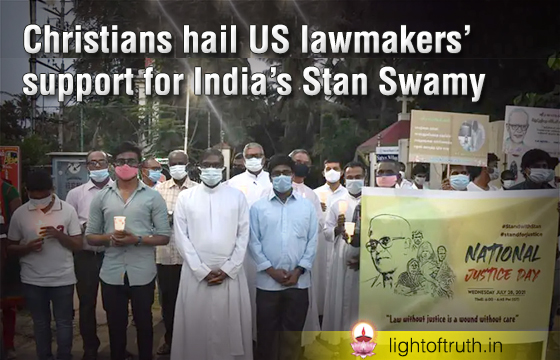
Christians hail US lawmakers’ support for India’s Stan Swamy
Christian leaders in India have hailed three US lawmakers’ demand for an independent probe into the situation that led to the death of Jesuit activist Father Stan Swamy as a prisoner three years ago. Representative from California Juan Vargas, along with lawmakers Jim McGovern and Andre Carson, on July 6 introduced a resolution in the House of Representatives on the third anniversary of Father Swamy’s death. The 84-year-old Swamy died in a private hospital in Mumbai, in western Maharashtra state, as an under-trial prisoner on July 5, 2021. He was accused of associating with terrorists aiming to destabilize the nation and being part of a plan to assassinate Prime Minister Narendra Modi. “The US lawmakers are justified in their demand” for an independent investigation into the situation that led to the death of the priest, said Father Jacob G Palakkappilly, spokesperson of the Kerala Catholic Bishops Council, a regional body based in southern Kerala. Father Palakkappilliy told that the allegations against the priest must be probed to clear his name. Christian leaders say the aged priest was arrested to silence his criticism that the policies of the Modi government ignored the welfare of tribal and poor in the country. Swamy opposed a move to amend India’s stringent Forest Act, which safeguards the interests of forest dwellers. He accused the government led by the right-wing Bharatiya Janata Party (BJP) of amending the law to help industrialists. According to the US resolution, Swamy worked to raise awareness among Adivasi (tribal) people about their rights. “Father Stan dedicated his life to giving a voice to the voiceless. He was a tireless advocate for the rights of the indigenous Adivasi people,” Vargas noted in the resolution. “Yes, there should be a probe into the allegations against Father Swamy,” stressed Sister Helen Tresa, a lawyer in the high court in Jharkhand. Swamy, based in Jharkhand, filed several cases to protect the rights of tribal people, who were illegally jailed after labeling them as sympathizers of outlawed Maoist rebels.
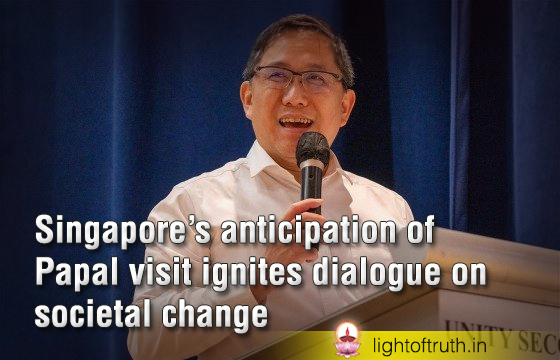
Singapore’s anticipation of Papal visit ignites dialogue on societal change
As the nation prepares for its first papal visit in nearly four decades, the dialogue about the interplay between faith and public policy is intensifying. The visit by Pope Francis on September 11–13 is eagerly anticipated, not only by the local Catholic community but also by the broader society, given its potential to influence discussions on a range of pressing issues, including social justice, family values, and education.
Catholic parliamentarian Alex Yam, known for integrating religious values into his political work, emphasized the importance of upholding the dignity of every individual. ”As Catholics, we are called to uphold the dignity of every person, no matter their circumstances in life, outlook, or sexual orientation, since we are all created in the image and likeness of God,” he said.
This message resonates as Singapore grapples with societal shifts such as rising divorce rates and declining birth rates, challenging traditional family structures.
Yam referenced the Church’s position as articulated by Pope Francis in his apostolic exhortations, Evangelii Gaudium and Amoris Laetitia. ”The sanctity of marriage and human sexuality is an area where the Holy Father has upheld traditional Catholic teaching,” he remarked. Yam stressed the need for policies that strengthen families, promote healthy relationships, and provide support for those in difficulty. He highlighted the Pope’s endorsement of an educational approach that emphasizes human values, solidarity, and respect for diversity, advocating for a holistic system that nurtures intellectual, emotional, and spiritual development. ”This allows for more diversity and creativity in our society and economy, which, in turn, builds a more resilient workforce,” he said.
On economic disparities, Yam emphasized the Church’s commitment to the preferential ‘Option for the Poor’, a principle underpinning policies aimed at fostering a more equitable society. ”
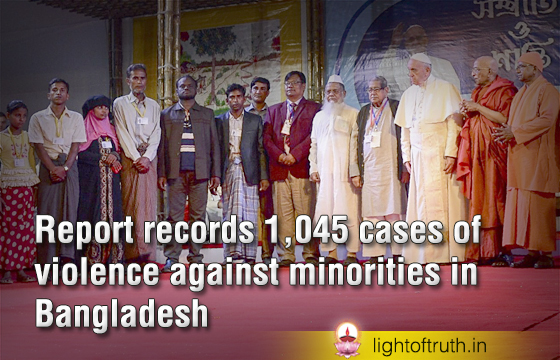
Report records 1,045 cases of violence against minorities in Bangladesh
Persecution of ethnic and religious minorities in Bangladesh continues unabated amid a lack of justice and impunity for perpetrators, a Bangladeshi minority forum says. The Muslim-majority Asian nation witnessed some 1,045 cases of human rights violations against minorities, according to the latest annual report of the Bangladesh Hindu Buddhist Christian Unity Council (BHBCUC).
The interreligious forum’s findings are based on media reports from July 2023 to June 2024. During this period, 45 members of minority communities were murdered and there were 10 attempted murders and 36 death threats.
A total of 479 people were attacked, physically abused or injured, and 11 were victims of extorsion. The violence included 25 gang rapes, while 12 people were abducted, went missing or forced to convert. Eight were arrested on false charges of blasphemy.
The report also recorded 102 attacks, acts of vandalism, looting and arson against homes and businesses belonging to minority communities. According to the BHBCUC, 70-75 per cent of the violence is centred on land grabbing, often under the influence of political parties and with the complicity of government agencies. The findings reported 47 incidents of land and homestead encroachment and 45 cases of land occupation, eviction activities, and threats, as well as 11 threats or attempts of expulsion.
The parliamentary elections in January this year saw 32 incidents of communal violence while local elections reported five incidents of this kind. At the press conference presenting the report, BHBCUC secretary general Rana Dasgupta, a Supreme Court lawyer, affirmed that these incidents are part of organised violence. He noted that the influence of extremist groups is growing in all areas, including the government administration, politics, and society, making minority communities more insecure and distrustful, forcing many of their members leave the country.
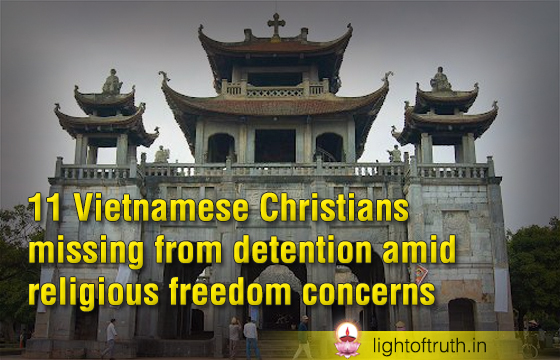
11 Vietnamese Christians missing from detention amid religious freedom concerns
Eleven Vietnamese Christians, including five Catholics, are reportedly missing from detention, according to a recent report from International Christian Concern (ICC), a U.S.-based advocacy group. The ICC report, released on July 5, claims the missing individuals were sentenced between 2011 and 2016 to a combined total of 90 years and eight months in prison for their religious activities. Their current whereabouts are unknown. According to the report, the five missing Catholics — identified by the names of Runh, A Kuin, A Tik, Run, and Dinh Kuh — were allegedly accused of “undermining national unity policy” for their participation in the Ha Mon Catholic Church, which lacks government approval. The report also mentions six Protestant detainees among the missing, including four who were allegedly accused of involvement with Degar Protestantism, a movement not recognized by Vietnam’s government.
Rep. Glenn Grothman, R-Wisconsin, commented on religious persecution in Vietnam in 2022, stating: “The United States has a role as a leader to promote and defend religious liberty on the world stage, and that starts with denouncing the Vietnamese government for its track record of religious persecution.”
The U.S. Commission on International Religious Freedom (USCIRF)has consistently raised concerns about religious freedom in Vietnam. In its 2024 report, USCIRF recommended that Vietnam be designated a “country of particular concern” for its violations of religious freedom. A 2019 USCIRF report noted that Vietnam’s Law on Belief and Religion, which went into effect in 2018, has been problematic in its implementation.

Historic Cathedral in the Philippines Designated as National Shrine
In a significant and symbolic gesture, the 17th-century Cathedral of Maasin in Southern Leyte has been declared a national shrine. This announcement, celebrated by the local Catholic community, underscores the cathedral’s importance as a centre for devotion and pilgrimage. Monsignor Oscar Cadayona, the vicar general of the Diocese of Maasin, expressed that this designation signifies a profound blessing for the faithful devotees of Nuestra Amada Señora de la Asunción (Our Beloved Lady of the Assumption). “This honour is a testament to the divine grace bestowed upon our community,” Cadayona shared with UCA News. As a national shrine, the Cathedral of Maasin, now officially known as the Diocesan Shrine of Our Lady of the Assumption, will be under the over-sight of the Catholic Bishops’ Conference of the Philippines (CBCP). This prestigious recognition marks it as the first national shrine in the Eastern Visayas region, which encompasses six provinces and a predominantly Catholic population of around four million people. The announcement was made during the 128th plenary session of the CBCP in Cagayan de Oro City, Mindanao, on July 6, 2024. The CBCP acknowledged the cathedral as a pivotal site for religious devotion and pilgrimage. “We look forward to welcoming pilgrims from across the Philippines,” Cadayona added. Mayor Nacional Mercado of Maasin City hailed the declaration, noting that it transforms Maasin into the pilgrimage capital of Eastern Visayas. “Our city is immensely honoured and blessed by this recognition,” Mercado stated on July 7.

Holy See encourages Catholics in Philippines to ‘listen to their pastors’ on divorce bill
Vatican Secretary for Relations with States and International Organizations Archbishop Paul Gallagher said the Holy See would encourage Catholics, particularly political leaders, in the Philippines to “listen to their pastors” regarding the latest divorce bill, which passed the country’s lower house of government in May.
At a press briefing held, during his visit to the southeast Asian nation from July 1-5, Gallagher addressed the topic of the Absolute Divorce bill, which passed the Philippines’ House of Representatives on May 22 with 131 votes in favour of the bill. One hundred and nine members of the house voted against the bill and another 20 declined to vote.
“And at the pastoral level, the question is within the competence of the bishops’ conference of the Philippines and the individual bishops,” he said. “I would presume, because it is an important issue, that they will be discussing it. So we [the Holy See] will look forward to hearing from the bishops on this in a matter which is principally of their concern.”
Since May, Filipino bishops and priests have been active in addressing the issues seen as grounds for “absolute divorce” including violence, drug addiction, and alcoholism.
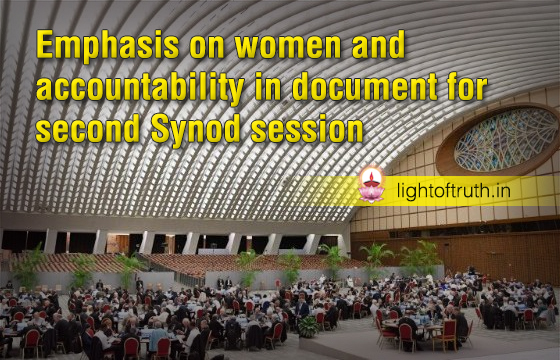
Emphasis on women and accountability in document for second Synod session
How to be a missionary synodal Church? That’s the question at the heart of the Instrumentum laboris (IL) for the upcoming session of the Synod of Bishops, which will take place from October 2 to 27. It will be the second session of the XVI Ordinary General Assembly, following the one in 2023. The IL – published on July 9, and presented at the Holy See Press Office – does not offer any “pre-packaged answers” but rather “indications and proposals”.
These regard how the Church, as a whole, can respond “to the need to be ‘synodal in mission.’” That is, to be a Church closer to people, less bureaucratic, where all the baptized are – within their different ministries and roles – co-responsible and participants in its life.
The document is structured in five sections: introduction, foundations, and three central parts. The introduction recalls the journey traveled so far and highlights the milestones already reached, such as the widespread use of the synodal methodology of the Spiritual Conversation. The foundations (nn. 1-18) then dwell on the understanding of synodality, seen as a path of conversion and reform. In a world marked by divisions and conflicts, it is emphasized, the Church is called to be a sign of unity, an instrument of reconciliation and listening for all, especially for the poor, the marginalized, and the minorities excluded from power. The foundations also give ample space (nn. 13-18) to reflection on the role of women in all areas of the Church’s life, highlighting “the need to give fuller recognition” to their charisms and vocation.” God chose women as the first witnesses and heralds of the Resurrection,” recalls the IL; therefore, “by virtue of Baptism, they enjoy full equality, receive the same outpouring of gifts from the Spirit, and are called to the service of Christ’s mission..”
In some cultures, the IL notes, “the presence of machismo remains strong”; therefore, the second synodal session calls for “a wider participation of women in the processes of ecclesial discernment and all stages of decision-making processes” along with “wider access to positions of responsibility in Dioceses and ecclesiastical institutions,” as well as in seminaries, institutes, theological faculties, and “an increase in the number of women judges in all canonical processes.” The suggestions also concern consecrated women.

World Religions Sign Pope’s Appeal for Ethical Artificial Intelligence in Japan
Eleven World Religions, six-teen new signatories, thirteen nations in attendance, more than 150 participants: these are some of the numbers of AI Ethics for Peace, the historic multi religious event held in Hiroshima, Japan, on July 9th and 10th. The event was greeted by Pope Francis with a dedicated tweet and a message, which read, “Recognizing the contribution of the cultural riches of peoples and religions in the regulation of artificial intelligence is key to the success of your commitment to the wise management of technological innovation.”
July 10th, religious leaders representing various faiths of the Eastern world (such as Buddhism, Hinduism, Zoroastrianism, Bahá’í and many other), accompanied by leaders of the Abrahamic religions (Christians, Jews and Mu-slims), signed the Rome Call for AI Ethics in the evocative venue of Hiroshima’s Peace Memorial Park. The new signatories, in the presence of top representatives of the Japanese Government and of big tech Microsoft, IBM and Cisco, signed the Call which urges the application, in the field of AI, of algorethics, i.e., ethics by design.