Prime minister, political, religious leaders mourn Abp Jala’s death

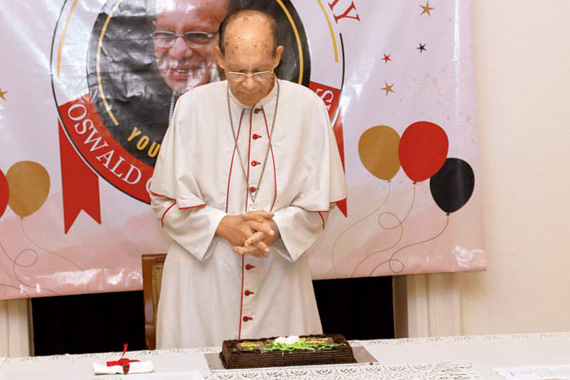
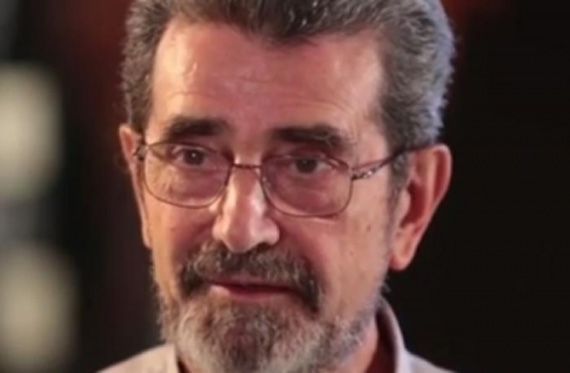
Prime Minister Narendra Modi led political and religious leaders to mourn the death of Archbishop Dominic Jala of Shillong in a car accident in California. The Salesian arch-bishop “will be remembered for his impeccable service to society and passion towards Meghalaya’s progress. May his soul rest in peace,” tweeted the prime minister on October 12, soon after the news of the Catholic prelate broke.

The Prime minister also said that he was anguished by the passing of the archbishop.

The accident reportedly occurred around 11 pm October 10 (10:30 am on October 11 Indian time) when Archbishop Jala was traveling to Clearlake in California along with Fathers Mathew Vellankal and Joseph Parekkatt, two Indian priests working in the United States.

Minister Muraleedharan leads Indian delegation to Mariam Thresia canonization

Minister of State for External Affairs V Muraleedharan led the Indian delegation at the ceremony in which Pope Francis will declare Mariam Thresia a saint in Vatican City on Oct. 13. Muraleedharan visited the Vatican City on October 12-13 for the canonisation of Sister Mariam Thresia, the Ministry of External Affairs said.

Sister Mariam Thresia, born on April 26, 1876, in Thrissur, Kerala, founded the Congregation of the Sisters of the Holy Family in 1914. She passed away on June 8, 1926. On April 9, 2000, she was beatified by Pope John Paul II.

In his ‘Mann ki Baat’ radio program last month, Prime Minister Narendra Modi had also referred to Sister Thresia.

“Sister Thresia, in her short lifespan of 50 years, worked for the good of humanity becoming a noble example for the entire world. Whatever task Sister Mariam Thresia undertook and accomplished, she did so with utmost dedication and devotion,” he had said.

Dalit, tribal girls honoured for academic excellence

Ten tribal and dalit girls from various parts of India were honoured for their academic excellence at a recent function in the national capital.

The awards have been hailed as a novel and unique move by the Catholic Church in India to reach out and encourage the less fortunate girl children, Sister Talisha Nadukudiyil, national secretary for the Council for Women under the Catholic Bishops’ Conference of India (CBCI), said at the October 6 award ceremony.

According to the Sisters of Destitute nun, the move will bring to the limelight those blessed with intellectual acuity to reach the high spectrum of life.The selection of the awardees was made on the basis of their outstanding performance in studies, despite their financial, cultural and geographical hedges, the nun explained. This is the second year the award program was organized by the women council in collaboration with the CBCI Offices for Dalit and Tribal Affairs.

India’s Christian philosophers to discuss science’s perils, possibilities

The 44th annual research seminar of the Association of Christian Philosophers of India (ACPI) will take place at the St Joseph Vaz Spiritual Renewal Centre, Old Goa. The October 23 to 25 addresses the theme: “Philosophizing Science: Promises, Perils and Possibilities.”

The seminar will be co-hosted by the Indian Institute of Science and Religion (IISR), Delhi.

Goa and Daman Archbishop Filipe Neri Antonio Sebastião do RosárioFerrão is the chief guest and inaugurate the seminar. Jesuit Father Job Kozhamthadam, director of IISR, will deliver the keynote address.

The theme “Philosophizing Science” has to do with the philosophical critique of science from diverse yet wholesome Indian and Christian perspectives, according to Jesuit Father Keith D’Souza, president ACPI.

The subtheme “Promises, Perils and Possibilities” lends itself to discussions on positive, dysfunctional and futuristic aspects of various features and disciplines of the scientific enterprise.

Jesuits in India promote pope’s ecological agenda

There are still areas in which the Jesuits can work to protect the environment in India, according to a member of the order.

On February 19, Father Arturo Sosa, the superior general of the Society of Jesus, urged his men to give a pastoral priority to ecological issues, as a direct response to Pope Francis’s 2015 encyclical Laudato Si’.

Jesuit Father Luke Rodrigues said it was also a response “to the crisis we experience today in terms of environmental degradation.”

The Jesuits of the Bombay Province – based in Mumbai – took up this call, building on already existing programs to protect the environment.

“In the rural areas, there are many ecological initiatives in the field of agriculture. Farmers working in dry regions – such as Nashik district – are encouraged to take up water harvesting schemes,” the priest said.

“This works on the principle of catching the water where it falls, thereby replenishing the groundwater table. This assures farmers of at least one good crop and at times the possibility of a second one too. Fruit plantations are now coming up, thanks to the enhanced supply of water,” he said.

Nashik is located about 120 miles north of Mumbai and has a large agricultural sector, most famous for its vineyards.

Major Archiepiscopal Assembly begins

Major Archbishop of the Syro-Malankara Church Cardinal Mar Cleemis has highlighted the relevance of family values for the betterment of society. Delivering the inaugural address at the second Major Archi-episcopal Assembly of the church here on Oct. 8, he said, family values and religious belief were increasingly coming under attack. If the family lost belief in God, it would reflect on religion and society, he added.

Former Chikmagalur bishop dies

Former Bp John Baptist Sequeira of Chikmagalur died on October 9 due to old age ailments. The end came at the Home of the Little Sisters of the Poor, Hosur Road, Bengaluru. He was 89. The funeral Service was held at 3 pm on October 11 at the Home for the Aged (Little Sisters of the Poor) in Bengaluru. Thereafter, the burial took place at St Patrick’s Parish Cemetery on Hosur Road.

Pakistan rejects attempt to allow non-Muslim PM, president

A Christian MP in Pakistan has slammed the ruling Justice party for rejecting his bill seeking to allow non-Muslim members of parliament to become president or prime minister of the country.

Naveed Aamir Jeeva, a Christian lawmaker of the opposition Pakistan Peoples Party, tabled the bill in the National Assembly.

The bill proposed amendment to Articles 41 and 91 of the constitution that bar Christians and other non-Muslim minorities from getting elected as head of state.

“A person shall not be qualified for election as president unless he is a Muslim of not less than 45 years of age and is qualified to be elected as a member of the National Assembly,” Article 41 states.

Article 91 reads: “After the election of the speaker and the deputy speaker, the National Assembly shall, to the exclusion of any other business, proceed to elect without debate one of its Muslim members to be the prime minister.”

The lower house blocked the Christian MP’s bill with a majority vote following objections from a minister known for hardline views on Islam.

Ali Muhammad, minister of state for parliamentary affairs, said: “Pakistan is an Islamic republic where only a Muslim can be elevated to the slots of the president and prime minister. The minorities are enjoying complete freedom and security and their rights are being protected in Pakistan.”

Maulana Abdul Akbar Chitrali, a member of Islamist party Jamaat-e-Islami, welcomed the government’s stance on the proposed amendment.

“No law against Islamic values and teachings can be passed, introduced or even debated in the parliament,” he was quoted by The News as saying.

The Christian lawmaker, however, said that he would continue to exercise his democratic right to introduce legislation.

“It was disappointing that the ruling party opposed my bill. We believe every Pakistani citizen irrespective of his faith or color has the right to become prime minister or president,” Jeeva told ucanews.com.

“If Christians, Hindus are other minorities enjoy equal rights, there should be no constitutional bar on them to lead this country.

Cardinal urges extra security for Sri Lanka’s religious places

Cardinal Malcolm Ranjith has written a letter to Sri Lankan President Maithripala Sirisena appealing for extra security for Catholic institutions.

It follows concerns that churches may face more attacks after the Easter Sunday suicide bombings of three churches and three hotels that killed 259 people and injured more than 500.

A senior Catholic priest said the easing of security at religious places was not a positive move and that the local Church had received information about impending threats.

He said Cardinal Ranjith had informed the president in writing that Catholic temples, shrines and public places are in danger of being attacked.

YasithaDevaka, a Catholic teacher from Kadana, said government officials had blamed each other for the loss. It was finally revealed that intelligence agencies had provided definite warnings of the April 21 attacks but no proper action was taken to prevent them. “The cardinal has warned of another attack on Catholic churches and has asked for tight security,” said Devaka.

Cardinal complains of ‘criminal silence’ of Myanmar’s religious leaders

Myanmar’s cardinal has called on the military and militias to show “mercy” on the poverty-stricken populations caught in the crossfire of the country’s ongoing ethnic conflicts. Cardinal Charles Maung Bo of Yangon also called out the country’s religious leaders for their “criminal” silence about the violence in the country.

“Not a single day passes without the heart wrenching news of innocent civilians being displaced or killed or maimed by the ongoing conflict in Lashio, other Northern regions and Rakhine State,” the cardinal said in an Oct. 1 statement.

“I had served as the priest and bishop in this area for almost 20 years. Most of these people are extremely poor and innocent people,” Bo continued. “Striving for basic needs is their daily unending struggle. No group had done any economic development for these people.”

Myanmar has been transitioning from a military dictatorship since Nobel Laureate Aung San SuuKyi’s National League for Democracy won a landslide victory in the 2015 general election.

Official Website

Exit mobile version