A bill banning commercial surrogacy was introduced in the upper house of Indian parliament on August 5 after gaining the approval of the lower house. The Surrogacy (Regulation) Bill, 2019 allows “ethical altruistic surrogacy” to the intending infertile Indian married couple, between the age of 23 and 50 years for the female and 26 and 55 years for the male. The Bill says the surrogate mother must be a relative of the couple seeking surrogacy who offers her womb for altruistic motives without any compensation except for medical expenses and her insurance coverage.


How Buzz Aldrin’s communion on the moon was hushed up
Neil Armstrong will be remembered at Washington National Cathedral today. It’s a good moment to look at one eccentric Apollo story: the tale of Aldrin’s hushed-up communion on the moon.
Before Armstrong and Aldrin stepped out of the lunar module on July 20, 1969, Aldrin Unstowed a small plastic container of wine and some bread. He had brought them to the moon from Webster Presbyterian church near Houston, where he was an elder. Aldrin had received permission from the Presbyterian church’s general assembly to administer it to himself. In his book Magnificent Desolation he shares the message he then radioed to Nasa: “I would like to request a few moments of silence … and to invite each person listening in, wherever and whomever they may be, to pause for a moment and contemplate the events of the past few hours, and to give thanks in his or her own way.”
He then ate and drank the elements. The surreal ceremony is described in an article by Aldrin in a 1970 copy of Guideposts magazine: “I poured the wine into the chalice our church had given me. In the one-sixth gravity of the moon the wine curled slowly and gracefully up the side of the cup. It was interesting to think that the very first liquid ever poured on the moon, and the first food eaten there, were communion elements.”
He also read a section of the gospel of John. During it all, Armstrong, reportedly a deist, is said to have watched respectfully but without making any comment.
The story of the secret communion service only emerged after the mission. Aldrin had originally planned to share the event with the world over the radio. However, at the time Nasa was still reeling from a lawsuit filed by the firebrand atheist Madalyn Murray O’Hair, resulting in the ceremony never being broadcast. The founder of American Atheists and self-titled “most hated woman in America” had taken on Nasa, as well as many other public organisation. Most famously, she successfully fought mandatory school prayer and bible recitation in US public schools.

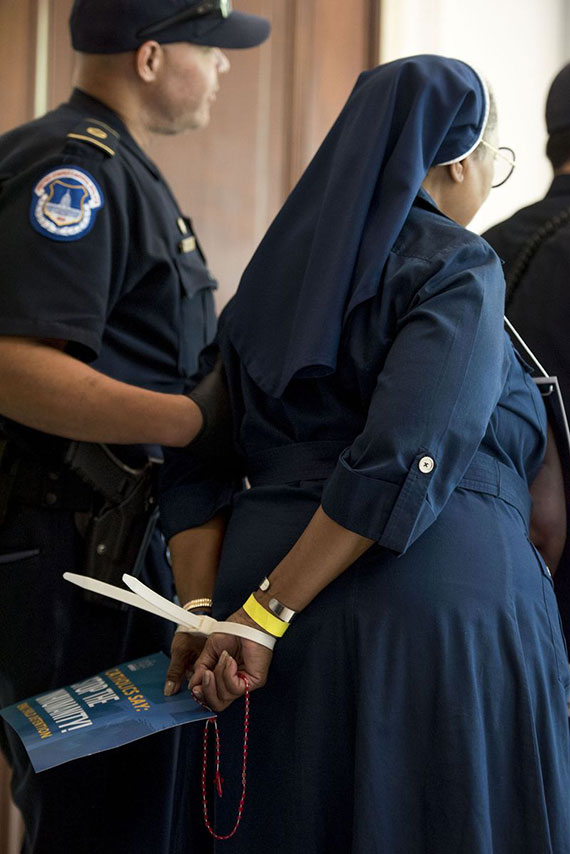
Catholics including clergy arrested while protesting migrant treatment
Seventy activists were arrest-ed in Washington, D.C., on July 18 while protesting the government’s treatment of undocumented immigrant children, organizers confirmed to Huff Post.
The group of Catholic sisters, priests, brothers and lay Catholic advocates recited the rosary as they gathered inside the Russell Senate Office Building on Capitol Hill for what organizers dubbed the “Catholic Day of Action for Immigrant Children.” Some of the participants held photos of children who have died in federal custody since 2018, while others lay on the floor of the building’s rotunda, forming the shape of a cross with their bodies.
The 70 individuals were arrested for unlawfully demonstrating, and were charged with obstructing a public place, U.S. Capitol Police spokeswoman Eva Malecki confirmed to HuffPost.
One of the activists arrested was 90-year-old Patricia M.Murphy, a Chicago-based religious sister who has spent years fighting for the rights of undocumented and detained migrants.

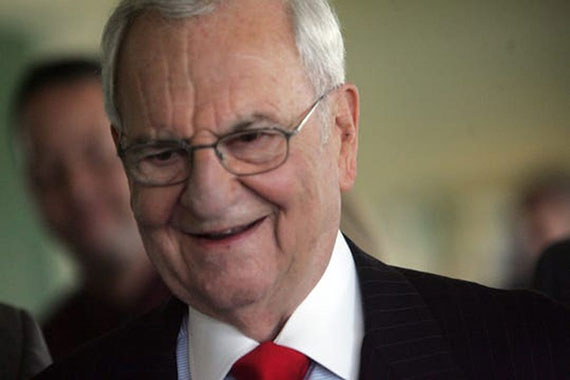
Chrysler’s Lee Iacocca remembered for being a courteous family man
Family and friends gathered on July 10 morning to pay tribute to famed auto executive Lee Iacocca.
Iacocca died recently at his home in Bel Air, California. He was 94.
The funeral mass, which took place at St Hugo of the Hills Church in Bloomfield Hills, was celebrated by Monsignor Anthony Tocco.
Among the readings during the funeral service was “The souls of the just are in the hands of God” from the Book of Wisdom and “if I have all the eloquence of men or of angels but speak without love I am simply a gong booming or a cymbal clashing” from the First Letter of St Paul to the Corinthians.
The eulogy was delivered by Monsignor Howard Lincoln of Sacred Heart Church in Palm Desert, California, where Iacocca was a member of the parish.
“For decades, Lee’s feet and hands moved mountains,” Lincoln told those at the service. “Lee always seemed to me to never really be down,” he continued. “Somehow, even at the darkest hours, I think he knew somehow even Chrysler would work out.”
Lincoln continued, “Lee knew that this life was his once in a lifetime opportunity and he wanted his life to matter… He was an elevating influence for our parish. I think he saw the importance of being kind and courteous to everybody… ‘Yes,’ he said, ‘I’ve had a wonderful and successful career but next to my family, it doesn’t matter at all.’”
After remarks by family members recalling Iacocca’s love of Christmas and family gatherings, the service concluded with the hymn “How Great Thou Art” with its refrain “Then sings my soul, my Saviour God, to Thee, how great Thou art! How great Thou art!”
During the height of his career in the 1980s, Iacocca was arguably the most popular business figure in the world. Pictures of him, often with his trademark cigar, were on magazine covers and TV screens.
During his career, he was credited both with creating the iconic Ford Mustang and, later, for persuading Congress to bail out a bankruptcy Chrysler in the late 1970s.

Eritrea Orthodox Church ex-leader expelled for ‘heresy’
In an unprecedented move, Eritrean bishops in the Orthodox Church have expelled their former patriarch, Abune Antonios. Antonios, who was the head of the church until 2006, was accused of heresy in a statement signed by a group of top bishops.
He has for a long time been a critic of the government and was deposed and put under house arrest 13 years ago. His followers accuse the government of interfering in church affairs.
He was deposed in 2006 after he refused to excommunicate 3,000 members of a Sunday school movement.

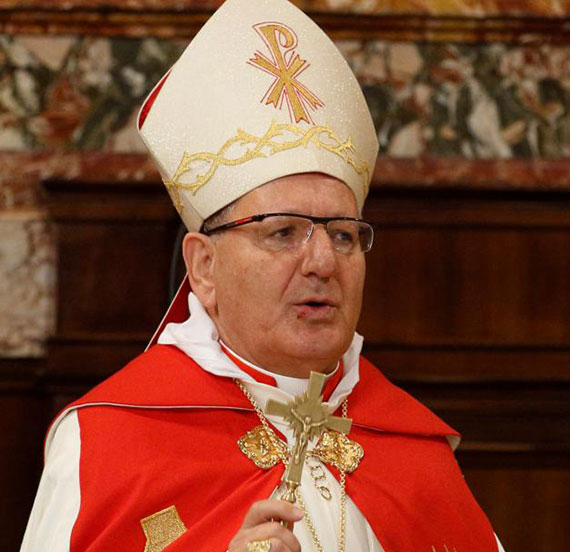
Chaldean Church says so-called ‘Christian’ militias are not Christian
So-called “Christian” militias contradict the Christian approach of love, tolerance and peace, said the Chaldean Catholic Church.
Individual Christians who wish to help defend and maintain security in Iraq can best do so by enlisting with the country’s official army or joining the federal police force, said a statement from the Chaldean patriarchate, headed by Cardinal Louis Sako, in Baghdad.
Individuals who live in the semi-autonomous Kurdistan region of Iraq could join its local Peshmerga forces, said the statement, signed by the cardinal.
“We respect individual decisions” to join Iraq’s state-sponsored coalition of some 40 different militias called the Popular Mobilization Forces “or to get involved in politics, but not to form a Christian ‘brigade,’” it said, “since forming a Christian armed militia contradicts the Christian spirituality that calls for love, tolerance, forgiveness and peace.”
The patriarchate sent the official announcement to the Vatican news agency, Fides, and the Rome-based missionary news agency, AsiaNews, which both published reports about the statement on July 25.
The statement expressed full support for a decree Iraqi Prime Minister Adel Abdul-Mahdi issued on July 1. The decree gave on a July 31 deadline to all militias in the country to operate fully within the nation’s armed forces and be subject to its regulations. The armed groups already answer to the Prime Minister, who is commander-in-chief of the country’s armed forces.
The militias assisted the Iraqi- and U.S.-led coalition in pushing out the Islamic State group. But the new decree mandates each militia group to choose to fully integrate with the military and no longer be a political organization or to remain a political entity and disarm themselves; groups will no longer be allowed to operate as both a political and paramilitary body.
The Chaldean patriarchate said it supported the decree, saying it was “an important step in the right direction.”
“This decree would limit the weapons to the state, strengthen its institutions and reinforce national awareness among Iraqis, in terms of their national identity,” it said. It should also help “solidify the pillars of a strong government of law, citizenship and equality,” it added.

Catholic Church in Germany lost 200,000 members last year
Continuing a years-long trend, the Catholic Church in Germany saw a significant drop in membership this past year, losing more than 200,000 members in 2018.
According to the German Bishops’ Conference, the Catholic Church in the country declined by 216,078 members last year. Protestant Churches saw a similar drop, with 220,000 members leaving during that time period.
Fr Hans Langendörfer, SJ, secretary of the German Bishops’ Conference, said the numbers show a need for the Church in Germany to be “more self-critical and constructive.”
“The current statistics are worrying. There is nothing to gloss over about the numbers, they confirm a trend that has shaped the Church in recent years,” he said in a statement.
Adding that a loss of trust and credibility has caused great damage, the priest went on to say that Church leaders must examine the question of how to make the Catholic Church a welcoming environment, where people can find hope and feel at home.

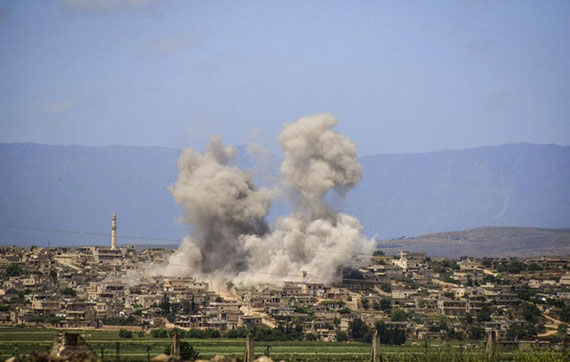
Pope voices ‘deep concern’ to Syria’s Assad over airstrikes
One of Pope Francis’s top aides delivered a personal letter from the pontiff to Syrian President Bashar al-Assad, among other things expressing Francis’s “deep concern” for the humanitarian situation in Idlib, a rebel-controlled area in northwestern Syria that’s been the target of Russian-backed airstrikes since April.
A Vatican statement on July 22 indicated that Cardinal Peter Turkson of Ghana, who heads the Vatican’s department for Promoting Integral Human Development, met that morning in Damascus with Assad, accompanied by Italian Cardinal Mario Zenari, the Pope’s ambassador in Syria.
The statement, issued by new papal spokesman Matteo Bruni, said that the letter “expresses the deep concern of His Holiness Pope Francis for the humanitarian situation in Syria, with particular reference to the dramatic consequences facing the civilian population in Idlib.”
Airstrikes in Idlib alone left at least 17 civilians dead, including seven children, according to the Britain-based Syrian Observatory for Human Rights.
The observatory warned that the death toll could rise significantly as bodies are cleared from rubble.


Anti-Christian violence continues in Nigeria
A pregnant woman and a child were among four people killed in attacks by suspected Fulani herdsmen in Nigeria’s Plateau State on mid July.
The attackers targeted the villages of Ancha and Tafigana in the Bassa Local Government area, as reported by news site Nasoweseeamonline.
Margaret Wakili, 27, from Ancha village and who was 6 months pregnant, was killed at the farm where she was visiting her husband. They both fled but the attackers caught his wife. As they killed her he heard them shout “‘Allahu Akbar, we have killed infidel, we need to kill more,” he said. He identified the 8 attackers as Fulani from Hayin Rukuba. An older woman in the village also was killed.
In Tafigana, 46-year-old Thomas Wollo, and his 7-year-old son Nggwe Thomas were beheaded when they returned home from choir practice on July 14 night.
Following the killings, the attackers went on to a nearby village where they destroyed crops to the value of millions of naira, according to Zongo Law-rence, Publicity Secretary of Miango Youth Development Association.

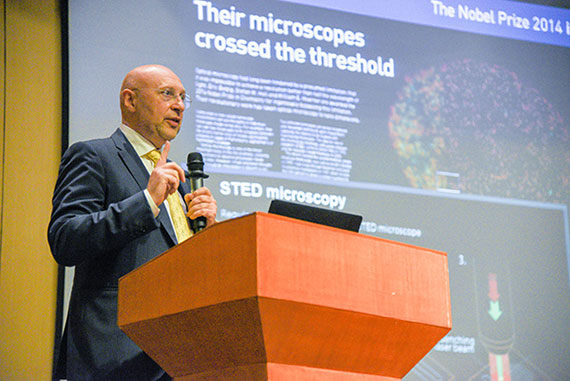
Pope Appoints German Scientist Stefan Walter Hell Member of Pontifical Academy of Sciences
Pope Francis appointed Professor Stefan Walter Hell, Director of the Max Planck Institute of Biophysical Chemistry in Gottingen, and of the Max Planck Institute for Medical Research in Heidelberg, Germany, an ordinary member of the Pontifical Academy of Sciences.
The Pontifical Academy of Sciences is of international scope, multi-racial in its composition and non-sectarian in the election of its Members. The Academy’s work includes six areas: Basic Sciences, Sciences, and Technology of Global Problems, Science of the Problems of the Developing World, Scientific Policy, Bio-ethics, and Epistemology.
Professor Hell has worked on the error of fluorescence of super-resolution, which made it possible to visualize details with a ten times greater superior precision, attaining the resolution of a few nano-meters; thus the micro-scopes became nano-scopes. He has been awarded numerous prizes, including the Kavli Prize for Nano-Science and the Nobel Prize in Chemistry in 2014.