Against religious freedom: Venezuelan government attacks cardinal after country’s first saints are canonized

In the days following the canonization of Venezuela’s first saints, a celebration that should have united the nation around faith and pride has instead revealed a deepening fracture between Church and State. What began as a moment of joy for Catholics has turned into a tense episode of confrontation, intimidation, and open hostility.

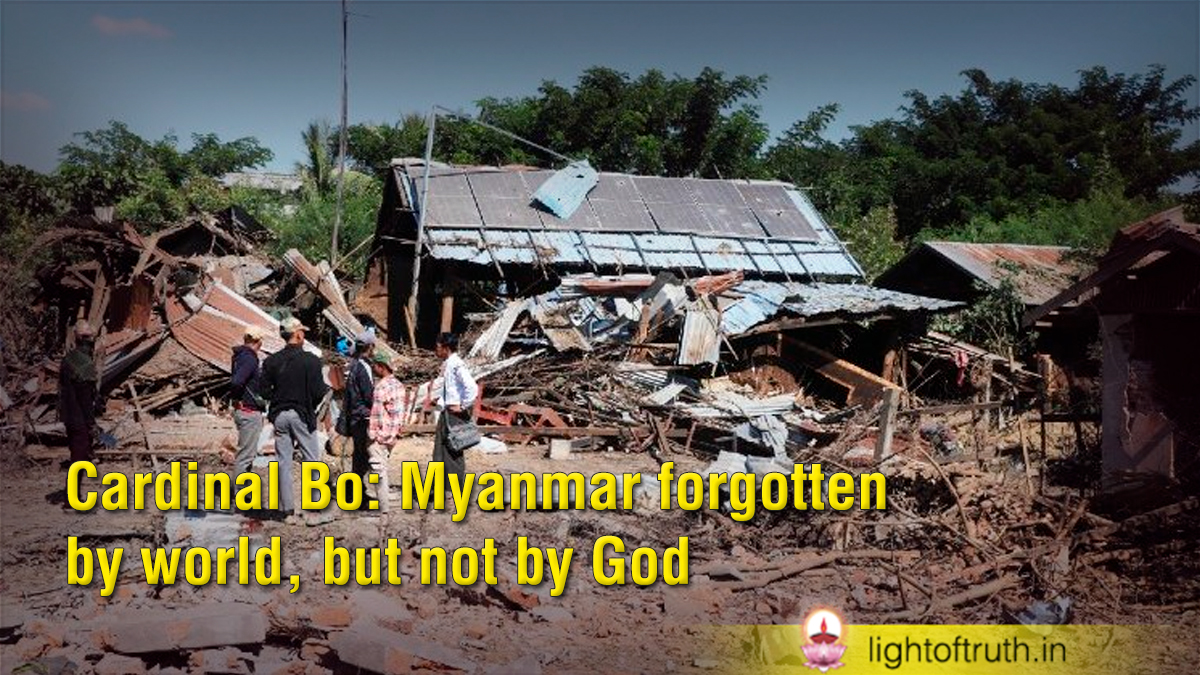
On October 25, Cardinal Baltazar Porras, Archbishop Emeritus of Caracas and one of the most prominent voices in the Venezuelan Church, reported that government interference and military obstruction prevented him from reaching Isnotú, the birthplace of Saint José Gregorio Hernández. The cardinal had been scheduled to celebrate a Mass of thanksgiving there, part of the national celebrations marking the canonizations of Saint José Gregorio and Saint Carmen Rendiles.

According to Porras, his state airline flight was abruptly canceled the night before—though he later confirmed that it departed and landed as scheduled, without him on board. Determined to continue, he chartered a private flight, but midway was instructed to make an unscheduled landing in Barquisimeto. “We were told that the Valera airport was closed due to strong winds,” he said, “but later learned that other flights were arriving normally.” What followed, the cardinal recounted, resembled a scene of intimidation more than a safety precaution. “We were surrounded by armed soldiers,” he said. “It was clear we weren’t free to move.” His attempts to continue by land were also blocked. “It’s troubling that one cannot travel freely within one’s own country,” he remarked, calling the episode “a violation of basic civil rights.” The prelate linked the incident to recent accusations made by President Nicolás Maduro, who publicly accused him of “conspiring” to obstruct the canonization of Saint José Gregorio Hernández. Days earlier, in a speech delivered in Rome, Porras had called for the release of Venezuela’s political prisoners—more than 800 people, according to the human rights organization Foro Penal.

Pope Leo XIV: ‘Peace is holy, not war’

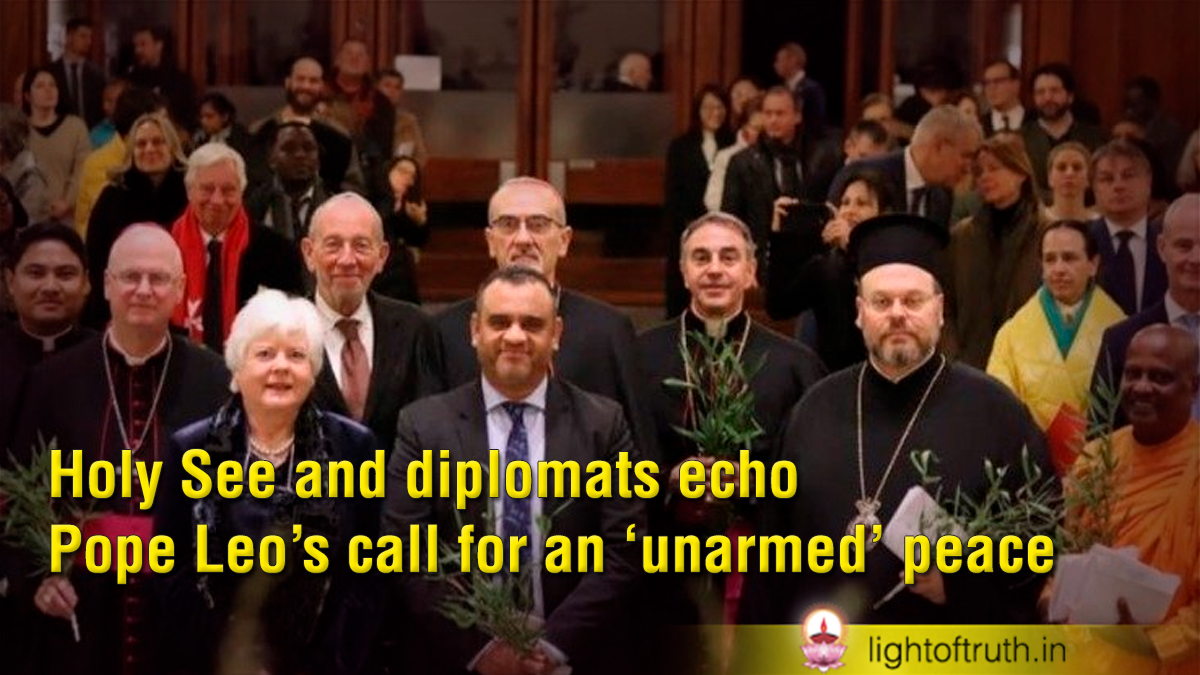
At the closing of the International Meeting for Peace: Religions and Cultures in Dialogue, organised by the Sant’Egidio Community, Pope Leo XIV joined leaders of the world’s religions at Rome’s Colosseum on 28 October for a Meeting for Prayer for Peace.

In his address, delivered in the presence of Christian, Jewish, Muslim, Buddhist, Hindu, and other religious representatives, the Pope renewed the Church’s call for reconciliation, dialogue, and fraternity among all peoples.

“We have prayed for peace according to our diverse religious traditions,” Pope Leo said, “and we are now gathered together to proclaim a message of reconciliation. Conflicts are present in all parts of life, but war is no help in dealing with them or finding solutions. Peace is a constant journey of reconciliation.”

Echoing the urgent need for unity in a world torn by war and displacement, the Pope decried “the abuse of power, displays of force, and indifference to the rule of law,” and called for “a true and sound era of reconciliation.” “Enough of war,” he said forcefully, “with all the pain it causes through death, destruction and exile! Gathered here today, we express not only our firm desire for peace, but also our conviction that prayer is a powerful force for reconciliation.”

Pope Leo warned against the misuse of religion, saying that “those who practice religion without prayer run the risk of misusing it, even to the point of killing.” True prayer, he said, “is an opening of the heart,” a movement that “changes the course of history” and transforms places of worship into “tents of encounter, sanctuaries of reconciliation and oases of peace.”

‘Polarisations’ have no place in the Church, Leo tells Synod Jubilee

Nobody in the Church “should impose his or her own ideas” on others, Pope Leo said on 26 October, asking that tensions between tradition and novelty not become “ideological contrapositions and harmful polarisations”. “The supreme rule in the Church is love. No one is called to dominate, all are called to serve,” Leo said. “No one should impose his or her own ideas – we must all listen to one another,” he continued. “No one is excluded – we are all called to participate. No one possesses the whole truth – we must all humbly seek it and seek it together.”

The Pope celebrated Mass on the thirtieth Sunday in Ordinary Time for the closing of the Jubilee of Synodal Teams and Participatory Bodies, part of the 2025 Jubilee of Hope. In a call for communion, Pope Leo addressed all the participants in the synodality meeting and asked for their help to expand “the ecclesial space” and make it “collegial and welcoming.” “Being a synodal Church means recognising that truth is not possessed but sought together, allowing ourselves to be guided by a restless heart in love with Love,” he emphasised.

The Pope called on Christians to live “with confidence and a new spirit amid the tensions that run through the life of the Church: between unity and diversity, tradition and novelty, authority and participation. We must allow the Spirit to transform them, so that they do not become ideological contrapositions and harmful polarisations.”

It is not a question of resolving these tensions “by reducing one to the other, but of allowing them to be purified by the Spirit, so that they may be harmonised and oriented toward a common discernment”, he said. He insisted that “prior to any difference, we are called in the Church to walk together in the pursuit of God, clothing ourselves with the sentiments of Christ.”

Jailing of Bangladeshi indigenous rights activist sparks uproar

A Bangladeshi court jailed an ethnic tribal leader for eight years for an alleged charge of extortion, about a year after he was released from nearly five years in secret detention.

A court in Rangamati district of Chattogram Hill Tracts (CHT) region in southeast Bangladesh sentenced Michael Chakma and two others to eight years rigorous imprisonment on Oct. 8. The case was filed in 2007 during the tenure of the military-backed caretaker government.

Chakma, 46, an ethnic Chakma and Buddhist, is a leader of the CHT-based political organization, the United People’s Democratic Front (UPDF), which seeks autonomy for the hilly, forested, and restive region.

He disappeared while visiting the national capital, Dhaka, in 2019. Chakma told the media that the state forces kept him in secret locations until he was dropped off at the door of his home on Aug. 7, 2024, two days after former Prime Minister Sheikh Hasina fled to India following a massive student-led public uprising.

He is among about 700 victims of enforced disappearance during the 15-year authoritarian regime of Hasina’s Awami League government.

The interim government led by Nobel Peace Prize winner Professor Muhammad Yunus, which replaced the ousted regime, formed the Commission of Inquiry on Enforced Disappearances to probe into hundreds of people who were either killed or secretly detained. Chakma was convicted in absentia in 2023 for alleged illegal possession of arms, which he termed “yet another false case.”

Pakistan slammed for delay in forming Minorities Commission

Leaders from Christian and Hindu communities have criticized Pakistani authorities for their failure to form a commission to protect the rights of religious minorities despite nearly five months after the parliament passed a related law. Pakistan’s parliament passed the National Commission for Minorities’ Rights Bill 2025 on May 12. The law was hailed as a landmark move to safeguard the rights of minorities in a country criticized for violations of religious freedom.

The criticism came as media reports suggest the bill has been in limbo after being returned by President Asif Ali Zardari to the Ministry of Human Rights for review. In a report released on Oct. 10, the Catholic bishops’ National Commission for Justice and Peace (NCJP) expressed disappointment over the limbo.

The report titled “Thousands of Slips Stand Guard” cited administrative hurdles and political apathy as major causes for the delay in forming the proposed 30-member minorities commission. The NCJP urged the government to ensure the commission enjoys independence.

It further urged the government to re-table the bill, ensure amendments comply with the Paris Principles, the standards for the credibility and effectiveness of National Human Rights Institutions adopted by the UN General Assembly in 1993.

China detains prominent ‘underground’ pastor

The founder of a prominent Chinese underground church has been detained along with more than 20 of its members in a sweeping national crackdown, according to his daughter and one of its pastors. Police arrested Jin Mingri, who founded the unregistered Zion Church, at his home in the southern region of Guangxi on Oct. 10, along with several pastors in other cities, including Beijing, who were taken into custody overnight.

Jin was detained on “suspicion of the illegal use of information networks,” a detention notice stated. At least seven pastors, including Jin, who also goes by the name Ezra, may face criminal charges for “illegal dissemination of religious information via the internet,” according to a church statement.

Police searched their homes and confiscated their computers and cell phones. “It is just a blatant attack on religious freedom,” Jin’s daughter Grace said. Since Oct. 9, police have apprehended church leaders and members in Shanghai, Beijing, Zhejiang, Guangxi, Shandong, Sichuan and Henan, according to a list compiled by church members.

Four people have since been released following interrogation. Police barred lawyers from meeting detained church members in the Guangxi city of Beihai on Oct. 13 morning, according to Grace.

It was not immediately clear if those detained have been able to speak with lawyers since then. “We are not criminals, we are just Christians,” said Sean Long, a Zion pastor based in the United States who has been in touch with family members of those detained in China. “We pray for the best, but we have to prepare for the worst.”

Daughters of St Paul elects first Asian as global leader

The Daughters of St Paul, a member of the Pauline Family, on October 1 elected Sister Mari Lucia Kim as their superior general during their 12th general chapter in Rome. Sister Kim is the first Asian to head the 110-year-old congregation founded by Blessed James Alberione along with Mother Thecla Merlo. She is the eighth successor of Mother Merlo.

The Korean nun, who will turn 60 on November 1, has been a member of the congregation since 1995. She is currently the Korean provincial. She had served as a member of the general council during 2013-2019. Sister Kim replaces Sister Anna Caiazza, who led the congregation for the past six years. She will head the congregation until 2031.

The Daughters of St Paul, who entered South Korea in 1960, are known as the “Media Nuns” in the Southeast Asian nation. The sisters spread the Gospel through various forms of media and literature, supporting Catholic culture among young people.

The sisters operate 15 bookshops throughout Korea and manage 12 communities. In 2020, they opened a new apostolic centre in Seoul called Hyehwa Namu, which includes a bookstore, snack bar, event spaces, and a small theatre. Their primary focus is on forming young people through new media and establishing a website for their mission in Asia. They are involved in training and motivational programs for young people in schools and universities. The Daughters of St Paul has 1,815 members in 11 provinces and 14 delegations. As many as five houses are directly under the generalate.

Cardinal Tagle: Philippines’ corrupt political leaders ‘are not God’

Cardinal Luis Antonio Tagle said politicians in the Philippines must remember that they are “not God” following a major corruption scandal. “Please, you are human beings. You are created in God’s image. Can you please look at yourself and, with humility, say, ‘I am not God. I should not pretend to be God. I am a creature with many other creatures, and so my responsibility is to take care of what God has given to us for the good of all,’” Cardinal Tagle told the ABS-CBN News Channel.

Tagle, pro-prefect at the Dicastery for Evangelisation, was the Archbishop of Manila from 2011 to 2019. The 68-year-old theologian, who finished his doctorate at the Catholic University of America in Washington, DC, remains an influential voice in the Filipino Church.

Speaking in an interview published on 4 October, Tagle expressed disbelief at the corruption controversy involving billions of pesos for flood control projects. He said it demonstrates “the mystery of the capacity of human beings to destroy each other through corruption”.

Acknowledging that this was partly a failure of formation by the Church, the cardinal challenged Filipinos to go beyond the massive protests that have rocked the country in recent weeks. “After the rallies, we should now look for lasting change, because we cannot effect change simply by expressing our anger,” he said.

Other Church leaders have condemned the corruption scandal, even joining protests in different parts of the country. A Church-led protest on 21 September drew thousands of people, and a bigger one is being prepared for 30 November, a public holiday in honour of the nineteenth-century Filipino revolutionary Andres Bonifacio. The Bishop of Kidapawan Jose Colin Bagaforo, 71, said a group of clergy had joined a new movement to fight the “systemic corruption” and “excessive greed” that have led to poverty in the country. Their “Trillion Peso March Movement” is named after the successful “Trillion Peso March” protest on 21 September.

Catholic educators urged to embody compassion, synodal leadership

The national convention and general body of the All India Association of Catholic Schools (AINACS) opened with a call from Cardinal Filipe Neri Ferrão urging Catholic educators to be “rooted in Christ and be messengers of hope.”

Addressing more than 1,050 delegates gathered at the Park Regis Convention Centre in Arpora, Goa, the archbishop of Goa and Daman drew inspiration from the Gospel and Pope Francis to invite educators to embody compassion, wisdom, and synodal leadership in their ministry.

Reflecting on the healing encounter between Jesus and the leper, Cardinal Ferrão illustrated the transformative power of loving care. He reminded the assembly that Jesus approached the leper, touched him, healed him, and became a witness of hope. In the same spirit, Catholic educational institutions are called to radiate hope through attitudes of mercy and understanding, the cardinal added.

In his keynote address, Cardinal Ferrão expanded this vision through the lens of synodality, describing Catholic educational leadership as a journey of communion, participation, and mission. He called on leaders to cultivate open hearts, to encourage dialogue, and to respect diverse perspectives. Leadership, he said, must move beyond rigid bureaucracies and embrace relationships built on trust and shared responsibility.

He emphasised that discernment is central to synodal leadership. Drawing from the Gospel, he described it as a patient, prayerful approach, attentive to God’s will rather than personal ambition. True discernment, he noted, allows educators to respond effectively to the evolving needs of their communities, making decisions that nurture growth, understanding, and holistic development.

The cardinal also framed leadership as stewardship, reminding educators that students are gifts entrusted to them, deserving care, guidance, and love. Quoting the Gospel of Luke, he described stewardship as a vocation of service, compassion, and patience, one that prioritises the integral development of each student.

Vatican greets Hindus ahead of Diwali, urges dialogue for peace

The Vatican has extended greetings to Hindus worldwide ahead of their Diwali festival, calling it an occasion to promote peace, dialogue, and reconciliation in a divided world. In an Oct. 10 message, the Dicastery for Interreligious Dialogue said the festival of lights — celebrated on Oct. 20 this year — symbolizes “the victory of truth over falsehood, light over darkness, life over death, and good over evil.” The three-day celebration marks the beginning of a new year, family reunions, and the worship of God, the dicastery noted.

This year’s Diwali message coincides with the 60th anniversary of Nostra Aetate — the Second Vatican Council’s landmark declaration on the Church’s relations with non-Christian religions, promulgated on Oct. 28, 1965. The dicastery’s prefect, Cardinal George J. Koovakad, and secretary, Monsignor Indunil Janakaratne, signed the message on the theme: Hindus and Christians: Building world peace through dialogue and reconciliation in the spirit of Nostra Aetate. The dicastery recalled that Nostra Aetate urged believers to “recognize, preserve, and promote the good things, spiritual and moral, as well as the socio-cultural values” present in other faith traditions for the sake of peace. The Vatican urged Christians, Hindus, and all people of goodwill to strengthen shared efforts for peace “through dialogue and collaboration in the spirit of Nostra Aetate,” emphasizing unity and fraternity across religions and nations. It also reaffirmed the Church’s teaching to reject “nothing that is true and holy” in other religions, and to honour teachings and practices that “reflect a ray of that Truth which enlightens all people.”

Official Website

Exit mobile version