There is no case of “love jihad” in Kerala, the Centre said in Parliament in response to a question about whether the government was aware of the observation of Kerala High Court on the issue. The Union ministry of home affairs made the remarks in a written reply to a question by Congress leader from Kerala, Benny Behanan, whether any of the central agencies have reported any case of love jihad from the southern state during the last two years. “The term ‘Love Jihad’ is not defined under the extant laws. No such case of ‘Love Jihad’ has been reported by any of the central agencies,” junior home minister G Kishan Reddy said in the reply.
Category Archives: National


Script by Capuchin priest to hit the big screens
Renowned preacher and author, Father Danny Capuchin is set to make a landmark in south Indian film industry with his story and screenplay in the upcoming Malayalam movie titled Varayan (striped).
According to reports made available to media on the first day of the project, Father Danny narrates the story of a young Capuchin priest who lands up in a remote and scary island and the events thereafter.
The lead role of the priest will be played by South Indian film actor Siju Wilson.
The first look poster of the movie was released on Jan 17 by Manju Warrier who is popularly known as the lady super star of Malayalam cinema. The poster features a firebrand young priest in a Capuchin friar’s habit.
Artists and the production team have high expectations for this movie which is reported to have a storyline that will appeal to the masses.
The scriptwriter himself being a Capuchin priest has created an extra interest to this upcoming movie. As the actor Siju Wilson mentioned in an interview, although he initially expected the story to have a religious theme, he was quite surprised by the serious content and entertainment offered by the story.
Father Danny is known for his unique way of preaching and talks both in India and abroad. He is also popular through several programs on television and radio.
He has authored several books including Daivom Peythirangunnu (God is raining down) – a novel in Malayalam; Prakasathinte Nizhal (shadow of light) – a character analysis, Mounam (silence) – a collection of articles. He is also a well known lyricist in Christian music.

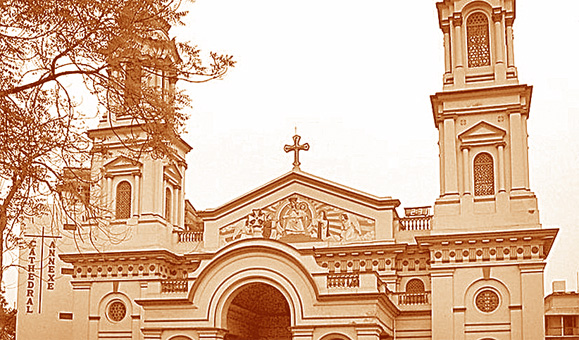
Republic Day: Churches under Calcutta archdiocese to read Preamble
Catholic churches under Calcutta arch-diocese will read out the Preamble to the Constitution after Sunday service on January 26, India’s Republic Day.
Archbishop Thomas D’Souza of Calcutta will send a circular to all 65 parishes in the city and the seven districts, conveying the decision to them. “The Preamble to the Constitution will be read out to uphold and safeguard the Constitution. I think under the present situation, understanding, upholding and being aware of the Constitution is more important than ever.
“We thanked God for the Constitution. We prayed for our country as we always do,” the archbishop said. “This is also an occasion to tell the congregation about the Constitution and many may not be aware of it. It will remind us of the values of liberty, equality and fraternity that the Preamble stands for.”
The Constitution was adopted by the Constituent Assembly on November 26, 1949, and it came into force on January 26, 1950.
The pastors will decide whether to read the Preamble inside the church or outside.
“Since childhood we have pledged to the nation and said ‘all Indians are my brothers and sisters.’ In the current context, it is our own brothers and sisters who are feeling that certain values of the Constitution are under threat. Reading the Preamble in front of God is also to say that it is sacred and cannot be taken lightly and guarding the Constitution is a duty each one of us have,” said Father Rodney Borneo, parish priest of St Ignatius Church in Kolkata. An inter-faith organization has called for the formation of a human chain from Golpark in the south to Shyambazar in the north on Republic Day to “celebrate and uphold the Constitution.”
“I am also asking the congregation to join the human chain wherever possible,” the archbishop said. Churches across the country traditionally celebrate the Republic Day and the Independence Day on August 15 with a variety of programs such as flag hoisting, singing of the National Anthem and talks on patriotism.
Goa Church holds public protest against CAA
Hundreds of people from various religions attended a protest meet organized by the Church against Citizenship Amendment Act (CAA), National Register of Citizens (NRC) and the National Population register (NPR) in Margao, Goa’s commercial capital.
“It is our common conviction that these measures are unconstitutional and therefore, unacceptable. The government must listen to the voice of the people and withdraw the act,” Father Savio Fernandes, executive secretary of the Council of Social Justice and Peace, one of the organizers explained the purpose of the January 24 protest.
The Goa unit of the National Confederation for Human Rights and the Concerned Citizens for Democracy collaborated with the Church group.
Speakers were unanimous that the main purpose of the federal government in enacting the citizenship law was to divide the people of India. “We thank our government for helping us to come together as one family irrespective of our religion,” they said.
Founder of Protestant movement returns to Catholic Church
The founder of a prominent non-denominational movement in India has returned to the Catholic faith of his baptism, after more than a decade as a Pentecostal pastor and traveling preacher.
Sajith Joseph, 36, was confirmed Dec. 21, 2019 at St Mary’s Cathedral in Punalur in the southern Indian State of Kerala. His family and nearly 50 other members of his movement were received into, or came back to, the Catholic Church the same day.
Joseph is the leader of Grace Community Global, which he founded in Kerala in 2011.
The group will now be under the jurisdiction of Bishop Selvister Ponnumuthan of Punalur as a Catholic association, with the permission of the Dicastery for Laity, Family, and Life, which is responsible for international associations of the faithful. Joseph’s Facebook page describes Grace Community Global as “an ecumenical movement of the Latin Rite of the Catholic Church.”
The group has around 2 million followers in 30 countries, and reaches many people through its televangelism programs.
Fr Prasad Theruvath, OCD, was asked to act as chaplain to the group; he has served as the secretary of the Kerala bishops’ commission for inter-church dialogue.
Fr Theruvath told CNA that a process of sorting out how the members of Grace Community Global want to proceed has begun. Most of the members are Protestant, but the group is also followed by Oriental Orthodox Christians, as well as Hindus and Muslims.
Church hospitals agree to implement Mizoram government project
The Non-Governmental Hospital Association of Mizoram (NGHAM), an umbrella body of all private and church-run hospitals in the northeastern Indian state, has expressed their willingness to implement a healthcare scheme.
Officials of the state health department said the association after its meeting on January 24 informed Health Minister R. Lalthangliana of its willingness to implement the healthcare scheme. Earlier in December, the government had suspended the empanelment of more than 15 private and church-run hospitals for allegedly refusing to implement the Mizoram State Health Car Scheme (MSHCS).
This led to misunderstanding and heated exchange between the state government and private hospitals.
The association relented following an appeal from the health minister. Lalthangliana had earlier appealed to the association to implement the state healthcare scheme by following the government’s notified rate for medical expense to be charged from patients.
India dropping Republic Day hymn upsets Christian leaders
The Indian government’s decision to stop its army band playing a traditional Christian hymn during a Republic Day celebration has dismayed Christian leaders. The Christian hymn Abide With Me has been part of the closing ceremony called Beating the Retreat, since India began celebrating Republic Day in 1950. However, from this year onward, the tune will not be played at the Jan. 27 ceremony, which comes a day after the Republic Day celebrations, media reports said quoting federal defense ministry officials.

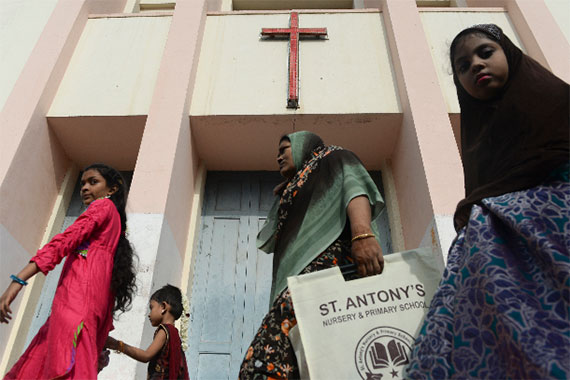
Top court’s education order upsets Indian Church officials
India’s Supreme Court has allowed the government to control the appointment of teachers in educational institutions run by religious minorities, a ruling Church leaders say violates their right to manage such institutions.
The country’s top court on Jan. 6 upheld a West Bengal State law that allowed a government commission to screen candidates to be appointed as teachers in government-funded madrasas, Muslim religious schools.
“The order definitely will have a bearing in the administration of Church-run education institutions too,” says Salesian Father Joseph Manipadam, secretary to the Indian Catholic bishops office for education and culture.
The verdict came while deciding on an appeal challenging a provision in the West Bengal Madrasa Service Commission Act 2008, which said the government panel could screen teachers to be appointed to state-aided Madrasas.
Madrasas were declared minority education institutions in West Bengal State, just as thousands of Christian schools in the country. The Indian Constitution allows religious and linguistic minorities to establish and manage educational institutions of their choice to help with the social advancement of their people.
The Catholic Church runs some 54,000 educational institutions in the country and at least half of them get financial aid from the state. With this order, “our right to administer our institution is curtailed. Freedom to appoint teachers is also part of the administration,” Father Manipadam told UCA News on Jan. 9, three days after the top court pronounced.
The provisions were challenged in 2013 before the West Bengal State’s Calcutta High Court on the grounds that they violated the rights of minority institutions. The single-judge bench of the High Court allowed the challenge and found the provisions to be unconstitutional.

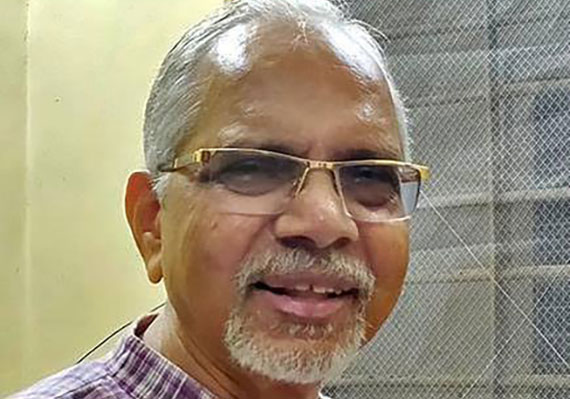
Hindu group opposes Christian president of Marathi literature festival
Veteran poet N.D. Mahanor on January 9 opened All India Marathi Literature Festival amid tight security in view of threats from right-wing Hindu organizations.
The groups had warned Mahanor, a Padma Shri and Sahitya Academy awardee—not to inaugurate the festival as a Christian priest, Father Francis D’Britto, presided over the festival. The priest is a Marathi writer.
The literature festival was held on January 10-12 in Osmanabad in Maharashtra, some 410 km southeast of Mumbai, the state capital. “I have been getting calls since January 1 asking me not to attend the festival as a Christian man is the president. Akhil Bharatiya Brahman Mahasabha had sent a letter asking me not to inaugurate the event, as they would be protesting at the venue. But there was no question for me not to inaugurate the festival.” Mahanor told News Click.
Anand Dave, secretary of All India Brahman Mahasabha (grand council of Brahman), said his organization did not threaten the 78-year-old litterateur. “We requested him not to inaugurate the festival that is presided by a Christian priest. We did not want him to witness our protests at the venue,” he said.
However, Mahanor’s close aides have said that repeated calls and “requests” in harsh words constitute a threat to a septuagenarian. Mahasabha and other right-wing organizations have been opposing selection of Father D’Britto as the president, even as he has been selected following a democratic process. Members of the Marathi Sahitya Parishad, which holds the festival every year, vote for contestant writers to select the president. Father D’Britto, a recipient of Sahitya Academy Award in 2014, was born and brought up in Vasai near Mumbai.

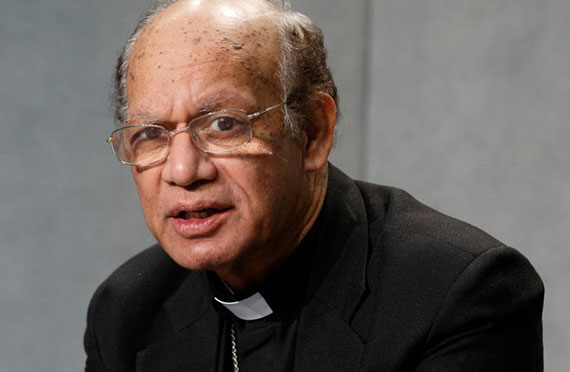
CAA: India’s Church leaders warn against dividing country
India’s leading cardinal has called the country’s controversial Citizen Amendment Act “a cause of great anxiety for all citizens.”
Cardinal Oswald Gracias, the Archbishop of Bombay and president of the Catholic Bishops’ Conference of India (CBCI), made his comments on Jan. 8 at a ceremony in Benaulim, Goa, inaugurating a new extension of the secretariat of the Conference of Catholic Bishops of India (CCBI). The CBCI is for all bishops in India – Latin and Eastern Rite – while the CCBI is for the country’s Latin Rite bishops. The Citizenship Amendment Act was passed on Dec. 12 by India’s parliament, and establishes a mechanism for undocumented migrants from Pakistan, Bangladesh and Afghanistan to gain Indian citizenship. How-ever, the law only applies to Hindu, Sikhs, Buddhists, Jains, Parsis and Christians, meaning Muslims are excluded.