Category Archives: National

Christian women express outrage over spraying disinfectant on workers

A national body of women belonging to various Christian denominations has expressed shock and outrage over the spraying of disinfectant on migrant laborers.

“Even as the whole country is battling an intense and grueling confrontation with the Corona crisis, we the members of want to express our deep shock and horror at the treatment being meted out to hapless migrant workers who were today,” says a March 30 statement from the Indian Christian Women’s Movement.

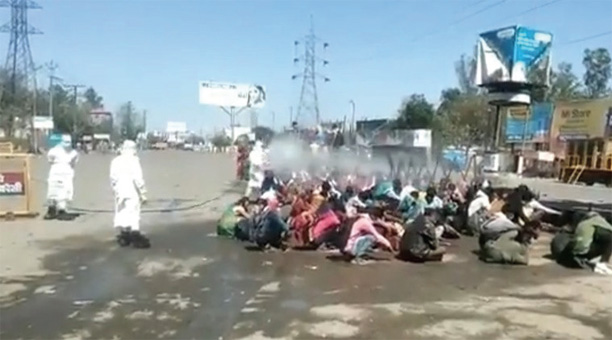
Footage on the same day showed a group of migrant workers sitting on a street in Bareilly, a district in the northern state of Uttar Pradesh, as health officials in protective suits used hosepipes to douse them in disinfectant, prompting anger on social media.

Coronavirus: Indian Church urged to care for stranded migrants

Catholic bishops of Ranchi, eastern India, have appealed their fellow prelates to reach out to millions of migrant laborers stranded in the country by the 21-day national lockdown.

“These are difficult times and even as we live in lockdown and make every attempt to keep ourselves safe, thousands of migrants are stuck where they are, not knowing where to go or have hit the road with their families and children without transport, monetary means or alimentary provisions,” says the March 28 appeal from Jesuit Archbishop Felix Toppo of Ranchi and Auxiliary Bishop Theodore Mascarenhas.

Indian Prime Minister Narendra Modi at 8 pm on March 24 ordered the nationwide lockdown from the midnight of that day as way to prevent spread of the Covid-19. It limits the movement of the country’s 1.37 billion people for 21 days.

The lockdown was preceded by a 14-hour voluntary public curfew on March 22.

Archbishop Felix Toppo The lockdown has caught millions of migrants and daily wagers off guard, leaving them no time to return home. Hundreds of thousands of them are now seen stranded at bus or railway stations or walking to their villages hundreds of kilometers away.

The bishops of Ranchi, who made the appeal a day after Pope Francis conducted “Urbi et Orbi” (to the city [of Rome] and to the world), the most solemn prayer in the Catholic Church.

Catholic religious urged to reach out to lockdown-affected

India’s more than 115,000 Catholic religious men and women have been urged to reach out to the poor affected by a 21-day national lockdown to contain the spread of the coronavirus pandemic.

“We need to move fast. This is an emergency,” says Father Joe Mannath, national secretary of the Conference of Religious India (CRI), the association of the major superiors.

In a March 29 letter to the heads of more than 550 congregations for men and women serving India, the Salesian priest says they should not wait for “perfect or easier” way to help hundreds of thousands poor migrant laborers stranded by the lockdown at various parts of the country.

Prime Minister Narendra Modi announced the lockdown at 8 pm on March 24, just four hours before it was imposed all over the country, taking millions of migrant workers off guard.

Father Joe Mannath says the migrant workers, who now struggle to get back to their home states, urgently require provide shelter and food.

“God waits for our response. He is suffering in our suffering brothers and sisters,” says the CRI official’s letter that lists of a set of “dos” and “don’ts” for the religious to follow to protect from the highly contagious virus.

As on March 29, the coronavirus affected a total of 1,024 people across India. A federal Home Ministry statement said the epidemic has also claimed 27 lives so far.

Delhi riots 2020: A milestone on the march to a Hindu nation

The Delhi riots of Feb. 23-27 provide harrowingly detailed narratives of the horrors of what Hindu sectarian politics has done to India, the world’s largest democracy, over the last seven decades.

After the riots in individual pockets of the capital, one could find Hindus and Muslims sharing food, echoing sentiments of brotherhood and harmony. But as one steps into northeast Delhi, the hub of the riots, the ugly face of the Hindu-Muslim divide is palpable.

Even on Feb. 29, when police said the riots were over, mobs were still shouting “Hinduon ka Hindustan” (India belongs to Hindus). In a violence-hit area, a Hindu shopkeeper was more vocal. “They have seen Hindus are not meek,” he said.

The riots provided a new but controversial slogan: “Desh ke gaddaro ko, Goli Maro salon ko” (Shoot down the traitors of the nation). The word “traitor” has somehow become synonymous with people who publicly oppose the idea of a Hindu nation and policies geared to that end. By extension, it came to mean Muslims. The slogan, publicly and brazenly, is a call to shoot down Muslims.

The Delhi riots have some ironic links to the February 2002 riots in Gujarat which killed some 2,000 people, mostly Muslims. Comparatively, the 46 deaths in Delhi could be regarded as insignificant, but the recent violence shows the definitive and advancing march toward a Hindu nation, a journey that began to take graphic shape 18 years ago in Gujarat.

Archbishop asks Indian state government to return Christ statue to cemetery

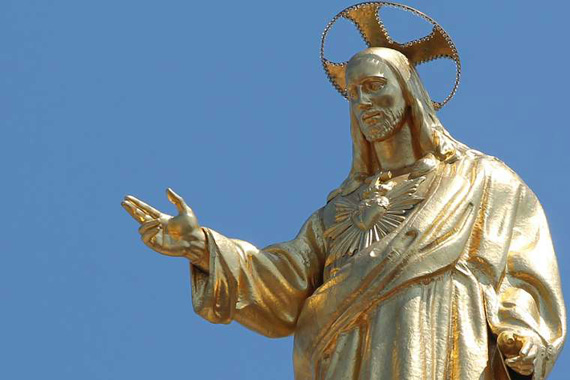
The Archbishop of Bangalore decried on March 4 the removal of a statue of Christ from a Christian cemetery. The statue was taken down after complaints from non-local Hindus.

“It is very sad, unfortunate and regrettable that the police, bowing to the pressure of a few outsiders, have forcefully removed the statue of Lord Jesus,” Archbishop Peter Machado wrote on March 4 at AsiaNews.

“It is a blow to the communal harmony of the people in our villages and also violation of the religious freedom guaranteed to us by the Indian Constitution.”

The 12 foot tall statue was taken down on March 3 from Mahima Betta cemetery in Doddasagarahalli, more than 30 miles north of Bangalore in India’s Karnataka State.

India’s ruling political party, the Hindu nationalist Bharatiya Janata Party, has been increasingly hostile to religious freedom for minorities. The BJP also controls the government of Karnataka.

According to Archbishop Machado, Christians have been making devotions at the cemetery “for the last 30 to 40 years with-out any difficulty,” and “there is absolutely no problem from local people to our burials, nor our prayers and devotions on the hill.”

He noted that for the past week or so “some people from outside have been creating tens-ions by spreading wrong rumors that the place is used for con-version, which is completely far from the truth.”

“The local villagers have publicly said that the presence of Christians and their prayers are absolutely no problem for them and, this being the case, why should some outsiders come and disturb the harmony of the village,” the archbishop asked.

Women petition Cardinal Gracias for more decision-making roles

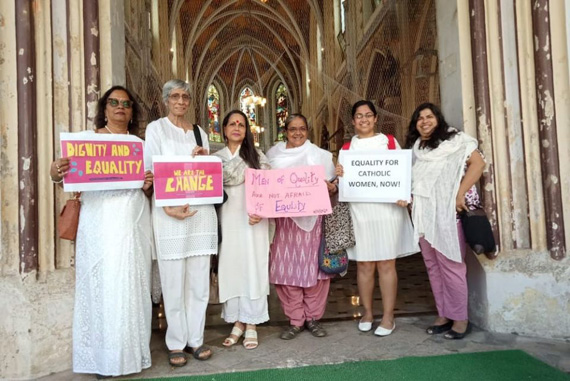
About 150 Catholic women in India have delivered a petition to Cardinal Oswald Gracias, asking that he take concrete steps to better include women in decision-making roles in the global church.

The women are partly responding with Gracias, in which the cardinal acknowledged a bias among the members of the Catholic Church’s all-male hierarchy against giving women more leadership roles. In that interview, he also said he and his peers must “shed this prejudice.”

The three-page memorandum praises Gracias’ words in the interview, but asks for “changes in the policies, practices and structures of the Church so that women can participate fully in … leadership.”

Support independent Catholic news. Gracias is the archbishop of Mumbai, president of the Catholic Bishops’ Conference of India and one of six members of Pope Francis’ Council of Cardinals. The petition was partly drafted by Astrid Lobo Gajiwala, a medical doctor and scientist who has served as a consultor to the bishops’ conference and helped draft the organization’s gender policy.

Some of the strongest language in the petition refers to that policy, passed in 2010 and the first of its kind in the global church. The policy said the Indian Church “rejects all types of discrimination against women as being contrary to God’s intent and purpose,” according to the memo.

Catholic groups team up to help Delhi riot victims

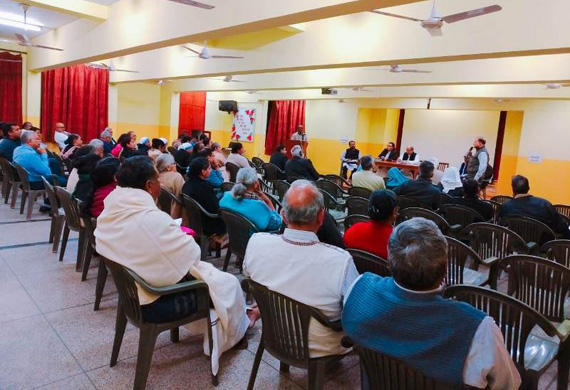
Various groups of Catholics in Delhi have decided to pool their resources and personnel for relief and rehabilitation works among the victims of sectarian violence in the national capital.

They met on March 10 under the leadership of Archbishop Anil Couto of Delhi and decided to work under the banner of the archdiocese and witness Christian services of love and compassion.

Presentation Sister Anastasia Gill, a member of the Delhi Minority Commission and among the first Christians to reach out to the riot victims in northeastern Delhi, narrated her painful experience in Shiv Vihar, a worst affected area.

She suggested the CRI members to join the local parish priest and heads of various institutions to send volunteers to help in distribution of relief material and to counsel women and children traumatized by the riots.

A legal team led by Jesuit Father Arun will help file First Information Reports and monitor people’s security requirements.

Retired bishop becomes assistant parish priest

Bishop Sebastianappan Singaroyan, who resigned as the head of Salem diocese for health reasons, has moved to a parish to work as an assistant pastor.

Pope Francis on March 9 accepted the resignation of the 68-year-old bishop and appointed a diocesan administrator.

Bishop Singaroyan, who resigned seven years before the statutory age of retirement for a bishop, says he wants to serve his people as an assistant pastor.

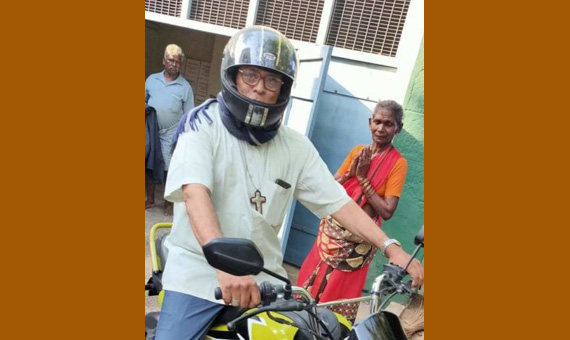
He left the bishop’s house on March 11 after 19 years as the prelate of the diocese in Tamil Nadu State. He now lives in Karpur Annai Velankanni substation church on the outskirts of Salem city. He went there riding his motorbike.

“The staff at Bishop’s House gave him farewell with tears,” says a Facebook post.

Bishop Singaroyan was known for his simple ways. When he was the bishop he used to travel by bicycle to nearby communities and by motorbike to far distances.

Covid-19: Religious leaders in India urge precautions

Two Catholic prelates and a Hindu religious leader were among those calling for precautions in the wake of growing scare over coronavirus or COVID-19.

Cardinal Oswald Gracias, president of the Catholic Bishops’ Conference of India, has asked his people to take five precautionary steps during religious services until April 12, the Easter Sunday, to check the spread of the virus.

Archbishop Kuriakose Bharanikulangara of Faridabad Syro-Malabar Church has issued 10-point guidelines for his people spread over five states to follow during the epidemic scare.

Meanwhile, Mata Amritanandamai, a Hindu religious leader popularly known as the hugging saint, has stopped meeting followers in her ashram in Vallikavu in Kerala’s Kollam.

Trump praised for raising issue of religious freedom in India

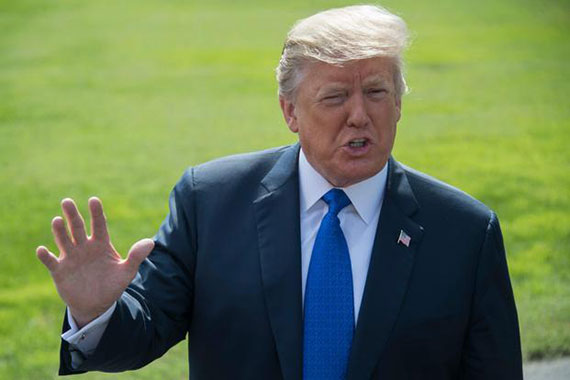
An organisation of Indian-American Christians has thanked US President Donald Trump for raising the issue of religious freedom and the plight of minorities during his talk with Prime Minister Narendra Modi, saying political tranquillity is fundamental to economic progress.

The Federation of Indian American Christian organisations in North America (FIACONA) said it “truly hopes” that the Indian government would respond positively to the concern expressed by the president that would be in the best interest of the country. Asked specifically about allegations that Muslims are being subjected to discrimination and there have been rising cases of hate crime in India, Trump in New Delhi on February 25 said: “We did discuss that and specifically Muslims. We also discussed Christians.”

“I had a very powerful answer from the Prime Minister. We talked about religious liberty for a long period of time in front of lot of people. I had a very very powerful answer I think,” he said.

Reacting to the remarks of Trump, president of FIACONA Koshy George said: “Although we lack any substance from their discussions, we are encouraged to see that the president took the opportunity to include the issue of religious freedom as a priority item at these important bilateral discussions with Prime Minister Modi.”

Despite the best efforts to showcase India in a positive light, the world is also watching the ongoing violence “as a result of the policies enunciated by the current BJP regime,” said John Prabhudoss, chairman of the FIACONA.

“Political tranquillity is fundamental to economic progress, and by promoting the policies that drive the country towards majoritarianism and intolerance, the Modi regime may be jeopardizing the prosperity of its ordinary citizens,” he said.

“We call upon the Prime Minister to uphold India’s constitution that guarantees freedom of conscience and religious freedom to every Indian,” Prabhudoss said.