A Catholic Church official has welcomed the Indian government’s decision to appoint a commission to examine if Dalits who converted to Christianity or Islam can be accorded Scheduled Caste (SC) status.
The federal government in a notification issued on Oct. 6 announced the setting up of a three-member inquiry commission headed by former Chief Justice of India, Justice K.G. Balakrishnan, to look into granting SC status, its implications and submit a report within two years.
However, Dalit Christian leaders dismissed this as a tactic to delay their recognition as SCs, the official name for former untouchables in the country.
The SC status will ensure them a share in the 15% reserved quota in parliament and state legislatures, government jobs and education, at present extended only to Dalits belonging to Hindu, Sikh, or Buddhist religions
“It is a welcome move. We have to take it positively as it will give us an opportunity to highlight the issues plaguing our brothers and sisters,” Bishop Moses D Prakasam, a member of Indian Bishops’ Conference’s Office of Scheduled Castes and Backward Classes, told on Oct. 8.
Category Archives: National


Plan to end Sikh-Christian ‘conversion’ rift in India
Representatives of different faiths in New Delhi have begun work to establish peace between Christian and Sikh minorities at loggerheads in Punjab over religious con-versions. The growing number of churches and churchgoers in the Sikh-majority state in north India has led to sporadic friction with Sikh religious organizations who accuse Christians of using forceful and fraudulent means of conversion.
A C Michael, convener of the Concerned Citizens Group in New Delhi said in a press note issued on Aug. 12 that the group at its recent meeting decided to meet Delhi Chief Minister Arvind Kejriwal, who is also the founder and leader of the Aam Adami Party (AAP) that rules Punjab.
The interreligious group “feels that the good offices of Mr. Kejriwal could play an important role in bringing about a much-needed peaceful atmosphere between two clashing groups as Mr. Kejriwal enjoys the goodwill of both communities,” Michael said. AAP’s Punjab Chief Minister Bhagwant Mann had called the latest attack on a church “unfortunate” and assured he will not allow anybody to disturb the communal harmony in the state.
In the attack on Aug. 31, masked men had vandalized a church in Tarn Taran district, on the border with Pakistan, and set the pastor’s car on fire.
A day before the Tarn Taran incident, Giani Harpreet Singh, head of Akal Takht, one of the highest seats of power for the Sikhs, had condemned alleged forced con-versions by Christian groups and demanded a law against such activities.
Earlier, a group of armed Nihang Sikhs reportedly disrupted an event organized by Christians at a village in the Amritsar district on August 28.
The group in Delhi in their attempt to build peace brought together representatives of Christians, Sikhs, Hindus and Muslims to work out an action plan.
It also proposes to have Christians, both denominational and non-denominational groups, initiate a dialogue among themselves.
The group also has plans to visit Punjab for a dialogue with all affected people and to undertake a fact-finding mission to establish the truth behind the alleged religious conversions in the state.
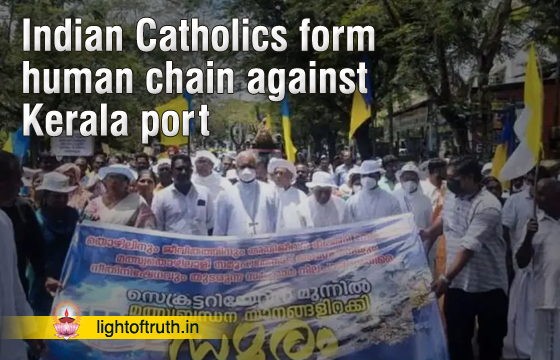
Indian Catholics form human chain against Kerala port
Catholics in the southern Indian state of Kerala formed a 17-kilometre-long human chain to support an ongoing fishermen’s protest against a multi-billion dollar Vizhinjam port project.
The human chain along the Chellanam-Fort Kochi coastal corridor on Sept. 10 was a show of solidarity against the project, which is a “man-made disaster,” said Father Jacob G Palakkappilly, spokesman of the Kerala Catholic Bishop’s Council (KCBC).
Thousands of fishermen and their families including women and children have been protesting since July 20 demanding an immediate halt to work at the site of the Adani port at Vizhinjam, close to the state capital Thiruvananthapuram.
The Latin Archdiocese of Trivandrum is spearheading the protest as a majority of the fisher-men are Catholics and members of the archdiocese.
Archbishop Thomas J Netto in his latest pastoral letter appeal-ed to Catholics to expand the protest across Kerala as the state government refused to stop construction work.
The letter was read out in churches across the archdiocese during Sunday Mass on Sept.11.
The unholy nexus between the politicians and the corporate company led to legal clearance”
The protesting fishermen, their families, bishops, priests and nuns from the archdiocese, are not alone as the entire Catho-lic community in the state is with them,” Father Palakkappilly told on Sept. 12.
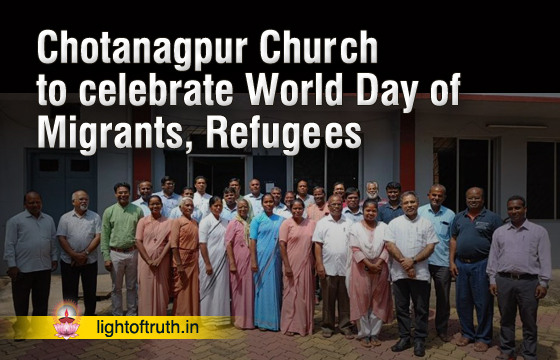
Chotanagpur Church to celebrate World Day of Migrants, Refugees
Distress migration from the east-central Indian region has prompted a Jesuit network to join the Latin rite bishops to organize programs to educate Church people about the exploitation of poor tribal people. A meeting organized by the Central Zone of the Migrants’ Assistance Information Network and the Commission for Migrants of Conference of Catholic Bishops of India (CCBI) has observed that thousands of tribals leave villages in Jharkhand and Chotanagpur areas to work in cities and other states in the country.
Their migration saw an increase year because of agriculture failure because of a drought, said the organizers of the September 10 meeting at Manresa House, the Jesuit provincial house in Ranchi, the capital of Jharkhand state.
The meeting has decided to celebrate the World Day of Migrants and Refugees on September 25 in all parishes and religious congregations in the region to create awareness about the distressing migration of poor tribal people from the region.
The Vatican section of the Migrants and Refugees have been organizing the World Day of Migrants and Refugees on the last Sunday of September. The message of Pope Francis for this year’s World Day of Migrants and Refugees is “Building the Future with Migrants and Refugees.” In his message the Pope explains that people cannot think of building a future that is not inclusive.
“We are all called to commit ourselves to building a future based on a new global system that better responds to God’s plan, a world where everyone can live in peace and prosperity.”

Odisha Church commemorates Father Arul Doss’ martyrdom
The Catholic Church in Odisha has observed the 23rd anniversary of the martyrdom of Father Arul Doss.
Father Doss, a priest of Balasore diocese, was killed by Hindu radicals on Sept. 2, 1999, in a remote village parish in Mayurbhanj district of the eastern Indian state.
More than 3.000 people, along with 30 priests and some 50 nuns and brothers, from Balasore and neighboring dioceses paid homage to the martyr at Jambani village that comes under Bagdapha parish.
Archbishop John Barwa of Cuttack-Bhubaneswar, head of the Odisha Church, in his homily said the large gathering proved the famous saying of Tertullian, “The blood of the Martyr is the seed of the Church.”
Archbishop Barwa paying tribute to Fr Arul Doss The Di-vine Word prelate also reminded the faithful the Jesus was victo-rious against the evil one. “We as His followers also will be able to overcome all evils by remaining steadfast to our Lord. We will never be defeated as long as we are with and in the Lord. Let’s therefore continue to practice and express our faith boldly, freely and share our faith with others so that one day they also will know Christ the redeemer.”
Father Jadu Marandi, former vicar general of Balasore and the current parish priest hailed Father Doss as a champion of the poor, needy and underprivileged Ho people. “Father Arul Doss has become a medium of God’s abundance blessings for the people of Odisha,” he added.
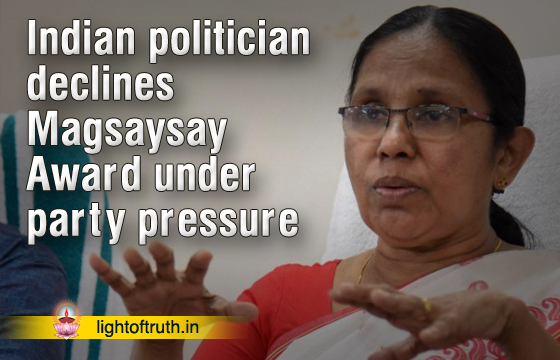
Indian politician declines Magsaysay Award under party pressure
A Marxist politician in a southern Indian state has declined the prestigious Ramon Magsaysay Award for 2022 reportedly under party pressure.
The Ramon Magsaysay Award Foundation had selected K.K. Shailaja, former health minister of Kerala state, for the 64th Magsaysay award for her commitment and service towards ensuring an accessible public health system and effectively managing the Nipah and Covid-19 outbreaks in the state. The award, a prestigious international honour, is regarded as the Asian equivalent of the Nobel Prize. It is named after Ramon Magsaysay, the seventh president of Philippines president, who died in a plane crash in March 1957. If Shailaja had accepted the award, she would have become the first woman from Kerala to receive Magsaysay. Under her tenure as the health minister, Kerala had won global recognition for its effective handling of the Nipah outbreak and the Covid pandemic.
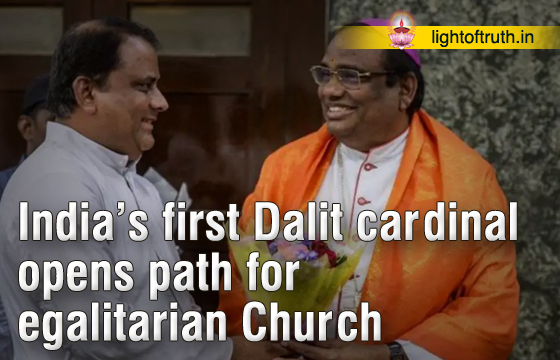
India’s first Dalit cardinal opens path for egalitarian Church
On Aug. 27, Pope Francis created 21 new cardinals at a consistory at the Vatican. The new cardinals include the first Indian cardinal from the socially poor Dalit community–Abp Anthony Poola of Hyderabad.
His appointment is seen as historical as it recognizes the Dalit Christian community, which continues to suffer caste discrimination within the Catholic Church.
The appointment of a Dalit as cardinal comes after three decades of public struggle by Dalit Christians against continuing caste discrimination and domination. For the past four years, they have been demanding to appoint Dalit bishops, especially in the Archdiocese of Pondicherry-Cuddalore. However, it has been prevented till now.
The struggles led by Dalit groups have been widely reported in recent times by some of the global Catholic media. And, this gesture of Pope Francis comes as a ray of hope for Dalit Christians. It also vindicates their struggle for justice and equality.
Caste discrimination against the Dalits started in the early days of Christianity in India. The early Provincial Councils of Goa in 1567, 1585, and 1606, forbade low castes and untouchables from joining seminaries.
The hierarchy continues that legacy even after several centuries.
“The appointment of a Dalit cardinal is a milestone in the history of the Church, particularly for Dalit Christians.”
For instance, when the first Dalit archbishop — Marampudi Joji of Hyderabad — was appointed two decades ago, several top Church leaders in India openly criticized the Vatican. “Rome is being taken for a ride. Rome does not know the ground realities,” said outgoing archbishop Samineni Arulappa of Hyderabad.
“If I say something, it will be interpreted as oppressing the oppressed, meaning the Dalits. Ninety-five percent of Hyderabad archdiocese’s priests oppose the appointment of Archbishop M. Joji. I give my successor less than five years in his new post. He has not remained more than three to four years in one place.” (UCA News, April 9, 2000)
Ironically, the first Dalit cardinal also comes from Hyderabad, where the first Dalit archbishop was installed 22 years ago.
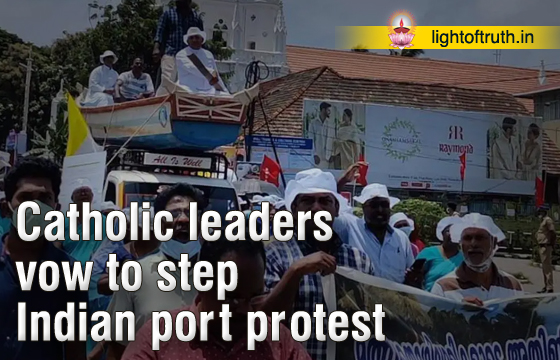
Catholic leaders vow to step Indian port protest
The protest by Catholic fishing communities seeking compensation from a multi-billion-dollar port project has entered its second month with their arch-bishop threatening to move his “stay and prayer” action to the protest venue in southern India.
“My stay and prayer will be moved to the protest venue from the archbishop’s house if required,” Archbishop Thomas Netto of Trivandrum said while addressing protesters in Kerala’s state capital on Aug. 23, as the protest entered its 34th day.
Thousands of fisherfolk under the leadership of archdiocesan bishops and priests have been protesting since July 20 against the multi-billion-dollar Adani Ports and Special Economic Zone on the coast of Vizhinjam.
They say the port endangers the livelihoods of fisher families, has displaced thousands of people and adversely affected the environment and caused coastal erosion.
The state government has ignored their demands which include suspending the project to study its environmental and social impact, rehabilitation of displaced people and employment for those who lost their livelihood and compensation for all who suffered damage.
“Fishermen and the Christian community believe Christ and the cross as everything in their lives. We know Christ died at the age of 33. His death brought liberation for humanity. We fight for justice trusting in Christ. We have nothing to lose,” said Arch-bishop Netto, a key figure in the protest who hails from a local parish.
“We are only asking the government to rehabilitate those who lost their houses.”
He announced the decision to intensify the agitation until the government accepts their demands. “I am ready to sacrifice my life for my people,” the arch-bishop said amid thunderous applause.
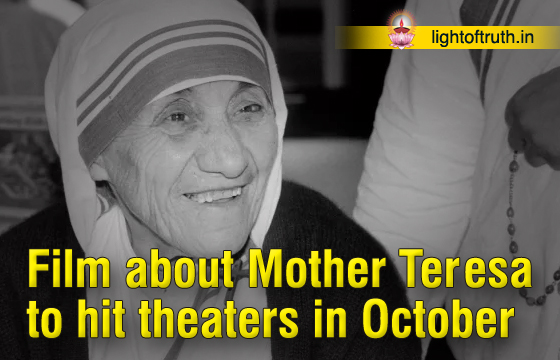
Film about Mother Teresa to hit theaters in October
A film presenting the life of St. Teresa of Calcutta, commonly referred to as Mother Teresa, will be premiering in theaters for two days in October.
In theaters Oct. 3-4, “Mother Teresa: No Greater Love” is airing in more than 960 locations across the United States. The film was produced by the Knights of Columbus, the world’s largest Catholic fraternal organization.
The film displays the life of the 20th-century saint and the impact both she and her Missionaries of Charity have had on the people they have served throughout the world. The Missionaries of Charity are a religious community dedicated to serving the poorest in society.
“The Missionaries of Charity are not publicity seekers,” David Naglieri, director of the film, told. “So, to have the opportunity to highlight the incredible work they do and the way that they live the Gospel, I think this story can positively impact people’s lives and draw them closer to their faith.”
Filmed on five continents, the documentary features “incredible access” to the apostolates run by the Missionaries of Charity, Naglieri said.
One of his favourite parts of the film includes footage in Kenya, where the Missionaries of Charity are caring for children with deformities and serious developmental disabilities.
The scene includes a Missionary of Charity sister feeding a baby with hydrocephalus, a condition in which fluid builds up in the brain.
“To see these children … and just the love and the care for that child was just something that deeply moved me,” he said.
“I think what sets this film apart is the fact that it comes 25 years after her death,” Naglieri said. “So it’s the first film that has had the chance to completely soak in her life, her legacy, and also deal with some of the information and revelations of Mother Teresa that came later.”
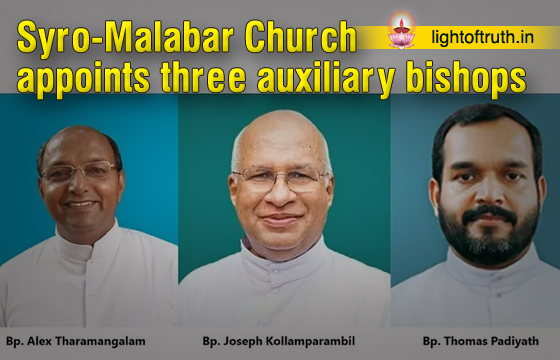
Syro-Malabar Church appoints three auxiliary bishops
The Syro-Malabar Church on August 25 announced the appointment of three auxiliary bishops for the larger of the two Oriental Catholic rites in India.
It also accepted the resignation of Auxiliary Bishop Jacob Muricken of Palai, who wants to lead an ascetic life.
Cardinal George Alencherry, who heads the Church as its Major Archbishop, appoint-ed Father Alex Tharamangalam as the auxiliary bishop of the eparchy of Mananthavady and Fathers Joseph Kollamparambil and Thomas Padiyath as auxiliaries of the eparchy of Shamshabad.
The announcement was made during the closing ceremony of second session of the Church’s 30th Synod of Bishops, after obtaining the assent of Pope Francis through the Apostolic Nuncio.
Since Tharamangalam is in Germany, he could not be present on the occasion. The other two were given the insignia by Cardinal Alencherry together with Bishop Raphael Thattil Shamshabad.
With the three new prelates, the Church has a total of 65 bishops, retired as well as active.
Bishop-designate Tharamangalam, a priest of the archdiocese of Thalassery, was born in 1958. He began his priestly forma-tion in the minor Seminary at Thalassery in 1973 and was ordained a priest on January 1, 1983. He holds a doctorate in philosophy from the Gregorian University, Rome.
Bishop-elect Kollamparambil, who was born in 1955, began his priestly training at the minor seminary of Palai diocese. He was ordained a priest on December 18, 198. He has served in several parishes of Palai diocese. Having secured a Master’s from St. Thomas College, Palai, he served as a lecturer, bursar and warden of the college hostel.
Bishop-elect Padiyath, a priest from the archdiocese of Changanacherry, was born in 1969. He entered the minor seminary in 1984 and was ordained a priest on December 29, 1994. He started his priestly ministry as the assistant vicar in Athirampuzha parish and secretary to Archbishop Joseph Powathil of Changnacherry. He has a doctorate in philosophy and a Master’s in theology from the University of Leuven, Belgium. He served as a professor at Good Shepherd Major Se-minary, Kunnoth in Kannur district. He has taught in several major seminaries and In-stitutions. He is currently serving as Syncellus in the Archeparchy of Changanacherry.