Category Archives: International

Vatican Christmas tree arrives in St. Peter’s Square

A 25-meter-tall red fir tree is now standing in St. Peter’s Square. This year, the tree comes from the Val d’Ultimo area in the province of Bolzano and was given by the municipalities of Lagundo and Val d’Ultimo, located in the northern part of Italy.

The province of Bolzano is known for its extraordinary beauty filled with lakes, forests, mountains, and meadows. After thorough examination, the forest guard service selected the tree.

As is tradition, in addition to the main tree, 40 smaller trees will also be brought to the Vatican and be placed in different offices and buildings of the Holy See. More mature trees are chosen as part of a natural renewal process.

Bishop Ivo Muser of Bolzano-Bressanone explained “the felling of the tree is not an act of disrespect but the result of careful forest management, where tree removal is part of an active care strategy that ensures the health of the forest and control its growth.”

In the area of South Tyrol—where the two cities are located—reforestation is seen as more than a simple project. It is, as the bishop noted, “an established practice and a cornerstone of sustainable forest management, where for every tree felled, new ones are planted, ensuring healthy and resilient forests for future generations.”

Part of this green perspective is that following the close of the Christmas season, essential oils are set to be extracted from the tree’s branches by the Austrian company Wilder Naturprodukte. The remaining wood will be donated to a charitable organization to be repurposed, in keeping with the guiding principles of environmental stewardship.

The Vatican Christmas tree tradition began in 1982 with Pope John Paul II when he received a Christmas tree as a gift from a Polish farmer, who had brought it all the way to Rome. Since then, the offering of the Christmas Tree to the Pope has become an honour, and each year the Vatican accepts a tree donated by a different European country or region.

Pontifical Yearbook now available online with information on global Church

From December 8, the Solemnity of the Immaculate Conception, the Annuarium Pontificium—the Holy See’s official Pontifical Yearbook—is available in a fully digital version, accessible via web browser and mobile app. The new platform offers data on the Dicasteries of the Roman Curia, Dioceses, Religious Institutes, and Apostolic Nunciatures. The project was jointly developed by the Secretariat of State and the Dicastery for Communication, and was presented recently to Pope Leo XIV.

Accompanied by Archbishop Edgar Peña Parra, Substitute of the Secretariat of State, and Msgr. Lucio Adrián Ruiz, Secretary of the Dicastery for Communication, together with other representatives of the two Dicasteries, Pope Leo effectuated the first login and navigated the platform himself.

“Thank you for this work, which will be of great use for many who work in the service of the Church,” said the Pope to those present at the launch event. He encouraged them “to continue with this spirit of service, so that what is born with care and attention may, in time, become an even greater help.”

Heir to the medieval Liber Pontificalis (the collection of papal biographies), the Pontifical Yearbooktook shape in the mid-twentieth century as an essential reference for anyone needing official information on the Catholic Church throughout the world.

Now that same corpus can be searched online, marking a significant step in updating and modernizing the information tools at the service of the universal Church.

According to a statement from the Secretariat of State, access from any device—via browser or app—overcomes the logistical limits of the printed volume and makes the informational patrimony of the Holy See consultable.

Zurich ends ‘missio canonica’ dismissals for church employees

New employment regulations in the Swiss canton of Zurich mean Church employees cannot be dismissed for failing to follow Catholic teaching.

“What has long been guaranteed in civil law now also applies to employment in the church,” the Diocese of Chur said, announcing that the revocation or withholding of the episcopal missio canonica – which confirms compliance with doctrine and moral teaching – will no longer lead to an employee’s automatic dismissal.

In Switzerland, it is not dioceses and parishes that are the legal employers of church workers, but rather church corporations governed by public law. These corporations are democratically organised and cover the area of a canton, which does not correspond with dioceses.

Referring “to the social reality in Switzerland that there is nowadays greater openness to life forms that were previously taboo”, the canton said the new regulations instead require employees to be willing “to respect the Christian character of the institution and to contribute to making it effective in one’s own area of responsibility”.

“Relationships, sexual orientation, and lifestyle, particularly the intimate sphere … are excluded from legal assessment and do not constitute a criterion for employment,” it said. A person’s private life cannot constitute “unsatisfactory behaviour” that is reasonable grounds for dismissal, though Church discipline for priests, deacons and Religious is exempt.

Zurich’s statement said the regulations were agreed in negotiation with Bishop Joseph Maria Bonnemain of Chur, whose diocese covers the entire canton.

In November, the Swiss bishops’ conference issued a “status report on the practice in Swiss dioceses with regard to the connection between episcopal authorisation” for pastoral work. While emphasising the “uniqueness of each life situation” and rejecting a “rigid set of rules”, the report did not say that a person’s private life could not be grounds for dismissal.

Five theologians from Lucerne called the report an “abuse of power” and challenged the bishops to change their approach. The reform group “Allianz Gleichwürdig Katholisch” demands the separation of missio from private lives, accusing the bishops of failing “to develop the necessary changes to make the Roman Catholic Church in Switzerland a discrimination-free working environment for pastoral workers”.

Venezuelan authorities prevent Cardinal Porras from traveling, cancel passport

On December 10 Venezuelan immigration police confiscated and invalidated the passport of Cardinal Baltazar Porras, the archbishop emeritus of Caracas, as he was preparing to travel to Bogotá, Colombia, from Simón Bolívar International Airport in Maiquetía. According to the Grand Priory of the Military and Hospitaller Order of St. Lazarus of Jerusalem in Venezuela, on December 10th morning the cardinal “was subjected to humiliating treatment” by airport authorities under the government of Nicolas Maduro.

From Bogotá, Porras was scheduled to take a flight to Madrid and then travel to Toledo, where he was going to participate in the solemn ceremony that would invest him as Spiritual Protector of the Order of St. Lazarus in Venezuela. Accompanying the cardinal were Grand Prior José Antonio Rodríguez and his wife, who were allowed to board the plane.

“Immigration police officers unjustly detained His Eminence Cardinal Porras [along with] the Grand Prior with his wife. The cardinal’s Venezuelan passport was confiscated and invalidated, preventing him from boarding his scheduled flight to Bogotá, with a connection to Madrid,” the order explained in a statement.

“Even though His Eminence presented his Vatican City State passport, issued by virtue of his dignity as a cardinal and with the diplomatic prerogatives that correspond to him as a prince of the Catholic Church, he was denied boarding. The cardinal was subjected to humiliating treatment, including a search of his personal belongings and clothing, with the use of drug-sniffing dogs, while his luggage was removed from the plane,” the statement added.

In a statement addressed to the bishops of Venezuela, Cardinal Porras recounted what happened at Simón Bolívar Airport, noting that “the most common experience in this last quarter of a century is to suffer almost constantly, with few exceptions.” Upon reviewing his passport, immigration police told him that he appeared as deceased in the identification system. The cardinal also reported that he was followed even into the restroom by the soldiers who prevented him from traveling.

“We are in the Christmas season. Strength lies in the weakness of the manger, in the fragility of the truth that is built in peace, without violence and without abuse. Hope comes through continuous work for the good of all, especially the excluded,” the archbishop emeritus of Caracas stated.

Pope defends ‘Christian Europe’ after rebuking US policy

Pope Leo said Europe’s “Judeo-Christian roots” are the only way to understand its identity, after criticising US policy on the continent. At an audience in Rome with members of the European Conservative and Reformist (ECR) group of the European Parliament, the Pope praised “the rich ethical principles and patterns of thought that are the intellectual patrimony of Christian Europe.” “These are essential for safeguarding the divinely bestowed rights and inherent worth of every human person, from conception to natural death,” he said. “They are likewise fundamental for responding to the challenges presented by poverty, social exclusion, economic deprivation, as well as by the ongoing climate crisis, violence and war.”

He had voiced concerns about the US peace plan to end Russia’s war in Ukraine, warning that it excludes Europe from negotiations. He told reporters that “unfortunately, some parts of it that I have seen make a huge change to what was for many, many years a true alliance between Europe and the United States”.

Leo has previously insisted that peace negotiations must include contributions from European powers. Critics of the plan, which demands significant territorial and diplomatic concessions from Ukraine, warn that it accepts Russian demands and undermines Ukrainian and European security. 

Ukraine’s President Volodymyr Zelenskyy had visited the Pope at Castel Gandolfo earlier on Tuesday as he toured European capitals to rally support after a series of unfriendly diplomatic interventions from the US.

In an interview with the Politico website broadcast, US President Donald Trump said many European nations were “decaying” and “will not be viable countries any longer” due to immigration – which he blamed on “weak” leaders who had also failed to bring peace in Ukraine.

During his remarks at Castel Gandolfo, Pope Leo said that “remarks that are made about Europe, also in interviews recently, I think, are trying to break apart what I think needs to be a very important alliance [between Europe and the US] today and in the future”. “I believe Europe’s role is very important, and the unity of European countries is truly significant, especially in this case,” he said.

“Trying to reach a peace agreement without including Europe in the discussions is not realistic. The war is in Europe, and I believe that Europe must be part of the security guarantees sought today and in the future.”

He continued: “Unfortunately, not everyone understands this, but I believe there is a great opportunity for the idea of Europe to come together and seek solutions collectively.”

COMECE expresses concern over EU Court judgement on same-sex marriage

The Commission of the Bishops’ Conferences of the European Union (COMECE) has expressed concern about a recent ruling by the Court of Justice of the European Union, which obliges all member states to recognize so-called “homosexual marriages” legally performed in another country.

In a Dec. 9 statement, the president of COMECE, Bishop Mariano Crociata, warned that the ruling could have an impact on the legal sovereignty of each nation, since the recognition of these unions is mandatory even if they are not valid under a country’s own legal system.

The ruling concerns a same-sex Polish couple who “married” in Germany in 2018. Upon returning to Poland, the authorities refused to record their union in the civil registry. The European court has deemed this refusal contrary to EU law, meaning that all member states are now obligated to recognize the rights stemming from this bond.

On behalf of the Church in Europe, Crociata referred to the Church’s anthropological vision, “founded on natural law,” and reiterated that marriage is a “union between a man and a woman.” In this context, the Italian prelate pointed out that the ruling restricts the rights of each nation, especially those in which “the definition of marriage is part of their national identity.” In his opinion, the ruling could generate “pressure to amend national family law” and also increase “legal uncertainty.”

Currently, almost half of the European Union countries have not legalized same-sex unions: Poland, Bulgaria, Cyprus, Slovakia, Hungary, Italy, Latvia, Lithuania, the Czech Republic, and Romania. In this regard, the bishops emphasized the need for “a prudent and cautious approach” to family law with cross-border implications and urges avoiding “undue influence” on national legal systems in Europe.

Haitian bishops call for hope and change in a Christmas message

Ahead of the Christmas season, the Episcopal Conference of Haiti (CEH) issued a message with the biblical theme, “The light of Christ shines in our darkness”. In it, the bishops spoke to a population “tested, journeying through the dark of night of uncertainty and pain”. Yet, the statement stressed that the Haitian people are capable of “unexpected achievements.”

In the message, released on 8 December, the CEH highlighted how Jesus was born “in the shadow of poverty”—something they argued with which many people in Haiti can resonate deeply. Especially in the midst of this Jubilee Year of Hope, the bishops noted that Christ’s birth can be a source of hope to everyone.

However, their statement was not one of naivety. It did not call for Christian hope to be an escape from the challenges of reality, nor a “superficial optimism”. Rather, the bishops described this Christian, Christmas hope as a push towards responsible and resolute action.

In Haiti, gang violence has killed at least 4,388 people between January and September, according to the UN’s office in Haiti, BINUH. Some 1.4 million people have been displaced, and more than half of the population of almost 12 million are facing acute food insecurity.

Despite the current challenges in the country, the Haitian bishops encouraged everyone—no matter their vocation or age—to continue their mission to be “peacemakers”.

Another sign of hope that the bishops praised was the 2026 World Cup qualification of the national football team, which they called a symbol of the Haitian people’s capacity to overcome division. Concluding their statement, the CEH entrusted the country to the “Prince of Peace” Jesus Christ and placed Haiti under the protection of the Virgin Mary. The bishops expressed their hope that Christmas will spark renewed hope for meaningful change by 2026.

Vatican commission votes against ordaining female deacons

A Vatican commission studying the possibility of female deacons reported that the current state of historical and theological research “excludes the possibility of proceeding” toward admitting women to the diaconate, a conclusion that slows momentum on one of the church’s most debated questions while stopping short of a definitive no.

In a letter sharing the results of its work with Pope Leo XIV and released by the Vatican Dec. 4, the commission reported a 7-1 vote in favour of a statement concluding that the church cannot currently move toward admitting women to the third degree of holy orders, the diaconate. 

“In light of Sacred Scripture, Tradition, and ecclesiastical teaching, this assessment is strong, although it does not allow for a definitive judgment to be formulated at this time, as in the case of priestly ordination,” said the approved statement voted on in 2022.

Why only eight votes were recorded from the 10-member commission was not explained in the letter.

The “third degree” of the holy order refers to the diaconate as the foundational degree of ordained ministry. The episcopate (for bishops) and the presbyterate (for priests) represent the two other degrees which the church teaches are above the diaconate in the hierarchy of ordained ministry. 

Yet a “purely historical perspective does not allow us to reach any definitive certainty,” wrote Cardinal Giuseppe Petrocchi, president of the commission, introducing the commission’s results. “Ultimately, the question must be decided on a doctrinal level. Therefore, issues relating to the ordination of women as deacons remain open to further theological and pastoral study.”

Pope urges educators in Africa to support youth seeking a better future

Pope Leo XIV has urged Catholic educators in Africa to help young people rediscover confidence in their future, especially those driven to leave the continent out of despair. His message, signed by Cardinal Secretary of State Pietro Parolin, was sent to Archbishop Gabriel Sayaogo for the African Congress on Catholic Education held in Nairobi from 4 to 7 December. The congress, titled “Catholic Education and the Promotion of Signs of Hope in the African Context,” focused on revitalising formation grounded in Christ. The Pope expressed appreciation for ongoing efforts to advance the Global Compact on Education, a commitment strongly supported by Pope Francis.

Pope Leo recalls that Catholic education aims not only to develop “cultivated minds” but also “full hearts” capable of compassion and concern for others. Young people, he notes, are “the wealth of Africa,” and educators must find effective ways to guide students toward the future with confidence.

He warns that many youths, discouraged by limited opportunities, leave the continent at great personal risk. Educators, he says, can help restore in them the belief that “nothing is lost” when they are accompanied by mentors who help them recognise their talents and set ambitious goals rooted in Africa’s cultural and moral strengths.

Drawing on his homily for the Jubilee of Families, the Pope highlights the family as the place where “the future of peoples is built.” He calls for protecting the family as intended by the Creator and promoted by the Church, guarding it against harmful ideologies. Many African leaders were formed in Catholic schools, he notes, yet the continent still faces significant challenges. He encourages educators to nurture two qualities essential for responsible leadership: solidarity and a spirit of sacrifice—values deeply rooted in African tradition and central to the Church’s mission of forming people committed to the common good.

“Education is not only a job but an evangelising mission,” the Pope concludes. Recalling his predecessor’s description of young Africans as potential “ambassadors of peace,” he urges all involved in education to form men and women who can become the builders of the continent’s future.

Pope: Visit to Türkiye and Lebanon teaches that peace is possible

At the Sunday Angelus on December 7 prayer following his visit to Türkiye and Lebanon, Pope Leo XIV thanked the many people who made it possible and the faithful who accompanied him with their prayers.

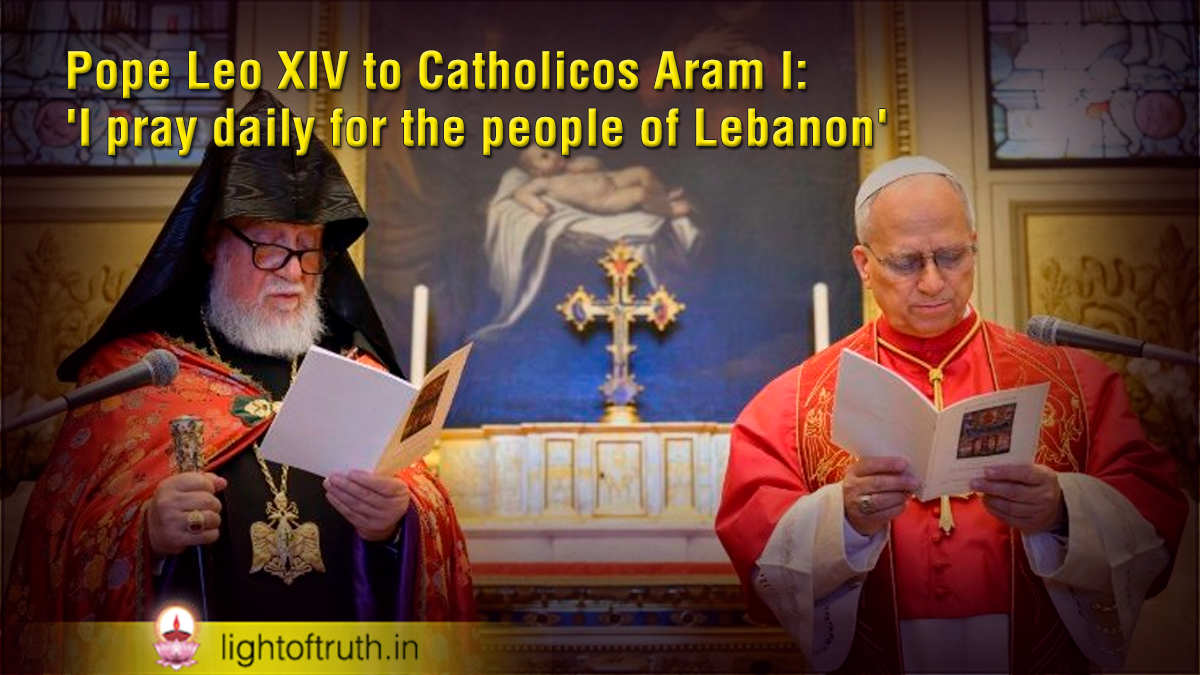
In Türkiye, he prayed with his “beloved brother Bartholomew, Ecumenical Patriarch of Constantinople, and the Representatives of other Christian confessions” at the site of the Council of Nicaea in 325, at modern-day Iznik. “Precisely today we mark the 60th anniversary of the Common Declaration between Paul VI and Patriarch Athenagoras, which put an end to the mutual excommunications,” he said. “Let us give thanks to God and renew our commitment to the journey toward the full visible unity of all Christians.”

Pope Leo expressed his joy for the opportunity to meet with the Catholic community of Türkiye, which he said bears witness to the Gospel of love in its patient dialogue and service to those who suffer.

Turning to Lebanon, the Pope said the country continues to be “a mosaic of coexistence,” saying he was encouraged to hear many people bear witness to that model. “I met people who proclaim the Gospel by welcoming the displaced, visiting prisoners, and sharing bread with those in need,” he said. “I was heartened to see so many people in the streets greeting me, and I was deeply moved by the meeting with the relatives of the victims of the explosion at the port of Beirut.” Even as he brought a word of consolation, said the Pope, he in turn receive much greater consolation from the Lebanese people’s faith and enthusiasm.

“What has taken place in recent days in Türkiye and Lebanon teaches us that peace is possible,” concluded Pope Leo XIV, “and that Christians, in dialogue with men and women of other faiths and cultures, can help to build it.”