Category Archives: International

Pope Francis appoints woman to senior Vatican position

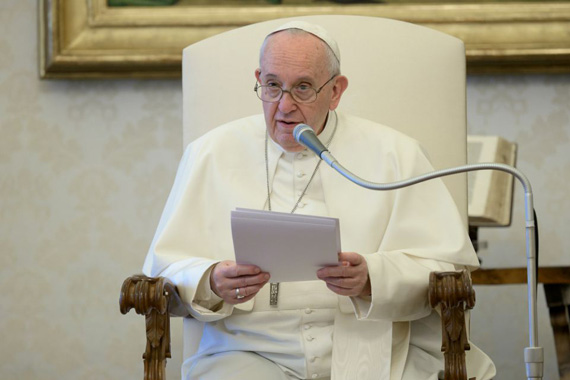
Pope Francis has announced that he is appointing a woman for the first time to a managerial role in the Secretariat of State, one of the most important departments in the Vatican.

Francesca Di Giovanni, who has worked at the Secretariat for 27 years, will be elevated to the position of undersecretary for the section for relations with states. She’ll manage the Vatican’s relationships with multilateral organizations such as the United Nations.

The Catholic Church’s leadership is almost completely male-dominated, and women are not allowed to be ordained as priests. In recent months, how-ever, Pope Francis has expressed a desire to include more women in decision-making roles.

Di Giovanni, who specializes in migrants and refugees and international law, says she was surprised to be appointed as undersecretary. “I sincerely never would have thought the Holy Father would have entrust-ed this role to me,” she said in an interview with Vatican News.

The Secretariat of State deals with the city-state’s operations and diplomatic affairs. Di Giovanni will be the first person to hold this particular position.

Former prostitutes among ex-nuns at Vatican shelter: Cardinal

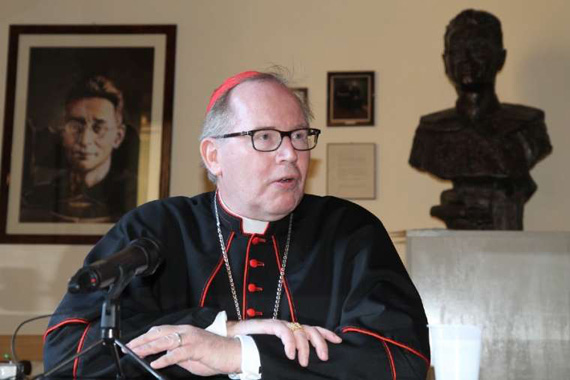
Former nuns “abandoned” by the Catholic Church, including some who became prostitutes to survive, have been sheltered at a Vatican residence for more than a year, a Brazilian cardinal said.

Cardinal Joao Braz de Aviz confirmed the house’s existence at an undisclosed location in the Vatican City during an interview for the February issue of the Vatican’s magazine Women Church World.

In the wide-ranging interview about women’s roles in the Church, Cardinal Braz said existence of the home underscored Pope Francis’ desire to rectify abuses within the Church, such as nuns who are expelled from their convents with nowhere to go. “At times they are completely abandoned,” the cardinal said, according to an advance copy of the issue released on January 23.

“But things are changing. The most significant example is precisely the Pope’s decision to establish in Rome a house to welcome in from the street nuns who were sent away by us, or by the superiors, especially if they are foreigners.”

Cardinal Braz said he had visited the home, and had found “a world of wounds there, but also of hope.” In some cases, mother superiors had withheld documents from nuns who wanted to leave the convent, and in others nuns were just told to depart.

Rebecca Long-Bailey: ‘My faith keeps me going’

Rebecca Long-Bailey MP, the current shadow business secretary and a practising Catholic, has become the sixth candidate to enter Labour’s leadership contest in Briton.

Long-Bailey struck a strongly left-wing note in her article that announced her campaign, pledging to rebuild Labour “as an insurgent force.” Linking constitutional reform with left-wing economic policy, she argued that her party must “go to war with the political establishment,” positioning herself clearly to the left of her competitors in the contest.

The former solicitor and one-time pawn shop employee has referenced her faith publicly on several occasions.

A graduate of The Catholic High School, Chester, Long-Bailey was elected to parliament in the 2015 election for the Salford and Eccles Constituency. A close ally of the outgoing labour leader, Jeremy Corbyn, she was one of 36 MPs to nominate him in his 2015 leadership bid. She afterwards served in the Shadow Cabinet as Shadow Minister for the Treasury and Shadow Secretary of State for Business. A mother of one, Long-Bailey sends her child to a Catholic school, and is a supporter of Catholic education. If victorious in the leadership contest, she would become only the second Catholic Leader of the Opposition in British history, the first being Iain Duncan Smith, who led the Conservatives from 2001 to 2003.

In an interview at Salford Cathedral for the 2019 Election, General Election, Long-Bailey cited her Catholic faith as a major inspiration: “The teachings I have based my life around drive the work I do every day and the policies I help to create as a politician.”

Study finds bishops are satisfied with their life and ministry

Catholics may be surprised to learn that many U.S. bishops describe their lives as both all-consuming and satisfying, a priest-researcher said.

“These are guys who generally get up very, very early in the morning, pray about two hours every day and work about 10 hours a day,” said Father Stephen Fichter, a research associate at the Centre for Applied Research in the Apostolate in Washington, which conducted the survey. “(They) just really do some interesting things and there are a lot of difficulties that they’re dealing with all the time.”

A priest of the Archdiocese of Newark, New Jersey, Fichter explained the results of a 2016 survey of active and retired U.S. bishops in a talk at St Mary’s University of Minnesota’s Minneapolis campus on Jan. 15. The survey was the first to look at the lives of bishops since 1989.

The study is the subject of a 2019 book published by Oxford University Press, Catholic Bishops in the United States: Church Leadership in the Third Millennium. Fichter is one of four co-authors of the book.

The researchers wanted to carry out a comprehensive study, develop a profile of bishops and chronicle the experiences of prelates in their ministerial roles, Fichter said.

The average age of active bishop respondents was 66. They are white and theologically moderate or traditional. Some bishops described themselves as moderately progressive.

Of 429 surveys sent, 213 recipients responded. They included bishops ministering in the Latin and Eastern rites. Respondents included bishops who head a diocese or archdiocese; auxiliary bishops; and retired bishops.

The survey, Fichter said, revealed demo-graphic changes among the bishops. Of the 126 Latin-rite bishops heading archdioceses or dioceses who responded, 97percent were born in the United States. Meanwhile, 76% of the 33 Latin-rite auxiliary bishops who responded were U.S. born. (Because of the foreign-based nature of their churches, Eastern-rite bishops are more likely to be born outside of the U.S. than those in the Latin Church).

Rights violations in Chile: Archbishop’s installation interrupted

During the Jan. 11 installation Mass of CelestinoAós as the new archbishop of Santiago, Chile, a small number of protesters opened backpacks near the front of the church and dumped tear gas canisters on the floor.

An Instagram post by portadasoñada, which describes itself as “an independent and self-managed media outlet” included a video of the incident, which it said was intended to “denounce in the face the highest Catholic authority in the country for his silence and complicity with the government.”

The United Nations has warned of evidence of numerous human rights violations committed by police and military personnel in Chile since October. These include excessive and unnecessary use of force, sometimes resulting in injury or death, as well as torture, rape, and arbitrary detention.

Demonstrations against the government began in mid-October in Santiago over a now-suspended increase in subway fares. Other regions joined in the protests, expanding their grievances to inequality and the cost of healthcare.

In Iceland, composer and Polish Carmelite sisters turn saints’ poetry into music

A community of 12 Polish Carmelite sisters in Hafnarfjördur, Iceland, opened 2020 with big goals in sight: This year, they will release two CDs created with the help of distinguished Icelandic composer and pianist Jónas Sen. A former keyboardist for Björk, Sen is a prominent music critic and also the author of a notable biography on Icelandic pianist and mystic Halldór Haraldsson published in 2017.

The Carmelite convent is based in Hafnarfjördur, the third-largest town in Iceland, known for its lively annual Viking festival. Located an estimated 7.5 miles outside Reykjavik, the small community of Polish sisters celebrated its 35th anniversary in 2019. The sisters enjoy meditating on Carmelite mystical poetry and singing, according to Sister Miriam of the Child Jesus and the Holy Face.

Marx deplores export of fundamentalist Islam

Germany’s Catholic and Protestant leaders have mounted a coordinated new-year attack on the way some states in the Middle East are “exporting” fundamentalist Islam. Cardinal Reinhard Marx, the president of the German bishops’ conference, and Bishop Heinrich Bedford-Strohm, the chairman of the German Protestant Churches, writing in the weekly Welt am Sonntag, criticised the way certain regimes, particularly in the Gulf Region, are abusing Islam politically and promoting fundamentalist interpretations of Islam in Africa and Asia.

“The failure to modernise society, wars and rampant hopelessness, above all among the younger generation, have led to instability in many regions which fundamentalist Islam is instrumentalising for its own purposes,” Marx told Welt am Sonntag. Regimes in the Gulf were exporting “rigid interpretations of Islam with a great deal of money,” he said.

The fact that meanwhile there was a growing sensitivity for religious freedom – “especially in the USA, the EU and particularly in Germany” – made him hopeful, Marx said. The Churches, whose mandate it was to commit themselves to religious freedom for all peoples, had contributed greatly to this growing sensitivity, he claimed.

Of all the world’s religions, Islam faced the biggest challenge as far as religious freedom was concerned, Bishop Bedford-Strohm told the Welt am Sonntag. “All religions have the obligation to be forces of peace and reconciliation,” he insisted and called for new rules or legislation “which prevented converts from Islam to Christianity from being deported back to countries like Afghanistan or Iran where Christian converts are particularly endangered and cannot safely practise their Christian religion.” It must be made clear that “only the Church [in question]” could judge whether a person’s wish to be baptised was truly serious, he underlined.

Morality of drone warfare questioned after attack on Iranian general

It wasn’t an unusual request from a church leader. Still, its significance stems from its context and its timing: a few hours after the overnight killing of Iran’s top military leader, Maj. Gen. Qassem Soleimani, in a U.S. drone strike in Baghdad.

“Welcome to the new year!” Bishop Stika wrote. “Congress and the President are playing with the emotions of the people of this nation. A divisive election year. North Korea is watching all this and now the assassination of the number 2 man in Iran. Prayers for the world during this time of unrest.”

Bishop Stika told Catholic News Service Jan. 6 that his tweet reflected a deep concern for uncertainty in today’s world, especially as tensions rise between the U.S. and Iran.

“It just seems it could spark something and that it could be very difficult to control the after-math,” he said.

“I think about all of the individuals I have known who have been harshly affect by being in wars. The PTSD (posttraumatic stress disorder), lost limbs, trauma,” the bishop continued. “It concerns me it could be a dangerous thing. The uncertainty of this could blossom into something that could become horrific.”

Hermits excommunicated after accusing Pope of heresy

Three hermits living on an Orkney island in Scotland have been excommunicated from the Church after accusing Pope Francis of heresy.

The Black Hermits of West-ray in Orkney – Fr Stephen de Kerdrel, Sister Colette Roberts and Brother Damon Kelly – received notice of their excommunication from the Diocese of Argyll and the Isles on Christmas Day.

The diocese’s action was in response to a declaration’ signed by the hermits in April 2019, in which the they state that Catholicism is “being transformed inexorably into [a] False Church” and that the Pope, “by his utterances, his behaviour, his teaching and his actions, has shown himself to be…a great heretic.”

The three hermits’ excommunication means they will no longer be able to receive the sacraments licitly unless they reconcile with the Church.

The diocese has clarified that, given the declaration contained a statement by the hermits that they have withdrawn “obedience from Pope Francis and sever [ed] communion with the Holy See,” the group had, canonically speaking, excommunicated them-selves.

Seasoned musician inspires people to sing, raise voices ‘in honour of God’

With the start of the new year, a seasoned Philadelphia musician is taking on a new challenge as director of the Philadelphia Catholic Gospel Mass Choir.

Tonya Taylor-Dorsey was appointed to the post by the Philadelphia Archdiocese’s Office for Black Catholics, effective Jan. 1.

Established for the 2014 World Meeting of Families, the ensemble features voices from the archdiocese and neighbouring dioceses. The choir has participated in parish revivals, the U.S. bishops’ listening sessions on racism and the annual “Soulful Christmas Concert” at Philadelphia’s Kimmel Centre for the Performing Arts.

In addition, the choir regularly performs at archdiocesan observances such as the St Martin de Porres Mass and the Rev. Martin Luther King Jr Day prayer service. For Taylor-Dorsey, who has more than three decades of experience in parish music, the role once seemed unlikely for someone who was raised Presbyterian — and who “didn’t sing in the church choir growing up.”

“I wanted to be a concert pianist,” she said, citing “Fanfarinette” from Jean-Philippe Rameau’s “Suite in A Minor” as her favourite piece to play.

Taylor-Dorsey’s musical ambitions led her to study at Michigan State University and the University of Texas at San Antonio. Diploma in hand, she returned to her native Philadelphia, and shortly thereafter landed a job as music director at St Peter Claver in Centre City until the parish was closed.

In 1993, she started a 13-year appointment as choir director at Our Lady of Hope parish in Philadelphia, during which time she staged annual concerts and produced a recording of the Hope Singers.

When she became the choir director at St Martin de Porres Parish in 2006, Taylor-Dorsey decided to make her lifelong commit-ment to Catholicism official, joining the church under the guidance of then-pastor Father Edward Hallinan.

“During our first meeting, he asked me, ‘Why aren’t you Catholic?’” she recalled in an interview with CatholicPhilly.com, the archdiocese’s online news outlet. “Actually, I felt like I was Catholic even before I converted.” In college, she had studied the Mass, finding beauty in the order of the liturgy. As her career developed in Catholic parishes, she realized that she felt increasingly at home.

“I thought to myself, ‘I’m playing at this church for two Masses each Sunday, but I wouldn’t be buried from here if I died,’” she said. “I want to encourage people to sing and raise their voices in honour of God.”