
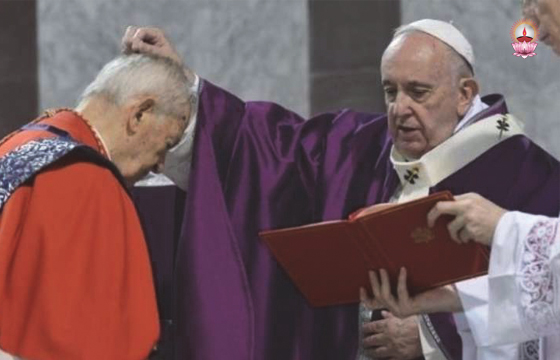
The Vatican Congregation for Divine Worship and the Sacra-ments asked priests to take special anti-COVID-19 precautions this year when distributing ashes on Ash Wednesday, Feb. 17, inclu-ding sprinkling ashes on the top of people’s heads rather than using them to make a cross on people’s foreheads.
The congregation’s note on the “distribution of ashes in time of pandemic” was published on the congregation’s website Jan. 12 and directs priests to say “the prayer for blessing the ashes” and then sprinkle “the ashes with holy water, without saying anything.”
“Then he addresses all those present and only once says the formula as it appears in the Roman Missal, applying it to all in general: ‘Repent and believe in the Gospel’ or ‘Remember that you are dust and to dust you shall return.’”
“The priest then cleanses his hands, puts on a face mask and distributes the ashes to those who come to him or, if appropriate, he goes to those who are standing in their places,” it said. “The priest takes the ashes and sprink-les them on the head of each one without saying anything.”
Category Archives: International
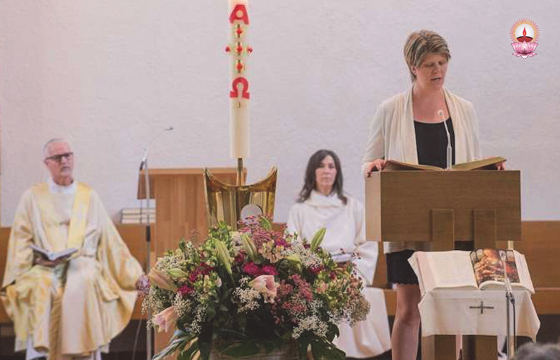
What has changed in canon law for women?
Most Catholics, who grew up seeing women at the altar reading from the Bible and serving at Mass, wondered what was improved when Pope Francis changed canon law this month, purportedly to allow women to participate in such services.
Although women have been taking care of these ministries at local bishops’ discretion, they were barred from being instituted as lectors or acolytes because church law did not allow it. These minor orders were reserved only for men until now, touted as preparation for priestly ordina-tion.
On Jan. 11, The Pope chang-ed one word in Canon 230. The law originally said: “Laymen who have the age and skills, determined by decree by the Episcopal Conference, can be permanently employed, through the established liturgical rite, for the ministries of readers and acolytes; however, this confer-ment does not give them the right to sustenance or remuneration by the Church.” Pope Francis changed the opening word, making it “laypeople” to include women. Pope Francis is pushing the Church to be more open to women, but slowly and carefully. These orders had been part of the all-male priesthood in the Catholic Church since the Coun-cil of Trent in the 16th century.
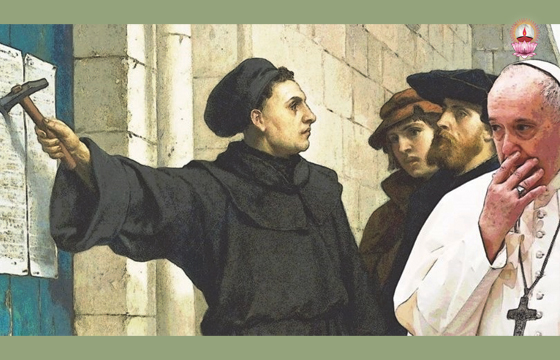
Pope Won’t Lift Luther’s Excommunication
Pope Francis has rejected an appeal to reinstate expelled Augustinian monk Martin Luther on the 500th anniversary of his excommunication, which falls on Jan. 3, 2021. The pontiff’s highly significant overtures towards Lutherans over the last five years had raised hopes in ecumenical circles for the withdrawal of the bull of excommunication, Decet Romanum Pontificem, issued by Pope Leo X on Jan. 3, 1521. Church Militant has learned that Francis will not revoke Luther’s excommunication to mark the anniversary but instead use the occasion to intensify dialogue with Lutherans. “There will be a special press release on Jan. 4 from both the Lutheran World Federation and the Vatican on the steps being taken that lead us further on the path from conflict to communion,” Professor Dr. Dirk G. Lange told Church Militant.
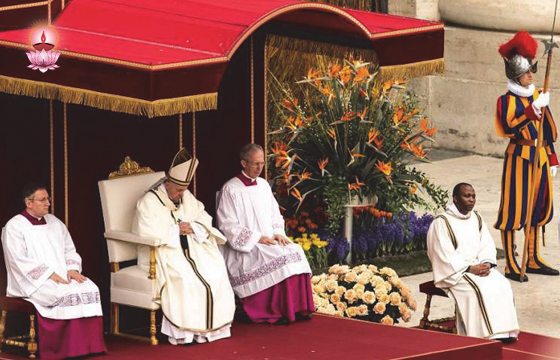
Pope Francis opens ministries of lector and acolyte to women
On Jan. 11, Pope Francis published an apostolic letter issued motu proprio (which means “on his own impulse” in Latin), modifying canon law regarding women’s access to the ministries of lector and acolyte. He also released a letter to Vatican doctrinal chief Cardinal Luis Ladaria explaining his reasoning for the decision.
In the document, Spiritus Domini, the Pope changed Church Law so that women can be formally instituted to the lay ministries of lector and acolyte.
The Pope modified the wording Canon 230§1 of the Code of Canon Law, which previously limited the ministries to lay men.
He changed the phrase “lay men” to “lay persons,” so that the canon now reads: “Lay persons of suitable age and with the gifts determined by decree of the Episcopal Conference may be permanently assigned, by means of the established liturgical rite, to the ministries of lectors and acolytes; however, the conferment of such a role does not entitle them to support or remuneration from the Church.” Yes, in many parts of the world women serve and read at Mass. But until now they were not officially established in the role with the liturgical rites associated with the ministry of an acolyte or lector. They per-formed the role “by temporary designation,” under Canon 230§2 of the Code of Canon Law.
The ministries were traditionally reserved to men because they were associated with what were known as the “minor orders” of priesthood: stages on the way to priestly ordination.
But in 1972, Pope Paul VI intended to abolish the minor orders in the motu proprio Ministeria quaedam. From then on, he said, lector and acolyte should be regarded as ministries, rather than minor orders. When they are conferred, he wrote, it should not be called “ordination,” but rather “institu-tion.” A lector is a person who reads Scripture to the congregation at Mass (other than the Gospel, which is only proclaimed by deacons and priests).
After abolishing the minor orders, Pope Paul VI wrote that an acolyte was a ministry in the Church with the “duty to take care of the service of the altar, to help the deacon and the priest in liturgical actions, especially in the celebration of the Holy Mass.”
In Pope Francis’s letter to Cardinal Ladaria, he said that the Congregation for Divine Worship and the Discipline of the Sacraments would be responsible for guiding the changes, amending parts of the Roman Missal and the rite of institution of lectors and acolytes where necessary.
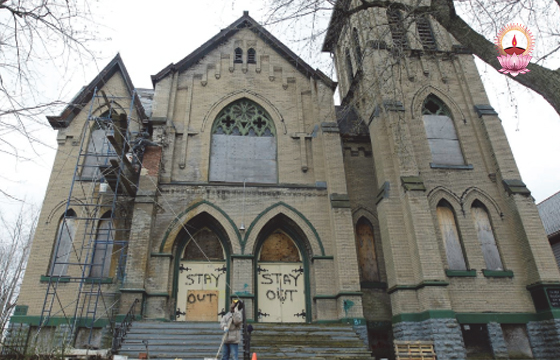
A new solution for America’s empty churches: A change of faith
Over the past few decades, vacant and under-utilized churches have become a familiar sight in American cities.
In some cases, a congregation or a religious governing body – say, a Catholic diocese – will sell the church to developers, who then turn them into apartments, offices, art galleries, museums, breweries or performance spaces. But what about churches in neighborhoods that aren’t doing well, areas that are less attractive to developers looking to turn a profit?
In Buffalo, New York, two empty Roman Catholic churches have been converted – not into apartments or offices, but into other places of worship. One became an Islamic mosque, the other a Buddhist temple.
As an architect and historic preservation planner, I was drawn to this phenomenon. With the help of Enjoli Hall, who was then a graduate student at University at Buffalo, I interviewed those involved in converting the former churches.
With immigrant and refugee populations growing in post-industrial cities across the U.S., the con-version of vacant Christian churches into new places of worship can preserve historic archi-tecture and strengthen burgeoning communities.
In Buffalo, a split between east and west.
Buffalo has long been an immigrant gate-way. From 1850 to 1900, the city’s population in-creased by over 700%. In 1892, over one-third of Buffalo’s residents were foreign born. Poles, Ger-mans and Italians settled in the city, leading to a wave of church construction. In the 1930s, African Americans started migrating from southern US to the east side of the city.
But by 2010, the city’s population had dwindled to just over 260,000 people – less than half of what it was in 1950.
Nonetheless, Buffalo has recently been in the news for its efforts to overcome decades of population decline and disinvestment. In 2016, Yahoo News anchor Katie Couric, fascinated by Buffalo’s transformation, featured the city in her six-video series, “Cities Rising: Rebuilding America,” while The New York Times detailed the changes taking place in some of the city’s neighbourhoods. This public attention, however, has mainly focused on the West Side neighbour-hoods, which have experienced the bulk of investment and population growth. Neighbourhoods in Buffalo’s East Side continue to face tremendous challenges of poverty, crumbling infrastructure and abandoned houses.
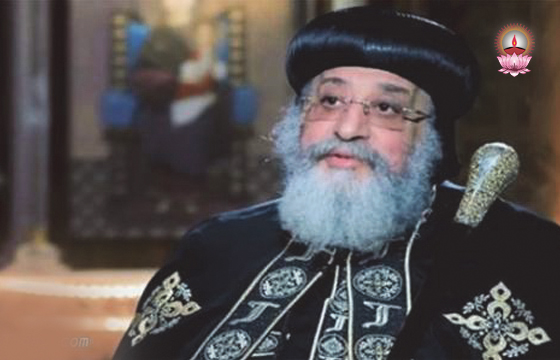
Refusal of the word persecution to qualify the situation in Egypt on the part of the Coptic Orthodox Patriarch
“When I meet the leaders of the world, they always ask me questions about the persecution that is affecting us in Egypt, and I answer that there is no persecution, clearly rejecting this expression to qualify our condition in our country.” This is how Coptic Orthodox Patriarch Tawadros II described his reaction to foreign representatives – including political leaders and Heads of State – who, when they meet him, evoke in their conversation formulas and schemes with which the Coptic Christians of Egypt in the “mainstream” media representation, and in general the Christian communities in the countries of North Africa and the Middle East, are systematically labelled as “persecuted minorities.”
This representation – explained Pope Tawadros in an interview broadcast by the satellite television channel Nile TV on the occasion of the Coptic Christmas – provides “a distorted image of the situation in Egypt,” where Copts are called to face difficulties and problems also linked to sectarian violence and discrimination, which however do not constitute a condition of systematic religious persecution.
“If there is a problem between the different communities in a village,” the Patriarch explained, referring to recent cases of sectarian conflicts that have exploded in certain regions of Upper Egypt, “it is necessary to take into account that in Egypt there are 5000 villages. It happens that in some of them people act recklessly, but for this they are arrested and judged. I categorically reject the definition of “persecution” that some leaders put before me when they talk about Copts.”
During the interview, the Patriarch also dwelt on the new law on the construction of new churches, which since September 2016 has removed the limitations and conditions that previously made it also impossible to build new Christian places of worship in Egypt. Within the framework of this new legislative provision, promoted by President Adel Fattah al Sisi – commented the Patriarch – we can also perceive “the shrewdness of the political leader” who, through laws and choices, aims to preserve stability and social peace.

Surgical abortion clinics on the decline in US; abortion pill providers on the rise: report
An exam room at the Planned Parenthood South Austin Health Centre is shown following the U.S. Supreme Court decision striking down a Texas law imposing strict regulations on abortion doctors and facilities in Austin, Texas, U.S. on June 27, 2016. The number of clinics that provide surgical abortion procedures has declined over the past several years while the number of clinics that provide only abortion pills is increasing, according to an annual report by a leading pro-life activist group.
The Kansas-based Operation Rescue released the report examining trends among abortion clinics across the country. The report finds that the number of surgical abortion clinics in the United States has dropped by over 35% from 713 facilities in 2009 to 458 facilities in 2020.
Meanwhile, clinics that provide non-surgical abortion methods, such as abortion-inducing drugs like mifepristone and misoprostol, have been on the rise in the U.S. — going from 131 facilities in 2009 to 248 facilities in 2020.
Overall, there were 706 clinics offering abortions of some kind in 2020, slightly down from the 710 facilities reported to be operating in 2019, and well below the 856 that were open in 2012.
In a statement included in the report, Operation Rescue President Troy Newman considered the latest numbers to be promising news for the pro-life movement.
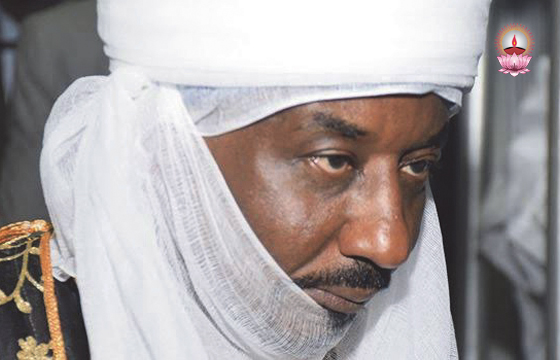
Babachir to ex-Emir Sanusi: Borrow Bible read Psalm 37, for strength
Babachir said he had been in the shoes of the deposed ruler and the monarch’s stance for the poor and the downtrodden especially in the North, will eventually lead to his emergence as a stronger and better person. Babachir made the remarks in a statement issued to newsmen, in Yola, Adamawa State. Addre-ssing the embattled Emir of Kano, Babachir said: “Good morning your Royal Highness. Please, note that wherever and however you may be now, God is with you; good Nigerians are with you and we the lovers of the North stand with you.” Given the way God does His things, this is only the beginning of good things and His showers of ble-ssings upon you. “We, lovers of Nigeria particularly the northern Nigerian ones, have listened to you and are in total agreement with what you say and the way you say it and we shall yet cele-brate with you.” He explained that “I have gone through this type of experience and I have come out the better and stronger for it. You are a hero of all the poor, the uneducated and the oppressed northerners in parti-cular and indeed Nigerians. “But you are also hated by the corrupt rich, the educated illiterates, the tribalists, some hard-lined fue-dalists and religious bigots and they are more powerful, more united and can muster more recourses than us.” “But God is God. No man is God. Man can only be a tin god for a brief period, wither like the flower, and thereafter be accountable for all his actions on the day of judge-ment before our Lord, Jesus Christ. “Your Highness, I reco-mmend Psalm 37 to you; borrow a Bible and read it, that is if you do not already have one.” Ma-king reference to the situation of some Nigerian leaders he admo-nished the monarch saying, “God is God. No man is God.”
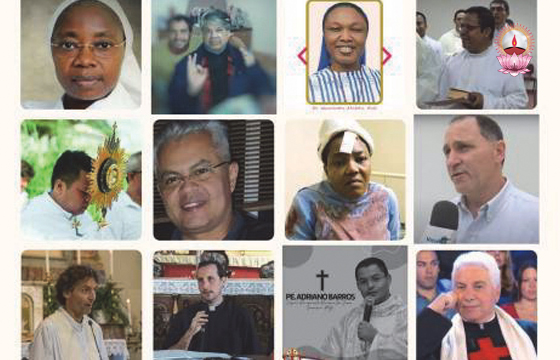
VATICAN – MISSIONARIES KILLED IN 2020
According to informa-tion gathered by Agenzia Fides, in 2020 20 missionaries were killed in the world: 8 priests, 1 religious man, 3 religious women, 2 semina-rians, 6 lay people. This 2020 year the highest number of missionaries killed returns to be registered in America, where 5 priests and 3 lay people were killed (8). Followed by Africa, where 1 priest, 3 religious women, 1 seminarian, 2 lay people were killed (7). In Asia 1 priest, 1 seminarian and 1 lay man. In Europe 1 priest and 1 religious man. In the last 20 years, from 2000 to 2020, 535 pastoral workers have been killed in the world, 5 of whom are Bishops.
Agenzia Fides continues its service to collect information regarding the missionaries killed during the year. We use the term “missionary” for all the baptized, aware that “in virtue of their Baptism, all the members of the People of God have become missionary disciples. All the baptized, whatever their position in the Church or their level of instruction in the faith, are agents of evangelization” (EG 120). As it has been for some time, the annual list of Fides does not look only to Missionaries ad gentes in the strict sense, but tries to record all the baptized engaged in the life of the Church who died in a violent way, not only “in hatred of the faith.” –Agenzia Fides
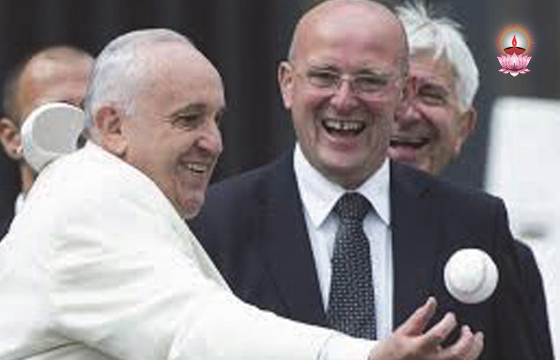
Former Vatican security chief praises pope’s financial reforms
Just over a year after this exit, Domenico Giani, formerly believed to be one of the most powerful people in the Vatican, has given an interview offering details as to his current career path and his thoughts on papal reform.
In the interview, published in Avvenire, the official newspaper of the Italian bishops, on Jan. 6, the former head of the Vatican police said that when he was first asked to enter service to the Holy See, he was told that “it was not my personal service by a vocation, a call,” which also extended to his family. Speaking of his unexpected resignation last fall, Giani said the move “caused pain” for him and his family but insisted that it did not alter his experience working in the Vatican Gendarme Corps, and nor did it take away “the gratitude for the Popes we have served: St John Paul II, Benedict XVI and Francis.”
“I remain deeply attached to the Church and I am a man of institutions,” he said.