
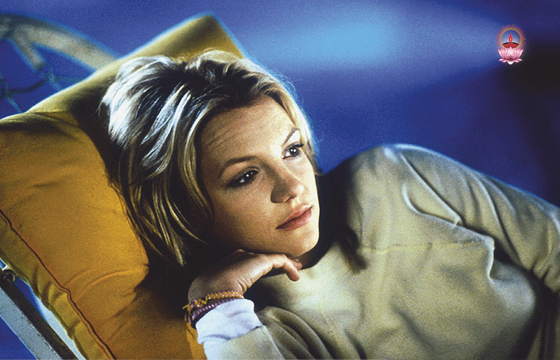
In a post on Instagram on Aug. 5 Britney Spears wrote: ”I just got back from mass… I’m Catholic now…let us pray.”
The 39-year-old pop star was raised in a strict Baptist household and is a regular churchgoer, but has had a troubled relationship with her family and her fame.
Her apparent swim across the Tiber is the latest chapter in a story that began with Britney bursting into the public gaze in a Catholic schoolgirl uniform in the music video for ‘Baby One More Time’.
Thrust into international celebrity as a teenager, and presented as a sex symbol, she suffered greatly from the prurience of the press and attempts from various figures in her life to control her life.
Category Archives: International
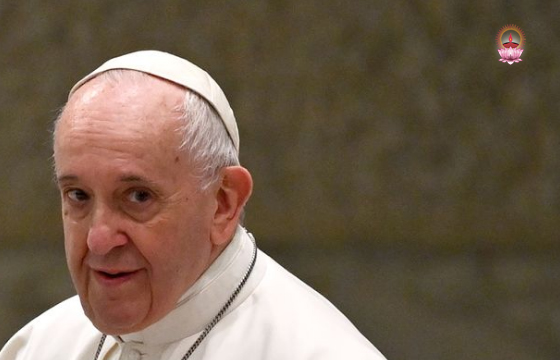
Envelope with bullets addressed to Pope Francis intercepted
An envelope containing three bullets addressed to Pope Francis was intercepted in Milan late on Aug. 8, according to Italian media reports. The piece of mail, which had no return address but carried a French stamp, was addressed to “The Pope, Vatican City, St. Peter’s Square in Rome,” the Italian newspaper Corriere della Sera reported. The newspaper said that the envelope contained three pieces of 9 millimetre ammunition, of the kind used in a Flobert gun, and a message referring to financial operations in the Vatican.
The manager of an Italian post office branch in the town of Peschiera Borromeo, southeast of Milan, alerted authorities when he found the suspicious piece of mail during sorting on Aug. 8. According to reports, local law enforcement have seized the note and are investigating its origins.
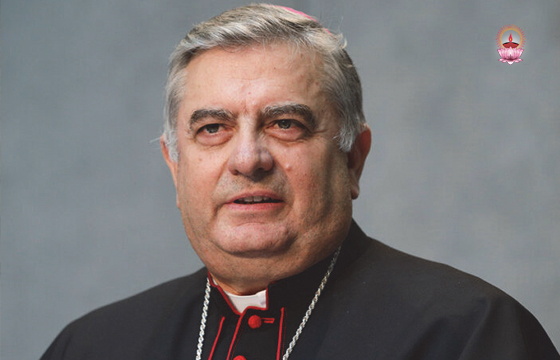
Spiritual abuse occurs more frequently than believed, Vatican official says
The Vatican is investigating about a dozen founders of congregations of consecrated or religious life, and the most common allegations involve abuse of power or conscience, financial corruption or problems associated with “affectivity,” said a top official.
Spanish Archbishop José Rodríguez Carballo, secretary of the Congregation for Institutes of Consecrated Life and Societies of Apostolic Life, spoke about his office’s work overseeing religious congregations in an interview July 30 with Vida Nueva, a Spanish weekly magazine on religion.
He said the church has very “clear and precise criteria” when it comes to discerning the authenticity of a religious charism when determining whether to approve a new congregation or religious order.
Among these criteria, he underlined: “Communion with the church; the presence of spiritual fruits; the social dimension of evangelization; high regard for other forms of consecrated life in the church; and the profession of the Catholic faith,” referring to the doctrinal congregation’s 2016 letter “Iuvenescit Ecclesia” to the world’s bishops regarding charismatic gifts in the life and the mission of the church.
“Sadly, it must be confessed that, at times, it is difficult to discover the authenticity and originality of a charism in some realities,” the archbishop said.
At the moment, the congregation is investigating about a dozen founders of institutes that come under his office’s authority, he said, without naming the founders or the communities involved.
“In most cases, these are associations whose canonical recognition is underway,” he said.
However, he said, in addition to that number there are some institutes who had already been canonically recognized and whose founders are being investigated, too, “so the number increases significantly.”
Rodríguez also said he was not counting communities or institutes of consecrated life that the congregation has already investigated and responded to, such as by appointing an outside delegate or, in some cases, suppressing the institute.
“It should also be noted that there have been some cases in which, after the necessary investigation, the female founder has left consecrated life or the male founder has been reduced to the lay state,” Rodríguez said.
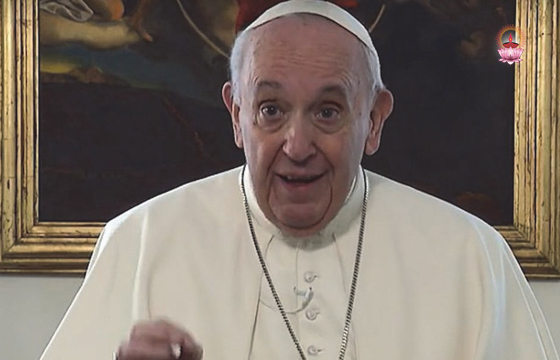
Crises are signs that church is still alive, pope says
Difficulties and crises within the Catholic Church are not signs of a church in decline but one that is alive and living through challenges, just like men and women today, Pope Francis said.
“Let us remember that the church always has difficulties, always is in crisis, because she’s alive. Living things go through crises. Only the dead don’t have crises,” he said.
In a video message released by the Pope’s Worldwide Prayer Network Aug. 3, the pope offered his prayer intention for the month of August, which is dedicated to the church’s mission of evangelization. At the start of each month, the network posts a short video of the pope offering his specific prayer intention.
The church’s call to evangelize and not proselytize, he said, is more than just a vocation; it is a part of the Catholic Church’s identity. “We can only renew the church by discerning God’s will in our daily life and embarking on a transformation guided by the Holy Spirit. Our own reform as persons is that transformation. Allowing the Holy Spirit, the gift of God, in our hearts reminds us what Jesus taught and helps us put it into practice,” the Pope said.
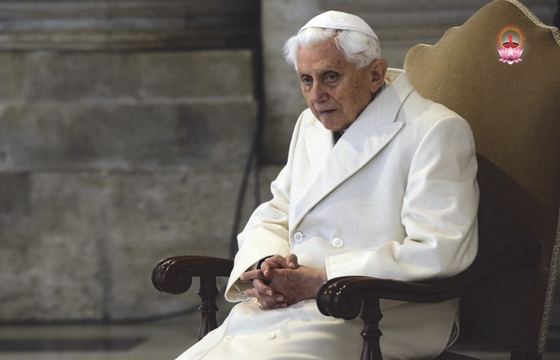
Benedict XVI laments lack of faith in German Catholic officialdom
In a rare lengthy interview with a German newspaper, retired pope Benedict XVI reflected on his 70 years as a priest and lamented what he said is an increasing institutionalization of the Catholic Church in Germany, making it a functional entity rather than the living body of Christ. In written responses to German magazine Herder Korrespondenz, published in their August edition on the 70th anniversary of his ordination to the priesthood, Benedict, 94, said his brief time as a young pastor before getting into academic work made it clear “that many of the functions relating to the structure and life in the church were performed by people who by no means shared the faith of the church.”
Because of this, the Church’s testimony “must appear questionable in many ways,” he said, noting that faith and disbelief “were mixed together in a strange way, and this had to come out at some point and cause a breakdown that would eventually bury the faith.”
Benedict said that in his view, “a divorce was necessary,” in this regard, and cautioned against the idea of thinking of the Church as a body of saints who have already reached perfection.
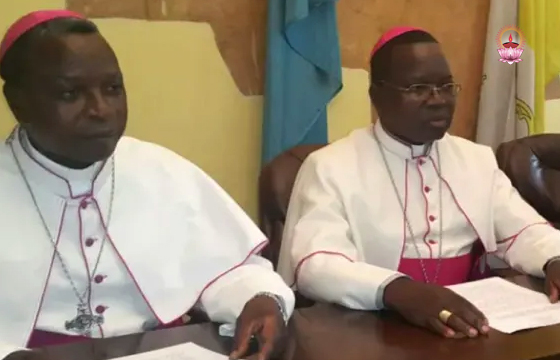
Congo’s bishops want an end to attacks on Catholic Church, its leaders
Catholic bishops in Congo called for an end to attacks on the church and its leaders, acts they believe are linked to the church’s persistent call for democracy and national cohesion. The bishops said the Archdiocese of Kinshasa has been targeted as well as places of worship — including parishes, Marian grottoes, altars and sanctuaries — in the Diocese of Mbujimayi.
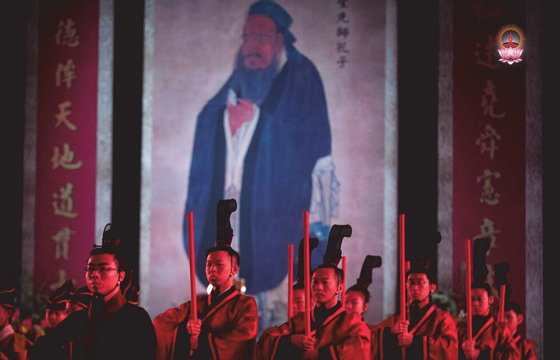
There’s a religious revival going on in China
The Chinese government has promoted a revival of Confucianism, along with traditional religious practices, as part of its nationalist agenda. The Chinese Communist Party is celebrating the 100th anniversary of its founding in 1921. For most of those decades, the party sought to restrict or obliterate traditional religious practices, which it considered part of China’s “feudal” past. But since the late 1970s, the party has slowly permitted a multifaceted and far-reaching revival of religion in China to take place. More recently, current Chinese president and Communist Party leader Xi Jinping has endorsed continued party tolerance for religion as filling a moral void that has developed amid China’s fast-paced economic growth. This support does come with caveats and restrictions, however, including the demand that religious leaders support the Communist Party.
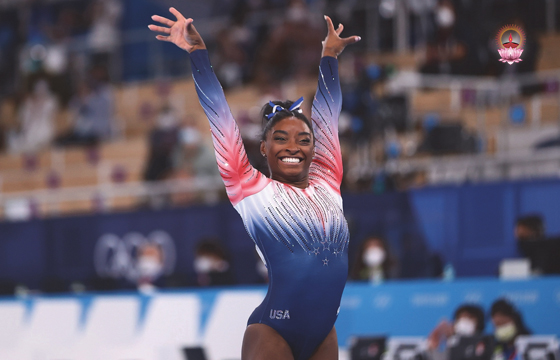
Catholics see challenging balance in Simone Biles’ decisions at Olympics
When Simone Biles, described as the world’s greatest gymnast, announced July 27 she would not be competing in a team event with the U.S. women’s Olympics gymnastics team and the next day withdrew from the all-around final, many people were shocked, but many supported her decision to prioritize her mental health.
Counsellors and spiritual directors at Catholic colleges and ministries who spoke with Catholic News Service echoed a similar view and also said her action opened up a broader and much-needed discussion about the importance of mental health care.
Biles, the four-time Olympic gold medalist, told reporters she was not in the right state of mind to continue the competition after she completed one fewer than planned mid-air twists in the team’s first event and uncharacteristically stumbled on her landing.
Later, she said she had experienced as a “little bit of the twisties,” an almost quaint term used by gymnasts that belies its meaning of losing control of one’s body while in the air.
That particular sensation is one most Olympics viewers likely can’t even begin to relate to, but the feeling of “fighting all those demons,” which Biles said she had been doing along with a sense of the “weight of the world” on her shoulders, is something non-Olympic stars can grasp on one level.
“Even if we aren’t carrying around the pressure of performing as one of the greatest athletes of all time, we are all susceptible to the undercurrents in our culture that preach grit, grind and pushing through,” wrote Zac Davis, associate editor of America magazine.
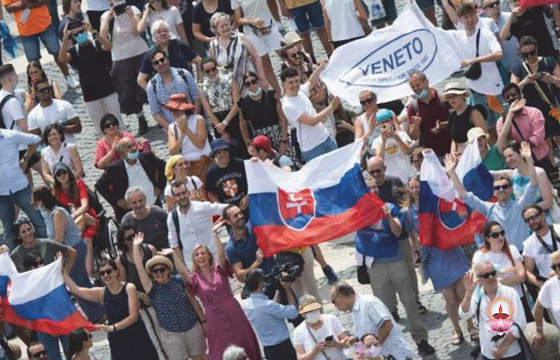
Vatican publishes schedule for papal trip to Hungary, Slovakia
Pope Francis’ September trip to Hungary and Slovakia features a jam-packed schedule that shows he has no intention of slowing down despite his recent recovery from colon surgery.
The Vatican July 21 released the pope’s schedule for the trip Sept. 12-15, including the closing Mass of the International Eucharistic Congress in Budapest.”
The Pope announced the trip July 4 to pilgrims gathered in St. Peter’s Square for his Sunday Angelus address.
“From the bottom of my heart, I thank those who are preparing this journey, and I am praying for them,” he said. “Let us all pray for this journey and for the people who are working to organize it.”
Arriving in Hungary Sept. 12, the Pope will meet with Hungarian President János Áder and Prime Minister Viktor Orbán before meeting with the country’s bishops and re-presentatives of the Ecumenical Council of Churches and several Jewish communities.
After celebrating the closing Mass of the International Eucharistic Congress, the Pope will immediately depart for Bratislava, Slovakia, where he will participate at an ecumenical gathering at the apostolic nunciature before meeting privately with a group of Jesuit priests.
Responding to questions on Twitter July 5 regarding the Pope’s brief stay in Hungary, Eduard Habsburg, the Hungarian ambassa-dor to the Holy See, said the Pope “is doing exactly what he has been invited for — in Budapest, the final Mass of the @iec2021 Budapest (the eucharistic congress), in Slovakia, an extended visit to the country.”
While in Slovakia, the Pope also will visit the cities of Presov and Kosice July 14 where he will preside over a Divine Liturgy, as well as meet with members of the Roma community and young people.
On his final day, July 15, Pope Francis will pray and celebrate Mass with the country’s bishops at the Basilica of Our Lady of Seven Sorrows in Šaštin before returning to Rome.
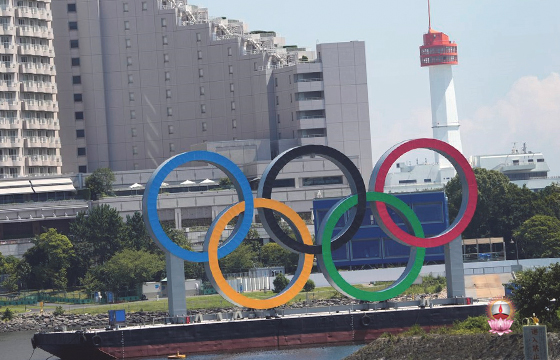
Olympics, religion played a starring role
In the early days of the Olympics, religion played a starring role. Faith leaders had front-row seats to the events and many athletes dedicated their triumphs to the gods. “Even the prizes were religious — crowns of olive leaves made from trees in a sacred grove dedicated to Zeus,” Religion News Service reported in 2016.
Religion still matters to many modern Olympic athletes, but its influence on the Games is harder to spot. You’ll have to pay close attention to Olympics coverage over the next few weeks to catch athletes praying before their events or champions thanking God during their media interviews. I, for one, feel up to the challenge and, to prepare, I did some research over the weekend into what religion-related storylines to follow during the Olympics this year.
Here are my favourite discoveries: Grace McCallum, from the women’s gymnastics squad, and Katie Ledecky, from the swimming team, are two of the many American athletes competing in this year’s Games who have talked about drawing on faith to prepare for competition. Both women are Catholic and believe their church has given them the tools to stay calm and humble in the face of a seemingly overwhelming challenge. “My dad is sending me a couple of prayers to say before each practice in the morning. I think that will be really helpful to keep me at peace,” McCallum said earlier this month.
Speaking of Catholics, the Archdiocese of Tokyo announced last week that Olympic athletes and support staff will not be allowed to attend church in-person during their stay due to COVID-19 concerns. The archdiocese will, instead, offer online worship services and other devotional video content to the athletes, Religion News Service reported.