
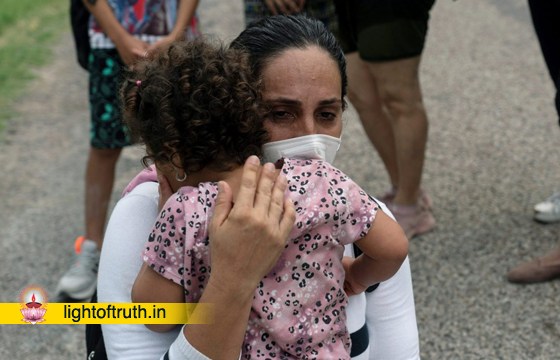
With more than 5.5 million people fleeing Venezuela in recent years because of lack of opportunities, the Salesians in the South American country are warning that the people don’t see the light at the end of the tunnel. “We do not see effective responses against the coronavirus, although the situation was already very complicated before,” warned the religious order. “Moreover, the popula-tion is losing hope. They do not see the light at the end of the tunnel.”
An estimated 87% of the population of 28.5 million is currently living in poverty, and essential goods such as food and medicine are scarce.
“People are coping. If they feel unwell, they take something and carry on, because many do not have access to medical care,” warn Salesian missionaries working in Caracas, speaking about Venezuelan’s inability to address the COVID-19 pandemic or get treatment when symptoms arise.
“The salaries paid are ridiculous,” the letter adds, noting a pensioner receives less than one dollar a month in pension.
“The poorest people cannot afford food and health care,” they add.
The Salesian missionaries in Venezuela have been working for years alongside the most vulnerable population, focusing their efforts in offering education and training to children and young people, while working hand in hand with the bishops’ conference in their efforts of dialogue and national reconciliation.
“In Venezuela, we need to dialogue, we need to find an expression of the popular will,” they wrote in a statement released this week in Spanish news outlet Religion Digital. “Those who should have the last word are the people, the citizens … It is necessary to give security to choose, to speak.”
The warning from the religious community comes after talks between the government of Nicolas Maduro and the opposition were held in Mexico to try to reach an agreement that would allow the country to leave the economic, political and social crises behind.
Venezuelans are expected to elect governors and mayors in November, but opposition forces say the electoral conditions are grossly unfair and have yet to decide whether they will participate. During the conversations held in Mexico, the biggest demand from the opposition was for Maduro to guarantee its participation in a “free and transparent” election process.
Category Archives: International
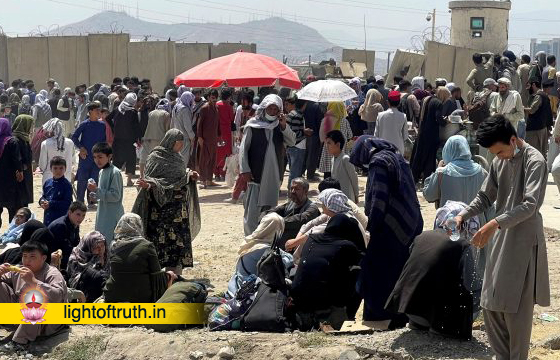
Desperate Afghan Christians turned away at airport, aid groups say
With time running out to rescue civilians fleeing the Taliban, Afghan Christians and others whose names appear on U.S. government lists of qualified evacuees are being turned away at the airport in Kabul, representatives of aid organizations and others told CNA on August 25.
“I was told by contacts from various groups working to rescue those still in danger in Afghanistan—who must remain anonymous — that the State Department at least at a certain point was not implementing the lists that they require the organizations to compile — even though they have sent them multiple times,” Faith McDonnell, director of advocacy at Katartismos Global, an Anglican non-profit ministry group based in Manassas, Virginia, told.
“It seems at present as if no one is getting any priority unless they have some sort of special connection inside the airport,” she said.
Looming over the deepening humanitarian crisis is a dead-line for civilian evacuation operations at the Kabul airport to give way to the transport of the remaining 5,400 U.S. military personnel out of the country in order to meet a target date of Aug. 31, set months ago by the Biden administration, for a full U.S. withdrawal from Afghanistan
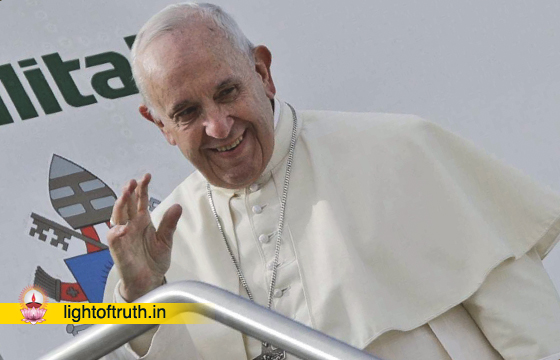
This fall, papal travel will change with closure of pope’s favourite airline
After a 57-year stretch of loyalty to the same company, papal travel is set to change this fall with the closure of Italy’s national airline Alitalia, which has taken four popes to a total of 171 countries on all continents.
Founded on Sept. 16, 1946, Alitalia is the flag carrier and largest airline in Italy, making it a natural choice for Paul VI, whose 15-year reign set the stage for the pope as a globe-trotting figure.
It was Paul VI’s predecessor, Saint John XXIII, who made history for becoming the first pope of 20th century to leave the Rome area after his election when he visited a prison during Holy Week in 1958, and he later took a train to the Holy House of Mary in Loreto, but Paul VI took papal outings to new heights when he began traveling internationally as a means of both pastoral care and carrying out Vatican diplo-macy. In total, Paul VI took nine international trips with Alitalia, which would transport three other popes to 162 locations in the subsequent years.
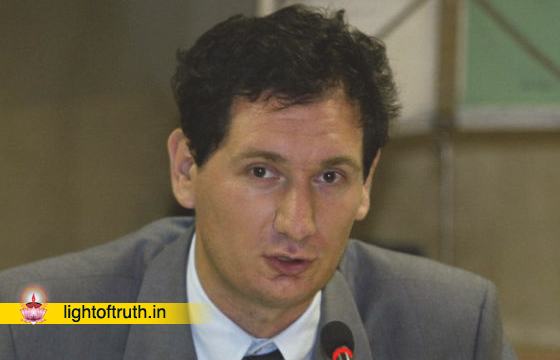
Pope names Italian journalist to head Vatican publishing house
Pope Francis has appointed Lorenzo Fazzini, an Italian journalist, author and father of four, to be managing director of the Vatican Publishing House.
The 43-year-old is the first layman to head the office, which is now operated by the Vatican Dicastery for Communication. He replaces Conventual Francis-can Father Giulio Cesareo, who had been appointed in 2017.
The Vatican made the announcement Aug. 23. Fazzini has degrees in modern literature and religious studies, has authored eight books and has written for several newspapers, including the Vatican’s L’Osservatore Romano and the Italian bishops’ conference’s daily, Avvenire. Since 2012, he has been director of EMI, a publishing house for 15 Italian missionary institutes that work all over the world.
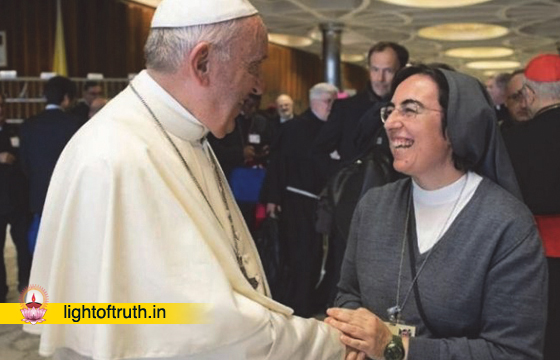
Pope names Salesian nun as dicastery secretary
Pope Francis has appointed a Salesian nun as interim secretary of the Dicastery for Promoting Integral Human Development, the Vatican announced. Sister Alessandra Smerilli replaces Monsignor Bruno Marie Duffé and Father Augusto Zampini, respectively secretary and assistant secretary of the Dicastery, both of whom have returned to their dioceses.” In an August 26 statement, the Vatican said Sister Smerilli will also be a part of the management team of the Vatican’s Covid-19 Commission together with Cardinal Peter Turkson.
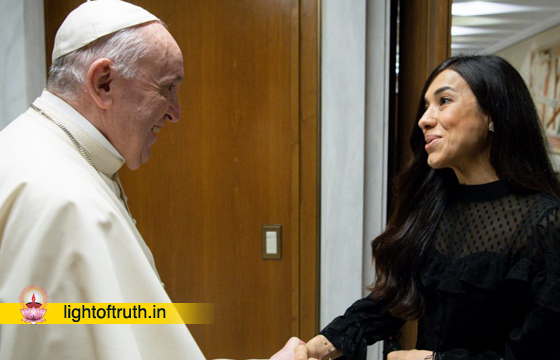
Pope Meets With Genocide Survivor Who Inspired His Iraq Trip
Pope Francis held a private audience with Nadia Murad, a Nobel Peace Prize laureate and survivor of the Islamic State-led genocide in Iraq, Aug. 26 at the Vatican.
While the Vatican did not release any details about the visit, Ms. Murad tweeted Aug. 27, “We discussed the importance of support for #Yazidis & other minority communities in Iraq. In light of the heart-wrenching events in #Afghanistan, we exchanged ideas on championing women & survivors of sexual violence.”
“I thank @Pontifex for welcoming me to the Vatican once again,” she tweeted, along with a photo of the pope looking through a book and Ms. Murad holding a copy of the document on “Human Fraternity for World Peace and Living Together,” which Pope Francis and Egyptian Sheikh Ahmad el-Tayeb, the grand imam of Al-Azhar, signed in 2019.
The pope met her previously at the Vatican at the end of a general audience in St. Peter’s Square in May 2017 and privately in December 2018, after she and Denis Mukwege were jointly awarded the Nobel Prize for “their efforts to end the use of sexual violence as a weapon of war and armed conflict.” She is the first Iraqi and Yazidi to be awarded a Nobel Prize.
She survived a genocidal campaign against the Yazidis by Islamic State militants in Iraq in 2014. The militants kidnapped her, and she escaped captivity after three months. In an Aug. 16 tweet commenting on recent events in Afghanistan, she wrote: “My heart breaks for the next generation of girls & women whose nation has been overtaken by the Taliban. Kabul fell on the same day my village fell to ISIS 7 years ago. The international community must address the repercussions before tragedy is repeated.”
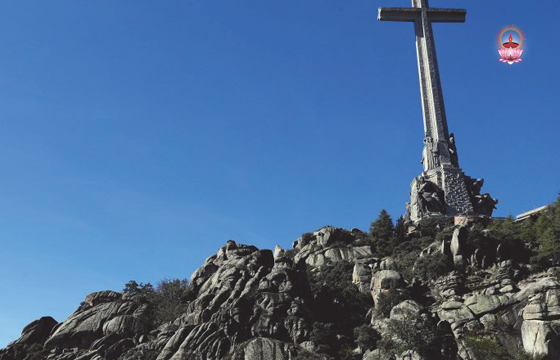
Bishops say Spain trying to ‘dismantle the Christian worldview’
Spain’s Catholic bishops warned of growing division and tension in their country over government attempts to “deconstruct and dismantle the Christian worldview.”
“We are in a difficult moment, not only because of COVID-19, but because we are convulsed by a deep institutional crisis, with some groups seeking to open a new constitutional phase and replace a political framework that has given Spain great stability,” the bishops’ conference said.
“Legislative initiatives by the coalition government on education, euthanasia, abortion, democratic memory and the judiciary reflect a global deconstruction project, whose development puts freedom at risk and impedes essential unity.”
The warning was contained in a 95-page statement, published July 28, setting out pastoral guidelines for the Spanish church from now until 2025.
The bishops said an attempt was underway to “erase distinctions between truth and falsehood, reality and fiction, good and evil.”
“With its prophetic mission, the church is obliged to denounce these attacks on freedom and justice, to act as a channel of encounter and reconciliation,” the bishops said. They added that “Spaniards are no longer living in a culture inspired by the Christian faith. For many, Christian truths have become incomprehensible, as moral standards flowing from the Gospel also become unacceptable.”
The statement was released two days after Spain’s co-governing Socialist Party confirmed plans to review a series of 1979 accords with the Vatican and adopt a “statute of secularism,” enforcing “strict separation between politics and religion, law and morality, crime and sin.”
The bishops said society was full of distrust and confrontation, as digitization, artificial intelligence and surveillance technologies fuelled “spiritual impoverish-ment.” They warned of a type of capitalism that does not just regulate production and consumption, “but also imposes values and lifestyles.”
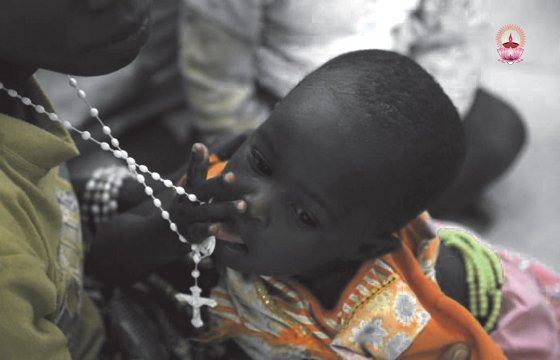
New report says anti-Christian violence in Nigeria highest level for years
At least 3,462 Christians, including ten priests or pastors, were murdered in Nigeria in the first 200 days of 2021. The number, just 68 deaths short to the estimated total for 2020, is aligned with the warnings from human rights organizations that focus on anti-Christian persecution regarding the rise of religious-motivated violence in Nigeria, and a nation where the Christian and Muslim populations are widely considered as more or less evenly split.
According to a recent report coming from Nigeria itself produced by the International Society for Civil Liberties and Rule of Law, the number of unarmed Christians who were murdered by members of the Islamic terrorist organization Boko Haram or other Jihadist groups between Jan. 1 to July 18, 2021, is barely lower to the one estimated by Open Door’s International for 2020.
Breaking it down, the number means that 17 Christians a day were murdered for reasons related to their faith the first half of 2020, the second highest daily average since 2014, when over 5,000 Christian deaths were recorded in the hands of Boko Haram and jihadist Fulani herdsmen.
In addition to the Christians who’ve been killed in the first 200 days of 2021, some 3,000 Christians, many of them young girls and women, have been kidnapped by Islamic terrorists and their whereabouts remains unknown. The people behind the report estimate, extrapolating from previous cases, that at least three out of every ten kidnapped Christians have been killed.
Christians in Lebanese border town say they’re having spiritual revival
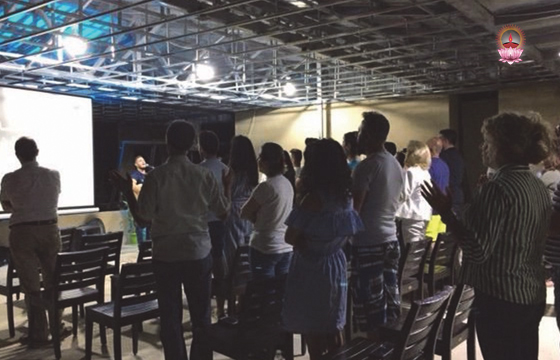
Young adults and families say they are experiencing a spiritual revival in this town near the Syrian border even as Lebanon is pummeled by multiple crises: an economic meltdown, mass unemployment, a fresh wave of coronavirus infections, and shortages of fuel and electricity — all made worse by the ongoing political paralysis and an unresolved probe into the devastating Beirut blast.
“Every week we intercede for Lebanon. We know that God is going to speak life over this country, because many times Jesus showed us that this is in his hands,” a 31-year-old Lebanese Catholic named Nesrine told the Catholic News Service one balmy summer night.
“We feel that God is allowing what is happening in Lebanon. His heart is for salvation. Yes, many are now poor, others are battling coronavirus, but we see many Lebanese seeking the Lord, because he is the very last shelter they have,” said the petite, raven-haired woman who was a civil servant and owned her own successful media business before entering lay ministry.
Both Nesrine and her husband, Elie, once an atheist, have experienced dramatic spiritual conversions. And so, apparently, have many others among the 200-plus attendees at the prayer meeting at The Land.
Berlin archbishop to name minister for gays, calls side-lining ‘painful’
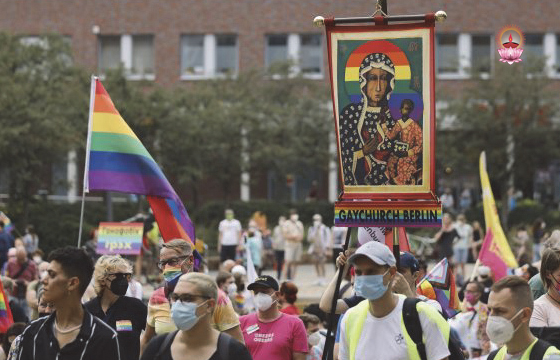
Archbishop Heiner Koch said he would appoint a pastoral minister as a contact person for gays, the Berlin Archdiocese announced. The German Catholic news agency KNA reported Koch made the pledge when he met with representatives of the Lesbian and Gay Association of Berlin-Brandenburg, with the Archbishop saying this was important so that the marginalization and discrimination of the LBGTQ community could be addressed in the church without fear. Koch said he regarded the double marginalization of Catholic gays — within the Catholic community as well as in the LGBTQ community — as “problematic and painful.”
The reason behind the dis-cussion, which the Lesbian and Gay Association had requested, was to look at the contradictions within the Catholic Church and the simultaneous solidarity shown toward LGBTQ people in the wake of the Vatican’s renewed rejection last February of any church blessing for homosexual couples, KNA reported.
Ulrich Kessler, a member of the board of the Lesbian and Gay Association of Berlin-Branden-burg, said he had been surprised and thrilled “that the rainbow flags were also waving from Catholic Church spires, decorated internet pages and posts in the social media and that many church congregations had called out for blessing services.”