
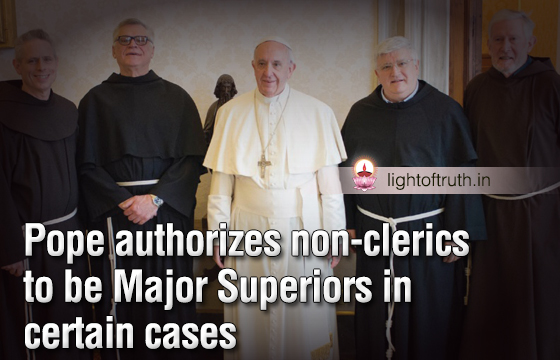
Pope Francis has authorised the Congregation for Institutes of Consecrated and Societies of Apostolic Life to grant dispensations that would allow non-clerics to hold the office of Major Superior in some cases.
The Holy Father did so in a rescript promulgated on May 25, concerning the possibility of a dispensation from Canon 588 §2 of the Code of Canon Law (CIC), which stipulates that that clerical institutes be governed by clerics.
Major superiors, along with their vicars, are those who govern an entire or a part of a clerical institute, and are call-ed to “devote themselves diligently to their office and together with the members entrusted to them are to strive to build a community of brothers or sisters in Christ,” according to the CIC.
Category Archives: International
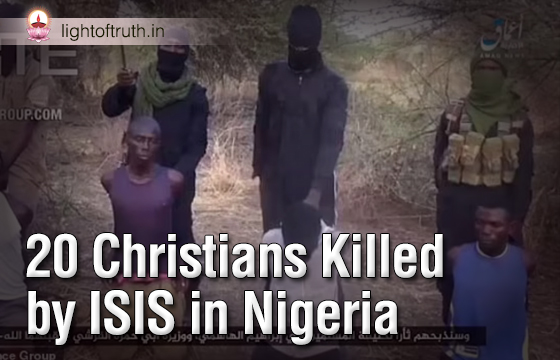
20 Christians Killed by ISIS in Nigeria
ISIS extremists executed 20 Nigerian Christians in a brutal knife attack to “avenge the killing of the group’s leaders in the Middle East.” The Islamic State posted footage of their executions in a vile warning to Nigerians, that they are there, are expanding their territory, and have the intent of imposing a draconian and barbaric rule. The militants carried out the merciless executions in Borno state where rival Islamist groups Boko Haram and Islamic State in West Africa (ISWAP) have been abducting, looting and killing on a huge scale.
Footage of the latest massacre shows one of the executioners saying in the Hausa language that the killings are a response to ISIS deaths in the Middle East earlier this year. It came a week after Islamic rebels killed at least seven people in an attack in northeast Borno.
Over 35,000 people have been killed and many more displaced in West Africa as a result of the extremist groups. The groups are clashing with each other, as well as the local and national governments that oppose them.
The ISIS insurgents attacked Kautukari village in the Chibok area at the same time that UN Secretary-General Antonio Guterres was in the state to meet with survivors of jihadist violence.
The Chibok area is 70 miles away from Maiduguri, the state capital, where Guterres met with former militants being reintegrated back into the society and thousands of people displaced by the insurgency.
Boko Haram and ISWAP were originally aligned but the groups splintered in 2016 and are now considered rivals. “They came in large numbers with superior firepower (and) took over the community,” said Hassan Chibok, a community leader.
Troops from a nearby military base were deployed to repel the attack but “the damage had been done,” Chibok said, adding that “casualties are up to 10.”
Another resident, Yana Galang, said at least seven people were killed in the latest violence before the Nigerian military intervened.
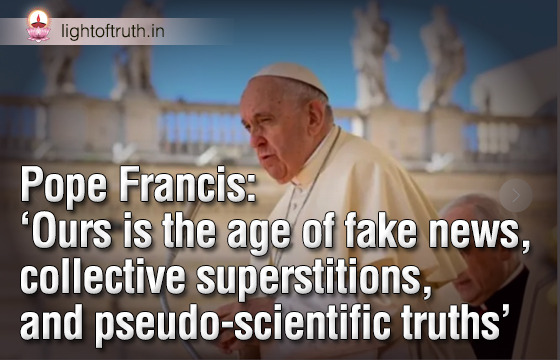
Pope Francis: ‘Ours is the age of fake news, collective superstitions, and pseudo-scientific truths’
Pope Francis said on May 25 that Catholics today are living in an “age of fake news, collective superstitions, and pseudo-scientific truths.”
Reflecting on the Book of Ecclesiastes at his general audience on May 25, the Pope suggested that the 21st century was marked not only by scientific knowledge but also what he called a “cultured witchcraft.”
“It is no coincidence that ours is the age of fake news, collective superstitions, and pseudo-scientific truths,” he said.
Speaking off the cuff, he went on: “It’s curious: in this culture of knowledge, of knowing every-thing, even of the precision of knowledge, a lot of witchcraft has spread, but cultured witch-craft.”
“It is witchcraft with a certain culture but that leads you to a life of superstition: on the one hand, to go forward with intelligence in knowing things down to the roots; on the other hand, the soul that needs something else and takes the path of superstitions, and ends up in witch-craft.”
The pope used the Italian word “stregoneria,” which can be translated as “witchcraft,” “sorcery,” or “black magic.”
The Pope’s live-streamed catechesis was the 11th in a cycle on old age that he began in February. He entered St. Peter’s Square in a white jeep, stopping to invite children in brightly colored clothes to join him for part of his journey among the pilgrims.
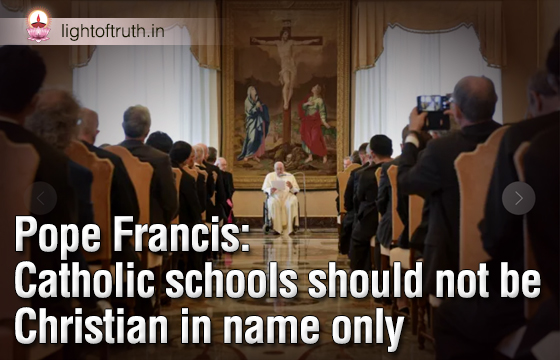
Pope Francis: Catholic schools should not be Christian in name only
Pope Francis said May 21 that Catholic schools should not be Christian in name only, but in fact.
Speaking to the De La Salle Christian Brothers, the Pope underlined that Christians educators must first of all be witnesses to the Gospel.
“The Christian educator, in the school of Christ, is first of all a witness, and he is a teacher to the extent that he is a witness,” Pope Francis said on May 21.
“And above all I pray for you, that you may be brothers not only in name, but in fact. And for your schools to be Christian not in name, but in fact,” he said.
The Pope met with the Christian Brothers as the religious institute is participating in its 46th General Chapter in Rome on the theme: “Building new paths to transform lives.”
“We know that the ‘way,’ the truly new path, is Jesus Christ,” Pope Francis said.
“By following him, by walking with him, our lives are trans-formed, and we in turn become leaven, salt, and light.”
The De La Salle Christian Brothers, formally known as the Institute of the Brothers of the Christian Schools, were founded by St. John Baptist de La Salle to provide Christian education to the young, especially the poor.
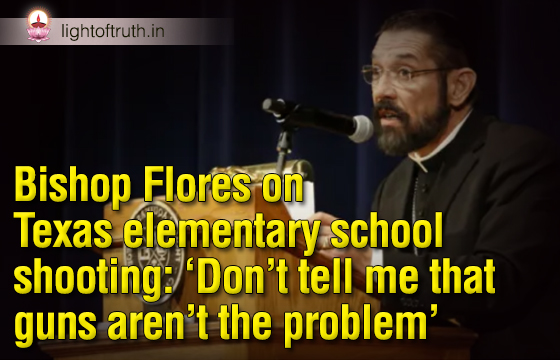
Bishop Flores on Texas elementary school shooting: ‘Don’t tell me that guns aren’t the problem’
Bishop Daniel Flores said on May 25 that he was sick of hearing people say that “guns aren’t the problem” after a gunman killed at least 19 children and two teachers at a Texas elementary school. “We sacralize death’s instruments and then are surprised that death uses them,” the bishop of Brownsville, Texas, wrote on Twitter on May 25, the day after the shooting.
Don’t tell me that guns aren’t the problem, people are. I’m sick of hearing it. The darkness first takes our children who then kill our children, using the guns that are easier to obtain than aspirin. We sacralize death’s instruments and then are surprised that death uses them.
“Don’t tell me that guns aren’t the problem, people are. I’m sick of hearing it. The darkness first takes our children who then kill our children, using the guns that are easier to obtain than aspirin,” Flores said.
It was one of many responses from Catholic bishops around the U.S. after an 18-year-old gunman opened fire at Robb Elementary School in Uvalde, Texas, about 80 miles west of San Antonio. Among the victims were 10-year-old students in the fourth grade.
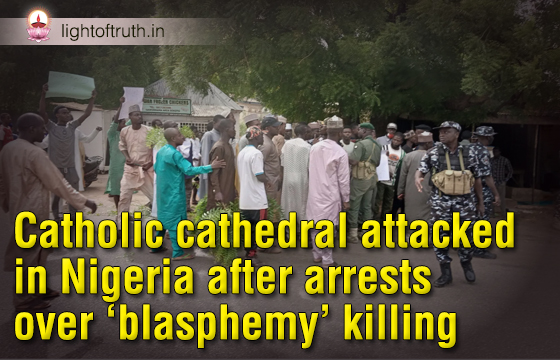
Catholic cathedral attacked in Nigeria after arrests over ‘blasphemy’ killing
A mob has attacked a Catholic cathedral in Nigeria amid protests demanding the release of two suspects in the killing of a Christian student.
The Diocese of Sokoto said in a statement that youths targeted Holy Family Catholic Cathedral in Sokoto, north-west Nigeria, after police arrested two students in connection with the murder of Deborah Samuel.
Samuel, a student at Shehu Shagari College of Education in Sokoto, was beaten and burned on May 11 after being accused of posting “blasphemous” state-ments about Islam in a WhatsApp group.
The Sokoto diocese said: “The Sokoto State Government has declared a 24-hour curfew to help stem the ongoing protests embarked upon by Muslim youth in the state capital today.”
“During the protest, groups of youths led by some adults in the background attacked the Holy Family Catholic Cathedral at Bello Way, destroying church glass windows, those of the Bishop Lawton Secretariat and vandalized a community bus parked within the premises.”
“Saint Kevin’s Catholic Chu-rch, Gidan Dere, Eastern By-pass, was also attacked and partly burnt; windows of the new hospital complex under constru-ction, in the same premises, were shattered.”
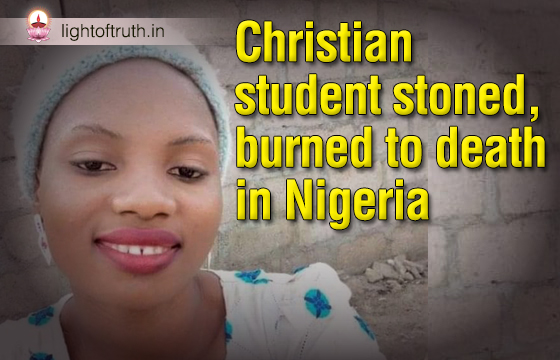
Christian student stoned, burned to death in Nigeria
A Christian student was stoned and then burned in Nigeria for allegedly sending a blasphemous WhatsApp message about Muslim prophet Mohammed during Ramadan. Deborah Yakubu studied at the Shehu Shagari College of Education in Sokoto, northern Nigeria. The college was closed for holidays when the alleged message want. When she returned to class, a group of students was waiting and attacked her, stoning her and then setting fire to her body.
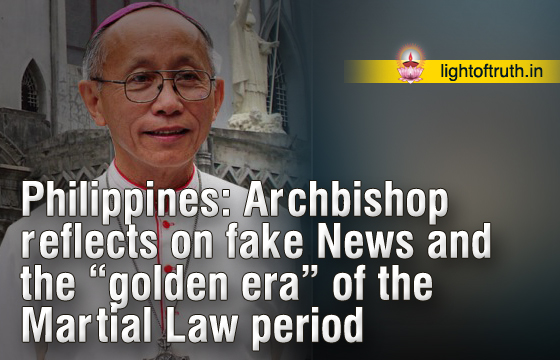
Philippines: Archbishop reflects on fake News and the “golden era” of the Martial Law period
Archbishop Emeritus Antonio J Ledesma SJ of Cagayan de Oro reflects on the results of this week’s presidential elections in the Philippines. “Ferdinand Marcos Jr, known as ‘Bongbong’, the son and namesake of the country’s late dictator, who was ousted by a people’s revolt 36 years ago, is poised to become the next President of the Philippines for a six-year period. He amassed a huge lead over his nearest rival, the liberal human rights lawyer and incumbent vice-president Leni Robredo.
Election Day, May 9th, 2022, has come and gone. We are left with the election results. But who are the real losers and winners? Ten challenges confront us as individuals and as a nation” reflected Abp Emeritus Antonio J Ledesma SJ of Cagayan de Oro. “The massive DISINFORMATION campaign over social media by a particular candidate and his party cannot just be brushed aside. Over the past five to ten years, we are told, this online campaign has been stealthily carried out, reaching the minds and fantasies of cell phone users even in the remotest areas of the country. The dissemination of fake news about the “golden era” of the Martial Law period, the rehabilitation of the Marcos name, the downgrading of the reputations of other candidates, the casting of heroes as villains and villains as heroes – all this was planned with deliberation and strategic targeting of socioeconomic classes as well as age groups.
How can the country prevent this form of brain-washing and “vote buying” in future elections? There are cyber libel laws, but can they be easily implemented? Do we require senders of anonymous online messages to identify themselves? Frequent repetition of lies can eventually be accepted as the truth, a lesson from Goebbels of the Nazi regime.”
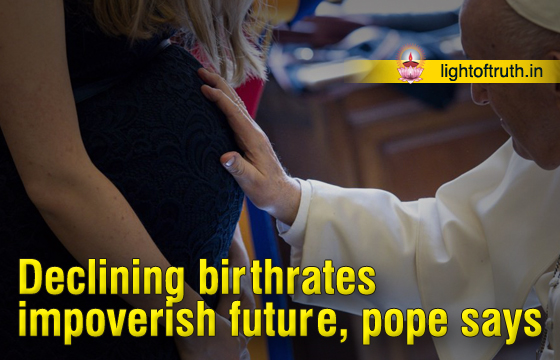
Declining birthrates impoverish future, pope says
The steady decline of birth-rates across Europe and the West are signs of a new form of poverty that deprives humanity of a future, Pope Francis said.
Families unable to have children and young people who struggle with having a family due to economic hardship or the allure of “mediocre substitutes” risk turning the “beauty of a family full of children” into a “utopia, a dream that is difficult to fulfill,” the Pope said in a message sent May 12 to participants of a conference on low birth-rates in Italy.
“This is a new poverty that scares me,” he said. “It is the generative poverty of those who discount the desire for happiness in their hearts, of those who resign themselves to watering down their greatest aspirations, of those who are content with little and stop hoping for some-thing great.”
According to the national statistics agency, ISTAT, Italy’s birth-rate hit an all-time low with 399,431 births in 2021 compared to 404,892 in 2020. Italy, Malta, Spain, Greece and Luxembourg have the lowest fertility rates in Europe.
The two-day “General State of Birth Rates” con-ference, its website stated, aims to “make proposals to reverse the demographic trend” in Italy which has “worsened by the effects of the COVID-19 pandemic.”
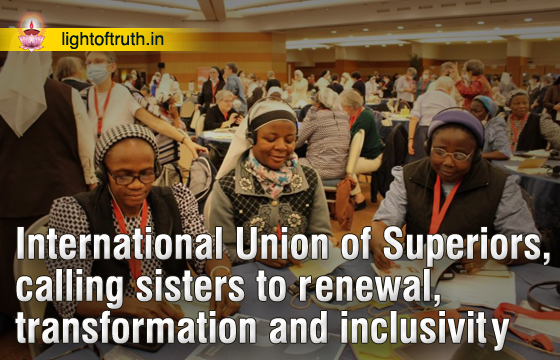
International Union of Superiors , calling sisters to renewal, transformation and inclusivity
With song, prayer and ritual, leaders of women’s religious congregations from around the world concluded five days of meetings in Rome on May 6, affirming their commitment to the process of synodality and em-bracing a journey of vulnerability that they believe is vital for the renewal of the church, religious life and their own communities.
The pledge was a culmination to the May 2-6 plenary of the International Union of Superiors General, during which numerous sisters, theologians and speakers voiced their support for Pope Francis’ vision of a synodal church that embraces its early historical roots, affirms the need for diversity, listens, and is more welcoming to those on society’s margins.
The 23-word commitment, spoken in unison by the 520 sisters attending the plenary in person and silently by another 200 or so who attended online, reads: “I commit myself to live vulnerable synodality through service as a leader, animating it within the community, together with the people of God.”
The plenary brought a strong sense of communion among the sister-leaders participating, UISG President Sr. Jolanta Kafka of the Claretian Missionary Sisters said in an interview after the gathering ended.