
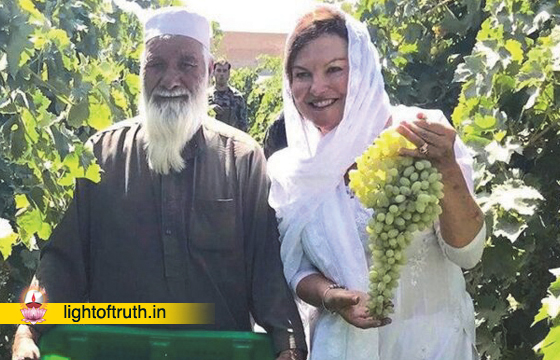
Roots of Peace founder Heidi Kuhn is on a dead-line-driven, life-or-death mission to get her nearly 400 employees out of Afghanistan by Aug. 31.
The Taliban took over the organization’s com-pound in Kabul Aug. 15.
President Joe Biden vowed Aug. 24 in a statement with G7 leaders to stick to the end-of-the-month deadline he set to complete evacuation of “Americans, third-country nationals and Afghans who were allies in the war.”
In an Aug. 25 news conference, the Taliban announced that Afghans will no longer be able to leave the country.
Kuhn, a Catholic mother of four from San Rafael, California, launched rootsofpeace.org in 1997 to clear war-scarred fields in Afghani-stan and other countries of land mines and convert them into life-sustaining farmland.
In Afghanistan alone, Roots of Peace has helped plant over 5 million trees, created over 100,000 full-time jobs and facilitated exports of fruits, nuts and spices to new markets that by 2020 valued $1.4 billion. The Taliban’s attack on the Roots of Peace compound in mid-August occurred as local workers began the year’s harvest of grapes and other fruits of the vine.
In addition to working to secure the safety of her Afghan workers in Kabul, Kuhn and her organization are helping rural farmers throughout the country bring the harvest to market without interruption. The loss of the ready crops and resulting income would further devastate the country and its people, Kuhn said.
Category Archives: From The States
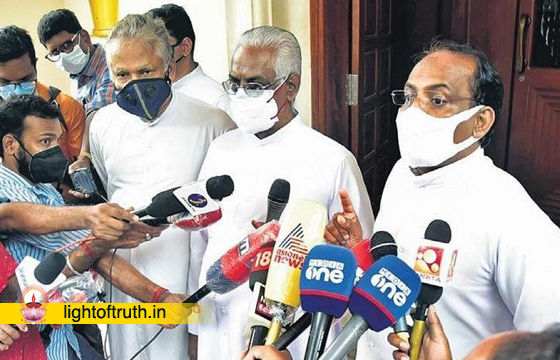
Priests appeal Pope against uniform mode of Mass celebration
All the 456 priests of the Arch-diocese of Ernakulam-Angamaly have written to Pope Francis saying they want to continue to offer Mass facing people, a practice that the Syro-Malabar eparchy has followed for the past 50 years. The memorandum was sent to the prefect of the Oriental Congregation in Rome and the apostolic nuncio in India on August 10, as the Syro-Malabar Synod prepared to discuss Pope Francis’ letter on the controversial issue of liturgy.
The memorandum was also signed by some priests of religious congregations working in the Syro-Malabar archdiocese.
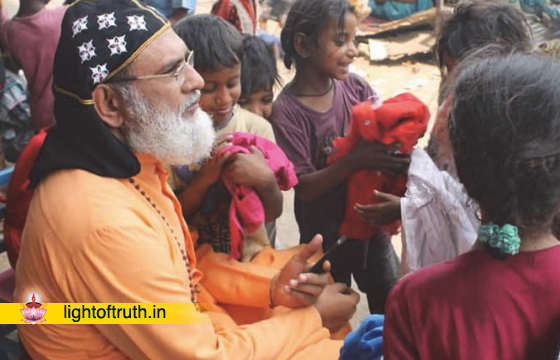
India loses fifth Catholic bishop to Covid-19
Bishop Jacob Barnabas of Gurgaon died of post Covid-19 complications at noon on August 26 in a private hospital in New Delhi. He was 60.
Bishop Bernabas is the fifth Catholic prelate in India to die of Covid-19 and its complications.
The other bishops who died of Covid-19 were Paul Alois Lakra of Gumla in Jharkhand on June 16, retired Archbishop Antony Anandara-yar of Pondicherry-Cuddalore on May 5, and Basil Bhuriya of Jhabua in the central Indian state of Madhya Pradesh, the next day. Retired Bishop Joseph Pastor Neelankavil of Sagar Syro-Malabar diocese died on February 17.
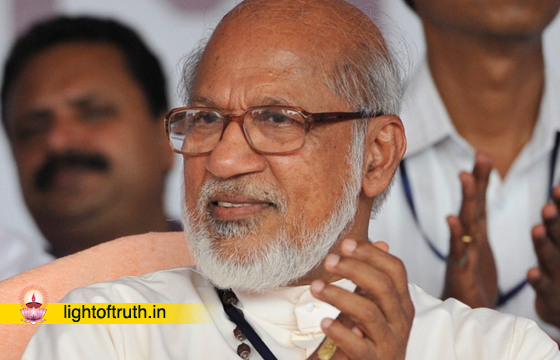
Cardinal Alencherry asked to face trial in land deal case
The Kerala High Court on August 12 said that Cardinal George Alencherry must face trial in the land deal case. The court upheld the verdict of a district sessions court that on August 24, 2019, asked the cardinal and two others to stand trial in the case. The court has dismissed six petitions submitted by Cardinal Alencherry.
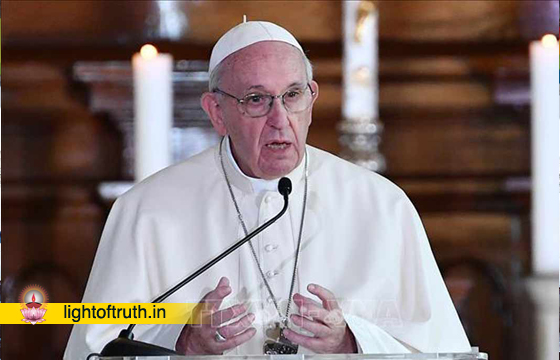
COVID-19: Pope donates 100,000 euros to Vietnam
The Vatican Dicastery for Promoting Integral Human Development announced on 24 August that the pontiff is sending 100,000 euros in emergency aid to the people of Vietnam, which is in a state of dire crisis due to the socio-economic fallout from the pandemic.
In Vietnam, the pope’s act of solidarity joins the Catholic Church’s action in favour of COVID-19 victims, which continues with unreserved dedication.
Credibility crisis wake up call for Indian Church: Theologians
The crisis of credibility is a wake-up call for the Church in India, and the best way to regain is to follow Jesus, who “lived what he taught and what he taught, he lived,” say Catholic theologians in the country. The eroding credibility the Church suffers now is caused by forces outside as well as factors inside, says a statement from the Indian Theological Association.
Although the Church has undertaken concerted efforts to present it as credible in an increasingly hostile environment, it lacks a professional approach to deal with attack in the media and other forums, said the annual meet of the association held online. As many as 45 theologians from across the country addressed the theme, “The Church in India Today: Credibility and Witness,” based on the papers presented by scholars.
The April 25-28 conference noted an urgency to deal with the crisis and reclaim the Church’s credibility so that it becomes authentic in its mission of proclamation and witness. The statement was released to the press on August 11.
According to the theologians, more vexing issues that trouble the Church come from within. The theologians have acknowledged that scandals and scams have severely affected the Church in India. The misuse of power and money, caste discrimination, Dalit and Tribal under-representation, gender discrimination and sexual abuse, and lack of financial accountability have added to the Church’s woes, they add.
“The unfortunate reality in India is that, such instances are not always honestly investigated, nor are the accused persons or bodies audited with transparency,” the statement bemoans.
Regarding the sexual abuse of children and women in the Church, the statement was forthright: “Shrouded in silence, this endemic evil has been kept hidden for a long time… It is not only an individual clergyman’s inappropriate sexual conduct that calls to question the credibility of the Church. It is also the approach taken by the ecclesiastical authority in dealing with this issue that puts at stake, all the more, the Church’s integrity and credibility.”
The statement also cautions about the increasing clericalism in the Church.
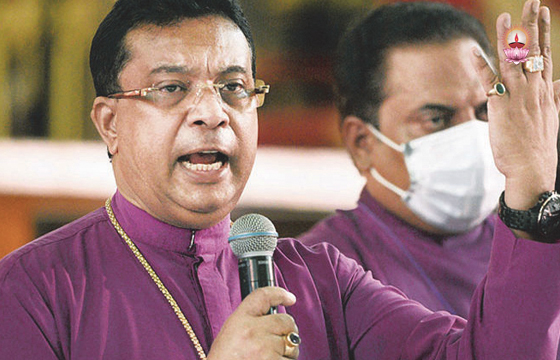
Time for minority voices to be heard: CNI bishop
The death of Father Stan Swamy has taught “minorities to be alive” and unite or else “your voice will not be heard,” says Bishop Paritosh Canning of Calcutta Church of North India diocese.
Father Stan, a Jesuit priest and tribal rights activist, died in judicial custody in July while waiting for bail. He was 84 and ailing.
Reverend Canning said Father Stan was a Christian priest but his work was “not only for Christians” but for “the tribals who are down-trodden,” in one way “minori-ty,” and he came forward to give them “new life” and tell them they had rights in their own land. Father Stan was condemned so that “tribals do not know their rights,” said Bishop Canning.
On August 5, the Bengal Christian Council, affiliated to the National Council of Churches in India, had called a meeting in remembrance of Father Stan. At the event at St Paul’s Cathedral, a minority forum was inaugurated with a call to all minorities to come together.
Speaking on the occasion, Bishop Canning said: “They (the tribals) should not be like us, they will be like tribals all the time. They will be like servants lifelong… This is the cause why Fr Stan… was kill-ed. It was not a normal death.”
Priests appeal Pope against uniform mode of Mass celebration
All the 456 priests of the Archdiocese of Ernakulam-Angamaly have written to Pope Francis saying they want to continue to offer Mass facing people, a practice that the Syro-Malabar eparchy has followed for the past 50 years.
The memorandum was sent to the prefect of the Oriental Congregation in Rome and the apostolic nuncio in in India on August 10, as the Syro-Mala-bar Synod prepared to discuss Pope Francis’ letter on the controversial issue of liturgy. The memorandum was also signed by some priests of reli-gious congregations working in the Syro-Malabar archdiocese, a priest, who did not want to be named, told.
The August 16-24 virtual synod is expected to decide the date to implement the uniform mode of celebrating Mass.
Pope Francis’s letter dated July 3 and made public three days later exhorts the clergy, religious and lay faithful to promptly implement the uniform mode for the greater good and unity of the Church.
The letter also said that Vatican regards implementing the code as an important step towards increasing stability and ecclesial communion in the Syro-Malabar Church.
The letter asked the bishops to persevere and confirm their ecclesial “walking together” with God’s people, trusting that “time is greater than space” and that “unity prevails over conflict.”
After 60 years of Indian rule, Goa’s Portuguese legacy disappears
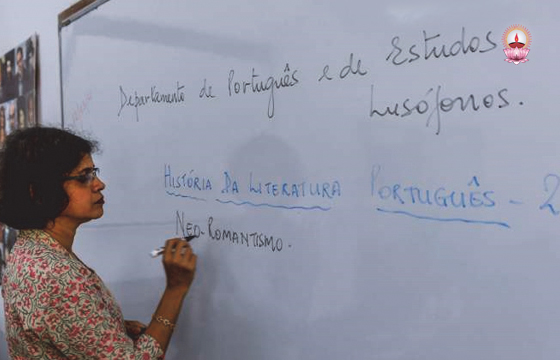
As Lorraine Alberto begins her Portuguese class at Goa University, students from the former colony are in short supply. Across Goa, a tiny coastal state once administered by Lisbon, there is little appetite for the territory’s 450 years of European heritage after a few short generations of Indian rule.
Ramshackle colonial homes and Bollywood’s increasing cultural dominance portend the disappearance of local history in a place where speaking Portuguese was once a passport to status and power.
My children don’t speak it at all,” Alberto told AFP. “They just don’t see the point of learning it.”
Those alive in 1961, when Indian troops marched into Goa and incorporated it into the rest of the country, recall an overnight transformation. India’s exit from the British empire in 1947 spurred many Goans to demand an end to Portuguese rule, but few expected so much to change so quickly.
“It was a very strange feeling … The changes came so fast,” said Honorato Velho, a retired school principal. The 78-year-old once lived next to the grandfather of Antonio Costa, Portugal’s current prime minister, and he fondly remembers a childhood peppered with European and local influences.
But his enthusiasm has not been inherited by the next generation.
“My wife and I still speak Portuguese out of habit, but never with our children,” Velho told AFP.
Indian Church mourns ‘sin of abortion’ with special day
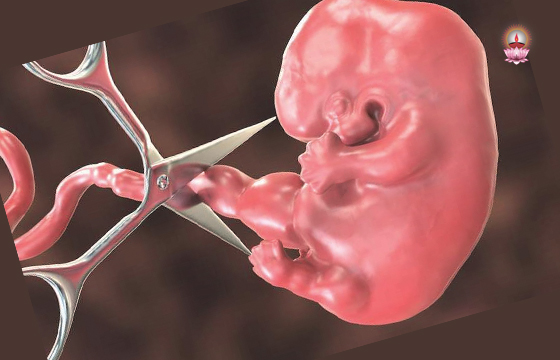
The Catholic Church in India has observed a “Day of Mourning” in memory of millions of babies aborted across the world. As the country marked the 50th year of its Medical Termination of Pregnancy Act, 1971, on Aug. 10, church leaders said it had led to the killing of millions of babies in the wombs of their mothers and called for an end to such a practice as life is a precious gift of God and must be protected.
Cardinal Oswald Gracias, president of the Catholic Bishops’ Conference of India (CBCI), in a message said that “millions of abortions have taken place in our country after that legislation and there is no sign of the slowing down of this anti-life trend.” In 2015 alone, at least 15.6 million babies were aborted in India, he said.
“We held special Eucharistic celebrations in honor of the departed souls of the unborn babies in our churches,” said Father Jacob G. Palackappilly, deputy secretary-general of the Kerala Catholic Bishops’ Council.