

Christians in India have mourned the death of the nation’s oldest Archbishop Alphonsus Mathias, who attended the Second Vatican Council as a participant bishop. The 96-year-old retired archbishop of Bengaluru died at St. John’s Medical College in Bengaluru, the capital of southern Karnataka, due to age-related ailments. “We have lost a great visionary who introduced local languages in place of Latin after the Second Vatican Council amid opposition from the local Church,” said Archbishop Peter Machado of Bangalore (now Bengaluru), who currently succeeds him. A statement from the Indian bishops conference said the late prelate “attended the Second Vatican Council as a Council Father,” convened by Pope John XXIII from 1962 to 1965. Mathias was president of the Conference of Catholic Bishops in India (CCBI), the national forum of the Latin rite bishops, in 1989 and 1993. “We celebrated his diamond jubilee of episcopal ordination in February, a rare for any bishop,” Archbishop Machado told UCA News on July 11. Mathias had “a special love for the poor and the needy,” Machado said. He added that the late prelate also did not want to publicize his charity works. Mathias championed inter-religious harmony and had “many friends and followers” in other religions, observed Machado. Mathias was appointed as the first bishop of Chikmagalur diocese in Karnataka in 1964 at the age of 35. He was made an archbishop in 1986 to lead the Bangalore (now Bengaluru) archdiocese until he retired voluntarily in 1998, citing poor health. His leadership extended to various international bodies. He was chairman of the Commission for Social Communications of the Federation of the Asian Bishops’ Conference and President of Radio Veritas, the radio project of the Asian bishops based in Manila, the Philippines’ capital. He was also a member of the Pontifical Commission for Social Communications and the Council for Justice and Peace in the Vatican. The late prelate, a native of Karnataka, was the fourth child of his parents, Diego Mathias and Philomena D’Souza. His funeral is yet to be finalized.
Category Archives: From The States
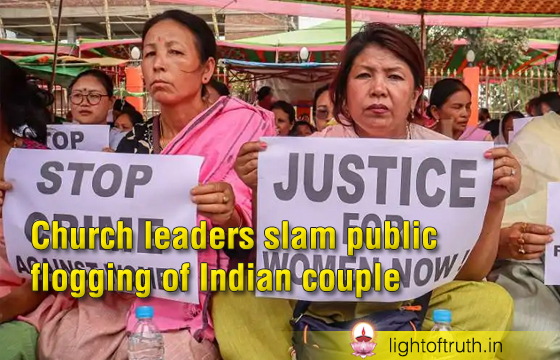
Church leaders slam public flogging of Indian couple
Church leaders and rights activists have condemned the public flogging of a man and woman accused of adultery in a northern Indian state. “The public flogging of man and woman is terrible and has disturbed me… I have read media reports and watched the video. No one can take the law into their own hands in a civilized society,” Archbishop Thomas D’Souza of Calcutta in West Bengal state told. D’Souza said the incident should not have happened in West Bengal as the state is headed by a woman chief minister Mamata Banerjee. On June 28, a mob led by Banerjee’s Trinamool Congress party members attacked the couple with bamboo sticks. A video of the incident went viral and showed more than 200 men watching the flogging. Lying on the ground, the couple were seen pleading for mercy and the man leading the assault was identified as Tajmul Islam, a Trinamool party leader in the Chopra area in Dinajpur district. According to the police, the flogging was ordered by a kangaroo court over allegations of an illicit relationship and Islam was arrested on June 30. The prelate has written to Derek O’Brien, a member of parliament and Trinamool party leader, “to take suitable action” against those involved in the crime. The National Human Rights Commission issued a notice to the West Bengal government after the couple was mercilessly beaten in Dinajpur in full public view. India is notorious for violence against women. The state-run National Crime Records Bureau’s annual reports have revealed a harrowing surge in crimes against women in India. “It was stated [in the video] that the woman was asked to end the affair! Why not the man?” asked Virginia Saldanha, a theologian and former secretary of the Office of Laity and Family of the Federation of Asian Bishops’ Council (FABC). ” This is an unjustified, condemnable action, a mob rule, free for all with no parameters whatsoever and worse than barbaric,” Michael Saldanha, a former justice of the Bombay High Court, told.
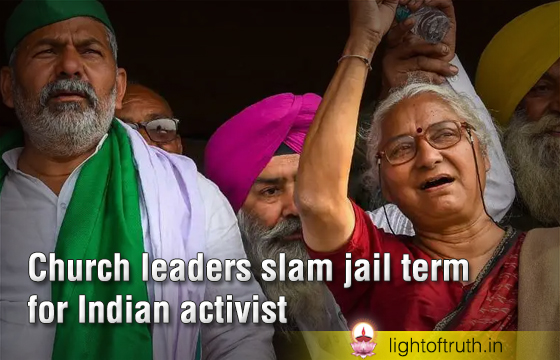
Church leaders slam jail term for Indian activist
Church leaders have condemned an Indian court order to jail for five months a well-known social activist at the center of a 23-year-old libel suit. Medha Patkar, a renowned human rights activist, was sentenced by a metropolitan court in the national capital New Delhi on July 1 in a case filed by the current Delhi Lieu-tenant Governor Vinai Kumar Saxena in 2001.
The court directed Patkar to pay 1 million Indian rupees (some US$12,000) in compensation to Saxena, a leader of the right-wing Bharatiya Janta Party of Prime Minister Naren-dra Modi whose administration is known for targeting social activists, writers, students, lawyers, and journalists. “Convicting Medha Patkar is a travesty of justice,” activist priest Fr Cedric Prakash told on July 2. After all, it is a 23-year-old case, Prakash noted. In 2000, Saxena, who headed an NGO in the western Indian state of Gujarat, published an advertisement against Patkar’s Narmada Bachao Andolan (NBA), a movement that opposed the construction of dams over the Narmada River in western India. After the advertisement, Patkar issued a statement alleging that Saxena was “mortga-ging the people of Gujarat and their resources before Bill Gates.” Subsequently, Saxena filed a libel suit against her in a Gujarat court in 2001. The case was transferred to Delhi in 2003 on the orders of the Indian Supreme Court. Prakash said that Patkar “spoke the truth,” and her statement does not constitute defamation. “The conviction order reeks of vindictiveness,” said the Jesuit priest, who is based in Ahmadabad, the capital of Gujarat, Modi’s home state. Patkar came to prominence with the protest against the Sardar Sarovar Project, a terminal dam on the Narmada River in Gujarat that is due to be completed in 2025. According to the government, the project will provide drinking water to 30 million people. However, Patkar said it would displace more than 100,000 people in 245 villages.
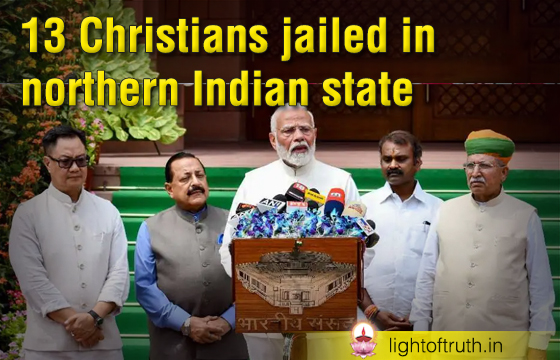
13 Christians jailed in northern Indian state
A Protestant pastor along with his wife, and three other pastors are among 13 Christians jailed in separate incidents in a northern Indian state over allegations of religious conversion. “It is an alarming situation. Within 20 days, 13 people went to prison because of their faith in Jesus Christ,” said a Christian leader who is helping Pastor Sanjay Kumar and his wife, Sunita Devi, to secure bail. The pastor and his wife, who are parents of three children, were arrested in Azamgarh on June 21 by police in Uttar Pradesh. The state, governed by the Bharatiya Janata Party (BJP), has a sweeping anti-conversion law in place. The series of arrests began on June 7 with Abhishek Masih and Anil Masih in Barabanki district. This was followed by the arrest of ` Durgesh Chauhan on June 9 in Ayodhya district.
On June 16, Pastor Paul, who was identified by a single name, and Nandlal Rajbhar were arrested in Ghazipur district followed by the arrests of Ram Chander, Anuj Kumar, Sarvesh Kumar and Hitna, identified by a single name, in Sitapur district on June 19. The latest to be arrested on June 23 were Pastor Sarju Prasad from Ayodhya district and Pastor Naresh Kumar from Hardoi district.The Christian leader said most of them were participating in house prayer meetings when the police arrived after being alerted by local villagers suspecting conversion activities. The police arrested and produced them in local courts seeking they be placed in custody for further investigations. “More than a dozen Christians are being accused of religious conversion even though there isn’t a single person whom they converted,” said a Church leader. He felt the police action may be “the fallout of the general election where Modi and his party lost seats in Uttar Pradesh,” resulting in their reduced majority in parliament.
Uttar Pradesh government is headed by Yogi Adityanath, a Hindu monk-turned-politician. The draconian anti-conversion law was enforced by his government as an ordinance in 2020. It was adopted by the state assembly the following year as the Uttar Pradesh Prohibition of Unlawful Conversion of Religion Act 2021.Since the enactment of this law, Church leaders said close to 450 Christians, including Catholic priests and pastors, have been jailed in the state. Christians make up a mere 0.18 percent of Uttar Pradesh’s more than 200 million people.
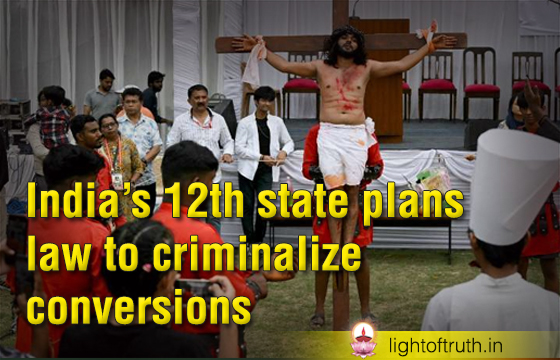
India’s 12th state plans law to criminalize conversions
Yet another Indian state has announced plans to enact a draconian anti-conversion law, which is often used to harass Christians in the country. The Bharatiya Janata Party (BJP) government in the north-we-stern state of Rajasthan dis-closed its intent to curb religious conversions in an affidavit filed before the Supreme Court, the country’s top court, on June 18. The affidavit was filed in response to a public interest litigation by Delhi-based lawyer and BJP Ashwini Kumar Upadhyay seeking stringent steps by federal and state governments to control fraudulent religious conversions, which he called “a nationwide problem.”
The petition alleged the involvement of Christians in fraudulent religious conversion. Eleven Indian states, most of them ruled by the BJP, have enacted the draconian law, ironically named as freedom of religious acts. But Rajasthan “lacks a specific legislation” to curb conversions, according to the affidavit filed by the state government. After defeating the secular Congress party, the BJP formed a government in Rajas-than in December last year. “There is no doubt enactment of an anti-conversion law will make Christians vulnerable to hardline Hindu groups,” said a Catholic priest based in Rajasthan. According to Christian leaders, Hindu nationalist groups and activists may misuse the anti-conversion law to target them with impunity. “Laws are made when there is a need for them. But in this case, there is no such need,” said A.C. Michael, a Catholic leader based in Delhi. Michael, a former member of the Delhi state minority commission, said that the proposed law “will only make the life of Christians difficult.” Christians face severe atrocities in the neighboring state of Uttar Pradesh, ruled by the BJP. The draconian anti-conversion law was first enforced as an ordinance in 2020 and adopted by the state assembly the following year as the Uttar Pradesh Prohibition of Unlawful Conversion of Religion Act 2021. Since the implementation of the law, close to 400 Christians, including Catholic priests and pastors, have been jailed in the state under the sweeping law. “We cannot rule out a similar situation in our state,” said a priest attached to the Udainagar diocese in Rajasthan. India’s top court is hearing public interest petitions challenging the constitutional validity of the anti-conversion laws passed by the states.
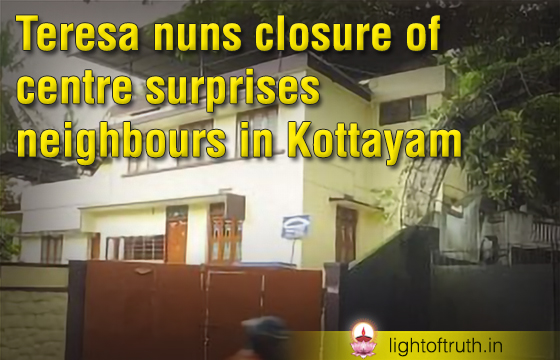
Teresa nuns closure of centre surprises neighbours in Kottayam
Neighbours of Shanti Bhavan (home of peace), a Missionaries of Charity centre in Kerala’s Kottayam town, have expressed surprise at the closure of the centre that had served the poor and destitute for half a century. The centre, opened by Mother Teresa in 1974, was closed June 21.
“We do not know why they closed and left the place,” said Jolly Varghese, a social worker in Kottayam. “Before they left, the sisters transformed their 55 inmates to other centers,” the Catholic layman told Matters India June 23. He said he knew the nuns for 45 years. “I was born and brought up in Kottayam town and have seen them coming to our colonies for charitable works. They wiped the tears of the poor, giving them food and medicine,” Varghese recalled. He said people used to bring people they found lying helpless on the street to the nuns. “The sisters welcomed them with love. We have brought many destitute people here,” he add-ed. He said he was shocked to see the centre’s gate closed when he was “passing by un-expectedly this way. It breaks my heart.” He said the neighbours would have stopped the closure if they were informed early.
His wife Nimmy said they had experienced the nuns’ kindness many times. ”Once we were going to the church in an auto with our two children, when we found a man on the street in a very bad shape. We took him to Shanti Bhavan and requested the sisters to attend to him. They gladly offered to help, and after the Mass we took him to another centre. There are several cases when sisters cooperated with us,” she added. The nuns have apparently given the keys of the centre to the diocese of Vijayapuram.
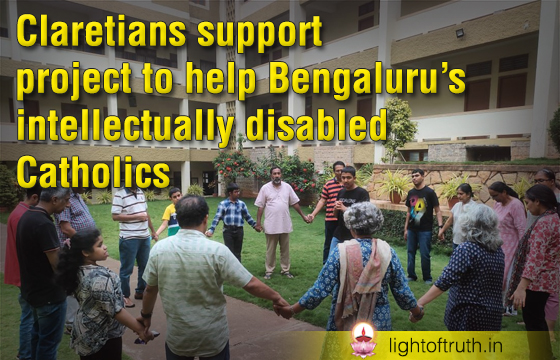
Claretians support project to help Bengaluru’s intellectually disabled Catholics
Catholic parents of some intellectually disabled children in Bengaluru got a boost with the Claretians offering support to an exclusive housing project for their community living. “Since four years, we have been dreaming of this project as we were really worried about our disabled children’s future after our death,” Merly Thomas, one of the parents, told a June 23 meeting at Claretian Seminary in the southern Indian city. Merly, a member of the Bangalore Archdiocesan commission for differently abled, says the Claretian support now helps them build the common living facility where children with intellectual disabilities and their parents can live with dignity. Claretian Father George Kannanthanam, who brought his congregation to the project, says he had seen parents of many differently able children worried about what would happen to their children when they are no more. The priest impressed upon his provincial to allot two acres of land for such families at Gauribidanur, on the outskirts of Bengaluru city. Kannanthanam, who had earlier served as the first secretary to the Bangalore diocesan commission for the disabled, said the Hope Society that functions under the Claretians will give wings to the project. The Archdiocese of Bangalore was first in India to set up a commission to ensure better participation of persons with disabilities in the life of the Church, he recalled.
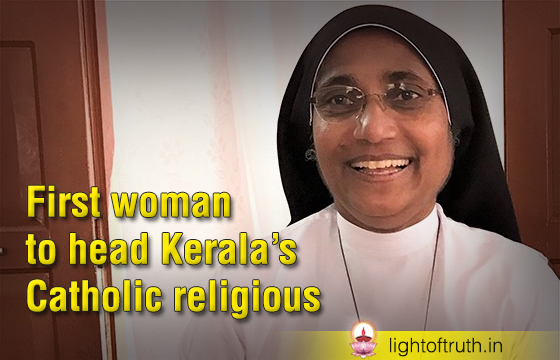
First woman to head Kerala’s Catholic religious
Sister Ardra Kuzhinapurathu is the first woman to head the major superiors of Kerala, the southern Indian state that has produced the largest number of Catholic religious men and women in the country. She became the president on June 7, 2023, at a joint meeting of the Kerala Catholic Bishops’ Council and the religious superiors. The Kerala unit is part of the Conference of Religious India, the national association of the major superiors, with more than 130,000 members, among them 103,000 women. Sister Kuzhinapurathu spoke to Global Sisters Report about various challenges faced by the religious congregations in India – dwindling vocations, aging members and the culture of working together.
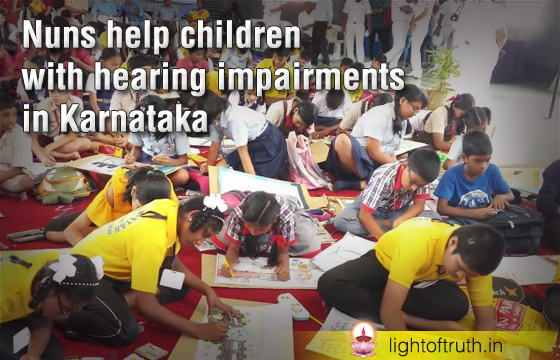
Nuns help children with hearing impairments in Karnataka
Prasad James cannot hear the roar of the sea, but can paint the beauty of the waves. “I have painted the charming Karwar beach, its waves, fishermen with their boats, tourists, and the beautiful sunset,” James told Global Sisters Report in sign language, translated by his teacher, as he showed his works. The sixth grader is among 48 children currently studying in Asha Niketan (House of Hope) Deaf School, a residential school for children who cannot hear or speak managed by the Sisters of the St. Joseph of Chambery, a French congregation, for the Karwar Diocesan Development Council. The center, founded in 1996 near a beach in Karwar on the Goa-Karnataka border, is the first Church-managed school for children with hearing impairments in Karnataka state’s northern region. It now caters even to villagers of Maharashtra, Karnataka’s northern neighbor. “Children seem to enjoy their silent world, but we really struggle to get into that world,” said Sister Tresa Irudayasamy, one of three nuns who live on campus and teach the stu-dents in sign language. The nun, who’s been the hostel warden for four years, has built a good rapport with the children, but said she still struggles in the classroom to teach them. “We use our universal language of love and care mostly, and it works better than our sign language,” she told GSR with a smile.
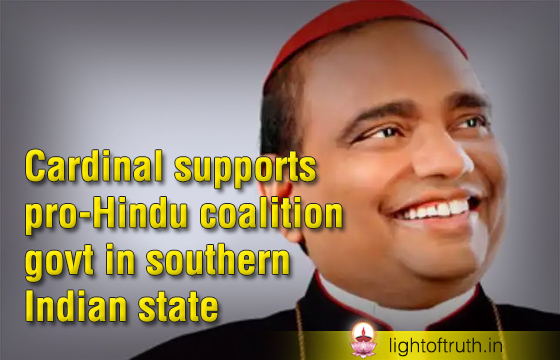
Cardinal supports pro-Hindu coalition govt in southern Indian state
Indian Cardinal Anthony Poola has pledged the Christian com-munity’s support for the new government in southern Andhra Pradesh state that unseated a Christian-led government in the recently concluded polls.
N. Chandrababu Naidu was sworn in as state chief minister on June 12 for the fourth time. He heads a coalition government com-prising his Telugu Desam Party (TDP), regional Jana Sena party, and the pro-Hindu Bharatiya Janata Party (BJP). In a letter to the new chief minister, Cardinal Poola assured “support of the Catholic Church and the Christian com-munity” to make the state “inclusive and sustainable.” The 62-year-old cardinal, archbishop of Hyderabad in the neighboring Telangana state, also promised “prayers for prosperity, peace and harmony in Andhra Pradesh.” He was made a cardinal in 2022. His Telangana state was carved out of Andhra Pradesh in 2014. The cardinal heads the regional Telugu Catholic Bishops’ Council, which includes all the Catholic bishops of Andhra Pradesh and Telangana. Telugu is the official language of both the states.
“We hope the alliance partners will keep a check on the BJP,” said Father Anthony Thumma, advisor to the Telugu Federation of Churches. Nadu’s alliance came to power after defeating the YSR Congress, a regional party headed by Jagan Mohan Reddy, a Church of South India member. He led the state government for five years and kept friendly terms with the BJP. Both Naidu and Reddy “always worked for the welfare of the people, especially for minorities in the state,” said Fr Thumma, also secretary of the Indian bishops’ Office of Dialogue and Ecumenism.