Category Archives: From The States

Indians protest attacks on Dalits for sporting mustaches

Indians belonging to socially poor Dalit groups are protesting upper caste men attacking their young men for issues such as watching a dance or sporting a mustache.

A 17-year-old Dalit boy was stabbed Oct. 3 for sporting a mustache in Limbodara village of the western Indian State of Gujarat.

Two days earlier, a Dalit youth was beaten to death for watching a folk dance at a temple in Borsad village of the same state. The event was organized by people belonging to the upper caste.

On Sept. 25, a Dalit youth in Limbodara village in Gujarat was also attacked for sporting a mustache followed by a similar incident on Sept. 29.

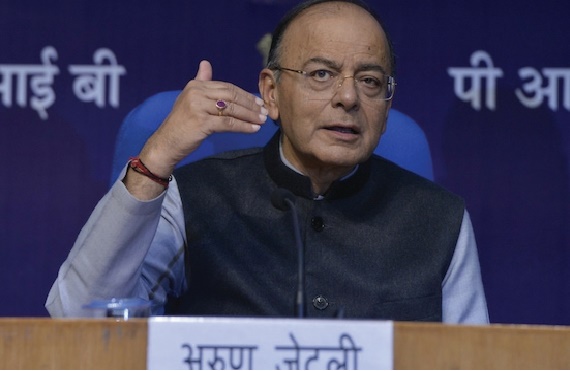
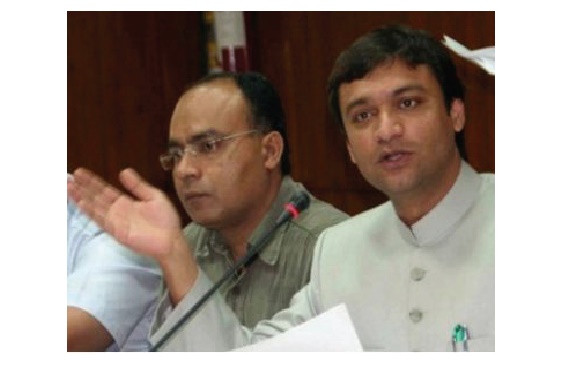
Jignesh Mevani, leader of the Rashtriya Dalit Adhikar Manch (National Forum for Dalit Rights) in Ahmedabad, the state’s commercial capital, told ucanews.com that they plan to widen the protest.

“If Dalits keep a mustache, buy new clothes or a bike, some feudal forces cannot tolerate it and try to suppress the community,” he said.

Convention released 10-year plan for Kerala Latin Church

The Latin Church of Kerala held a convention on the Mission Congress and Basic Christian Community.

Apostolic Nuncio Archbishop Giambattista Diquattro and secretary of the Pontifical Congregation for the Evangelisation of Peoples Archbishop Protase Rugambwa were attended the three-day convention held at the famous Marian shrine at Vallarpadam in Kochi from October 6.

All bishops of the Latin Church in Kerala and Conference of Catholic Bishops of India president Cardinal Oswald Gracias were the other participants.

A 10-year plan of the Kerala Latin Church was be released at the convention. The convention was addressed various subjects related to the church in the southern Indian state.

Catholics castigated for opposing Muslim cemetery in Goa

A Catholic Church official in Goa cautioned against “increasing intolerance” in the coastal state, while also disapproving efforts of a section of lay Catholics to obstruct allocation of land for a burial ground for Goa’s Muslim community.

The statement issued on behalf of the Goa Archbishop Filipe Neri Ferrao, has also said that disposal of dead bodies is a basic right of every religious community, including Muslims, and appealed to Catholics to peacefully facilitate the setting up of a Muslim burial ground.

New Syro-Malabar Eparchies in Shamshabad and Hosur

Pope Francis has erected two new Syro-Malabar Eparchies, Shamshabad in Telengana and Hosur in Tamil Nadu.

Bishop Raphael Thattil, at present the Auxiliary Bishop of Trichur, and Fr Sebastian (Jobby) Pozholiparampil of the clergy of Irinjalakuda has been appointed the first Bishops of Shamshabad and Hosur, respectively.

The Pope has also extended the boundaries of the Eparchies of Ramanathapuram and Thuckalay, both in Tamil Nadu.

US Senators ask new envoy to India to focus on human rights

US Senators have asked America’s ambassador designate to India, Kenneth Juster, to focus on human rights, ‘rise of Hindu nationalism’ and trade issues, apart from promoting security ties, during his stint.

Juster was repeatedly asked about religious freedom, minority rights and human trafficking in India during a confirmation hearing at the Senate Foreign Relations Committee on Oct 3.

The committee is expected to confirm Juster, a top economic aide of President Donald Trump and one of the key architects of the Indo-US civil nuclear agreement, as ambassador to India.

Both Republicans and Democrats recognise Juster’s experience and understanding of India. However, during the Senate hearing, he faced a barrage of questions and a flood of advice on how to deal with New Delhi.

Government seals off Catholic mission in central India

Government officials in a remote area of central Indian Madhya Pradesh state have impounded the property of a Catholic mission and forced its priest out of the premises, allegedly under pressure from right-wing Hindu activists.

The 20-year-old mission in Mohanpur village of Guna district was “sealed” over a land title dispute and Father Siljo Kidangan forced out on Sept. 12, local Bishop Anthony Chirayath told ucanews.com. Father Kidangan said government officials acted under pressure from members of hard-line Hindu groups who are opposed to the mission’s work and accuse it of trying to secure religious conversions.

The mission aims to help poor villagers by coordinating several welfare projects.

Mohanpur and some 40 nearby villages are provided with basic amenities and a hostel for about 15 boys studying at a nearby government school.

A Hindu right-wing activist group on Sept. 11 went to the mission demanding that the priest and schoolboys vacate or face dire consequences, Bishop Chirayath said. The priest refused to move.

However, the next morning govern-ment officials, a village headman and two police constables threatened the priest and confiscated the hostel by locking and sealing it. Local Sub-Divisional Magistrate Dinesh Shukla confirmed with ucanews.com that the government has taken over the land and the hostel building as the Church “lost a case” with the Land Revenue Board on Sept. 8.

Two local Hindus filed a case in 2005 claiming that the Church did not have mandatory title deeds for the mission land, which was donated to a tribal Catholic priest by a local tribal villager.(see Focus)

Role of laity in Church activities stressed 

The Synod of the Syro-Malabar Church has called for finding solutions to the problems faced by families and the larger society by taking into consideration the perspectives of the laity.

It was observed that the progress made by lay people has significantly influenced the multifarious activities of the church. Priests and church officials should try to understand the sentiments of the laity regarding issues such as unemployment, housing, diseases, alcoholism, consumption of addictive substances and frictions in families. The church attached critical importance to renewal of families. The priests and the church officials should constantly communicate with the laity for the comprehensive understanding of problems faced by families and society which called for novel solutions, reported the Hindu.

The Synod took pride in social activities undertaken by the laity such as the running of old-age homes, orphanages, and institutions for mentally challenged children and distribution of food in hospitals. The Synod held at Kakkanad Mount St Thomas concluded.

Church officials see no hope in India’s first tribal university

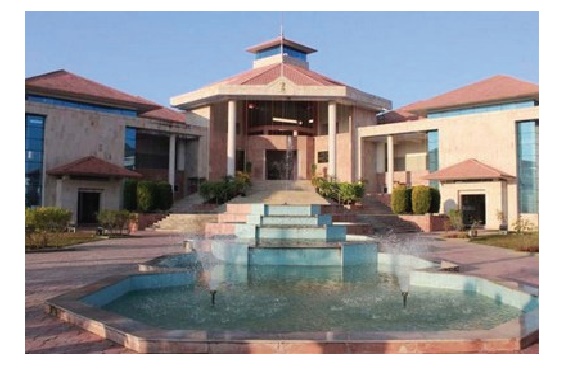
A government-funded institute for tribal advance-ment in the eastern Indian State of Odisha has become the nation’s first tribal university, however Christian leaders have expressed doubts as to how much it will achieve. The central criticism is that the focus will continue to be on teaching the Hindu religion and culture rather than on preserving tribal traditions. The Federal Ministry of Human Resource Development on August 25 awarded “deemed university” status to the Kalinga Institute of Social Sciences, a facility for indigenous children from kindergarten to postgraduate level.

The institute, based in Odisha’s capital, Bhubaneswar, was established in 1992. It offers residential education to some 25,000 “poorest of the poor” indigenous children and plans to educate some 200,000 children in the next decade, its website states. Among those who believe the new status will not help tribal people is Father Nicholas Barla, Secretary of the Catholic Bishops’ Conference of India Commission for Tribal Affairs. He says in the past 25 years of existence the institute had “done more harm that good.”

Delhi minority schools seek ways to protect constitutional rights 

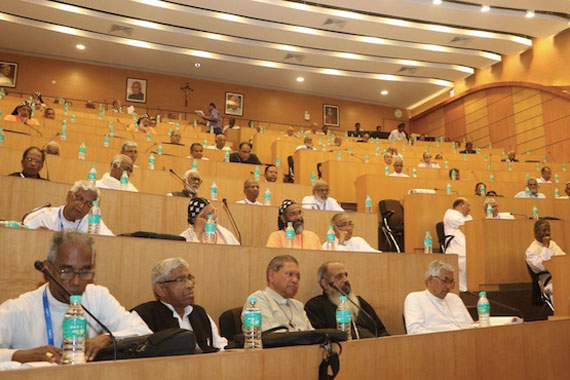
Heads of more than 40 minority schools in the national capital met on September 2 to seek ways to remain alert to attempts to erode constitutional freedoms and protections provided to such institutions.

They belonged to the Forum for Minority Schools in Delhi and Bishop Theodore Mascarenhas, secretary general of the Catholic Bishops’ Conference of India (CBCI), brought them together. The meeting at the CBCI Centre “was a step towards creating a joint platform for exchange of ideas and concerns relating to minority education institutions,” says a press release issued by Bishop Mascarenhas, who is also the conference’s spokesperson.

The meeting, the prelate noted, came as these institutions have gone to the court challenging orders of the Delhi government’s Directorate of Education regarding refund of fees. The minority schools also face statements and policy matters regulating admission and staff administration and other concerns. These moves affect the constitutional freedoms and protections provided to such institutions, it added.