Category: From The States

  • Coadjutor for Patna, administrator for Palayamkottai appointed 

    Coadjutor for Patna, administrator for Palayamkottai appointed 

    Pope Francis on June 29 transferred Bishop Sebastian Kallupura of Buxar to Patna archdiocese as the coadjutor. Both the dioceses are in Bihar, eastern India.

    On the same day, the pontiff accepted the resignation of Bishop Jude Gerald Paulraj A of Palayamkottai, Tamil Nadu, and appointed Archbishop Antony Pappusamy of Madurai as the diocese’s apostolic administrator.

    Bishop Kallupura has been the Buxar bishop since June 21, 2009. Earlier, he had served Patna arch-diocese as pastor in various parishes.

  • Pope appoints apostolic administrator for Syro-Malabar major archdiocese

    Pope appoints apostolic administrator for Syro-Malabar major archdiocese

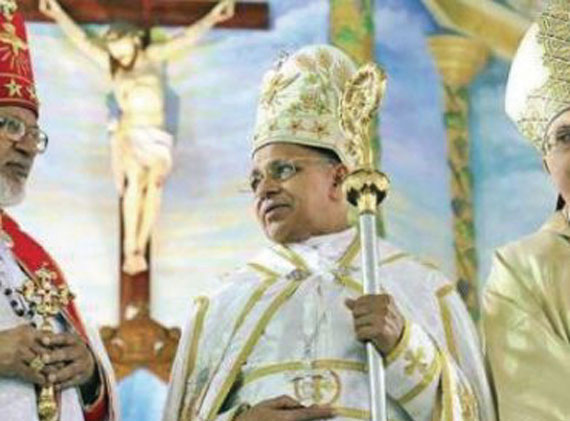
    While Cardinal George Alencherry still retains the title of major archbishop of the Syro-Malabar Archdiocese of Ernakulam-Angamaly, Pope Francis named an apostolic administrator to run the Indian archdiocese.

    The Pope appointed 71-year-old Bishop Jacob Manathodath of Palghat to be the apostolic administrator “sede plena,” or effective head, of the archdiocese, said a Vatican press release on June 22.

    “It shows a grave situation of ethical violations and the inability of the synod to effectively settle the issue,” he told ucanews.com.

    In 2011, Alencherry, now 75, was selected by the Syro-Malabar Catholic Church’s decision-making Synod and confirmed by the Pope to be major archbishop and head of the Eastern Church. Pope Benedict XVI elevated him to the College of Cardinals in 2012.

    Ucanews.com reported a letter from Cardinal Leonardo Sandri, prefect of the Vatican’s Congregation for Eastern Churches, said, “There remains the grave and worrying” situation of division between priests, auxiliary bishops and Cardinal George Alencherry.

  • India’s Mizoram snubs Yoga Day as ‘anti-Christian’

    India’s Mizoram snubs Yoga Day as ‘anti-Christian’

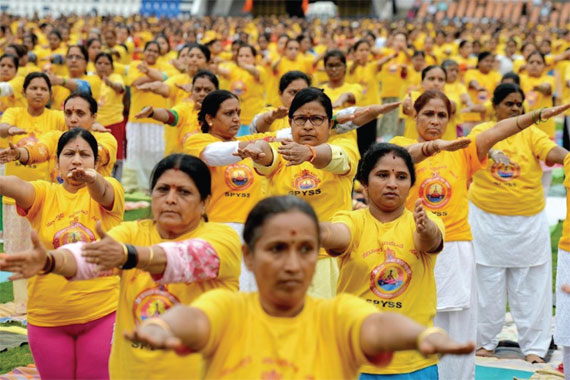
    World Yoga Day proved a big hit across India on June 21 as Prime Minister Narendra Modi urged the nation to revel in and promote its culture but it was largely ignored in Christian-dominated Mizoram State. While many Catholics in other parts of the country joined the mass group exercises organized that on June 21, some religious groups in the north-eastern state dubbed the event “anti-Christian,” according to local media.

    “Ours is a Christian state. We cannot accept yoga because we see it as a part of Hinduism,” said Vanlalruata, president of the People’s Representation for Identity and Status of Mizoram (Prism), a newly floated political party. “We refuse to practise yoga and we will keep opposing this celebration in our state,” he added.

  • Arunachal chief minister promises to repeal anti-conversion law 

    Arunachal chief minister promises to repeal anti-conversion law 

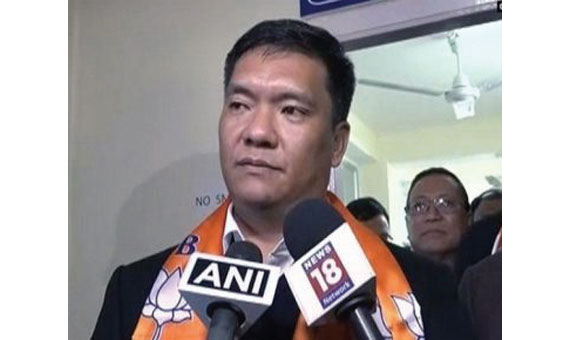
    Arunachal Pradesh Chief Minister Pema Khandu on June 28 announced that his government would repeal the anti-conversion law the north-eastern Indian state passed 40 years ago.

    “The anti-conversion law could undermine secularism and is probably targeted towards Christians,” said Khandu while assuring he would introduce steps to repeal the draconian law in the next assembly session to prevent its misuse in future by irresponsible officials.

    Khandu was speaking at the tenth death anniversary of Prem Bhai, a Benedictine missionary who is considered the “Saint Paul” of Arunachal Pradesh. He endured repeated arrest, imprisonment, beatings and wore disguises to evangelize in the north-eastern state. Born Henry Gaikwad in the western Indian State of Maharashtra, the missionary was popularly known as Prem Bhai (loving brother). He died on June 28, 2008, in Colombo, Sri Lanka, following a heart attack the previous day. He was 45 at the time of his death. He was buried in Banderdewa, a village near the Arunachal Pradesh capital of Itanagar.

    The chief minister said although he had not heard of Prem Bhai earlier, the testimonies of many about the Christian missionary’s efforts to promote communal harmony, peace and love among the people of Arunachal Pradesh have impressed him.

    Khandu, 38, expressed concern about the persecution Christians faced because of the infamous law against conversion in Arunachal Pradesh, especially when the state was a territory directly ruled by the federal government. The Arunachal Pradesh Freedom of Religion Act or the Anti-Conversion Law was passed by the state Assembly in 1978. It says no person should convert or attempt to convert, either directly or otherwise, any person from one religious faith to any other religious faith by the use of force or by inducement or by any fraudulent means nor should any person abet any such conversion.

    The chief minister expressed surprise that the discriminatory law against Christians had not been repealed, even though it was not being enforced. He said that in the future there could be a chief minister, chief secretary or director general of police who could have malicious intent, to misuse the Act. “Any misuse of the law leading to torture of people could trigger large-scale violence in the state and could break Arunachal into pieces,” the chief minister warned.

  • Jharkhand’s move to weaken land rights meets opposition

    Jharkhand’s move to weaken land rights meets opposition

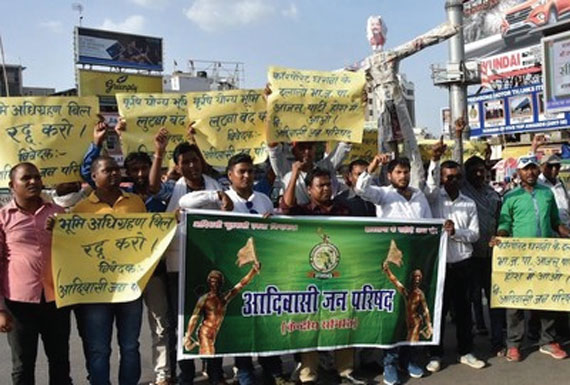
    The amendment allows the state government to alter a five-year-old federal law that aims to protect the rights of farmers and indigenous people when acquiring their land for state development purposes. Protests and sit-in-demonstrations have been held in several locations around the state following media reports that President Ram Nath Kovind had agreed to the amendments. “The approach of the current government is more pro-rich rather than strengthening the poor,” said Auxiliary Bishop Telespore Bilung of Ranchi, who like other Christian leaders, believes the move dilutes a stricter federal law. The amendment allows the state government to alter a five-year-old federal law that aims to protect the rights of farmers and indigenous people when acquiring their land for state development purposes.

    Nearly 20 opposition parties, including Congress and Jharkhand Mukti Morcha (Jharkhand Liberation Front), have demanded the state scrap the amendments and conducted a sit-in protest in front of the Ranchi residence of state governor Draupadi Murmu, the representative of the Indian president on June 25. Protesters also gathered outside district headquarters across the state. If the government fails to scrap the move, the opposition plans to hold a state-wide shutdown on July 5. Meanwhile the ruling pro-Hindu Bharatiya Janata Party has been conducting its own campaigns and demonstrations to garner support for the changed federal law.

  • Church hails big fall in India’s childbirth deaths

    Church hails big fall in India’s childbirth deaths

    Church leaders have welcomed a big reduction in India’s maternal mortality rate, with nearly 12,000 fewer women dying during childbirth in 2016.

    They said the improvement was the result of a joint effort by government and private health workers.  India’s maternal mortality rate (MMR) registered a 22% reduction in three years. The rate declined to 130 deaths per 100,000 births in 2014-16 from 167 deaths in 2011-13, according to data released by the Registrar General of India on June 6. This meant India saved the lives of nearly 12,000 pregnant women in 2016, UNICEF said in a statement analyzing the data.

    “India has shown impressive progress in reducing maternal deaths, with nearly 1,000 fewer women now dying of pregnancy related complications each month in India as compared to 2013,” UNICEF’s India representative Yasmin Ali Haque said.

    The result is “very encouraging for us all because the church is at the forefront of the health sector in the country,” said Father Mathew Peru-mpil, secretary of the health office of the Indian Catholic Bishops’ Conference.

    He said one reason for the achievement was that people were made aware about facilities by the government and privately run health centres.

    The government has introduced several schemes to provide free medicine and health checks for pregnant women in state facilities. Federal schemes are also available to ensure healthy food for pregnant women and newly born babies and their mothers. The World Health Organization (WHO) said the government’s efforts to improve access to high-quality maternal services and increased emphasis on women’s education are some of the reasons behind India’s ground-breaking progress.

  • Muslim students protest Catholic College banning hijab

    Muslim students protest Catholic College banning hijab

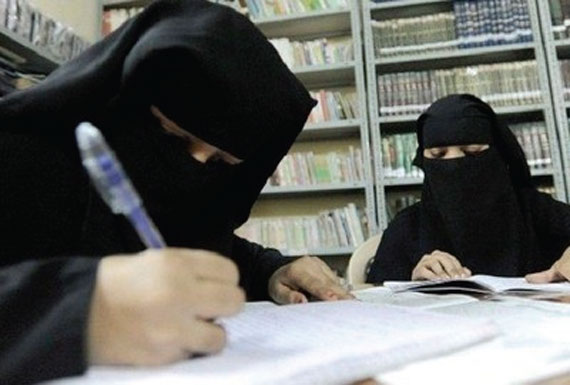
    A Catholic college’s decision to ban Muslim girl students from wearing hijab sparked protest outside the college campus on June 25.

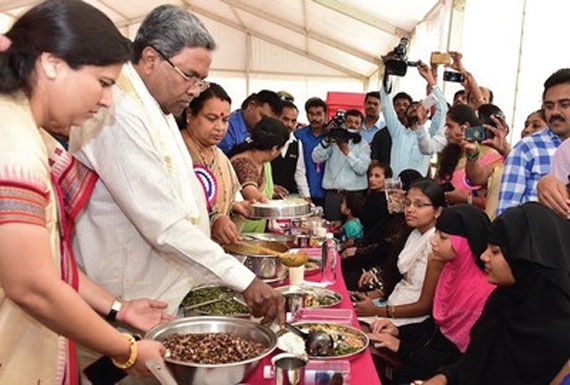
    St Agnes College, Mangalore, has ordered the Muslim students not to wear hijab in the classroom saying the headdress does not conform to the college’s dress code.

    In a press statement Principal Sister Jeswina said St Agnes is a “minority institution” catering to women’s education and it respects every student. But the college rules do not permit “headscarves in the classroom.”

  • Join hands to solve issues in Church: Alencherry 

    Join hands to solve issues in Church: Alencherry 

    The faithful should work together to solve the issues being faced by the archdiocese, Syro-Malabar Church Archbishop Cardinal Mar George Alencherry has said.
    “We should reach unity through faith and try to become matured,” he said while delivering introductory message at the installation ceremony of Bishop Mr Jacob Manathodath as the Apostolic Administrator of Ernakulam-Angamaly Archdiocese at the St Mary’s Cathedral Basilica.

  • Despite criticism, major superiors of India working for the country

    Despite criticism, major superiors of India working for the country

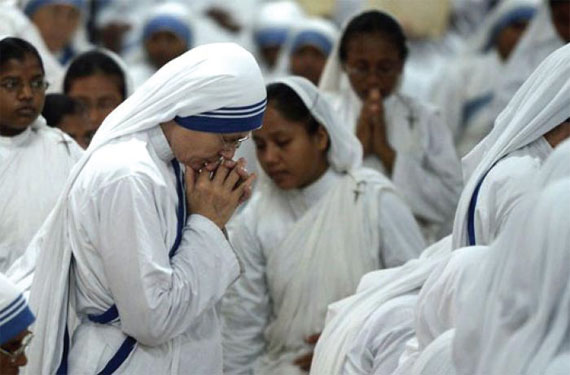
    The Conference of Religious India held a meeting in Chennai (Tamil Nadu) from 27 to 30 May. Participants agreed that, despite criticism of Christians, they will continue to work together for the good of the country.

    Speaking at the event, Msgr Theodore Mascarenhas, secretary general of the Catholic Bishops’ Conference of India (CBCI), reiterated the importance of Church unity, stressing the need for everyone – bishops, Caritas, religious and laity – to work together.

    Speaking to AsiaNews, Fr Rayarala Vijay Kumar, regional superior of the Pontifical Institute for Foreign Missions (PIME), said that the meeting provided an opportunity to talk about the country’s political situation, ahead of next year’s general elections.

    The venue also gave participants a chance to reiterate “the commitment of the Catholic Church to the needy people of India,” Fr Kumar said, “not only their material needs,” he added, “but spiritual ones as well.” The general assembly of superiors of religious – male and female – congregations is held every three years. About 550 superiors and representatives of Church hierarchies were present at this year’s meeting, including Msgr Giambattista Diquattro, apostolic nuncio to India and Nepal.

    “One thing we greatly appreciated was the fact that the nuncio stayed for all four days,” Fr Kumar said. “He spoke to at least with 250 men and women religious. This shows the Vatican’s interest in India.”

    Taking a cue from a topic dear to Pope Francis, the Assembly discussed “the Church going forth,” i.e. “the Church going out to the edges (or peripheries) of society,” Fr Kumar explained. “It means finding the Lord in those who thirst for him, the marginalised, and lend a helping hand to those in need.”

    With the term edge (or periphery), “we mean being on the margins – the needy, the poor, the sick – but also spiritual, that is, those who live in the misery of the spirit, whether rich or poor.”

    Fr V.M. Thomas, a former CRI president, was one of the first to speak. He highlighted the challenges the Indian Church has to face at a very delicate moment in the country’s political life.
  • Pope Francis appoints two new bishops for India

    Pope Francis appoints two new bishops for India

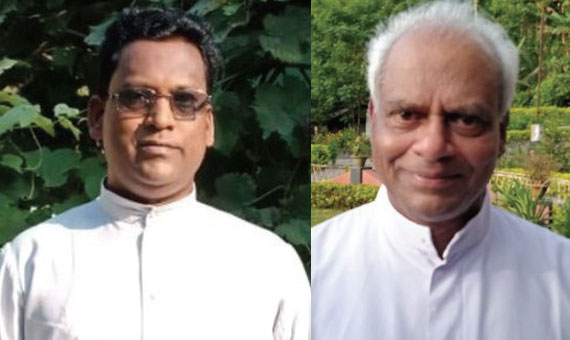
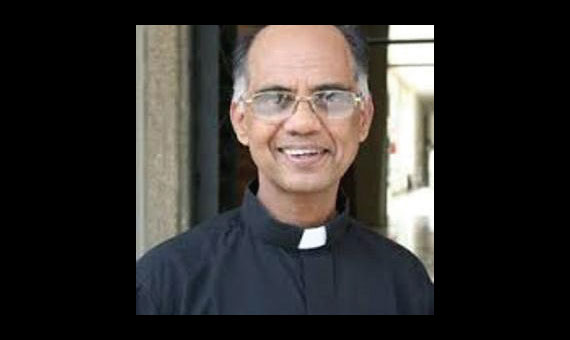
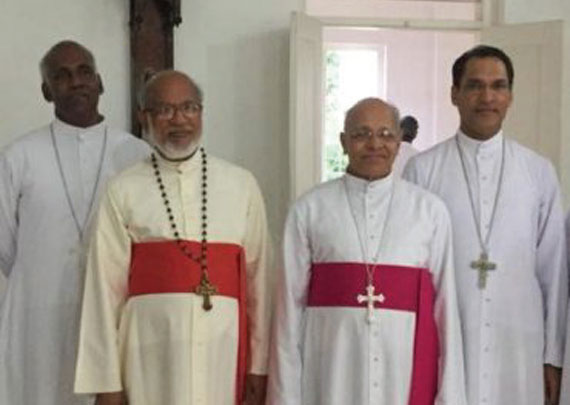
    The pontiff appointed Father Fulgence Aloysius Tigga as the new bishop of Raiganj in West Bengal state and Salesian Fr Dennis Panipitchai as the auxiliary of Miao in Arunachal Pradesh, according to a press release from the Catholic Bishops’ Conference of India headquarters in New Delhi.

    Father Tigga, a priest of Bettiah diocese in Bihar, is currently its vicar general.

    Father Panipitchai is currently the parish priest of Mary Immaculate Parish, Chingmeirong, in Imphal archdiocese in Manipur diocese. He is also a consulter of the Salesians’ Dimapur province.