Category: From The States

  • Delhi archdiocese to launch prayer campaign for nation

    Delhi archdiocese to launch prayer campaign for nation

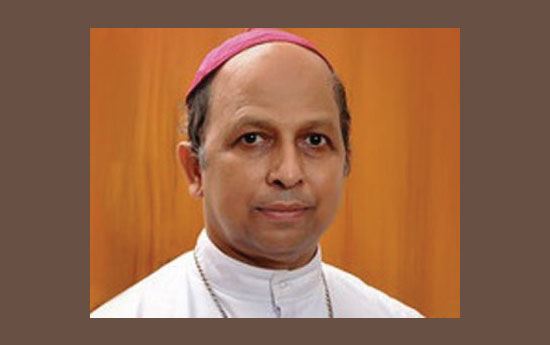
    The Archdiocese of Delhi will launch a prayer and fast campaign for India and its leaders as the country gets closer to general elections.

    “We are witnessing a turbulent political atmosphere which poses a threat to the democratic principles enshrined in our Constitution and the secular fabric of our nation,” says a letter from Archbishop Anil Couto of Delhi addressed to all parish priests and religious institutions in the archdiocese.

    The letter dated May 8 is to be read during Masses throughout the archdiocese on Sunday, May 13.

    Archbishop Couto says praying for the country and it political leaders all the time has been a “hallowed pra-ctice” of the archdiocese. It is all the more necessary “when we approach the General Elections,” the prelate adds.

    The current coalition government led by Prime Minister Narendra Modi of the Bharatiya Janata Party will complete its five-year term in May 2019. “As we look forward towards 2019 when we will have a new government let us begin a prayer campaign for our country from May 13, the anniversary of the Apparition of the Blessed Mother,” the archbishop appeals to his people. He wants them to consecrate themselves and the country to the Immaculate Heart of Mary. The campaign comprises observing a day fast and conducting an hour of adoration on every Friday for a year. The letter urges the faithful to forgo one meal on Fridays and offer penance and sacrifices for “our spiritual renewal and that of our nation.” The archbishop has also prepared a prayer for the nation to be recited during the adoration.
  • Theologians stress to address challenges of religious nationalism

    Theologians stress to address challenges of religious nationalism

    Members of Indian Theological Association (ITA) say the ‘one religion, one culture, one language’ mantra of the religious nationalism challenges India’s diversity and secular ethos.

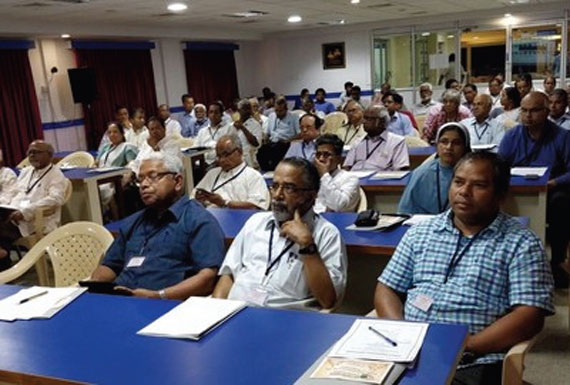
    Some 70 theologians dis-cussed the theme “challenges of religious nationalism in India today” at their annual meeting and analyzed the complexity of the present Indian reality from various angles in the context of the current political scenario.

    Through various papers presented during the April 26-29 gathering in Bangalore, they discussed the threat religious nationalism has posed to the secular and democratic foundations of the country.

    Besides challenging the diversity of cultures, religions, languages and ethnic groups, the religious nationalism also threatens the existence of millions, who are systematically marginalized and deprived of their basic dignity.

    The present political and social scenario of hatred, mistrust and violence compels every Indian “to reinvent and rejuvenate” the resources and claims of invincible Indian identity which has fostered, through the centuries, the unity and integrity of India, the papers said.

    While searching together adequate theological response to the threat of religious nationalism, the theologians urged Christians to actively join the social mainstream to engage with others fighting the destructive trend.

    They stressed the need to safeguard the fundamental rights ensured by the Constitution of the India, which is the ‘referral’ for the people of India to defend their secular and democratic rights.

  • Vandals deface St Stephen’s College chapel 

    Vandals deface St Stephen’s College chapel 

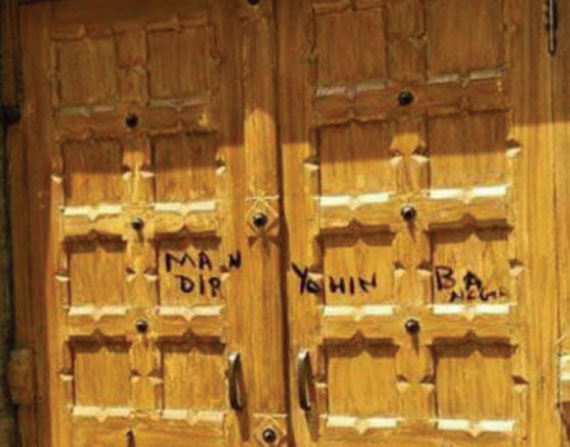
    Vandals have defaced the door of the chapel inside Delhi University’s St Stephen’s College with a pro-Hindutva slogan that read, “Mandir yahin banega” (The temple will be constructed here).
    Moreover, the cross outside the chapel was also defaced.

    Sources said the graffiti on the door was first noticed by students on May 4 evening and the work began to get rid of the slogans the following day.

    A St Stephen’s student who did not wish to be named, said, “Some students had already noticed the graffiti, but I noticed it when I was out for an early morning jog. After a while, I saw that the staff had started to re-move the slogans. All signs of the slogans were gone.”

    The writing may have gone unnoticed for hours since regular classes have been suspended owing to the impending Delhi University examinations.

  • Ranchi, beheaded pastor was a tribal, a ‘peripheral’ being

    Ranchi, beheaded pastor was a tribal, a ‘peripheral’ being

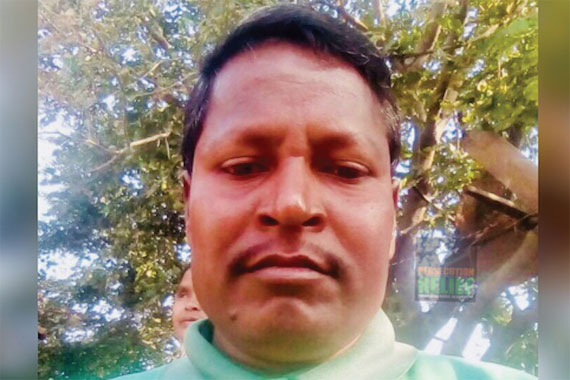
    The Pentecostal Christian pastor beheaded near Ranchi, in Jharkhand, was a tribal, informs Msgr. Paschal Topno, Archbishop emeritus of Bhopal, in Madhya Pradesh. According to the prelate, the real reason for the reverend’s murder is to be found in his aboriginal origins. “Being a tribal Christian in India – he says – means being peripheral. Tribal Christians face the greatest challenges.” Meanwhile, police investigations continue to identify the perpetrators of the murder of the Rev. Abraham Tigga Topno, kidnapped on the night of May 1, beaten and beheaded.

  • Christians of Pakistan join Asia Bibi in fasting and praying

    Christian Churches and groups in Pakistan have responded to the call of death row Christian woman, Asia Bibi, to join her in a special day of prayer and fasting for her release.

    Her appeal was conveyed by her family that visited her recently and by the Renaissance Education Foundation in Lahore that supports her family and bears her legal costs.

    In perhaps Pakistan’s most famous blasphemy case, Asia Bibi was sentenced to death in 2010 for insulting Muhammad, an allegation she denies. Pakistan’s Supreme Court adjourned her death sentence appeal on October 13, 2016, after one of the 3 judges recused himself from the case.

    Asia Bibi’s hope revived after hearing her lawyer Saiful Malook declare that the Chief Justice of Pakistan Supreme Court Saqib Nisar would soon establish the date for the next hearing before the Supreme Court.

  • Mangalore’s age-old harmony caught in crosshairs of communal hate

    The beauty of coastal Karnataka is in sharp contrast to its politics. Sparkling back-waters and swaying palms were once witness to a land of religious co-existence. But over the last two decades, this picturesque region has been caught up in the politics of religious polarisation.

    It was from here the Sangh Parivar first began its campaigns, starting with Hindu mobilisation against migrant Muslim workers from Kerala. In the 1983 Assembly elections, the BJP won 18 seats for the first time, mostly from the coastal districts of Dakshina Kannada and Uttar Kannada.

    In 2013 the Congress breached the saffron fortress and swept the region as the Sangh Parivar faced a revolt within. Out of 12 seats of Dakshin Kannada, Congress won 10, BJP 2. In Mangalore out of 8 seats, Congress won 7. A year later though in Lok Sabha polls it was business as usual as the BJP won all 3 MP seats of coastal Karnataka.

    Mangalore comprises 18% Muslims, 13% Christians and 69% Hindus. “The mix of religions here makes Mangalore a communal tinder box,” says Suresh Bhat Bakrabail of the PUCL, “ but those fomenting communal troubles are only playing politics. It is not religious but purely political communalism.”

  • Lenin should be buried, Stalin returned to Georgia – Kadyrov

    Moscow, April 13, Interfax – A prompt decision needs to be made on the burial of the remains of Soviet leader Vladimir Lenin and on the transfer of the remains of Joseph Stalin to Georgia, Ramzan Kadyrov, the head of Chechnya, said. “If I was asked, I would make this decision today, without waiting until tomorrow. Why torture Lenin’s dead body, clean it constantly, keep this mummy? Who needs it? He is not a holy person.”

  • WORLD ASSEMBLY OF RELIGIOUS CONCLUDES IN BENGALURU

    WORLD ASSEMBLY OF RELIGIOUS CONCLUDES IN BENGALURU

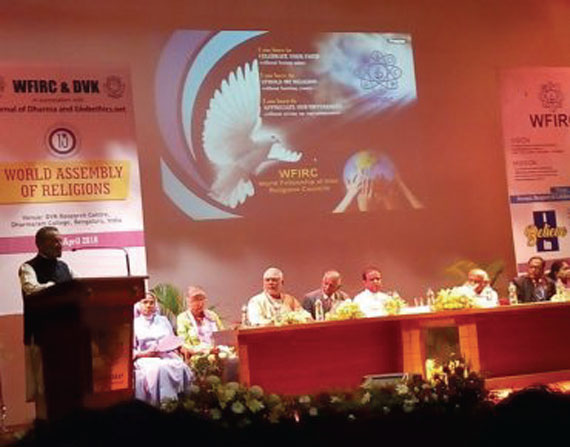
    The 13th World Fellowship of World Religious Councils (WIFRC) concluded on April 21 with delegates from various religions celebrating the diversity of faiths and religious traditions.

    Around 200 people from all over India representing Bahai, Buddhisht, Christian, Hindu, Jain, Muslim, Sikh, faiths conducted a series of symposiums and panel discussions on the theme “Accept, respect and celebrate diversity” during the three-day assembly at Dharmaram Vidya Kshetram in Bengaluru, southern India.

    The assembly ended with a resolution to start Harmony Clubs in various schools to give peace education to children and to promote celebration of diversities.

    WFIRC president Swami Sadashivananda from Coimbatore, in his presidential address, said that the delegates believed in the element of innate goodness existing in all human beings. “It flourishes when people of all religions, castes and creeds come together to celebrate each other’s faith and festivals,” he added.

    WFIRC general secretary, Carmelite Father Roby Kannanchira welcomed the delegates saying the assembly’s focus was to take a personal and collective resolution to celebrate the faith of the other without losing one’s won, uphold one’s religion without hurting others and appreciate the differences without giving one’s uniqueness. Dr K.P.Fabian, who was former ambassador in various countries, narrated from his experience of living with people of diverse religious backgrounds.

  • INDIAN NUNS HELP INDIGENOUS WOMEN BREAK FREE OF SHACKLES

    INDIAN NUNS HELP INDIGENOUS WOMEN BREAK FREE OF SHACKLES

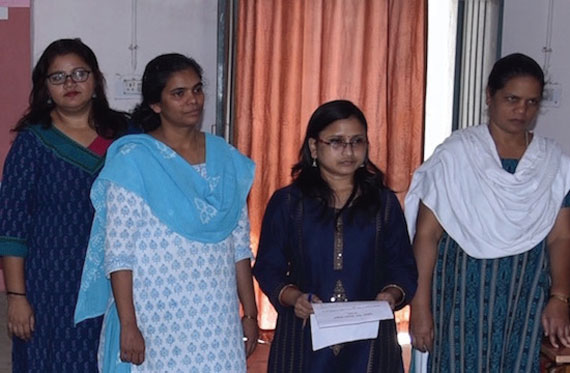
    Sister Lizy Thomas from the Uday (Dawn) Social Development Society is pictured with her co-workers as they attend a media conference organized by indigenous women in Jhabua district of India’s Madhya Pradesh State – hoping to enlist the media’s help in their crusade against alcoholism.

    For Shanti Devada, the mud walls of her home in Badi Damini village of Jhabua district in the central Indian State of Madhya Pradesh were more like a prison than a shelter or a place of refuge.

    She lived a closeted life, not daring to speak to men outside of her family or step outside her village without a chaperon. In fact, the traditions and customs of the indigenous group to which she belongs are so strict, she even had to cover her face with a sari when speaking to male relatives.

    However that all changed about eight years ago when Devada, who is now 50, began to defy these conservatives, even archaic customs and became a self-style “crusader” fighting for the greater empo- werment of women.

  • ANTI-HUMAN TRAFFICKING LIFE-THREATEN- ING CHALLENGE: FRANCISCAN NUN

    ANTI-HUMAN TRAFFICKING LIFE-THREATEN- ING CHALLENGE: FRANCISCAN NUN

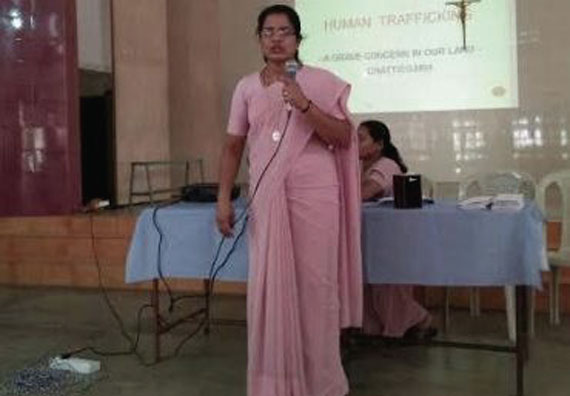
    Working against human trafficking is a huge challenge, says a member of the Franciscan Missionaries of Mary (FMM) congregation working in Chhattisgarh State, central India. “Working against the human trafficking in India is the most challenging task. It is a road less-travelled. It is a life-threatening apostolate, yet for the love of those women, we have to rescue, save and rehabilitate those victims of slave industry,” Sr Anne Jesus Mary, director of Jeevan Jharna Vikas Sansthan (JJVS, institute

    for the development of life stream), Jashpur, told Matters India. On April 22, Sr Anne addressed on human trafficking conditions in the State of Chhattisgarh to a group of 50 priests and nuns who held a day- long CRI (Conference of Reli- gious India) regional meeting in Jashpur.

    She spoke about the South Asian network of sisters working against trafficking, AMRAT, that comprises trained social workers, counselors, lawyers and many other professionals committed to confronting modern slavery. AMRAT members in India number about 600. Sr Anne is one of them.