Category: From The States

  • Bishops’ event focuses on how to beat India’s divisive politics

    Bishops’ event focuses on how to beat India’s divisive politics

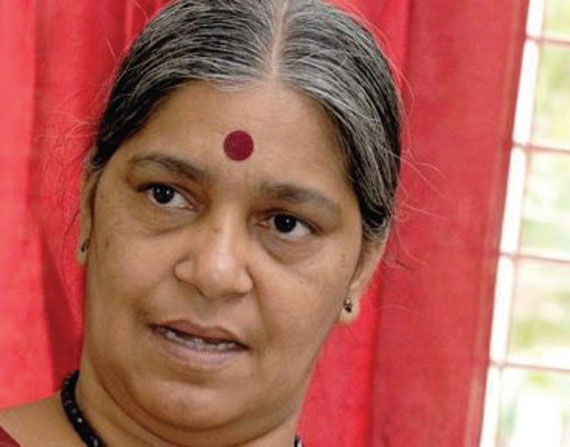
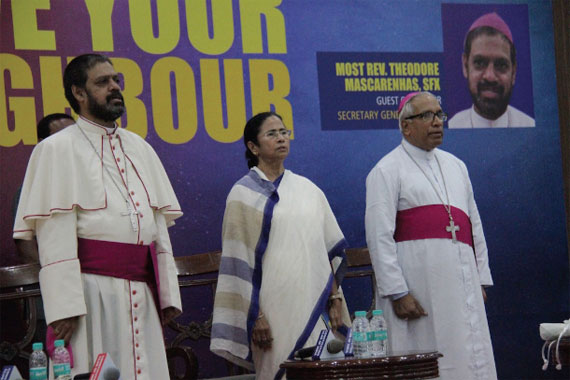
    A Catholic Church-organized program in New Delhi has called on Indian politicians to cease being divisive and using religion as a way of attracting votes. Prominent opposition leader Mamta Banerjee was among several speakers voicing concerns over the divisions in Indian society during an assembly organized by the Indian Catholic bishops’ conference on July 31. “Some people are trying to divide the country in the name of religion, caste and creed. But we can’t sit here as mute spectators,” Banerjee, chief of Trinamool (grassroots) Congress party, told the gathering of 1,000 people. “Time has come for us unite and raise our voices,” she said. With the theme of “Love your neighbour,” the assembly was held as leaders of India’s ruling Bharatiya Janata Party (BJP) press their pro-Hindu ideology ahead of general elections early next year.

    Banerjee, who is also the chief minister of West Bengal State, said the theme of the gathering was rightly chosen because “some communal forces are trying to dictate what we should eat, dress and how we should practice our faith.” She was alluding to cases of harassment and violence committed against Christians and Muslims by hard-line Hindu groups ever since Prime Minister Narendra Modi came to power leading the BJP in 2014.

    Leaders like Banerjee accuse BJP governments in New Delhi and most northern Indian states of supporting Hindu groups who attack religious minorities in an effort to project the party as a pro-Hindu champion.
  • Indian tribals urged to resist exploitation

    Indian tribals urged to resist exploitation

    About 2,000 people who gathered to mark International Day of the World’s Indigenous Peoples were asked to fight to protect their identity and culture in the face of increasing challenges in India.

    Leaders who addressed the gathering in New Delhi on Aug. 9 presented data and incidents to show how exploitation of tribal people has increased since the pro-Hindu Bharatiya Janata Party (BJP) came to power at federal level and in several states in 2014.

    “Atrocities on tribals are nothing new but now tribals are branded as anti-national and the government will always harass them,” Jesuit Father Vincent Ekka, a tribal rights activist, told participants.

    He said the Indian constitution provided for tribal people to enjoy self-administration in certain areas “but local administrative executives are not following it and have taken an attitude of my way or the highway.” Father Ekka heads the department of tribal studies at the Jesuit-run Indian Social Institute, which organized the meeting of tribal people and leaders across India to mark the international day, which had the theme “Indigenous peoples’ migration and movement.” Tribal leaders recalled how governments had made laws to take over and control tribal land and forests while chanting development mantras but acting on behalf of multinational companies and miners. Many tribal people were forced to migrate to cities.

    “The main reasons for migration are mining, power projects and industries,” said Lakhiram Murmu, a professor at the All India Institute of Medical Sciences.

    The 2011 census showed the total number of internal migrants in India was a staggering 139 million. Murmu, a tribal and senior surgeon, said that “when we speak about migration, it will be mostly our own people who are affected and we have to find the solution for that by creating jobs.” India has about 104 million tribal people who form 8% of the population. However, 30% of India’s 27 million Christians come from tribal communities, especially in northern and eastern states.

  • Religious bias seen in India revising citizenship claims

    Religious bias seen in India revising citizenship claims

    Religious bias is suspected in an Indian government move that could result in millions of people who migrated from Bangladesh five decades ago losing their citizenship rights.

    India’s National Register of Citizens (NCR) on July 30 published a list accepting as Indian citizens those who migrated from neighbouring Bangladesh before March 25, 1971, a day before the Muslim nation declared independence.

    The list prepared for people living in Assam State bordering Bangladesh left at least four million people uncounted, making them stateless.

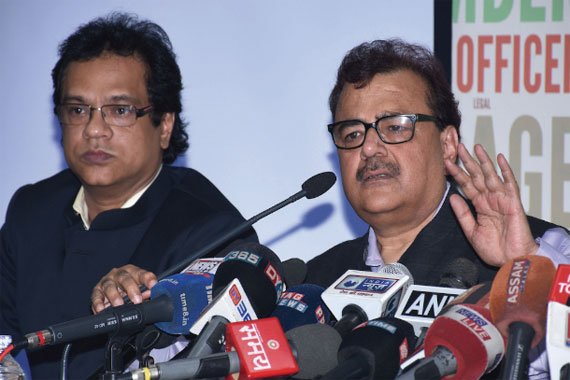
    “The issue is of international importance as it affects relations with neighbouring countries including Bangladesh,” senior politician and opposition Congress leader Anand Sharma told media in Delhi hours after the list was published.

  • Guilty should face consequences: Catholicos

    Guilty should face consequences: Catholicos

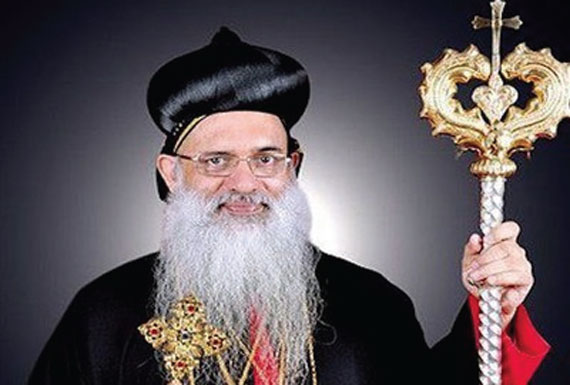
    The Church has taken a consistent stance in the alleged sex scandal involving a few of its priests, said the supreme head of the Malankara Orthodox Syrian Church. Addressing the Church managing committee, the highest executive body of the Church that met in Kottayam on August 9, Catholicos and Malankara Metropolitan Baselios Mar Thoma Paulose II, said the Church had always maintained that those who were found guilty in the case should face the consequences, but the innocent shall not be punished.

    He also came down on those who took the opportunity to insult the entire priestly class and denigrate sacraments such as confession. He said those who took such positions had not done it with the right intention.

    The Catholicos said the Church was engaged in an effort to bring peace in the Malankara Church even as it strove to maintain its identity as an ancient Indian Church.

  • Serra Bangalore Annual Scripture Quiz 2018

    Serra Bangalore Annual Scripture Quiz 2018

    The Serra Club of Bangalore comprising of a group of lay Catholics promote, foster and encourage vocations to the Priesthood and Consecrated life. They held their 14th Annual Scripture Quiz on Saturday, August 4, 2018 at the Catholic Club, Bangalore, who also co-sponsored the event.

    This year’s theme for the quiz was ‘Evangelization’ and focused on the Gospel according to St Mark and on St Paul’s letters 1 and 2 to the Corinthians.

  • Goa still a ‘battery’ of Catholicism for Asia

    Goa, a former Portuguese colony that now ranks as having one of the most famous beaches in India, is continuing to promote Christianity in Asia as part of its colonial legacy, according to former Archbishop Raul Gonsalves.

    The 91-year-old retiree believes Jesuit missionaries, who have been based in his homeland on the subcontinent’s southwest coast since the 16th century, are still having a ripple effect across the entire continent, despite alleged attempts to “ethnically cleanse” the area of Catholics in the past. Archbishop Gonsalves said Goa has produced bishops for a number of countries due to the strong sense of faith instilled in so many families in the region.

    This tiny Indian state, covered by the dioceses of Goa and Daman, has churned out some 60 bishops and cardinals for India, Pakistan and Africa, according to Father Joaquim Loiola Pereira, secretary to the current Archbishop of Goa Filipe Neri Ferrao.

    Goa Diocese was created in 1533, 23 years after the Portuguese conquered the state by defeating its then Muslim ruler Ismail Adil Shah.

    About 500,000 of Goa’s 1.8-million population identify as Catholic while in nearby Kerala about 5 million of its 36 million people are Catholics, and another 1 million are from other Christian denominations.

  • Religion a punchbag for Indian poll

    India’s secular ethos is being eroded by the politicization of religion ahead of a general election due in May next year.

    Opposition parties during the latest session of parliament accused the federal government led by the pro-Hindu nationalist Bharatiya Janata Party (BJP) of trying to manipulate religious sensitivities. The Congress Party said Prime Minister Narendra Modi is copying divide-and-rule tactics used by British colonial rulers to foment antagonism between Hindus and Muslims. This included BJP leaders branding Congress as a “Muslim party.”

  • Demand for ban on confession shocks Cardinal Gracias

    Demand for ban on confession shocks Cardinal Gracias

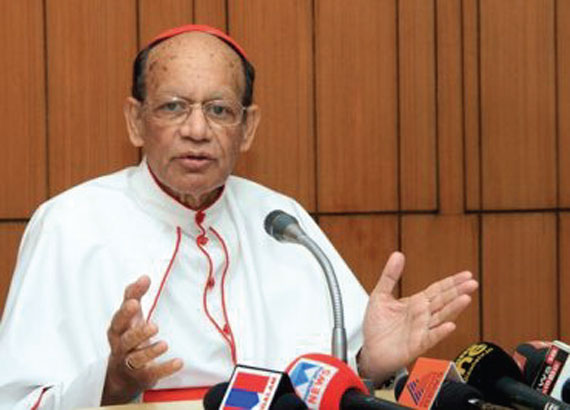
    The head of the Catholic Church in India on July 27 expressed shock at the National Commission for Women’s demand for a ban on the Christian practice of confession. “This demand by the commission betrays a total lack of understanding of the nature, meaning, sanctity and importance of this Sacrament for our people; and also an ignorance of the strict laws of the Church to prevent any abuse,” Cardinal Oswald Gracias, president of the Catholic Bishops’ Conference of India, said in a press release.

    The 73-year-old prelate, one of the eight cardinal advisers of Pope Francis, said such a ban will directly infringe on “our freedom of religion guaranteed by the Indian Constitution.”

    According to him, millions of people from all over the world, over the centuries, have testified to the spiritual benefit of this Sacrament and to the grace, pardon and peace they have experienced as a result of receiving this Sacrament. “I am confident the government will totally ignore this absurd demand from the commission,” he added.

    The cardinal was reacting to commission chairperson Rekha Sharma’s recommendation to Prime Minister Narendra Modi and some of his cabinet colleagues to take steps to abolish the practice of confession in Christian Churches. The commission, a statutory body concerned with advising the Indian government on policy matters affecting women, reportedly recommended confession’s abolition alleging that the practice could lead to blackmailing of women.

    Sharma on July 26 said priests pressured women into telling their secrets. “We have one such case in front of us, there must be many more such cases and what we have right now is just a tip of the iceberg,” she said.

    The recommendations come in the backdrop of a rape case against four priests of Malankara Orthodox Syrian Church accused of sexually exploiting a married woman belonging to their church.

    The issue came to the fore after the victim’s husband wrote to the Church, alleging that the priests blackmailed and abused his wife, a school teacher.

  • Women activists ask Pope to remove Jalandhar bishop

    Women activists ask Pope to remove Jalandhar bishop

    Leaders of various national women’s organizations and human rights activists in India have requested the Vatican to advise Pope Francis to remove Bishop Franco Mulakkal of Jalandhar from his post at least until an investigation was on his alleged sexual harassment of a nun. The women leaders on July 25 submitted a memorandum to Apostolic Nuncio to India Archbishop Giambattista Diquattro.

    A member of the Missionaries of Jesus congregation in June filed a police complaint against the bishop alleging that he had sexually abused her several times during 2014-2016.

    One of the women leaders, Annie Raja, general secretary of the National Federation of Indian Women, said an impartial inquiry could be conducted only if the bishop stepped down. The activists have already taken up the matter with the National Women Commission, which has assured all help to the aggrieved nun.

  • Attacks, harassment against Christians high in India: Priest

    Attacks, harassment against Christians high in India: Priest

    During a recent visit to the headquarters of Aid to the Church in Need (ACN), Father Ajay Kumar Singh of the Odisha Forum for Social Action advocated for the suppressed Christians of his eastern Indian state. “After 10 years there is hardly any justice for these communities,” said Father Singh.

    The Catholic priest declared that the attacks of 2008 were the worst the country has seen in 300 years. “The violence claimed 101 lives, more than 350 churches were destroyed, 7500 houses were reduced to ashes, scores of convents, presbyteries, dispensaries and 13 humanitarian organisations were also attacked and vandalised. The riots spread to 450 villages in Kandhamal district alone.”

    As time moves on buildings are rebuilt; the news headlines change, memories fade. But what is the state of the Christian community in Odisha and around India 10 years on?

    In 2014, six years after the Kandhamal attacks, the “secularist” Indian National Congress party was voted out of power, in favour of the nationalist party the Bharatiya Janata Party.