
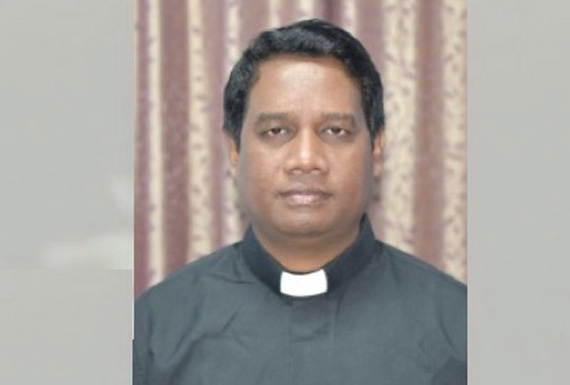
Pope Francis has appointed Fr Albert Hemrom as Coadjutor Bishop of Dibrugarh on December 2 to succeed its present Bishop Joseph Aind. The 49-years old Bishop designate will be the youngest Bishop in the entire northeast. Currently, he is the Rector of St Joseph’s Seminary, Dibrugarh.
Category Archives: From The States

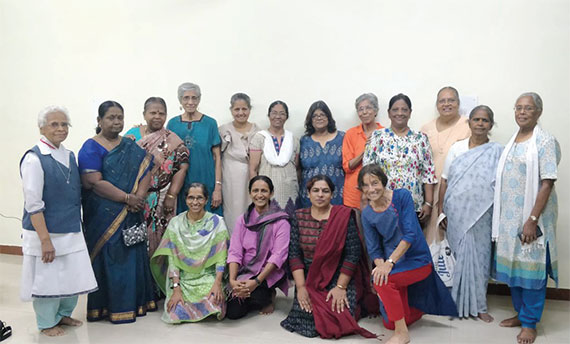
Jalandhar rape case: Women theologians write to Pope
The Indian Women Theologians Forum (IWTF) has written to Pope Francis expressing deep concerns over the way the Church in their country handles sexual abuse cases.
Around 800 Catholics from around the world have endorsed the letter sent to the Pope Francis with copies to ecclesiastical leaders in India, says a November 20 press release from the forum.
The letter highlights the context and facts regarding the case of sexual abuse involving the bishop of Jalandhar. It also comments on the lack of response and the inappropriate handling of the case by the Church authorities in India.
As remedial measures, the letter requests the setting up of an impartial enquiry committee with at least 50 % women to study the allegations and taking adequate steps to support a fair trial in keeping with the Church policy of “zero tolerance of sexual abuse.”
It wants immediate implementation of the CBCI Guidelines, 2017 of the Church in India for addressing sexual abuse, in keeping with the civil laws applicable to grievance redressal mechanisms of the country.
The November 9 letter was endorsed by Catholics from 24 countries, with the United States topping the list, followed by Australia and Brazil.
The Indian signatories came from 15 states, including nearly 500 from Kerala, where the complainant and the accused of the Jalandhar case belong. The signatories included 71 priests from India, more than 50 women religious and 16 advocates.
“In keeping with the need to be transparent in our efforts this letter is also mailed to 250 representatives of the Catholic Church, including all the cardinals and bishops within India,” the press release says.

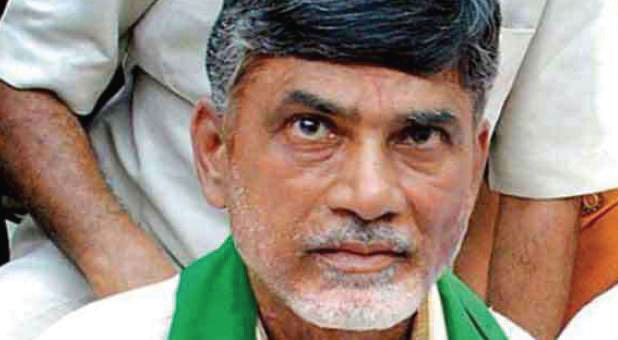
Telugu Churches demand laws to curb attacks on Christians
Christians in twin Telugu states have demanded laws to check increasing attacks on the community.
Leaders of the Federation of Telugu Churches (FTC), an apex body of the mainline Churches in Andhra Pradesh and Telangana, made this demand in a memorandum submitted to Andhra Pradesh Chief Minister Chandrababu Naidu.
The Andhra Pradesh government on November 17 organized an interaction between Naidu and Church representatives at Praja Vedika, the chief minister’s residence, an FTC press release said on November 20.
The Church leaders, led by FTC president Bishop F. Paradeshi Babu, applauded Naidu’s commitment in championing the cause of secularism, democracy, and for protecting the rights of religious minorities especially Christians.
They also thanked him for various welfare and development projects Naidu implemented through the A.P. State Christian (Minority) Finance Corporation and other government agencies.
The Christian leaders pointed out that their minority community contributes more than 25% charitable services to society.

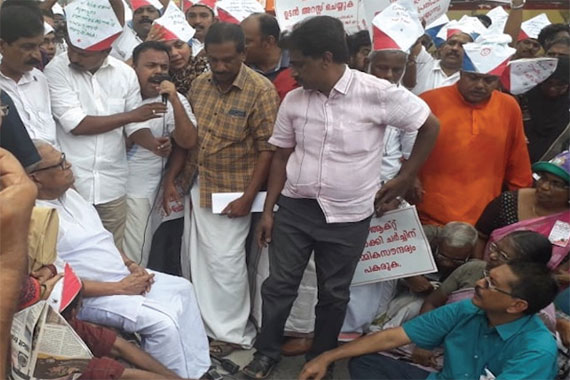
Plea to cancel bail for Indian bishop accused of rape
About 600 people demon-strated near the legislative house of India’s Kerala State demanding bail be revoked for a Catholic bishop accused of raping a nun.
Protesters say the free movement of Bishop Franco Mulakkal of Jalandhar, a native of Kerala, has become a threat to witnesses in the case and is working against the legal process.
“As long as Franco is out on bail, he can use his power to destroy evidence and influence witnesses. The lives of witnesses and sisters who publicly spoke against him are also at a risk,” said former Kerala chief minister and communist leader V.S. Achuthanandan, who launched the protest on Nov. 14.
Kerala’s High Court bailed Bishop Mulakkal on Oct. 15. He was arrested on Sept. 21 based on the July complaint of a 48-year-old nun of the Missionaries of Jesus, a diocesan congregation under the prelate, that he raped her multiple times between 2014 and 2016 while he was visiting her convent in Kerala.
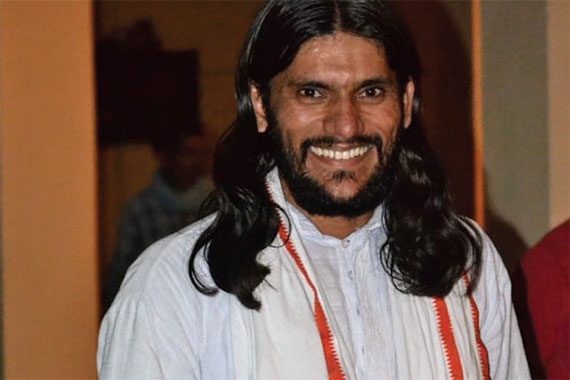
Hermit priest’s popularity brings attack from Hindu hardliners
A Catholic priest has been arrested on false charges after being beaten up by a hard-line Hindu youth group in India’s Uttar Pradesh State. Father Vineet Vincent Pereira of Varanasi told ucanews.com that members of Hindu Yuva Vahini (youth force) came to his ashram in Gohana town in Mau district on Nov. 15 and attacked some of the elderly people living there with him.
“When I objected, they beat me. One pulled me down holding my hair and dragged out. Then they hit me left and right,” he said. Those gathered around rescued him, said Father Pereira.
Not long after the attack, police arrived and arrested him based on a complaint made by his attackers on charges of rioting and disturbing public peace. If found guilty, each charge carries a maximum jail term of two years.
A local court bailed the 43-year-old priest on the same evening.
Father John Abraham, the diocesan vicar general, told ucanews.com that the Hindu group must have been angry over Father Pereira’s popularity with Hindus who identify themselves as Christu Bhaktas (devotees of Christ).
Father Pereira lives a hermit-like existence and regularly conducts prayers for around 1,500 of these people at his ashram, said Father Abraham. “None of them have become Christians, but they follow Christian spiritual values.”
Kerala bishops resent article criticizing confessions to priests
An article published in Vijnaana Kairali, a monthly publication of the state-run Kerala Bhasha Institute, has become the centre of controversy after commenting on the practice of confession in Catholic Churches.
The article has sparked criticism from the Kerala Catholic Bishops’ Council (KCBC) as well as a response from the National Commission for Minorities (NCM).
The sections of the article that the KCBC took objection to included the lines, “Jesus Christ has said that heaven is in the mind of he who confesses and regrets his action. It is the priesthood that should publicly confess for using the Utopian concept of heaven, which is only an imagination of the human mind, to satisfy their sexual desires. If you don’t consider woman’s body as a sexual object, no woman – whether she is a lover or a nun – should henceforth confess before anyone. Believers hide the fact that a man who confesses is not harassed anywhere. It is not enough to sing that you are not ready to die, but the women community should stand together and shout that they are not ready to confess.” But according to the Bhasha Institute, the article in its entirety discusses the opposition of Kerala’s middle class to so-called regressive traditions, and calls for a revitalization of progressiveness in society.

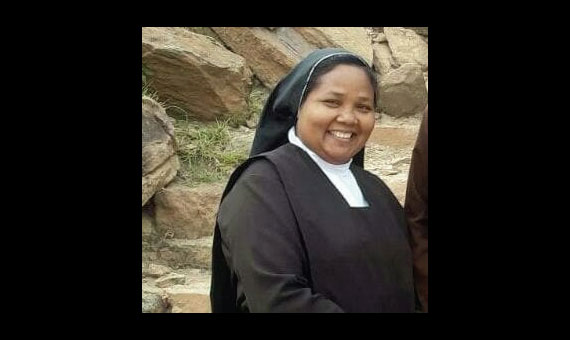
Indian nun dies in Tanzania in road accident
An Indian nun died in a road accident in Tanzania on Nov. 27. The 44-year-old victim is identified as Sister Rohini Pradhan, a native of the Kandhamal district of Odisha, eastern India.
The accident occurred when the member of Carmelite Sisters of St Teresa went to the airport along with two other nuns, also Indians, to receive their superior general Sister Chris, who was making an official visit their convent in Tanzania.

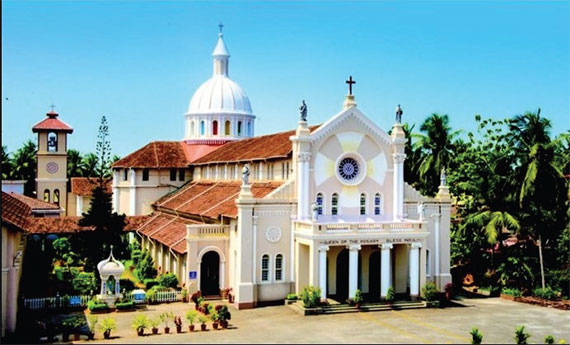
Special postal cover on Rosario Cathedral released
Philatelists in and around Mangaluru will surely be delighted, for India Post has released a special cover depicting the Rosario Cathedral and an ornamental cancellation featuring ‘Rosary year’ emblem. The attractive cover was released by India Post at a symbolic church celebration on the occasion of the 450th anniversary of the cathedral. The cover has a splendid picture of the ‘Holy Rosary Cathedral’ a historical landmark of the city whose history goes back 450 years (1568-2018).
Dalit seminar empowers priests, religious to work for Poor
As a follow-up activity earmarked by Catholic Bishops’ Conference of India (CBCI) Office for Dalits and Backward Classes, a three-day national conference of Dalit priests and Religious took place at Arnold Bhavan, Hyderabad, on November 13–15. Above 110 participants different parts of the India joined the program to share, deliberate and strategize so as to empower themselves and their people back in parishes and communities. The conference focused on “Pilgrimage Extension and Training.” Several dignitaries addressed and facilitated the members dealing with topics: media and effective pastoral ministry, creative ministries to empower the Dalit community members, and interpersonal relationship.

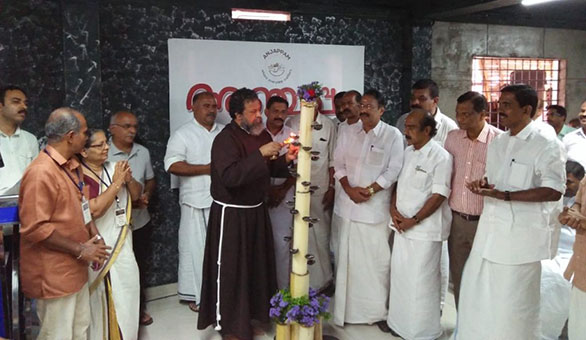
Priest’s “Five Loaves” restaurants set new trends
The ‘Anjappam’ collective initiated by a Capuchin priest to feed the hungry with love and respect has opened its fourth branch in Changanacherry in Kottayam district in Kerala on Nov 1st.
The latest addition located in Panachikkal Buildings in the heart of Changanassery town was inaugurated by Capuchin Father Bobby Jose Kattikad, who is popularly known as ‘Bobbyachan.”
Fr Kattikad is known for his preaching, writing and evangelization through television, radio and social media.
Anjappam (five loaves), a concept visualized by Fr Kattikad and supported and facilitated by a community of friends who supports financially or otherwise, irrespective of caste or religion.
Anjappam restaurants have no cash desk or bills. Instead it has a box kept inside where people make contributions if they wish to. During the day, the restaurants act as places where good, healthy meals are available at affordable prices and in the evenings, they are transformed into libraries with reading spaces. It also acts as a hub for discussions and book reviews.
The restaurant chain funds itself through voluntary donations by customers. They uphold the thought that donations need not be in terms of money .Anyone who intends to help the poor and needy always have an option available here. This can be as spending one’s time at the restaurants, serving food and helping with cleaning activities.
The restaurants serve only vegetarian food. The members of the Trust take care to ensure that a majority of the vegetables are acquired locally so that they can provide healthy as well as environment friendly food, which is good for both the body and mind.
Anjappam also plans to distribute basic food packs free of cost to the homeless and other needy sections of society.
Anjappam currently has three other branches in Kerala – Ranni, Neyyattinkara and Kozhencherry.