India’s pro-Hindu Bharatiya Janata Party (BJP) has invited suggestions from minorities on how to adapt its election manifesto to making the nation more inclusive. Representatives of religious minorities, including Catholics, presented their suggestions at a March 7 meeting in the capital, New Delhi. The gathering was convened by federal Minority Affairs Mini-ster Mukhtar Abbas Naqvi and Social Justice and Empower-ment Minister Thaawar Chand Gehlot ahead of national elections in May. “We told the ministers that the minorities feel insecure in the country and need to be protected and that constitutional values need to be upheld,” said Father Joseph Manipadam, who led the Catholic representation at the meeting.
Category Archives: From The States


Pakistani bishop appeals against risk of Pakistan-India war
With the risk of war escalating between India and Pakistan following an Indian airstrike inside Pakistan on Feb 26, a Pakistani bishop has appealed for peace talks. The Indian government claimed it carried out air raids against an Islamist militant training camp of Jaish-e-Mohammed, killing “a very large number” of fighters, raising the risk of a war between the nuclear-armed neighbours.
Pakistan denied there had been any casualties but condemned the Indian action and vowed it would respond.
The airstrike near the town of Balakot, some 50 kilometres from the IndoPakistani border was the deepest crossborder raid launched by India since the last of its three wars with Pakistan in 1971. Tensions between the south-Asian neighbours have escalated dramatically since a suicide car bomb attack on Feb. 14 that killed at least 40 Indian paramilitary police in Kashmir.
The Pakistan-based Islamist Jaish group claimed responsibility for the attack.
“We condemn the terrorist attacks in Kashmir, but also any armed reaction: we ask God to change the hearts of men to stop any act that may lead to war,” said Pakistani Bishop Samson Shukardin of Hyderabad. “Let us pray for the victims and pray for peace between India and Pakistan,” he told the Vatican’s Fides news agency.
In December 2001, Jaish fighters, along with members of another Pakistanbased militant group, Lashkar-e-Taiba, launched an attack on India’s parliament, which almost led to a fourth war.

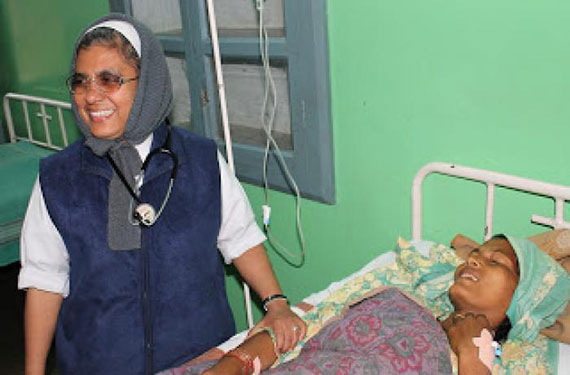
Indian nun welcomes Oscar for film on menstruation taboo
A Catholic nun, who has promoted women’s hygiene in Indian villages for years, on February 26 expressed happiness that a documentary on menstruation has won an Oscar award. “We are very happy,” Sister Liza Ignatius, gynecologist at Our Lady of Graces Hospital in Sardhana, in the northern Indian State of Uttar Pradesh.
The documentary film “Period – End of Sentence,” available on Netflix, on February 25 won the Best Documentary category at the 91st Academy Awards.
The documentary by American-Iranian director Rayka Zehtabchi tells the difficulties of seven Indian women working in a small sanitary towel factory, since their use is considered unacceptable.
According to Sister Ignatius, the award “is good news for us who serve poor women in rural areas. This will help us to improve our initiatives in favour of women’s hygiene.”
“My patients are very poor and come from rural villages. We regularly organize programs and courses on women’s issues, such as menstrual hygiene. The hospital is at the service of the poorest of the poor,” Sister Ignatius says.

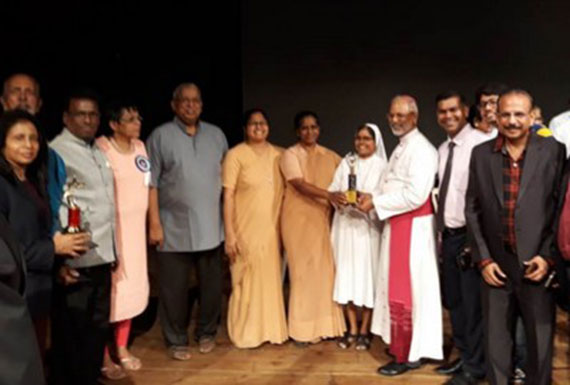
Salesian nuns’ centre in Mumbai bags award
A Salesian social development agency has been awarded the first Father Edward D’souza Memorial award meant to honour services rendered to the poor and under privileged.
The Sahayini Social Development Society Vocational Training Centre was given the award on Feb. 23 at a function in Mumbai.
Sister Rosaline Pereira, in charge of Sahayini received the award from Auxiliary Bishop Savio Dominic Fernandes of Bombay archdiocese.
Sahayini has trained and placed 500 marginalized youth and contributed social advancement of the poor.
Adrian Rosario, a member of Bombay catholic Sabha and in-charge of the award selection team said the Sabha instituted the award to perpetuate the memory of Father Edward D’souza, the Sabha’s chaplain who passed away four years ago.
Sahayini Social Development was created to provide programs and services to the poorer and needy children, adolescent girls, women through the community centres established in various locations of Maharashtra, Gujarat, Karnataka and Goa.

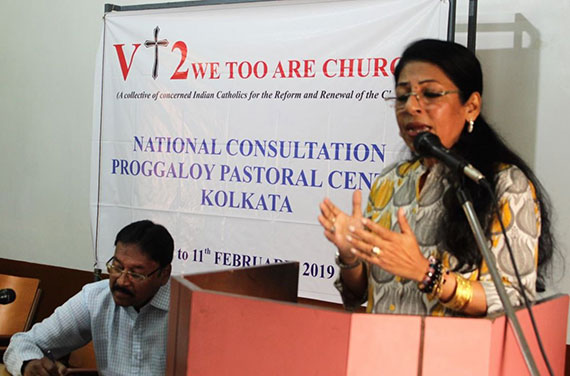
Catholic Forum calls for Vatican III
A national consultation “We Too Are Church” has appealed for the convening of Vatican III. In an era of breaking news, and shifting goal posts, it is not enough to hark back to Vatican II that concluded 54 years ago. It is now time for Vatican III to address the rapidly mutating issues faced by the church in the modern world, says a press release from the consultation.
As many as 60 delegates from 15 Indian states attended the Feb 9-11 consultation held at Proggaloy Pastoral Centre, Kolkata. The gathering of lay leaders, clergy and religious was a collective response to the various political and moral crises that the church finds itself embroiled in, without an adequate or credible response, the press release explains. It also says “Pastoral Letters” on elections issued by three archbishops and the alleged rape of a nun by a bishop have attracted a hostile press. The bishops of Kerala in a recent statement have labelled those raising their voices as “enemies of the church,” it adds.

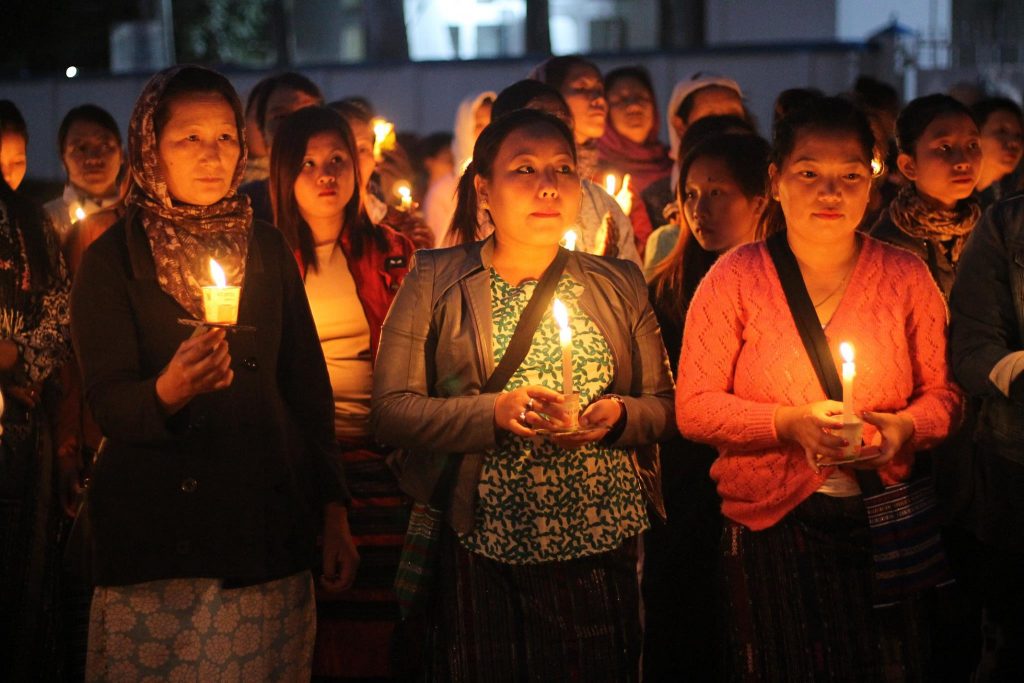
Arunachal students raise fund for police firing victims
A student union in Aruna chal on Feb. 25 organized a peaceful candlelight rally and fundraising campaign to support the families of the four boys who were killed in police firing.
“Our four brave hearts have laid their lives for us and for our future generations. It is because of their supreme sacrifice, the Arunachal government has decided not to table the Permanent Citizen Bill in state assembly again,” Sengman Ronrang, president of the Tangsa Students Union’s Changlang district, told the rally at Miao.
“The lost lives will not come back again but they will live in our hearts forever. We must stand together and support the families of our brave men who sacrificed their lives today for our tomorrow,” Ronrang added.
The rally urged welfare societies to generously contribute to the fund.
Nearly 500 people took part in the rally that saw the participation of Arunachal Pradesh Women’s Welfare Society, Yobin Welfare Society, Yobin Youth Association, Galo Welfare Society, Tagin Student Union, Singpho Women Organization, Muklom Elite Society, Singpho Development Society, officers, public leaders and Church representatives.
“We are not against anyone. We are a very peace loving community. Impulsive decisions without reference to the true sentiments of the people of the state and the untimely death of the four young lives all could have been easily avoided. We have come here to condole the death of our brave boys and to express our solidarity with the bereaved families,” said Ms. Pinna Kitnal, a women leader from the district.
GUJARAT’S CHRISTIANS RALLY FOR PEACE
Over February 17-18, thousands of Christians participated in peace rallies in Ahmedabad, organised by various churches in support of the martyrs of the Pulwama terror attack.
This is probably the first time that the Christian community in Gujarat, which usually keeps a low profile and stays away from political matters, organised a rally on an issue not related as such purely to their own community.
Different Christian denominations came together for a peace rally in Maninagar in East Ahmedabad on February 17, where members of the Roman Catholic Church, the Church of North India (CNI), the Methodist Church, Salvation Army and Alliance Church gathered in the thousands for a silent candle march.

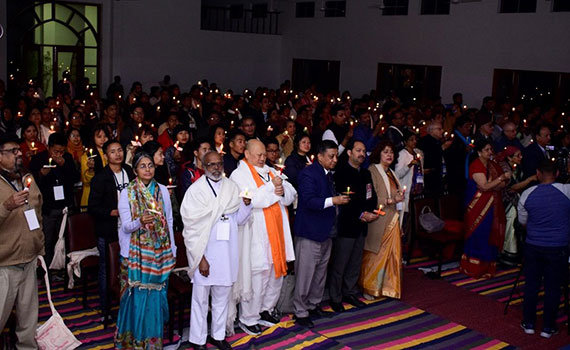
Peace convention stresses women’s equal right
Society expects women to console and love others, but it does not realize that women also need to be consoled and loved, a woman police officer has told a peace convention.
“Women have the right to be consoled and loved,” asserted Anuradha Shankar, additional director general of police of Madhya Pradesh, at the inauguration of the fifth national peace convention at Shofar Conference Centre Gurgaon, Haryana, on January 30, the 71st death anniversary of Mahatma Gandhi.
The police officer cited the example of Gandhi’s wife Kasturba who played a crucial role in India’s independence struggle. “Gandhiji became Mahatma because of the support of Kasthurba, Shankar said.
“While Gandhiji learned from the books, Kasturba learned from the book of life. Kasturba had the courage to organize protest of women in South Africa. Similarly she was leading the anti-liquor movement in Bardoli while Gandhiji was leading the Dandi March,” she explained.

Supreme Court denies bail to jailed Mother Teresa nun
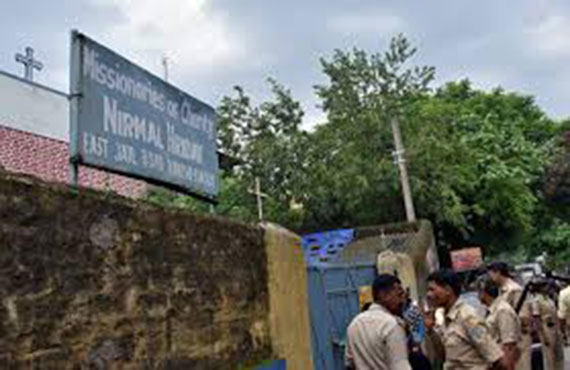
India’s Supreme Court has rejected bail for a Missionaries of Charity nun arrest-ed and remanded in custody in the eastern State of Jharkhand six months ago on suspicion of child trafficking. The top court turned down the plea from MC Sister Concilia on Jan. 29 on grounds that police had not yet pressed charges in the case. However, the court left the door open for her to file another application and also told the police to file formal charges soon. Sister Concilia, who headed the Nirmal Hriday (tender heart) home for unmarried mothers in Jharkhand’s State capital Ranchi, was initially remanded in judicial custody for 14 days on July 5.
Christian bodies slam Yoga guru Baba Ramdev on Mother Teresa comment
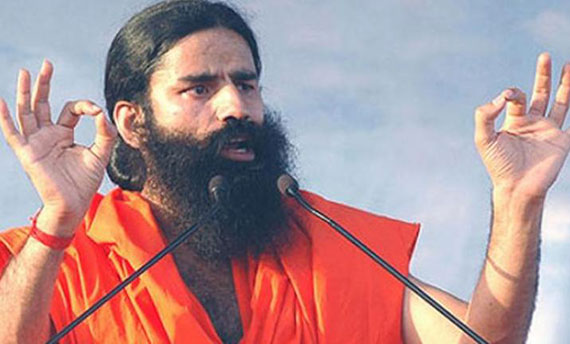
Aggrieved over the unwarranted comments made by Baba Ramdev that Mother Teresa had got Bharat Ratna, the highest civilian award of India, just because she was a Christian, the members of Telangana Christian Association and United Christian Association in Mahbubnagar district termed the comments of Baba Ramdev as motivated and unwarranted.
They said that India is a secular country and every citizen has the right to serve the country and its people. They said Mother Teresa had served the humanity and the downtrodden and even orphan-ed children and people suffering from leprosy and spread the message of love and peace in the society.
Her services are acknowledged worldwide and she was being regarded as angle of poor, downtrodden and deceased. She gave them food, treat-ed them for their diseases, gave education and made them lead a happy life and Government of India recognised her unparalleled services and bestowed her with the highest civilian award, Bharat Ratna, and not because of her being a Christian, opined the Association members.