
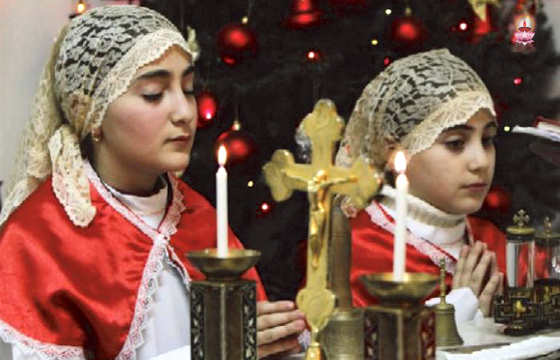
Iraq’s Chamber of Deputies voted on a bill sanctioning Christmas as a “national holiday with an annual frequency” for all citizens. Welcoming the news as a source of great “joy and satisfaction” and confirmation of the importance of “the Christian presence” for the whole country, Chaldean patriarch, Card Louis Raphael Sako explains: “Parliament voted on our request to consider Christmas a holiday for all Iraqis.” And the motion “passed, to our great satisfaction.”
Interviewed by AsiaNews, Msgr Basilio Yaldo, auxiliary of Baghdad and general coordinator of the Iraqi Church Pope Francis’ imminent visit to Iraq, speaks of a “historic vote, because today Christmas is truly a celebration for all Iraqis. And this happens for the first time.”
In the past, he adds, “the government granted Christians a day off, now it applies to everyone and it will be for years to come. It is no longer a temporary measure to be renewed every year. This is a message of great value and great hope for Christians and for all of Iraq and is inevitably linked to the pontiff’s apostolic journey to our country in March. This is one of the first fruits we hope will bring many others in the future.”
On October 17, the Chaldean primate met the President of the Republic Barham Salih. In addition to the situation of Christians, Card Sako had forwarded the “official request” to the head of state to proclaim the birth of Jesus a “holiday for all.” The green light arrived recently is a further recognition for a community victim in recent decades of serious sectarian violence and targeted attacks that have triggered a massive exodus. A flight that reduced the original population of the early 2000s to a third.
“His Beatitude and Eminence – reads a note released by the patriarchate – thanks the President of the Iraqi Republic Barham Salih, for having adopted the request […] to make Christmas (December 25th) a national holiday every year. He also thanks Muhammad al-Halbousi and the parliamentarians for their favourable vote for the good of Christian citizens.” – AsiaNews
Category Archives: Asian
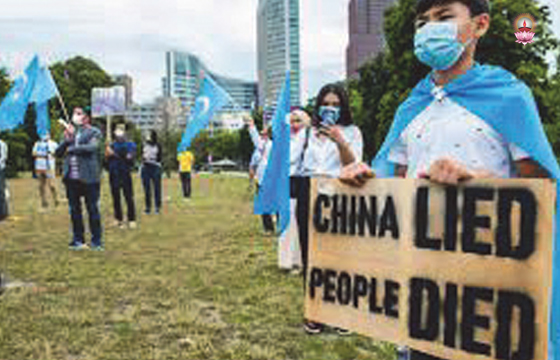
How the Chinese Communist Party Robs Children of Their Religious Faith
The U.S. State Department on Dec. 7 designated China a “country of particular concern” for its systematic, egregious, and ongoing violations of the religious freedom of its citizens.
The Chinese Communist Party has rightly been under scrutiny for its persecution of religious groups, including the internment of Uighurs in concentration camps in Xinjiang and the organ harvesting of Falun Gong practitioners, as well as for arrests and imprisonment of followers for reason of their practice, the destruction of church buildings and symbols, and the arrest or intimidation of Christians holding private Bible studies.
At a recent event on the sidelines of the U.N. General Assembly’s Third Committee session, the Jubilee Campaign—together with the Coordination of Associations and Individuals for Freedom of Conscience—brought the untold stories of Chinese children’s experiences of religious persecution.
The left is actively working to undermine the integrity of our elections. Read the plan to stop them now. The event exposed the fact that the Chinese Communist Party has utterly failed to uphold its treaty obligations under the Convention on the Rights of the Child, to which China is a signatory.
While entire religious communities have been persecuted in China because of their religious and spiritual beliefs, children have suffered tenfold.
The government has separated children from their parents and has threatened to beat the children if the parents do not renounce their faith. Government authorities have even threatened parents of adopted children that they will forcibly take away those children, return them to their original families, or put them up for adoption again if the family does not give up its beliefs.
In addition, in keeping with the 2018 Revised Regulations on Religious Affairs in China, local authorities have interpreted the regulation to ban attendance for all children at churches and other houses of worship, as well as to prohibit children from attending any religious activities, such as religious summer camps, or religious instruction, such as Sunday school.
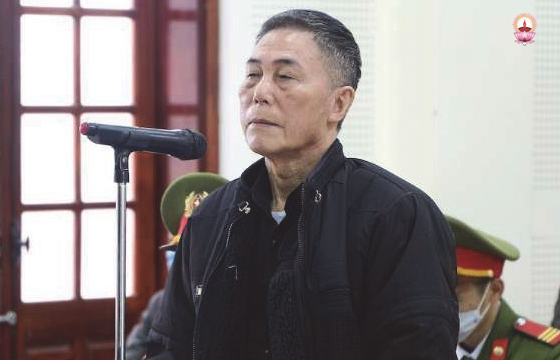
Vietnamese poet jailed for 12 years for subversion
A court in central Vietnam has imposed a harsh prison sentence on an elderly poet and blogger for his posts critical of the communist government.
On Dec. 15, the People’s Court of Nghe An Province sentenced 68-year-old Tran Duc Thach to 12 years in prison for charges of “activities aimed at overthrowing the people’s government” under Article 109 of Vietnam’s Criminal Code. He will also have to serve another three years’ probation after his sentence.
Vietnam News Agency reported that Thach, who was arrested in April, was accused of writing and posting articles distorting the country’s political, economic and social events, and smearing government leaders on Facebook from May 2019 to March 2020.
The state-run agency said the former soldier, who served with North Vietnamese forces during the Vietnam War, was among five co-founders of the Brotherhood for Democracy, which is banned by the government. Many of its members have been jailed since its establishment in 2013.
It said his crimes were seen as being dangerous and aimed at fighting the one-party government.
Thach had been imprisoned for three years in 2009 for “conducting propaganda against the state” along with his two fellow dissidents Vu Van Hung and Pham Van Troi. However, he was among over 10,000 prisoners granted amnesty in 2011 to mark the country’s National Day.
His poetry describes life without freedom and justice, while his novels cover human rights abuses and the legal system in the Southeast Asian country.

On Cages and Evangelization in China
Joshua Wong is a young Chinese human rights activist, recently sentenced to 13 and a half months in prison on the Orwellian charge of “incitement to knowingly take part in an unauthorized assembly”—meaning, in Chinese Newspeak, urging others to protest peacefully the tyranny now throttling Hong Kong. In his first letter from prison, the uncowed Mr Wong wrote, “Cages cannot lock up souls.” Indeed, they cannot. But the failure to defend the caged by standing in solidarity with them can do the gravest damage to evangelization.
Jimmy Lai, one of Hong Kong’s most prominent Catholic defenders of religious freedom and other basic human rights, was back in jail in early December; his bail in a civil lease dispute was revoked on the grounds that he might flee and is a national security risk to boot. The real reason for his incarceration, of course, is that keeping Mr Lai in prison stifles his ongoing challenge to repression. In numerous interviews, Jimmy Lai has em-phasized that his Catholic faith undergirds and sustains his commitment to human rights for all, even as the Xi Jinping regime tries to ruin his business and threatens his life. Has Jimmy Lai been encouraged by a public word of protest from the Vatican against his persecution since he became a prime target of China’s overlords? No.
Martin Lee is another devout Catholic—a distinguished barrister and pro-democracy activist—who has seen his work undone as Beijing tightens its stranglehold on Hong Kong in brazen disregard of the commitments it made in 1997, when Great Britain reverted sovereignty over the territory to China. Profiled in the Wall Street Journal, Mr Lee rebuffed any suggestion that he would ever leave Hong Kong.

Catholics praised for helping Vietnam’s pandemic fight
High-ranking government officials have praised Vietnamese Catholics for their great contributions to the Covid-19 fight and returned some former church properties as Christmas gifts during their festive visits.
On Dec. 22, National Assembly chairwoman Nguyen Thi Kim Ngan, accompanied by central and local officials, offered Christmas and New Year flowers and greetings to Archbishop Joseph Nguyen Chi Linh at the Arch-bishop’s House in Hue, the capital of Thua Thien Hue province.
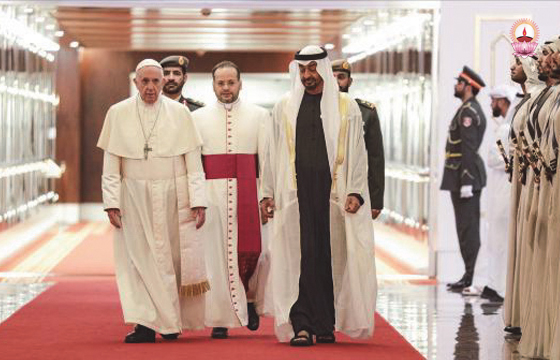
Pope to visit Iraq in March 2021
Pope Francis will travel to Iraq next year. The Holy See Press Office director Matteo Bruni made the announcement on Dec. 7.
Following the invitation of the Republic of Iraq and of the local Catholic Church, Pope Francis will make an Apostolic Journey to Iraq on 5-8 March 2021. The pontiff will visit Baghdad, the plain of Ur, linked to the memory of Abraham, the city of Erbil, as well as Mosul and Qaraqosh in the plain of Nineveh.
For the Church in Iraq, for Iraqi Christians and for the whole country, including Muslims, this “represents a source of great and immense joy, which we have been waiting for many years, since the time of St Pope John Paul II, in 2000, with the first reports of a journey that was not possible then,” said Mgr Basel Yaldo, Auxiliary Bishop Baghdad, a close aide to the Chaldean Patriarch Louis Raphael Sako. Francis will undertake the journey that St John Paul II was unable to make in 1999. Ur of the Chaldees was supposed to be the first of three stages – the other two were the Sinai and Jerusalem – in a journey along the path of history before the 2000 Jubilee, said in 2014 Card Giovanni Battista Re, who at the time was sostituto (substitute) for general affairs of the Vatican’s Secretariat of State.
St Pope John Paul II was able to visit the Sinai and Jerusalem (pictured) in February and March 2000, but not Ur of the Chaldees. The site, located in southern Iraq, is the place where, according to the Bible story, Abraham heard the voice of God and left. Today, ancient Ur is now nothing more than a collection of archaeological remains.
This first stage, which St Pope John Paul II “dreamed and desired,” was however very difficult to do at that time, coming as it did a few years after the First Gulf War, which ended with the liberation of Kuwait. In those years, Iraq was under a UN embargo for the refusal of Saddam Hussein’s government to allow inspectors to see his alleged nuclear and chemical weapons programmes. No plane could travel to the country.

Elderly Catholic priest suspended over exorcism in Vietnam
A Catholic diocese in Vietnam has suspended an elderly priest after he joined a banned group of exorcists, disobeying his bishop.
Da Lat Diocese annou-nced on Dec. 6 that 72-year-old Father Dominic Nguyen Chu Truyen had been sus-pended from administering sacraments and pastoral care. The diocese’s vicar general, Father John Bosco Hoang Van Chinh, announced the suspension of Father Truyen, who claims to be an exorcist.
Father Turyen lived in a house owned by Teresa Nguyen Thi Thuong, who leads a group of exorcists based in Bao Loc parish in Lam Dong province.
Thuong and her group members regularly perform exorcism inside the house, attracting several people. The diocese banned Catholics from attending such practice, in June after some priests and nuns also attended the rituals.
The vicar general said Father Truyen sent two letters in October to Bishop Dominic Nguyen Van Manh and the diocesan advisory board stating that he “has to absolutely obey the will of God” even if it means disobeying the bishop.
Father Truyen, a former pastor of Thanh Mau parish, said that Thuong received “a mandate from God for him.”
He claimed that he could “put hands on patients and heal them and perform an exorcism without seeking the bishop’s permission.”
The priest said he considers this service as “a special grace from God, more than his priesthood.”
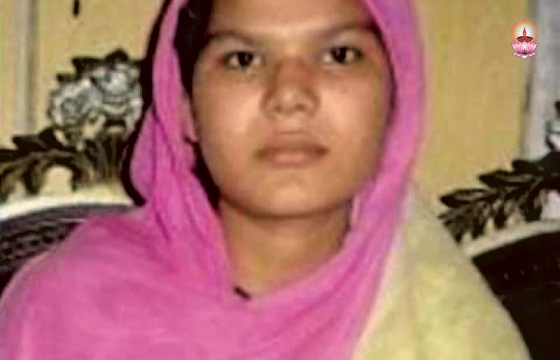
Rawalpindi, Christian girl murdered for refusing to marry a young Muslim
Sonia, a 24-year-old Christian girl was killed by a young Muslim Shahzad because she refused to marry him. The killing took place last November 30 and the killer is still at large.
Sonia was the daughter of Allah Rakha Masih, who moved 13 years earlier with her family from Faisalabad to Rawalpindi to work as a janitor in a government school.
Sonia’s mother, Teresa, says her two daughters, Sonia and Nazish, 18, work as housekeepers and are a great financial help for the family. Usually they always left together to go to work. On the morning of November 30, Sonia left her sister at the entrance of the Air Force Colony, the neighborhood where they live in a rented house, and headed to Behria Town, where she worked. As she was crossing the G.T. highway, Shahzad shot her in the head and killed her.
The family, warned of the accident, took Sonia to the hospital, where the doctors could only declare her death. Allah Rakha tells that the family of Shahzad, a Muslim, had met their poor Christian family and asked that Sonia marry Shahzad. But they refused, saying that being Christians, their faith does not allow them to marry people of other faiths. In addition, Allah Rakha explains, Sonia was a “true Christian” and would never agree to change her religion.
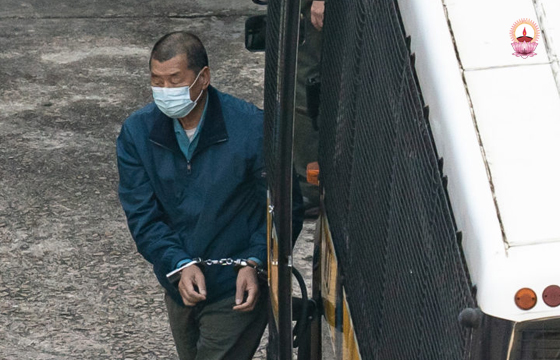
Hong Kong: Anti-Communist Media Mogul Jimmy Lai Facing Decade in Prison
The owner of Hong Kong anti-communist news-paper Apple Daily, Jimmy Lai, is facing a minimum of a decade in prison after being charged on December 11 with violating the city’s new, and illegal, law against “national security” trespasses.
Prosecutors charged Lai, 73, under the law’s “foreign intervention” provision for allegedly having conversations with foreigners about the steep decline of respect for human rights in Hong Kong in the past year.
The “national security” law mandates no less than ten years in prison for those convicted of four times of national security crimes: foreign interference, “secession,” “terrorism,” and “subversion of state power.” The law was implemented through Beijing’s National People’s Assembly, which violates Hong Kong’s longstanding policy of “One Country, Two Systems.” Under the policy, Hong Kong cannot exercise sovereignty and the Chinese Communist Party cannot impose its laws on the city. Hong Kong Chief Executive Carrie Lam, a Beijing loyalist, has nonetheless ordered Hong Kong police to enforce the illegal legislation.
Apple Daily has developed a reputation for being one of Hong Kong’s most vocal publications criticizing the current government’s friendliness towards Beijing. The newspaper regularly covers Hong Kong police’s use of violence against peaceful dissidents and Lai himself became a regular during the anti-communist protests that erupted in the city in 2019.
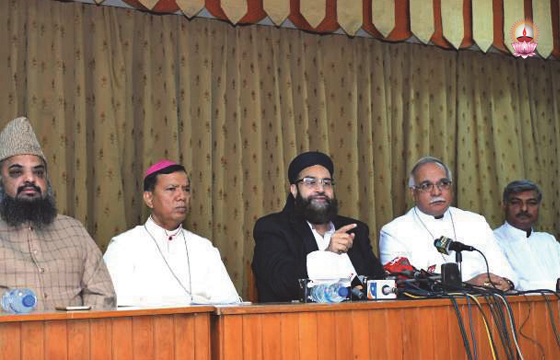
Pakistani PM orders probe into forced conversions
Church leaders have thanked Pakistani Prime Minister Imran Khan for ordering an investigation into forced conversions of females from religious minorities.
“The PM has ordered an investigation on a case-by-case basis of incidents of forced con-versions of minor girls belonging to minority communities, particularly Christian and Hindu, to find reasons for this issue. Law and rights are equal for all. Christians, Hindus, Sikhs and daughters of minorities are our daughters as well,” said Tahir Mehmood Ashrafi, the PM’s special representative on religious harmony.
“Forced marriages, forced conversion of religion and abdu-ction of underage girls of other religions in the name of marriages will not be tolerated. The human rights ministry, in consultation with other stakeholders, is working out a mechanism to eliminate the fear of forced marriage among non-Muslims.”
Ashrafi was speaking at a joint press conference on November 30 with Catholic and Protestant bishops on Nov. 30 at St Peter’s School of Lahore.
Church of Pakistan Bishop Azad Marshall, president of the National Council of Church-es, welcomed the Prime Minister’s decision.
“We urge Islamic scholars and government officials to sit with us and develop a mechanism for judging instances of religious conversion of children. Many cases go unreported due to societal pressure and fear of reprisal from the accused” he said.