
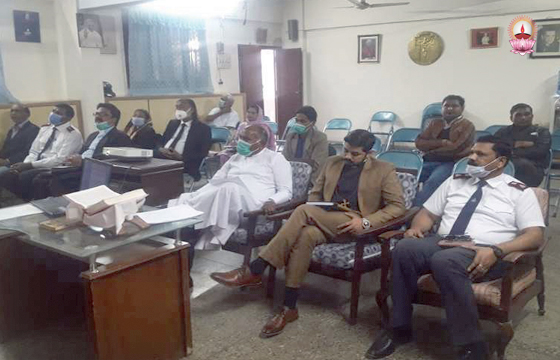
The Week of Prayer for Christian Unity was observed by the National Commission for Justice and Peace (NCJP), the human rights organization of Pakistan’s Archdiocese of Kara-chi. Celebrated from Jan 18-25 since 1908, this year’s unity week had a special theme of “Abide in my love… You shall bear much fruit” (John 15:17).
The role of the NCJP in the community was highlighted by Christian leaders of different denominations, lawyers and journalists.
Father Saleh Diego, director of the NCJP and vicar general of the Archdiocese of Karachi, said it was the desire of Jesus mentioned in the Bible that “they may be one,” noting that “we must keep in our minds St Paul’s words that we all are different parts of the same body and if there is a pain in any part of our body, our whole body feels it.”
“All Christians, united and bonded in Jesus’ body, must feel the pain of each other and be united. If someone cuts himself, he actually cuts himself from the Body of Christ,” he added.
Kashif Anthony, a rights activist, said the first week of unity was celebrated in the small chapel of Atonement Franciscan Convent of the Episcopal Church, located on a remote hillside outside New York City.
The dates of the week were proposed by Father Paul Watson, co-founder of the Gravmoor Franciscan Friars, keeping in mind the feast of the Confession of St Peter on Jan. 18 and concluding with the feast of the Conversion of St Paul on January 25. “We must keep in our minds and practice ecumenism in our lives in which Christians belonging to different denominations work together and develop closer relationships and promote Christian unity among their churches,” Anthony said.
Category Archives: Asian
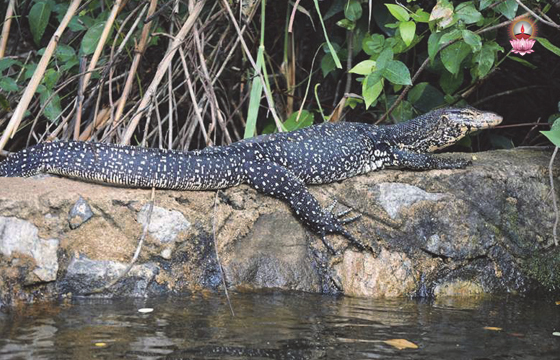
Cardinal tackles Sri Lanka’s environmental destruction
At the start of this year, Cardinal Malcolm Ranjith of Colombo, the outspoken leader of the Sri Lankan Church, addressed environmental issues in his archdiocese regarding Muthurajawela, a wetland 30 kilometres north of Colombo. This marsh-land is notable for its unique and highly diverse ecosystem and is listed as one of the 12 priority wetlands in Sri Lanka.
Muthurajawela, which translates as “Swamp of Royal Treasure,” has a long history of 700 years. It covers 4,390 acres and while only 700 acres are ear-marked for development, the project will have a drastic effect.
Prominent environmentalist Ven. Pahiyangala Ananda Sagara Thera joined the cardinal in speaking out against the Muthurajawela development project. Ven. Sagara Thera has condemn-ed almost all destructive projects in the country, castigating rulers who make promises during election campaigns but act differently once they are in power.
The monk and the cardinal conducted a joint press conference against the development of this prime land, which was cultivated until the 1950s but later abandoned due to problems with water resources.
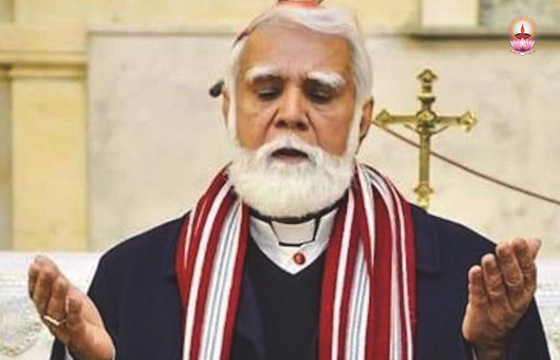
Cardinal named head of Christian research centre in Pakistan
Cardinal Joseph Coutts, the Archbishop of Karachi, has been appointed as the chairperson of a key Christian research and study centre.
He is taking charge of the Christian Study Centre in Rawalpindi, said Father Nasir William, director of the Diocesan Commission for Rawalpindi and Islamabad.
“It’s a big responsibility but since this prelate of the Catholic Church is well known for his experience and personal interest in the interfaith and ecumenical field, I would say he is the right man for the right place,” Father William told.
Founded in 1967, the Christian Study Centre aims to work for peaceful coexistence, coope-ration, better understanding and strong bonding between the Christian and Muslim communities and with people of other faiths.
Supported by both the Catholic and Protestant churches, it has been serving as an ecumenical institution for the study of Christian-Muslim relations. Christian-Muslim dialogue has been the key component of the center since its establishment.
It is also running projects related to developing Christian theology in Pakistan, interfaith harmony and peace-building and human/minority rights.
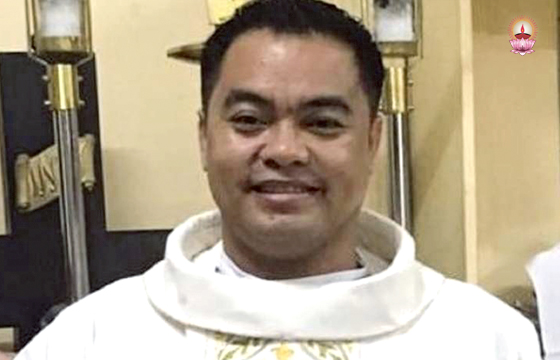
Catholic priest gunned down in Philippines
A Catholic priest has been shot dead near a Carmelite monastery in Bukidnon province in the southern Philippine region of Mindanao. The body of Father Rene Regalado, 42, was found near his car in Malaybalay City on Jan. 24. He had been shot in the head. Malaybalay Diocese said it had received reports that churchgoers had heard gunshots around 7.30 pm, adding it took at least an hour for police to arrive at the scene.
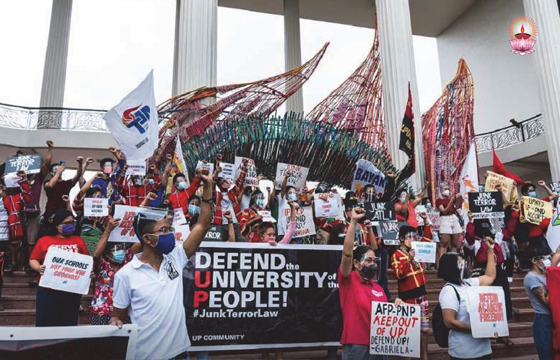
Row between Philippine govt, top university widens
Civil and political groups in the Philippines have lent their weight in a growing row by condemning the government for breaking a 30-year-old agreement with the country’s top state university over allowing security forces onto its campuses.
The deal required police and the military to seek permission from administrators of the University of the Philippines (UP) if they wanted to enter its grounds.
The university, which has 32 campuses across the country, has become a hive of “clandestine recruitment” activity by communist rebels and needed saving, according to the Defence Department.
University bosses and students deny the claim, saying its an attempt to stifle freedom of expression at an institution well known for its criticism of President Rodrigo Duterte’s rule.
On Jan. 21, a Philippine labour coalition said protection from state forces should not only apply to places of learning.
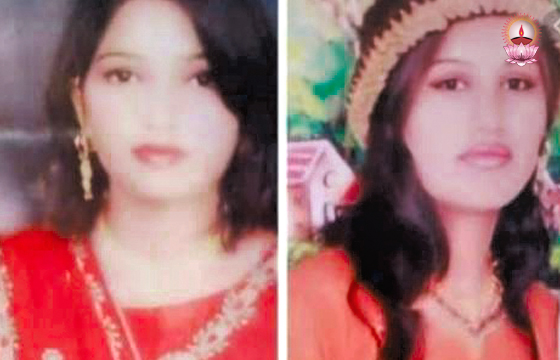
Murder of two young Christians, killed for not wanting to give up their faith according to the pastor of their Protestant community
“The merciless murder of Abida and Sajida is a tragedy that shows how the lives of religious minorities in Pakistan are held by a thread or is worthless. Rape, kidnappings, forced conversions and even murders of young Christian girls are worrying phenomena. The government must not deny this and has the duty to stop the violence against Christians.” This is what Nasir Saeed, Director of the NGO CLAAS (Centre for Legal Aid Assistance & Settlement) said in a note sent to Agenzia Fides, commenting on the case in recent days which has provoked outrage and the protest of the community of the faithful in Pakistan.
Two young Christian sisters, Abida, 26, and Sajida, 28, residing in the Christian neighbourhood of Makhan, near Lahore, were murdered last December after stubbor-nly refusing to convert to Islam. Police arrested two Muslims, Mumtaz Khan and Muhammad Naeem, suspected of killing the women. As Fides learned, Mushtaq Masih, Sajida’s husband, reported that the two sisters worked in a medicine factory and that they disappeared on Nov. 26, 2020. The family filed a formal complaint following their disappearance, reporting to the police his fears of kidnapping, as the two sisters had indicated that they had been often sexually harassed and had received from two work colleagues, Muhammad Naeem and Mumtaz Khan, the request, always rejected, to convert to Islam. Pakistani Prime Minister Imran Khan has pledged to ensure minorities are safe and happy in Pakistan. When we see cases of false accusations of blasphemy, kidnappings, forced conversions and murder of Christian girls, it must be emphasized that, in practice, this is not true and that the condition of Christians in society is getting worse” (PA). Nearly 1,000 girls from religious minorities who are forced to convert to Islam in Pakistan each year, largely to pave the way for marriages that are under the legal age and non-consensual.
China’s Threat to the Bible
The Bible is America’s best-selling book, annually outpacing the top 20 best sellers combined. Yet a single Chinese company has a near monopoly on Bible printing, meaning that any rupture in the supply chain—say, from U.S. or Chinese government poli-cies—would lead to a Bible shortage in America. This poses a serious threat both to American Christians’ fundamental religious liberty rights and to national security.
More than 20 million Protestant and Catholic Bibles are printed annually by America’s largest Bible publishing compa-nies. But few are aware that most of these Bibles are printed in China, by Amity Printing Company. (Bible publishers that don’t print in China include InterVarsity Press [IVP], St Ignatius Press, St Benedict Press, Cambridge University Press, R.L. Allan & Son, and Schuyler Bibles). Thanks to American publishing decisions, American Christians rely on a state that represses Christianity for their Bibles. While China intensifies religious persecution at home and is considered by U.S. Intelligence to be “the greatest threat to America today,” this Bible supply chain is increasingly precarious. Yet the Bible publishers have no plans to use alternative printing presses.
The supply chain was tested in 2019, when the Trump administration proposed broad trade tariffs to better balance U.S.-China trade relations. As the plan included tariffs against Bibles, America’s Bible publishers found themselves alongside Beijing vociferously lobbying Washington against the measure. Harper Collins Christian Publishing (HCCP), now the world’s largest Bible publisher (having acquired Zondervan and Thomas Nelson), uses Amity to print most of its Bibles, as does Tyndale House, America’s largest privately-owned Christian publisher. HCCP CEO Mark Schoen-wald denounced the proposed tariff before the U.S. Trade Commission last year. He called it a “Bible tax,” and argued that it would force his company to reduce sales and discontinue some Bible editions. The Trump administration quickly exempted Bibles from the China tariffs.
Christian ministry publishers lobbied as well, arguing that the tariffs would curb First Amendment rights. Stan Jantz, president of the Evangelical Christian Publishers Association, declared that the tariffs would do “significant damage to Bible accessibility.” He stated before the Trade Commission that “some believe such a tariff would place a practical limitation on religious freedom.”
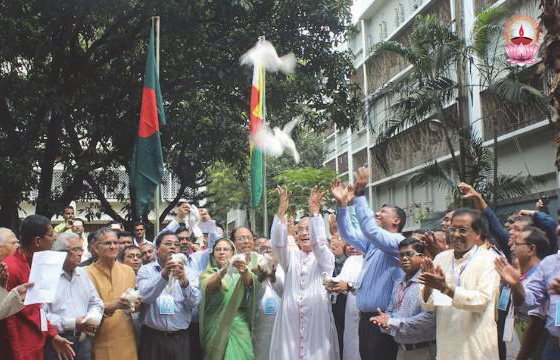
Bangladeshi minorities seek scripture readings in state programs
Bangladeshi religious minority groups have urged the government to introduce the reading of scriptures of all four major religions at the beginning of parliamentary sessions and state ceremonies.
Bangladesh Hindu Buddhist Christian Unity Council (BHB-CUC), the country’s largest minority group, made the call during a virtual conference this week.
Parliamentary sessions and state programs in Muslim-majority Bangladesh now begin with a recitation from the Quran.
BHBCUC leaders say intro-ducing readings from the holy books of the four major religions would be a significant symbolic gesture to behold pluralism in Bangladesh on the eve of the country’s golden jubilee of independence from Pakistan this year.
Advocate Rana Dasgupta, a Supreme Court lawyer and BHBCUC secretary, said that such a move is important as it recognizes the equal dignity and rights of minorities.
“Our constitution has given equal rights for all religions but only a recitation from Quran is done in the parliament and in various state functions. We hope that by introducing the reading of all scriptures we can fill a void that the spirit of the constitution has enshrined,” Das told UCA News on Jan. 8.
Das said the group will hold a press conference and submit a memorandum to the parliament speaker to press the government over their demand. Holy Cross Father Liton H. Gomes, secretary of the Catholic bishops’ Justice and Peace Commission, support-ed the move.
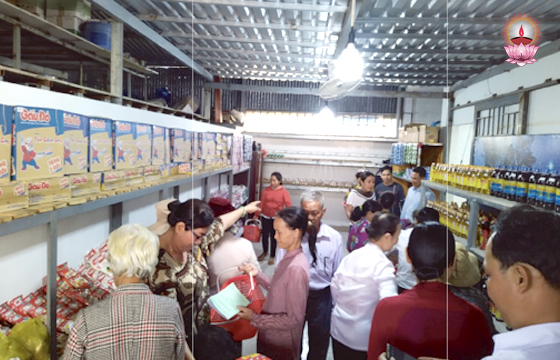
The Diocese of Can Tho opens two ‘free supermarkets’ for the poor
The Diocese of Can Tho opened two supermarkets at the start of the month where the poor affected by the coronavirus pan-demic can get basic necessities for free. One is in Sông Ñc pari-sh, the other in Cái Tac parish.
Vietnam is one of the coun-tries that seems to have better managed the COVID-19 crisis. So far it has reported just over 1,500 cases, with 1,360 hospitalisations and 35 deaths. Despite this, many Vietnamese are facing hardships.
Volunteers run the two supermarkets, also known as “solidarity shops,” the most popular form of charity in Vietnam. The Diocese helps families in difficulty, orphans and people with disabilities.
The beneficiaries have a booklet where the products they receive each month are registered, mostly salt, sugar, rice, fish soup and cooking oil. In Cái Tac more than a hundred families get supplies from one supermarket; each booklet gives the right to get 100,000 dong (US$ 4.3) worth in goods per month.
Bishop Stêphanô Tri Bíu Thiên of Can Tho said that many Catholics face serious economic conditions, and this required some action. “After talking with local priests, we decided to help those who need it most,” the prelate explained, based on Pope Francis’s teachings about the “culture of care as a path to peace.”
–AsiaNews
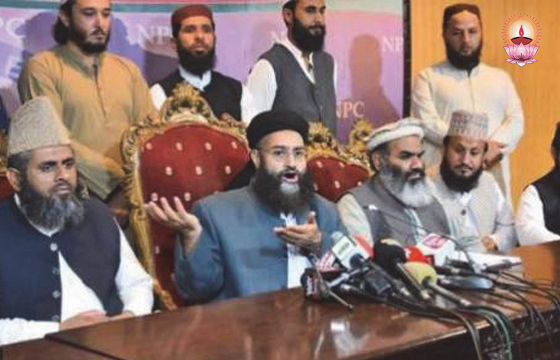
Christians welcome the new government initiative to protect religious minorities
“We appreciate the government’s renewed commitment to the protection of religious minorities in Pakistan, especially for the protection of those falsely accused and for the protection of innocent underage girls trapped in forced conversions and marriages. The initiative of the Government Office for Interreligious Harmony will certainly strengthen peace and harmony between people of different religions and help ensure that members of religious minorities do not to live in fear.”