

Pope Francis hopes to embark on the first-ever papal visit to the biblical land of Iraq in early March in a spiritual pilgrimage of sorts to the place known in Arabic as the “land of the two rivers” — the mighty Tigris and Euphrates — and once renowned as Mesopotamia, the “cradle of civilization.”
The Garden of Eden is believed possibly to have been in ancient Iraq, but certainly the famed Hanging Gardens of Babylon and the Tower of Babel were located there. Jews exiled to ancient Iraq in Old Testament times, such as the prophet Daniel, experienced God’s miraculous grace; Daniel was rescued from the lion’s den and his friends from the fiery furnace.
“The pontiff said he looks forward to visiting our country, which is also where Abraham began his journey,” Cardinal Louis Sako of Baghdad said of the March 5-8 trip.
The historically rich country is full of religious sites important to understanding the antecedents of the Christian faith, making the visit significant for Pope Francis. Here’s a snapshot of some of these places.
Old Testament patriarch Abraham is recognized as the father of faith in one God by Jews, Christians, and Muslims alike and was born in the southern town of Ur. The place, which dates back to 6000 B.C., lies on a former course of the Euphrates and is one of Iraq’s oldest sites.
The pope will see a dry, flat, and ocher- coloured plain renowned for its well-preserved stepped platform or ziggurat, which dates back to the third millennium B.C. Also, some of the earliest known writing, cuneiform, has been uncovered at Ur.
Around 2000 B.C., Ur was a bustling urban centre, drawing traders from both the Mediterranean and the Indian subcontinent, until its conquest by Alexander the Great a few centuries before Christ. Pope Francis will participate in an interreligious meeting there.
Category Archives: Asian
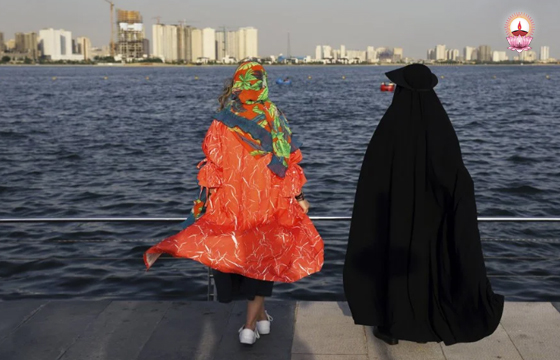
Expert sees changing religious landscape in the Middle East
A Jordan native and expert on Islamic affairs has said the Middle East is currently undergoing an in-depth reflection on the role of religion in society and governance, leading to a changing religious landscape in the region.
“Violence perpetrated in the name of religion contributed to this change,” said Monsignor Khaled Akasheh, Bureau Chief for Islam at the Pontifical Council for Interreligious Dialogue.
“The quest for enhanced liberty and better life conditions also contributed to reflecting on the role of religion in society and to eliciting religious responses to particular questions and doubts,” Akasheh told Crux.
Akasheh stressed that while he is Jordanian and follows developments in issues of social and religious interest in the Middle East closely, he has not lived in the country for years, and thus “cannot claim to have an extensive and complete vision of the reality.”
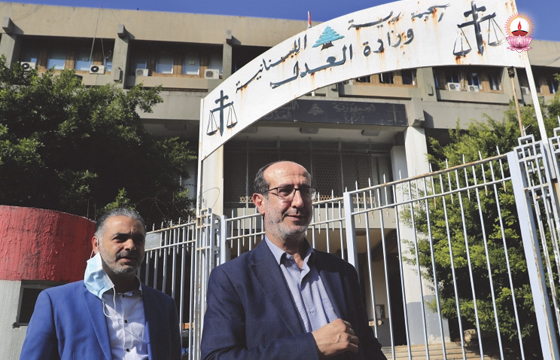
Saving the Middle East’s Last Bastion of Christianity
At September’s annual In Defense of Christians (IDC) 2020 summit, an IDC board member described Lebanon as the “last bastion of Christianity in the Middle East.” Recently, the advocacy organization hosted a panel discussion titled “The U.S. Needs a Better Lebanon Policy,” which brought together Lebanese and American politicians, clergymen, and experts to discuss how to save Lebanon — and why the changes in policy must be dramatic.
“If Lebanon fails, it may be a small state, but it’s where all the triangles in the Near East touch,” concluded Nicholson.
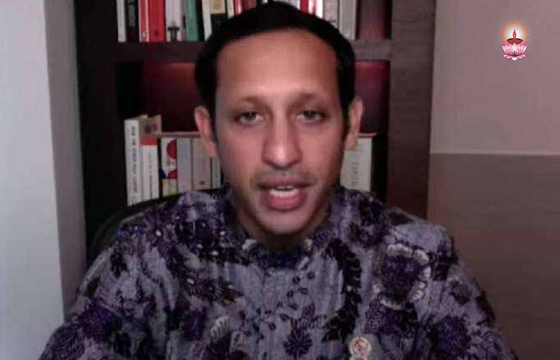
Indonesia bans forced religious attire in state schools
The Indonesian government has issued a decree banning state schools from interfering in the religious beliefs of students and teachers in a move that is being hailed as part of increased efforts to ensure the Muslim-majority country remains inclusive.
The decree was announced on Feb. 3 following an outcry last month after a state vocational senior high school in Padang, West Sumatra province, ordered all female students to wear a hijab.
According to the decree, schools must not force students and teachers to wear clothing that identifies people with a certain religion. “The essence of this decree is that students, teachers and education officials have the right to choose. Wearing religious-oriented attire is an individual decision,” said Minister of Education and Culture Nadiem Anwar Makarim when announcing the decree with Religious Affairs Minister Yaqut Cholil Qoumas and Home Affairs Minister Muhammad Tito Karnavian.
The decree also demands that local governments and school principals revoke regulations that require or prohibit such attire within 30 days.
Makarim called on the public to report any violations. The regulation, however, exempts Aceh province in Sumatra, the only region in Indonesia authorized to impose Islamic Sharia law.
Minister Quomas said the decree was necessary to stamp out religious intolerance in schools and cited the Padang school which had tried to force a Christian girl to wear a Muslim headscarf.
“I believe that case was just the tip of the iceberg,” said Quomas, adding that the government hopes everyone will respect each other’s beliefs.
Ahmad Nurcholish from the Indonesia Conference on Religion and Peace welcomed the decree, saying it upholds the concept of freedom of religion and belief guaranteed by the Indonesian Constitution.
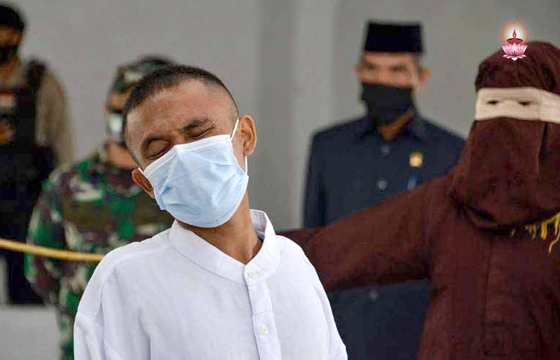
Three Indonesian Christians caned for drinking alcohol
Three Christians were flogged in public in Indonesia’s Aceh province on Feb. 8 after being caught drinking alcohol at a small shop in the provincial capital Banda Aceh, according to a local government official.
Heru Triwijanarko, acting head of the Banda Aceh public order agency and Sharia police, said the three unnamed men received 40 strokes of the cane for violating bylaws prohibiting alcohol.
It was not clear whether any of the men were Catholic.
“They were all given the choice of a prison sentence or caning, and all chose to be caned,” he said.
The conservative province is the only area in the country allowed to implement Sharia-based bylaws.
They stipulate that violators must be given the option of being tried in a Sharia court or in a regular criminal court using Indonesia’s national penal code. However, if the offense does not fall under the penal code, even non-Muslim violators can be tried under Sharia law.
One of the caned Christians said he chose to be flogged to avoid a prison sentence of up to six months.
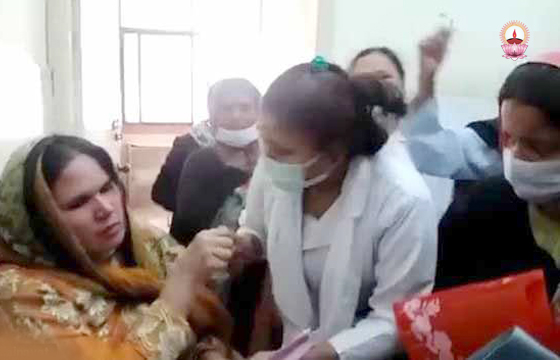
Blasphemy law: Christian nurse tortured in Pakistan hospital
A Christian nurse was reportedly tied up and tortured by a mob at a Pakistani hospital after a Muslim colleague falsely accused her of blasphemy.
Tabitha Nazir Gill, 30, was attacked and beaten by staff at the Sobhraj Maternity Hospital in Karachi where she has worked for nine years, Rabwah reports.
The head nurse was allegedly falsely accused of blasphemy after she challenged a coworker for accepting money from a patient.
Gill is said to have implemented a rule which stops staff receiving money from people using the hospital services.
After seeing a Muslim coworker breaking the order, she told them about their breach and the member of staff subsequently accused them of blasphemy.
Footage from the hospital has emerged on social media which shows a group of people in the hospital hitting the woman.
Several woman can be seen surrounding her, smacking her while another appears to hit her with a stick-like object.
One man in the angry mob can be seen attempting to climb through a window to get to the woman before they gain access to the room she is in.
There are also claims that she was tied up by the angry mob, tortured and locked inside a room before being taken to the police station.
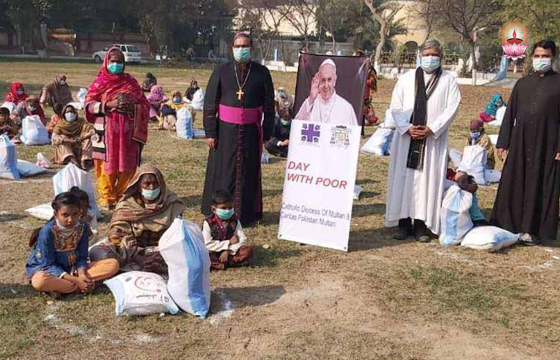
New archbishop named for Pakistan’s largest city
Pope Francis has accepted the resignation of Card. Joseph Coutts of Karachi and transferred Bishop Benny Travas of Multan to take his place as arch-bishop of Pakistan’s largest city.
Cardinal Coutts has headed the southern archdiocese since Jan. 25, 2012. He was appointed chairperson of the Christian Study Centre, a key Christian research centre, in Rawalpindi last month.
Cardinal Coutts was born on July 21, 1945, in Amristar in the Diocese of Jullundur in British India. He was ordained a priest in Lahore on Jan. 9, 1971
Bishop Travas was born in Karachi in 1966 and ordained a priest on Dec. 7, 1990. He served as vicar general of Karachi Arch-diocese and was ordained bishop of Multan on Aug. 15, 2015. He has also served as a professor of canon law at the National Catho-lic Institute of Theology in Kara-chi. Karachi has a population of 20 million. According to the Catholic Church directory 2018, the seaport archdiocese has 182,000 Catholics and 16 parishes. “The son of Karachi has returned,” Father Mario Rodrigues, former rector of St. Patrick’s Cathedral in Karachi, told UCA News.
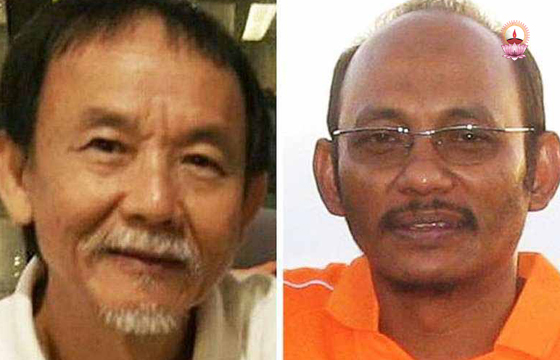
Malaysian Christians pray for missing pastor, disappeared
Catholics and Protestants in Malaysia are praying for victims of enforced disappearances as they remember a Christian pastor who went missing four years ago. The prayers of solidarity on the weekends on Feb. 6-7 and Feb. 13-14 are in response to a call from the Christian Federation of Malaysia (CFM), the interdenominational Christian forum in the Muslim-majority country. Archbishop Leow, president of the Catholic Bishops’ Conference of Malaysia, referred to several cases of enforced disappearances that made headlines in recent times. Anglican pastor Richard Koh, 62, went missing on Feb. 13, 2017, from Selangor state in western Malaysia. He had been accused of proselytizing among Muslims in the state by Islamic radical groups.
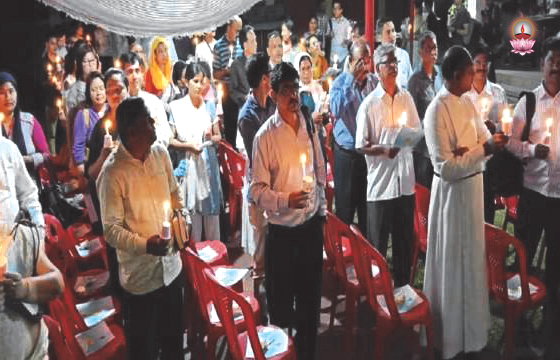
Indian Baptists urge faithful to ignore Covid vaccine prophesy
A Christian group in the north-eastern Indian state of Nagaland has urged the faithful not to believe a claim by a healing ministry that the Covid-19 vaccine is against the will of God.
The Chakhesang Baptist Church Council (CBCC), an association of Baptist Churches in the Christian-majority state, has warned people to ignore such claims.
In a press release issued on Jan. 17, the CBCC clarified that a prophecy made by the Eastern Zion Healing Ministry of Pfutsero claimed that the Covid-19 vaccine is “not the will of God.”
“Such false prophecies are contrary to the Bible and the Christian faith and believers should be careful about alleged divine revelations,” its statement said.
Catholic Bishop James Thoppil of Kohima, the state capital, said Nagaland has several small sects over which Christian churches have no control.
“Most of these sects parted ways from the main churches for various reasons. They are free to give any statements which are not in line with mainline churches,” he said.
“There are many healing and prayer ministries here which claim they are the main church. They sometimes even argue that followers of the Catholic Church are fake Christians, but we don’t pay heed to their claim as it has no meaning.
“The Covid-19 vaccine is intended for all. Let’s not make it a religious issue. People are free to get vaccinated as they wish. The CBCC is an associate church of the Nagaland Baptist Church Council and we support its stand on the issue.”
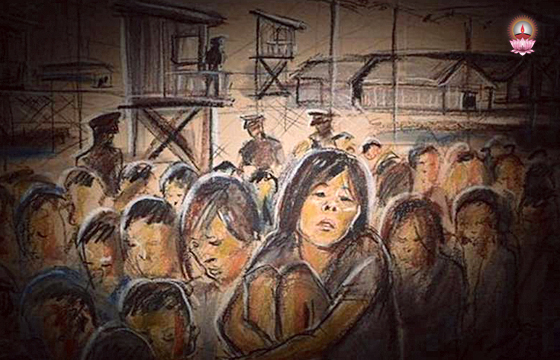
Christians face a climate of fear in six Asian countries
Christians in six Asian countries live under extreme persecution where feudal, oligarchic, authoritarian and theocratic governments call the shots, says the latest report by a Christian advocacy group.
The 2021 World Watch List, compiled by the US-based Christian advocacy group Open Doors, says North Korea, Afghanistan, Pakistan, Yemen, Iran and India are hotbeds of Christian persecution in Asia.
These countries have been occupying positions ranging from first to 10th for global Christian persecution since 2015, according to the report released on Jan. 13.
Christians in these nations are harassed, discriminated against and put to death for their faith because the majority community and authoritarian governments view Christianity as a relic of white privilege and a symbol of Western colonialism, the group said.
Except in North Korea, where the communist party’s diktats run riot, governments in the other five countries are remote-controlled by hardliners and conservatives who fear that Christianity is always susceptible to external influences and use it as a ploy to mobilize the majority against the Christian minority, the report said.
Of late, violence in the form of abduct-ions, forced conversions and sex attacks perpetrated against Christian women go unnoticed and unreported as the governments and law-enforcement agencies, including the legal system, openly appease the majoritarian mob. Less surprisingly, in countries such as Afghanistan, Yemen, India and Pakistan, the fringe elements act as the mainstream and inflict horrific abuses on Christians, the report said.
Christians in the worst-hit Asian countries are holed up in harsh labour camps where forced labour, torture, persecution, starvation, rape, forced abortion and sexual violence have become the order of the day.
Moreover, extrajudicial killings are staged when it suits the fringe elements and governments to enter the good books of the majoritarian mob after molding the political narrative of the country to suit violence.