
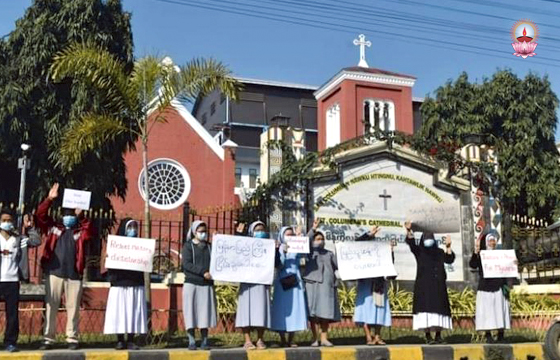
A new call for peace and an end to violence in Myanmar was launched together by 12 cardinals from different regions of Asia, through the Federation of Asian Bishops’ Conferences (Fabc), the body led by the Archbishop of Yangon, Cardinal Charles Maung Bo as president.
The initiative echoes a similar message of solidarity that had already been sent in recent days by the Archbishop of Seoul, Cardinal Andrew Yeom Soo-jung. In the text – which we publish in full below – the 12 cardinals appeal to dialogue to find a way out, expressing particular closeness to Cardinal Bo: “The people of Myanmar we know are peace loving and only seeking an opportunity for progress. They have been law abiding and cooperating with all authorities. At the moment they only seek harmony and end to violence Asia is a continent of peace and of hope, of warm family bonds. We are one family. Peace is possible! ”
It is with deep sadness and great distress that we have been following the events in Myanmar. There is too much anger, too much violence, too much blood shed, too much suffering and pain inflicted on a peace-loving populace which only seeks unity, harmony, and an opportunity for progress in freedom. There have been repeated appeals for calm from the highest quarters. The United Nations Security Council unanimously appealed for a de escalation of violence. Pope Francis has made repeated appeals for peace, harmony, and justice. The Association of South East Asian Nations (ASEAN) has called for “Dialogue, Reconciliation and Return to Normalcy.”
Category Archives: Asian
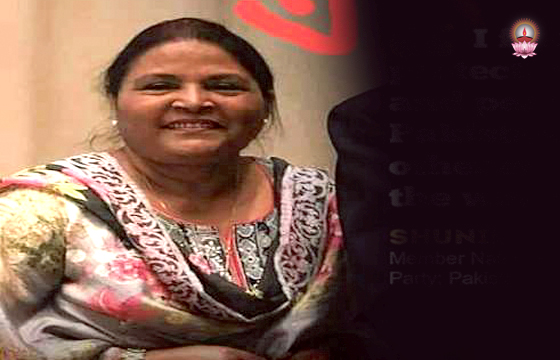
Pakistani lawmaker faces wrath for negating minorities’ persecution
A Christian lawmaker in Pakistan’s ruling party has drawn flak for rejecting a report on religious persecution in the country.
Shunila Ruth, parliamentary secretary for the ministry of religious affairs and interfaith harmony, faced criticism after she rejected an international re-port that said religious minorities suffered discrimination in the Islamic nation.
Last year, a 168-page report by the UK-based All-Party Parliamentary Group for Ahmadis narrated discrimination faced by their community in Pakistan.
Ruth rejected the report and announced to issue its rebuttal in a meeting last week in Islamabad.
“I feel more protected, safe, and peaceful in Pakistan than any other country of the world,” she stated.
The report, titled ‘Suffocation of the faithful – the persecution of Ahmadi Muslims in Pakistan and the rise of International Extremism,’ said “state-sponsor-ed” persecution against Ahmadis intensified following the formation of Pakistan.
It also noted how the denial of freedom of religion for Ahmadis has also led to the denial of freedom of religion for other communities including Chri-stians.
“Security improvements in churches include raised-up perimeter walls, complete with razor wire, surveillance cameras, bomb-proof gates, guards and patrols,” it stated.
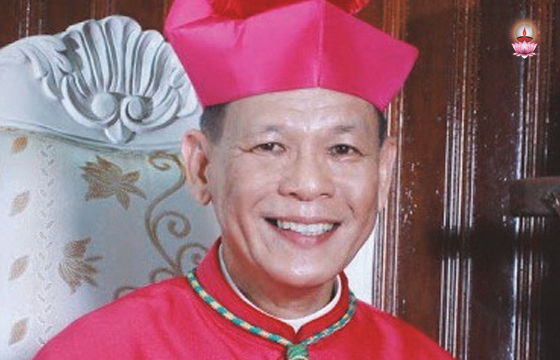
Pope appoints new Archbishop in Manila
Pope Francis on March 25 appointed a new archbishop in Manila Archdiocese, in the Philippine capital. He transferred Cardinal Jose Fuerte Advincula of Capiz to succeed Cardinal Luis Antonio Tagle, who the Pope had appointed Prefect of the Congregation for the Evangelization of Peoples in the Vatican on December 8, 2019. The See of Manila has been vacant for more than 15 months during which Auxiliary Bishop Broderick Pabillo has been serving as Apostolic Administrator.
Myanmar priest follows nun’s peacemaker act
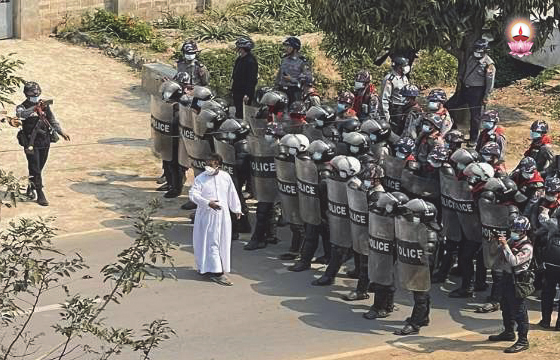
A day after a Kachin nun’s brave act in confronting security forces, a Catholic priest played a mediator role in a Catholic stronghold in northeastern Myanmar.
Wearing a white robe, Father Celso Ba Shwe, apostolic administrator of Loikaw Diocese, walked in front of dozens of security personnel who stood ready to crack down on anti-coup protesters in Loikaw, capital of Kayah state, on March 9.
As police ordered protesters to disperse via a loudspeaker, the priest pleaded with them not to harm unarmed civilians.
“Please, I plead with you not to give harm,” he told one police officer.
The priest’s request, however, was ignored by security personnel and they started to disperse the protesters with rubber bullets and tear gas, causing several injuries.
Father Ba Shwe’s mediation followed the inspiring example of Sister Ann Rose Nu Tawng from Myitkyina, Kachin state, who knelt on the road and begged security forces not to shoot the protesters on Feb. 28 and March 8.
The priest took the role of apostolic administrator of Loikaw on Dec. 21 following Bishop Stephen Tjephe’s death on Dec. 16.
Local Catholics have praised the priest’s brave act and condemned the security forces who ignored his plea.
“I’m proud of being a Catholic as we have priests and nuns who are brave to stand up for the people,” one posted on Facebook.
“Like the priest’s brave act, I wanted to see a cardinal and bishops carrying out the same move in their respective dioceses,” said another comment.
Priests, nuns and seminarians in Loikaw have expressed their solidarity with the people of Myanmar since anti-coup protesters took to the streets nationwide following the Feb. 1 coup. They also rallied to pray for peace in the country by reciting the rosary in early February.
Kayah state is regarded as a stronghold of Catholicism in the Buddhist-majority country and ethnic groups such as the Kayah, Kayan and Kayaw reside in the remote, underdeveloped and mountainous region. About 90,000 Catholics live in a state with a population of 355,000.
Anti-coup protests have continued from urban areas to remote regions including Christian strongholds despite crackdowns bypolice and soldiers.
The military’s brutal approach in recent days has drawn strong condemnation from the United Nations and Western countries including the US and Britain.
On March 9, the 15-member UN Security Council failed to agree on a statement that would have condemned the coup, called for restraint by the military and threatened to consider further measures, according to media reports.
Philippine Jesuit schools call for end to Myanmar violence
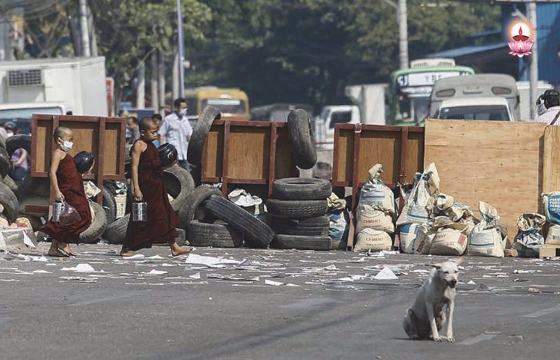
Five Jesuit-run universities in the Philippines have issued a joint statement condemning an ongoing deadly crackdown on street protests against Myanmar’s military coup that has claimed at least 70 lives, according to the United Nations. The military takeover on Feb. 1 and the subsequent repression of pro-democracy protesters was illegal and a gross violation of human rights, the March 10 statement called “One with Myanmar, In the Name of Human Fraternity” said.
The statement was signed by the presidents of Ateneo de Naga University, Ateneo de Manila University, Xavier University — Ateneo de Cagayan, Ateneo de Davao University and Ateneo de Zamboanga University.
Myanmar’s military seized control of the country following a national election in which State Counselor Aung San Suu Ky’s National League for Democracy won easily. The military said the election was flawed, a claim dismissed by the country’s election commission. The coup triggered street protests which the military has sought to crush.
At least 70 people have been killed, according to the UN special rapporteur for Myanmar, Thomas Andrews, who said there was also mounting evidence of crimes against humanity.
“To our brothers and sisters in Myanmar, we are at your side, united in the defense of your freedom. As one family in the Southeast Asia, we are with you in your noble gift to win democracy back,” said the Jesuit-run schools in their statement.
They said that although Asian countries are diverse in culture and history, each nation is called to a spirit of solidarity.
Christians protest after church demolition in Bangladesh
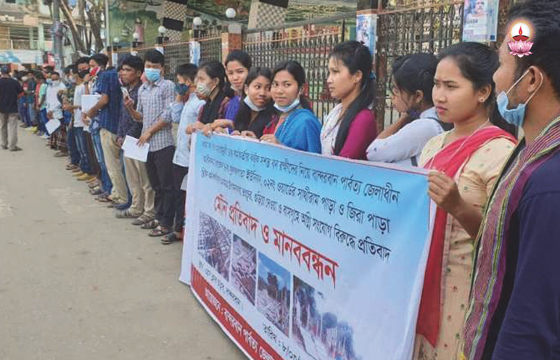
Christians in Bangladesh claim they are being per-secuted after the demolition of a new church building in the remote Chittagong Hill Tracts region.
About 200 Catholics and Protestants formed a human chain and held a silent protest on March 8 against the demolition of the Seventh-day Adventist Church building. A group of about 10 persons including forest officials demolished the under-construction church building in Sathiram Tripura village of Bandarban district on Feb. 25.
Five Christian Villages Extinct: Survivor tells the story
Five Christian villages in rural Bangladesh are virtually extinct now owing to persecution by Muslims.
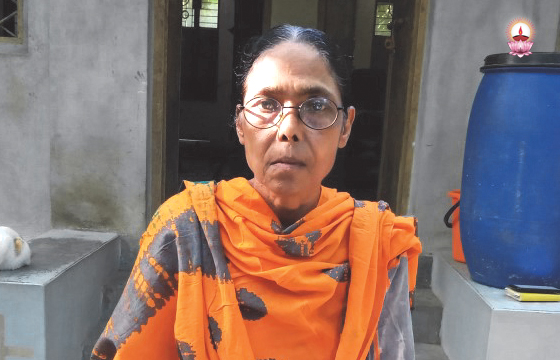
Some 400 Christians once lived in five villages near Dhaka’s Nawabgonj area and were spi-ritually tended by the Hasnabad Catholic parish of Dhaka. But now only one Christian woman remains living. Virgin Margarat Gomes, a former schoolteacher, is now the only inhabitant at Nagerkanda in Nawabganj.
The 65-year-old woman now only has the company of 13 cats and five dogs. She has been living alone in the village for the last 24 years, but without the fellow villagers she knew, she has become anguished.
Gomes told her story to Church Militant, explaining that persecution by Muslim “land grabbers” not only decimated her immediate family but became the last straw for other villagers who, already struggling, fled for safer communities instead of fighting to improve the living standards locally.
In Bangladesh, 90% of the people are Muslim while most of the remaining 10% are Hindu and Buddhist. Christians are nearly invisible in the country, comprising less than one-half percent of the population.
560 UK Churches Ready to Welcome Hong Kong Wave
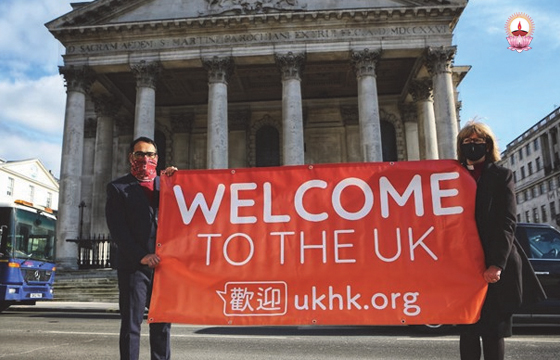
On February 14, a local Chinese church’s multilingual service was broadcast live on BBC Radio 4, the United Kingdom’s most popular radio station, for the first time in history—a gesture of welcome to the hundreds of thousands of Hong Kong residents expected to migrate to the country under a new visa provision.
“This feels like a watershed moment for the Church in the UK,” wrote Mark Nam, an Anglican priest in Bristol. “I never dreamed I would be alive to hear Chinese songs and voices broadcast across the nation for Sunday Worship like this.”
Nam is among hundreds of pastors, ministry leaders, and laypeople who are preparing local churches for what could be the largest planned migration to the country in over half a century.
As of January 31, nearly three million British overseas nationals in Hong Kong are said to be eligible for this new passport program, which will allow them and their families to live and work in the UK and to apply for British citizenship within six years. The UK government expects over 300,000 to register and estimates that at least 130,000 will arrive in 2021 alone.
Political tensions are high in Hong Kong, particularly for pro-democracy activists—including Christians—who have become the target of a crackdown from Chinese authorities in the region. While the government has committed to open the door for everyone who applies, Christian leaders believe the church should be waiting on the doorstep to welcome them.
“It’s in our DNA; it’s in our doctrine,” said Krish Kandiah, a former pastor, missionary, and adoption reform advocate who has rallied local Christians around the Hong Kong Ready initiative. “The welcome is an important part of what the church is about, and we don’t always get it right, but we’re keen now.”
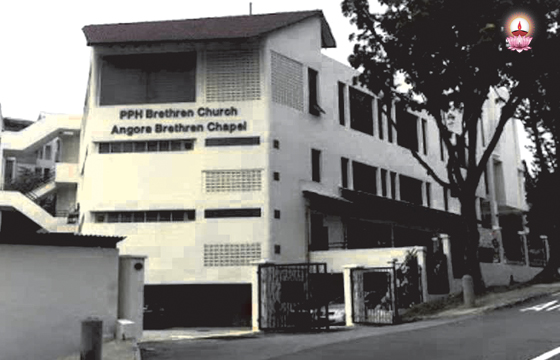
Singapore pastor apologizes for asking women to dress modestly
A Protestant pastor in Singapore has issued an apology following a heavy backlash from young netizens after asking women “to refrain from reveal-ing or provocative dressing” in order to avoid inciting “lustful thoughts” in men.
Pastor Joanne Chow, 38, a mother of two and youth minister of Pasir Panjang Hill Brethren Church in Singapore, came under fire after she posted PowerPoint slides in blog post on Christian website Thirst on Feb. 21, titled “In the fight against sexual temptation, defence is not enough.”
“Can I also make a special appeal to the girls? Let’s help our brothers by not dressing in a revealing or provocative way. Of course you don’t have control over their lustful thoughts, and it may not be a sin to wear that skin tight dress or post that bikini photo, but if we can help our brothers, why not?” she wrote in the post.
Chow’s post was triggered by revelations of the sexual abuses of Ravi Zacharias (1946-2020), an internationally famous Indian-Canadian evangelical preacher and Christian apologist who founded Ravi Zacharias International Ministry (RZIM).
“I realize that my comment on dressing modestly has sparked many responses and comments, and even angered many people. I’m truly sorry if it has hurt any-one, especially victims of sexual abuse. I understand how it ended up coming across as insensitive and that it caused offence to some in light of the recent revelations around Ravi Zacharias,” Chow wrote.
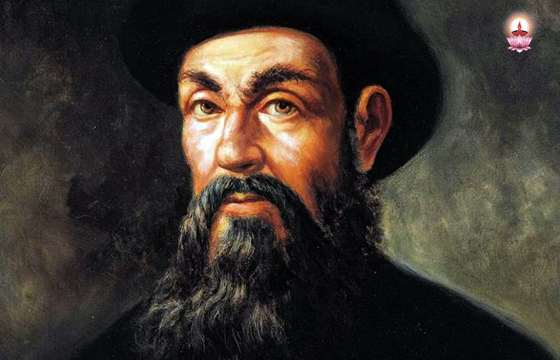
Catholic university traces Philippine Christian roots
A Catholic university in the Philippines has launched a series of online lectures on church history tracing the country’s journey to Catholicism since the arrival of the Spanish.
The University of Asia and the Pacific (UA&P) wants people to know how Christianity spread in a country composed of thousands of islands.
The lectures titled the “Philippine Church History Webinar Series” are being held every Saturday from February 13 until April 17, to mark the 500th anniversary of the arrival of Christianity in the Philippines when Portuguese explorer Ferdinand Magellan first set foot in the Philippines as part of a Spanish expedition in 1521.
They also aim to deepen a sense of history in appreciating the Catholic faith as a gift.
“The webinar series will examine and analyze the challenges and responses that the Church encountered as it expanded and developed throughout the Philippine islands,” the department said in a social media post. Distinguished Catholic historians Paul Dumol and Grace Conception are among the speakers.