
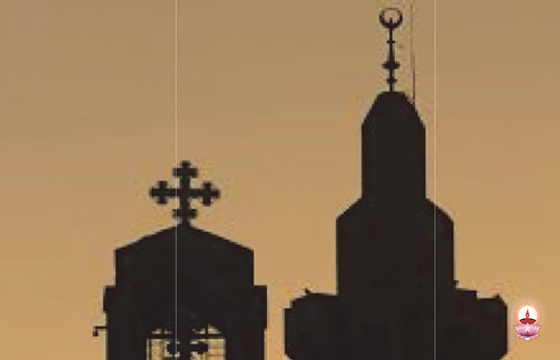
The Pontifical Council for Interreligious Dialogue released a message addre-ssed to Muslims today titled ‘Christians and Muslims: Witnesses of Hope’ on the occasion of Ramadan and ahead of the feast of Id al-Fimr, the Festival of Break-ing the Fast, which marks the end of the holy month.
Signed by the president of the Pontifical Council, Card Miguel Ángel Ayuso Guixot, MCCJ, and its secretary, Fr Indunil Kodithuwakku Janakaratne Kankanamalage, the statement stresses the meaning hope has for believers, based on the “belief that all our problems and trials have a meaning, a value and a purpose, however difficult or impossible it may be for us to understand the reason for them or to find a way out of them.”
“During these long months of suffering, anguish and sorrow, especially during the lockdown periods, we sensed our need for divine assistance, but also for expressions and gestures of fraternal solidarity: a telephone call, a message of support and comfort, a prayer, help in buying medicines or food, advice, and, to put it simply, the security of knowing that someone is always there for us in times of necessity.
“The divine assistance that we need and seek, especially in circumstances like those of the current pandemic, is manifold: God’s mercy, pardon, providence and other spiritual and material gifts.”
“While optimism is a human attitude, hope has its basis in something religious: God loves us, and therefore cares for us through his providence. He does this in his own mysterious ways, which are not always comprehensible to us.”
Category Archives: Asian
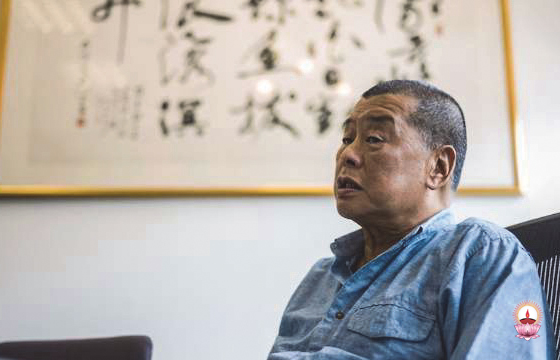
Catholic media tycoon jailed in Hong Kong
Catholic media tycoon and philanthropist Jimmy Lai has been jailed for 14 months in Hong Kong after being found guilty of unauthorized assembly.
He was among nine activists in court on April 16 who were earlier found guilty of charges relating to pro-democracy de-monstrations in the Chinese territory in 2019.
Lai, 72, has donated millions of dollars to Catholic causes and has been retired Cardinal Joseph Zen’s biggest financial backer.
He made his fortune through mid-market fashion chain Gior-dano before putting his wealth into media companies Next Media and the city’s leading anti-Beijing newspaper Apple Daily.
Lai’s jailing comes as the Chinese Communist Party inten-sifies its crackdown on Hong Kong’s rights and freedoms.
Earlier this week, Apple Daily published a handwritten letter by Lai, sent from prison, which read: “It is our responsi-bility as journalists to seek justice. As long as we are not blinded by unjust temptations, as long as we do not let evil get its way through us, we are fulfilling our responsibility.”
Speaking to the BBC before the hearing, Lai said that even if he were to be imprisoned, he would still be “living my life meaningfully.” “I came here with one dollar. I got everything I have because of this place. If this is the payback time, this is my redemption,” he said.
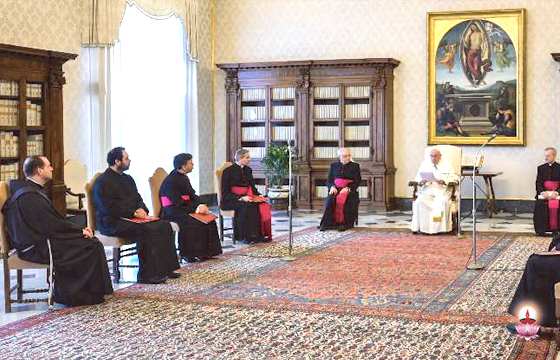
China, North Korea ‘worst for religious persecution’
Religious persecution in China and North Korea, restrictions on religious freedom in dozens of countries and the continuing threat of violence at the hands of religious fundamentalists belonging to a variety of faiths all have worsened since 2018, said Aid to the Church in Need, a papal foundation and Catholic charity.
The problems “have been exacerbated by the Covid-19 pandemic. States have used the insecurity to increase control over their citizens, and nonstate actors have taken advantage of the confusion to recruit, expand and provoke wider humanitarian crises,” said an analysis publi-shed with ACN’s annual report, “Religious Freedom in the World.”
The report, released April 20, said outright persecution exists in “26 countries which are home to 3.9 billion people or just over half — 51% — of the world’s population.”
In addition to China, North Korea and Saudi Arabia, the list includes a dozen African countries, such as Somalia, Libya, Nigeria, Congo and Mozambi-que, as well as Myanmar because of its treatment of the Rohingya, a Muslim minority in the predominantly Buddhist nation.
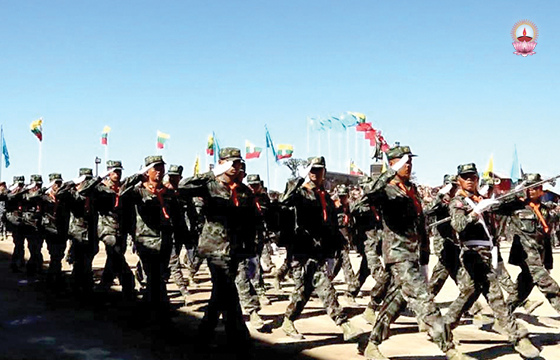
Myanmar’s military is waging war on its citizens. Some say it’s time to fight back
From a fenced-off compound close to the Myanmar border in northern Thailand, a rebel leader offers a bleak view of Myanmar’s future, as the country is cleaved apart by a military coup.
The possibility of a deepening civil war in Myanmar is “high,” Gen. Yawd Serk said from his administrative base in Chiang Mai province. “The world has changed. I see people in the cities won’t give up. And I see (coup leader) Min Aung Hlaing won’t give up. I think there is possibility that civil war might happen.”
Yawd Serk is an old hand at confronting military rulers. He is chairman of the ethnic minority political organization Restoration Council of Shan State (RCSS) and founder of its armed wing, the Shan State Army (SSA), which controls large pockets of land in Myanmar’s east. His is one of more than two dozen ethnic armed groups that have been fighting against the Myanmar military — know as the Tatmadaw — and each other in the country’s borderlands for greater rights and autonomy, on and off for 70 years.
Since the military seized power on February 1, deposing the elected government of Aung San Suu Kyi, many of these rebel groups — including the RCSS — have expressed support for non-violent nationwide protests against junta rule, and condemned the indiscriminate brutality and deadly use of force inflicted on Burmese civilians by junta-controlled soldiers and police.
But as security forces continue their deadly campaign, there are signs the country is reaching a turning point where rebel groups could engage in renewed conflict, while some in the protest movement start to push for armed resistance in a bid to defend themselves.
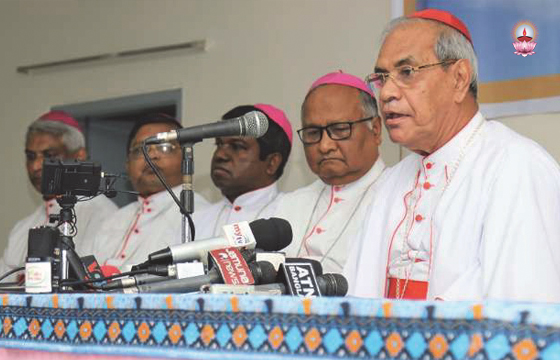
Bangladesh bishops urge dialogue to solve Myanmar crisis
Catholic bishops in Bangla-desh have denounced deadly violence in Myanmar as scores of people continue to be killed in the crackdown on nationwide anti-coup protests.
In a statement issued by the Justice and Peace Commission of the Catholic Bishops’ Con-ference of Bangladesh (CBCB), the prelates expressed solidarity with the Myanmar people’s aspirations for an end to military rule and the restoration of democracy through dialogue.
“We call on the military junta of Myanmar to be sensible and to sit with the relevant people for dialogue in order to solve this political crisis of the country, instead of shooting their own fellow citizens. We join the Church in Myanmar in prayers and adorations seeking God’s love and mercy on the people and nation of Myanmar,” said the statement released on April 6 and signed by Bishop Gervas Rozario, chairman of the commi-ssion.
“We the Catholic Church in Bangladesh are the close neigh-bours of the Church in Myanmar, express our support and solidarity with the people and the Church in that country. We too share the pain and suffering of the peace-loving people of Myanmar who only want the democracy back, nothing more.”
The protests over the coup have been the largest since the so-called Saffron Revolution in 2007. The protesters include teachers, students, lawyers, bank officials and government work-ers. Christians of all denomina-tions have taken to the streets with their fellow citizens.
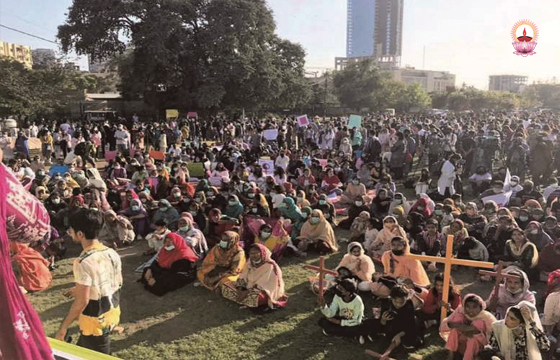
Anger over ‘sexist’ reporting of women in Pakistan
Rights groups and journalist bodies in Pakistan have conde-mned a daily newspaper for pub-lishing an abusive commentary about participants in an annual women’s march.
“Fourteen countries have the highest rape cases of women. The randies [whores] of Aurat March can’t see these non-Muslim countries,” stated the front-page article in Ummat, an Urdu-language newspaper in Karachi.
“Why don’t they abuse re-ligions like Christianity, Hindui-sm and Buddhism of the majority populations of these countries? Why does their voice rip apart while criticizing their teachings?”
Father Nasir William, dire-ctor of the Commission for Social Communications in Islamabad-Rawalpindi Diocese, slammed the controversial commentary.
“It is unethical to use such words in media. They reflect personal enmity, ignorance and stupidity. There are other ways for criticism,” he told.
“However, the women are risking their dignity by protesting on roads and going against the male-dominant culture. Rights cannot be achieved on such plat-forms. We discourage nuns from protesting on roads. They are different from other women.”
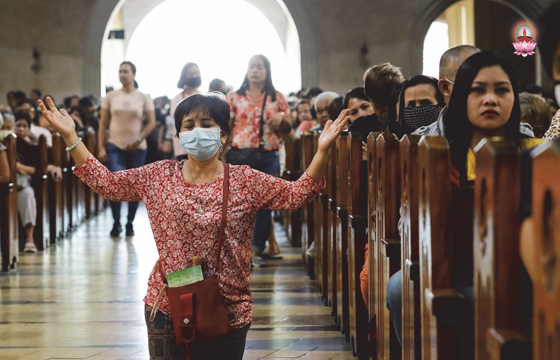
Celebrating 500 years of Christianity in the Philippines
As the pandemic roars on in the Philippines and the world, church organi-zers continue with co-mmemorations marking the 500th year of Chri-stianity in the Southeast Asian country.
“It caught us by sur-prise, really,” said Mark Purugganan, a liturgist at Parish of the Holy Sacri-fice in Quezon City just north of the capital Manila. “We already had … started in November 2019 … 500 Holy Hours leading up to March 31. This is the anniversary of the first Easter Mass celebrated in the Philippines.”
Purugganan explained that, during lockdown, time spent with Jesus in the Eucharist became a virtual exercise with a camera focused on the host and projected on big screens outdoors. Instead of silence, vespers prayers were added because “people don’t like dead air,” which he said becomes too stark in a virtual setting.
In a country that loves a celebration, physical participation is much preferred over virtual attendance.
But one piece on social media is taking hold across the country where more than 75 percent of the population has a Facebook account. Father Kali Llamado of the Archdiocese of Manila said Filipinos are learning the anniversary theme song “We Give our Yes!” and posting versions online. The 500th anniversary theme is “Missio ad Gentes” or “mission to the people.”
“We are looking at highlighting certain as-pects where we need to incorporate faith in our daily life,” Father Lla-mado told CNS.
He said in addition to activities on faith formation and the legacy of Christianity, the Manila Archdiocese also has social programs such as hosting pandemic vaccination centers and holding a voter registration drive for the election year 2022. Organizers said the Philippine bishops designated hundreds of “jubilee churches” across the country to hold special commemorations on the mission theme to be rolled out over the next year, culminating in a pushed-back April 2022 celebration.
The actual year that Christianity came to the shores of the Philippine Islands was 1521, when the Portuguese explorer Ferdinand Magellan, in an attempt to circumnavigate the globe from Spain to India, landed on tiny island of Limasawain the central Philippines and started to convert the natives to Christianity. More than 2,200 converted, but those on nearby Mactan island resisted and killed Magellan.
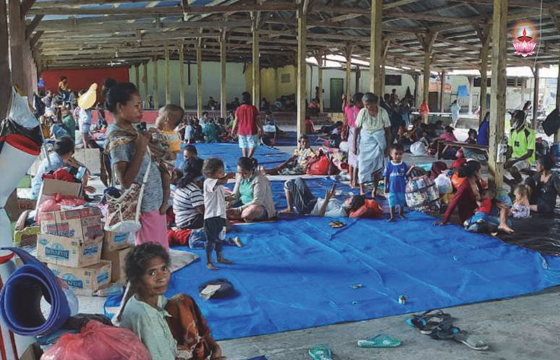
Indonesian cardinal calls for compassion for flood victims
Cardinal Ignatius Suharyo Hardjoatmodjo of Jakarta has called on Catholics to show compassion to victims of deadly flash floods and landslides that hit the country’s predominantly Catholic province of East Nusa Tenggara last weekend.
The disasters, caused by two days of heavy rain due to the Seroja tropical cyclone, hit 12 cities and districts in the province on Easter Sunday, killing at least 128 people, according to the National Disaster Mitigation Agency.
About 72 people are re-portedly missing, while 271 homes and 99 public facilities were damaged. More than 8,000 people were evacuated to shelters including ones belonging to the Catholic Church.
He said such compassion “is a materialization of our faith” and “can be blessings for our brothers and sisters.”

Pakistani courts reconsider blasphemy penalty cases
Christian human rights groups in Pakistan are urging local courts to reject Sharia punishments for the blasphemy accused in the Muslim majority country.
Last week, a Peshawar High Court bench issued notices to the attorney general for Pakistan and provincial advocate general over a petition seeking orders for the government to remove the option of punishment other than the death penalty for blasphemy from the Pakistan Penal Code.
The petitioner claimed the issue of an alternative punishment of life imprisonment had already been decided by the Federal Shariat Court, but it had not been implemented by federal and provincial governments. The option of life imprisonment was made defunct after a Federal Shariat Court judgement in 1991.
The Centre for Legal Aid Assistance and Settlement (CLAAS) UK, a Christian charity dedicated to helping persecuted Christians in Pakistan, rejected the death penalty for blasphemy in a March 25 press release.
“It’s time to stop the misuse of the blasphemy law. We see every day how this law is being misused by individuals and religious groups to achieve their goals and settle their personal grudges, especially against religious minorities,” said Nasir Saeed, director of CLAAS.
“Several governments have pledged to stop its misuse, and even recommended 10 years imprisonment for a false accusation, but nothing has changed. Instead, voices against the misuse of the blasphemy law have been forced into silence.”
Kashif Aslam, Deputy Director of the Advocacy and Program National Commission for Justice and Peace (NCJP), the Church’s human rights body, in Pakistan agreed.
“Clearly the judges are prejudiced. We are experiencing such attitudes from the beginning,” he said. “Instead of being driven by emotions, they should go by the book. We demand overall reforms in judicial system,” he told.
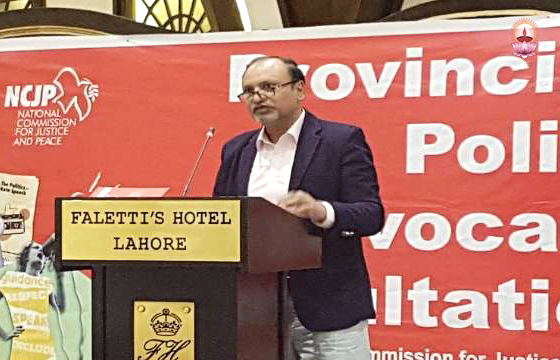
Hate speech the norm in Pakistan, church study claims
A new study published by a bishops’ commission highlights the psychological impact of hate speech on religious and sectarian minorities in Pakistan’s Punjab province.
“Hate speech in Pakistan is accepted as a norm. One of its immediate effects is that people experience a loss of self-esteem. There is a constant fear among minority community members regarding their security and survival. A Hindu student reported losing her interest in studies, claims the study titled “The cost of hate speech.”
It was based on 12 focus group discussions, held between February 2020 and February 2021, with about 200 individuals including Christians, Hindus, Sikhs, Shia and Ahmadi in both educational institutes and public places around Punjab. Similar sessions will be conducted in urban and rural areas of the three other provinces.
The National Commission for Justice and Peace (NCJP), the Church’s human rights body in Pakistan, launched its policy brief for Punjab in Lahore on March 17.
The commission made several recommendations including monitoring and regulating religious sermons and seminary curriculum, reforming the education system, a government policy on non-discrimination, a media campaign to pro-mote equality as well as federal and provincial committees to monitor hate speech.
According to Aila Gill, program coordinator of NCJP, this is the first time such data has been collected in the country.
“We have identified more than 50 hateful terms. A lexicon has been prepared with suggestive terminologies preferred by the different minority communities,” she told.
“Religious minorities generally don’t know derogatory hate speech experienced in daily life and have become immune to this common phenomenon. Most of them hide their religious identities and never report such incidents for fear of retaliation. They demand support from the majority community to register complaints against hate speech.”