
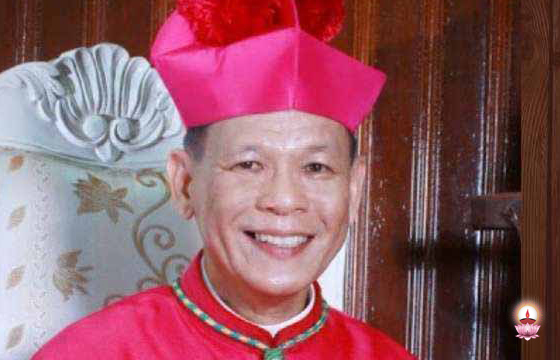
Manila Archdiocese has issued a notice warning Catholics not to be fooled by fake social media accounts purportedly owned by the Philippine capital’s recently appointed archbishop, saying he has no social media account on any platform.
People have reported several accounts on Facebook using the name and photos of Cardinal Jose Advincula. One Facebook page has gathered hundreds of thou-sands of likes from Catholics in the Philippines and abroad. It also posts the cardinal’s homilies and speeches as well as providing information on his public engagements.
The Archdiocese of Manila and the Archdiocese of Capiz have not yet created a Facebook page or social media account under Cardinal Advincula’s name, the archdiocese’s chancellor Father Reginald Malicdem said in the May 24 notice.
The cardinal was archbishop of Capiz in the central Philippines before being appointed Manila’s archbishop.
In April, Cardinal Advincula himself warned against fake solicitation letters being circulated online using his name to ask for donations for his installation.
Category Archives: Asian
Christian leaders offer to mediate Papua peace talks
Churches in Papua have offered to mediate talks between the Indonesian government and separatist groups in a bid to ease tensions in the restive region.
The offer comes amid an escalation in violence in Papua that has seen hundreds of troops deployed and many people dis-placed in a crackdown following the government’s decision on April 29 to declare pro-separatists as terrorists. This followed the death a week earlier of an Indonesian intelligence chief in a shootout with members of the rebel West Papua National Liberation Army.
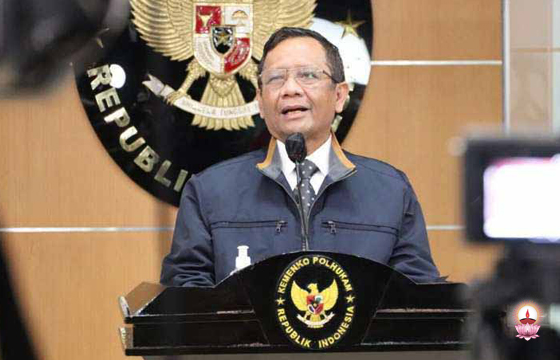
Church leaders conveyed their concern over the deteriorating situation during a meeting with Coordinating Political, Legal and Security Affairs Mini-ster Mahfud MD in Jakarta on May 25.
The leaders included Sacred Heart Abp Petrus Mandagi of Merauke in Papua, Indonesian bishops’ conference president Cardinal Ignatius Suharyo of Jakarta, and Reverend Ronny Mandang, chairman of the Fellowship of Indonesian Evangelical Churches and Institutions.
During the meeting, they offered to act as a mediator in peace talks.
“Many church and ordinary people in Papua are praying the government will hold talks to end the violence immediately,” Reverend Mandang said.
Dialogue must involve all elements to end the conflict
Mahfud responded by saying he was open to Christian leaders acting as mediators.
“If there are parties wanting to become mediators and they are welcomed by various groups in Papua, then we will facilitate that,” he said.
“We ask for dialogue and will exchange ideas with anyone including church leaders who can help forge peace and security for the Papuan people.”
Myanmar’s Junta soldiers are ‘terrorists’
More and more people on social media are describing the military junta responsible for the coup d’état and its soldiers as “terrorists.” The label is not only used to counter the military regime’s use of the “terrorist” label against its opposition, but reflects a broadly held view in the population that the military is reverting back to its cruel old methods, typical of the dictatorship that ruled before the recent short-lived period of democratic government. Increasingly, soldiers walk through markets taking food without paying, stealing valuables from the homes of suspected activists they search, beating defenceless civilians to a pulp, not to mention abducting people of all ages who go missing without leaving a trace.
Pope: Borders that are not walls, but places of encounter
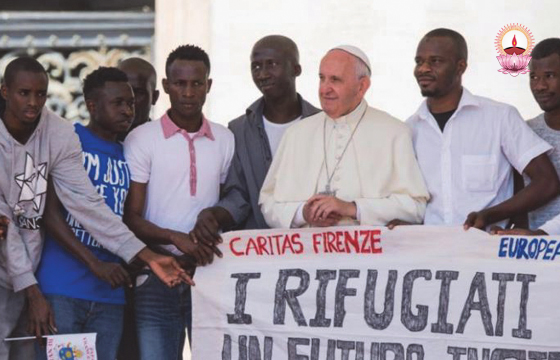
Borders that are no longer walls, but “privileged places of encounter “ between all the components of a “colourful” society, capable of “dreaming together” to build a common future through “more sustainable development, balanced and inclusive.”
This is the vison of Pope Francis contained in his message for the 107th World Day of Migrants and Refugees – which will be celebrated on Sunday 26 September 2021 – entitled “Towards an ever wider we”, made public today.
The title chosen for the message, explained during the presentation of the document Father Fabio Baggio, CS, under-secretary of the Migrants and Refugees Section of the Dicastery for integral human development, is “an appeal to ensure that” there may be more ‘others’, but only one ‘we’ “(Fratelli tutti, 35). And this universal ‘we’ must become a reality first of all within the Church, which is called to make communion in diversity”.
“It is an invitation to everyone, because we are committed to restoring our human family”. Thus the Pope, in the video on the next day, shown for the first time today in the Vatican press office on the occasion of the presentation of the message. “We are like many grains of sand, all different and unique but which together can form a beautiful beach, a true work of art”.
The “we”, Francis writes, is that of God’s creative plan who “created us male and female, different yet complementary, in order to form a “we” destined to become ever more numerous in the succession of generations”.
“The present time, however, shows that this “we” willed by God is broken and fragmented, wounded and disfigured. This becomes all the more evident in moments of great crisis, as is the case with the current pandemic. Our “we”, both in the wider world and within the Church, is crumbling and cracking due to myopic and aggressive forms of nationalism (cf. Fratelli Tutti, 11) and radical individualism (cf. ibid., 105). And the highest price is being paid by those who most easily become viewed as others: foreigners, migrants, the marginalized, those living on the existential peripheries.”
“In reality, we are all in the same boat and we are called to commit ourselves so that there are no more walls that separate us, no more others, but only one us, as big as all of humanity”. Hence a twofold appeal. The Pope asks believers to commit themselves to making the Church more and more Catholic, to “all men and women of the world” to transform walls into bridges.
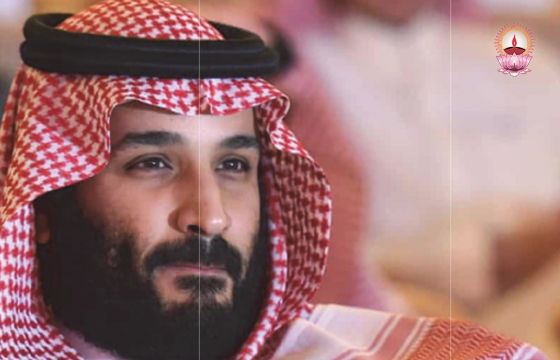
Mohammed Bin Salman attempts to reform Islam
On April 27 Saudi Arabian Crown Prince, Mohammed Bin Salman (Mbs), gave a long television interview to the Saudi channel “Al-Arabiya”[i], dedicated to his economic and social program for a new country in the framework of the 2030 vision, first unveiled in 2015.
In the interview he spoke of moderation in the application of Islamic laws, challenging Wahhabism, an ideology developed by Mohammed ben Abdelwahhab, an 18th century Saudi preacher, who reigned for a long time in the country and elsewhere, after promoting it for many decades in the Muslim world.
It would seem that MBS has come out in favour of the reform of Islam, when he stated: “All Muslim jurists and scholars have been talking about the concept of moderation for over a thousand years. So, I do not think I am in a position to clarify this concept, as much as I can … abide by the Saudi constitution, which is the Quran, the Sunnah, and our basic governance system and to implement it fully in a broad sense that is inclusive of everybody.” Until a few years ago, such a speech would have been unimaginable and [even that evening] it was hard to believe it, if broadcast live on the television channel.
MBS also declared that “the Constitution of Saudi Arabia is the Koran” and that his country is “obliged to implement the Koran in one form or another”; that is: all citizens will be respected as such and in their differences. To be more explicit, he stressed that only what is only said “unequivocally” in the Koran should be applied: “In social and personal affairs, we are obliged to implement only the stipulations clearly enunciated in the Quran. Thus, I cannot apply a sharia punishment without a clear or explicit Koranic stipulation of the Sunna.”
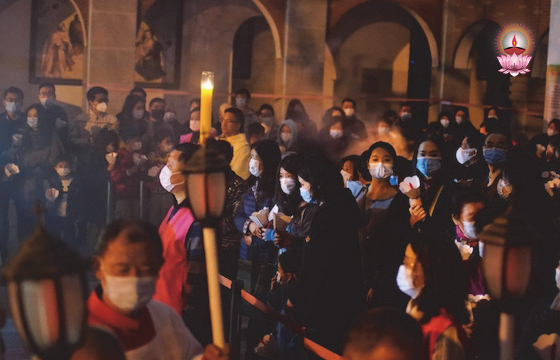
China moves to censor Christians online
Authorities in China have removed online Bible apps from app stories in China, as well as taking down prominent Christian chat accounts.
According to Father Francis Liu of the Chinese Christian Fellowship of Righteousness, those logging in to see Christian chat accounts in China saw the following message: “[We] recei-ved report that [this account] vio-lates the ‘Internet User Public Account Information Services Management Provisions’ and its account has been blocked and suspended.”
“Sadly, this doesn’t come as a surprise,” said Dr David Landrum, head of advocacy for Open Doors UK and Ireland. “Since President Xi Xinping came to power we have seen a concerted and strategic wave of persecution against Christians, with the use and abuse of technology at the forefront of this religious cleansing.”
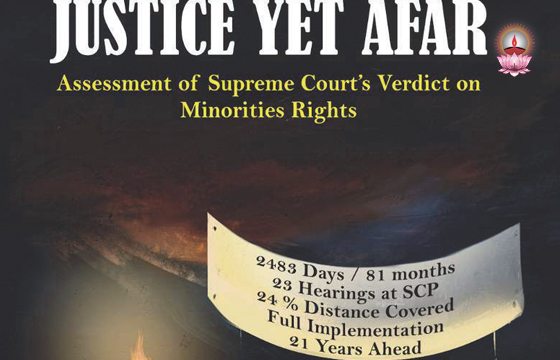
Pakistan minorities await implementation of ‘historic’ ruling
New research assessing the Pakistan Supreme Court’s 2014 judgment to protect minority rights predicts its implementation will take more than two decades.
“During this period, a Supreme Court bench has conducted 23 follow-up hearings and passed nearly six dozen orders, yet Pakistan stands 21 years away from the finish line of full implementation, considering the existing pace of compliance,” the study states.
“The federal government reported the least number of compliance reports. No report had been submitted from Gilgit-Baltistan and Azad Jammu and Kashmir. Reportage from the Ministry of Religious Affairs and Interfaith Harmony and Ministry of Federal Education was in particular missing.”
Peter Jacob, executive director of the Centre for Social Justice (CSJ), virtually inaugurated his research titled “Justice Yet Afar” in Lahore on April 30. Speakers expressed concerns at the state’s lack of compliance with the 2014 Supreme Court judgment that mandated the federal government to create a national council for the rights of minorities and provincial governments to create task forces for religious tolerance, protect places of worship and crack down on hate speech, among other measures.
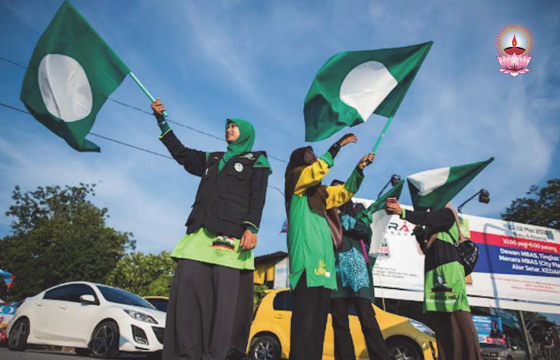
Malaysia: ‘Christians Are Enemies of Islam’
A malicious book accusing Christians of a grand conspiracy to undermine Islam has gone viral in Malaysia, even as fresh allega-tions are being brought against Kuala Lumpur’s archbishop for spewing anti-Muslim propaga-nda.
The Islamic book, Pendeda-han Agenda Kristian (Exposing the Christian Agenda), labels the “Nasrani” (Christians) as “ene-mies of Islam who are always malicious and display a negative attitude towards Muslims,” and who “will try their best to cause heartache among Muslims.”
Church Militant obtained a copy of the 130-page book from the official portal of the Selangor Islamic Religious Council (SIRC), which has a gov.my internet address — linking it to the government of Malaysia.
First published in hardback in 2014 and now made available in digital format in the Malay language, the publication accuses Catholics and evangelicals of adopting missionary schools and “contextualization” as a conver-sion strategy, especially by using the term “Allah” in the Malay-language Bible.
Ironically, the accusations come in the light of Pope Francis’ categorical rejection of efforts to convert people of other religions and in the wake of the pontiff’s Abu Dhabi Catholic-Muslim concordat with Sunni Grand Imam of al-Azhar Ahmed al-Tayyeb in 2019.
It gives the lie to Pope Fran-cis’ fond hopes that his ‘interfaith dialogue’ will lead to harmony and peace between Muslims and Christians.
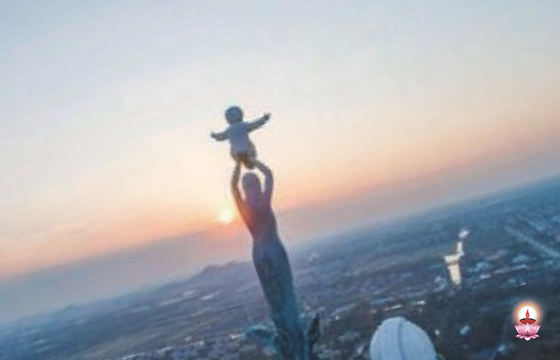
Sheshan’s shrine is closed but its amusement park is open, like other tourist spots
The Catholic diocese of Shanghai has announced that pilgrimages to the shrine of Our Lady of Sheshan will be cancelled in May due to the Covid-19 pandemic. On the other hand, the amusement park on Sheshan Hill has been open for some time, as have many mass tourist spots in the country.
The shrine of Sheshan is a national Marian shrine and in the month of May there is a tradition from the various Chinese dioceses to go on pilgrimage walking up the hill on which the basilica stands, stopping in the intermediate chapels and marking the stations of the Cross, up to the summit where the church stands, crowned by the statue of Mary presenting her Son to the world.
According to the diocesan announcement, “as the pandemic at home and abroad is still not under control, and measures for the prevention of the pandemic are still in place in the nation, to comply with the demands and regulations of the [Shanghai] municipal government … The annual May pilgrimage to Sheshan has been cancelled”.
The announcement explains that the Sheshan basilica, the intermediate chapels and other areas are closed and there will be no pilgrimages and religious activities. The presence of groups of pilgrims and individuals are not allowed. Catholics are advised to stay home and pray asking for an end to the pandemic, so that they can return to normal life.
Throughout China, places of worship have been gradually reopened in many provinces since March and community religious practice has resumed. Despite strict health measures, many Catholic churches have also reopened and masses are again being celebrated with the live participation of faithful. In Beijing, Shanghai and other provinces, the reopening was enthusiastically announced, although the closure continues in some parts of the country.
In many dioceses – for example in Zhejiang, Jiangxi and Inner Mongolia – the reopening coincided with the celebrations of Holy Week: the mass in Coena Domini with the ceremony of the washing of the feet; the Via Crucis; baptisms of catechumens at Easter; the distribution of Easter eggs.
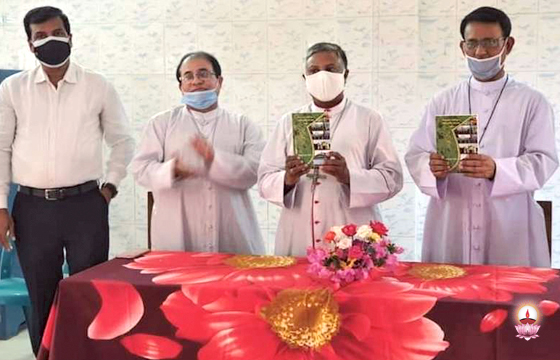
Priest’s book documents history of Christianity in Bangladesh
A senior Catholic priest has authored and published a book that documents the history of Christianity in Bangladesh spanning over five centuries with an aim to inspire young Catholics to better understand the advent and growth of Catholicism amid various challenges. Father Albert Thomas Rozario’s Bangla-language book Bangladeshey Christodhormo and Christomondolir Etikotha (Christian Religion and Christianity in Bangladesh) was launched by Oblate Archbishop Bejoy N. D’Cruze of Dhaka on April 12. Father Rozario, 61, is a diocesan priest and pastor of St. Joseph’s Church in the Savar area covered by Dhaka Archdiocese. The priest, who is a Supreme Court lawyer, also teaches civil and criminal law to students at Holy Spirit National Major Seminary in capital Dhaka.
The 300-page book is the third Bangla-language book on the history of Christianity and the Catholic Church in Bangladesh after Bangladeshey Catholic Mondoli (The Catholic Church in Bangladesh) by Canada-based Catholic writer and journalist Jerome D’Costa in 1986 and Bangladeshey Christomondoly Porichiti (Introduction to Church in Bangladesh) by Father Dilip Stephen Costa in 2020.
Father Rozario earlier authored a Christian introduction to practical law for Christians and Shadhu-Shaddhy Der Jibon Kotha (The Life of Saints).