

A female professor at Loyola College (Autonomous) is listed in the world’s top 2 percent scien-tists. J. Judith Vijaya of the De-partment of Chemistry has been named in the world’s top scientist, in the field of “materials.”
The analysis was conducted by a team of scientists from Stanford University, USA, led by John P. A Ioannidis and published in PLOS Biology on October 2, Jesuit Father A Thomas, principal said in a statement.
The management of Loyola congratulates Vijaya for placing Loyola College on the global map of scientific research and bringing laurels to the institute, he added.
“Our youngest cousin Vijaya who is a professor at Loyola Chennai is listed in the world’s top 2% scientists. Proud of this brilliant sister of ours,” said Sister Cicily, a Handmaid of Mary nun, who is working in Odisha. Vijaya has been teaching at Loyola College since 2001.
Jesuit-run Loyola College was established in 1925. It offers several undergraduate and graduate degrees in Commerce, Sciences, Humanities, Social Sciences and liberal arts.
She did her undergraduate course in Chemistry at Stella Maris College, University of Madras, Masters in Chemistry and Ph.D. at Loyola College.
Category Archives: Asian
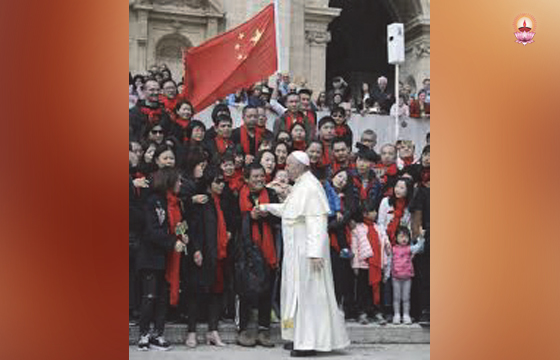
China criticizes pope over comment on Uighur Muslim minority
China criticized Pope Francis on November 24 over a passage in his new book in which he mentions suffering by China’s Uighur Muslim minority group.
Foreign ministry spokesperson Zhao Lijian said Francis’ remarks had “no factual basis at all.”
“People of all ethnic groups enjoy the full rights of survival, development, and freedom of religious belief,” Zhao said at a daily briefing.
Zhao made no mention of the camps in which more than 1 million Uighurs and members of other Chinese Muslim minority groups have been held. The U.S. and other governments, along with human rights groups, say the prison-like facilities are intended to divide Muslims from their religious and cultural heritage, forcing them to declare loyalty to China’s ruling Communist Party and its leader, Xi Jinping.
China, which initially denied the existence of the facilities, now says they are centers intended to provide job training and prevent terrorism and religious extremism on a voluntary basis.
In his new book Let Us Dream, due Dec. 1, Francis listed the “poor Uighurs” among examples of groups persecuted for their faith.
Francis wrote about the need to see the world from the peripheries and the margins of society, “to places of sin and misery, of exclusion and suffering, of illness and solitude.”
In such places of suffering, “I think often of persecuted peoples: the Rohingya, the poor Uighurs, the Yazidi — what ISIS did to them was truly cruel — or Christians in Egypt and Pakistan killed by bombs that went off while they prayed in church,” Francis wrote.
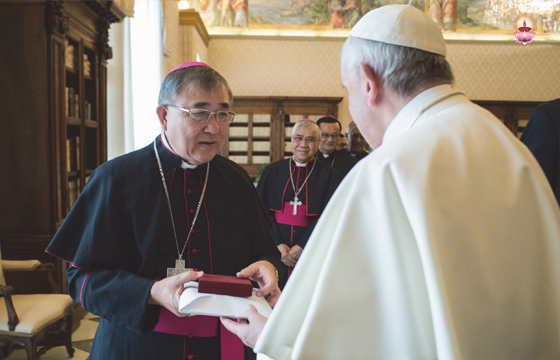
Card. Cornelius Sim: Ours is a ‘hidden’ Church, ‘not noisy’, small but alive
“A hidden Church,” “not noisy;” as small as “a Fiat 500,” but alive, which envisions its apostolate above all through schools and help for migrants. This is the image of the Church of Brunei, depicted by the new cardinal- designate Cornelius Sim speaking with AsiaNews via Zoom. Despite being among the smallest churches in Southeast Asia – indeed, perhaps precisely for this reason – Pope Francis wanted to reserve a Cardinal’s hat for Archbishop Sim during the next consistory on 28 November. Unfortunately, the new cardinal will not be able to be present at the ceremony in Rome, due to the Covid-19 lockdown.
“We are a minority Church and this makes us prudent. Not so much because we are discriminated against… Like in any family gathering, small children should be quiet to let the elders talk. So we are quiet. And we, being small, accept our role: if the dishes have to be washed, we do it; if the floor has to be swept, we do it; we do what is required of us.
As a Church we have three small parishes and a mission station. We also have some schools, linked to the parish. Most of our social apostolate takes place through the school, which was opened in the 1930s. School is where our presence started. And where the Church has been established. The Church was actually present here in the first half of the 1800s, thanks to a PIME father [Fr Antonio Riva, in the Barambang mission; Fr Ignazio Borgazzi in Labuan – ed] but after three or four years, those priests were called to Hong Kong and their attempt did not bear much fruit, until 1920, when the Mill Hill missionaries arrived from Sabah (in present-day Malaysia.) The missionaries started a small school. My grandfather was one of the first to be baptized and he was one of the first Catholics in the nation.
And so the Church has always been involved in school, in education, which is not a partisan education, but an open one: 70 percent and more of the students are non-Catholics. There are Muslims, Buddhists, people of different faiths, or people without any faith. Our schools are renowned for the quality of the education they offer. Our teachers are academically bright and prepared. The teachers are local, but also international: they come from Malaysia, Singapore, the Philippines, …
We are the smallest Church in ASEAN. Perhaps only Laos has a very small Church like ours.
We have about 16 thousand faithful. There were more, but due to the economic crisis, many people left the country. On Sundays, 3-4 thousand people arrive at every mass.”
–AsiaNews
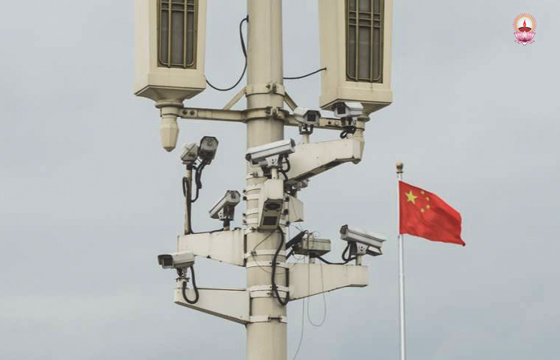
US religious liberty ambassador calls out China for using tech to suppress religion
The U.S. will be working against the use of technology to suppress religious minorities, the religious freedom ambassador announced.
“The United States announced that we will pursue the topic of misuse of technology to oppress religious minorities,” said Sam Brownback, Ambassador-at-Large for International Religious Free-dom, on a Nov. 17 press call about the 2020 Ministerial to Advance Freedom of Religion or Belief.
Brownback cited China’s abuses against Ughurs; it has created a “virtual police state” to track the movements of the population and to engage in predictive policing.
“We’re seeing this graphically done in Xinjiang, where high-tech observation systems using artificial intelligence and facial recognition are oppressing a dominantly Muslim majority from practicing its faith, this along with being locked up in detention facilities – over a million Muslim Uyghurs locked up in detention facilities,” Brownback said.
Poland hosted the third annual ministerial, held virtually on Nov. 16-17 due to the pandemic. The meeting featured leaders from more than 50 countries and international organizations. –CNA
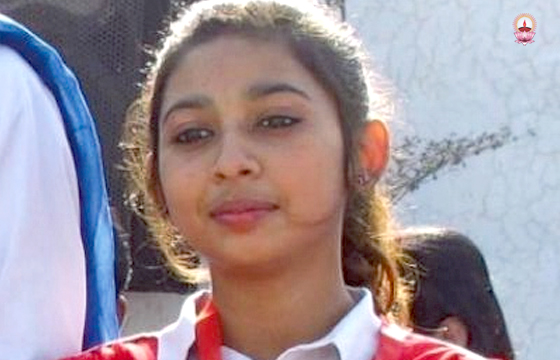
Britain urged to grant asylum to Pakistani girl
A U.K. based charity has called on British Prime Minister Boris Johnson to grant asylum to a 14-year-old Christian girl who was abducted at gunpoint during the Covid-19 lockdown and forcibly married and converted to Islam by a Muslim married man.
The Catholic charity Aid to Church in Need, which supports persecuted Christians around the world, is urging concerned Chri-stians to add their names to an online petition that will be sent to the Prime Minister on behalf of Catholic teenager Maira Shahbaz in Pakistan, who was abducted in April.
In August, Maira fled the home of her alleged husband, Mohamad Nakash, weeks after the Lahore High Court ordered her to return to her abductor and ruled that she was legally married to the Muslim man.
“Regardless of what the court eventually decides, Maira’s life will forever be in danger,” the charity said. “There is the threat of honour killing. Extremists in Pakistan consider her an apostate and will kill her at the first chance. Her lawyer said men have been looking for her, knocking on doors and asking for her whereabouts.”
–MATTERS INDIA
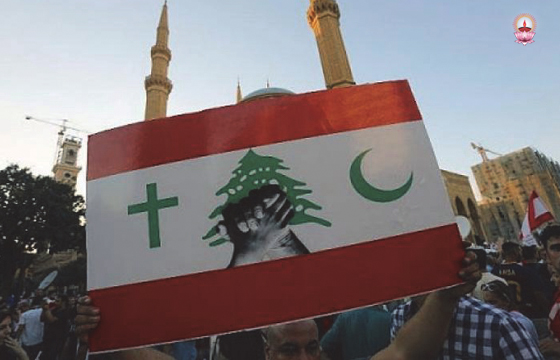
Lebanon’s is a model of coexistence
Lebanon’s “living together,” the historic vocation perceived and conferred by Pope John Paul II to Lebanon, and proposed by him – for our greatest honour and confusion – as “model for East and West,” is once again in the spotlight because of what is happening in a world where multi-religious societies are constantly growing, not without frictions, wars and sometimes horrible massacres.
In his homily on Sunday 15 November, in which he accused those who are delaying the formation of a government by Saad Hariri of trying to “overthrow of the State of Greater Lebanon” established by the Treaty of Versailles (1919), the head of the Maronite Church, Patriarch Bechara al-Rahi, sought to comfort the Armenians of Nagorno-Karabakh that Azerbaijan has just militarily conquered, by offering them as model Lebanon’s “living together,” encouraging them not to flee their homes and their shrines, but to agree to coexist in good harmony with the Muslims of Azerbaijan, in a multicultural and multi-religious state in which the believers of the two great Muslim and Christian religions stand together in an atmosphere of mutual acceptance. –AsiaNews
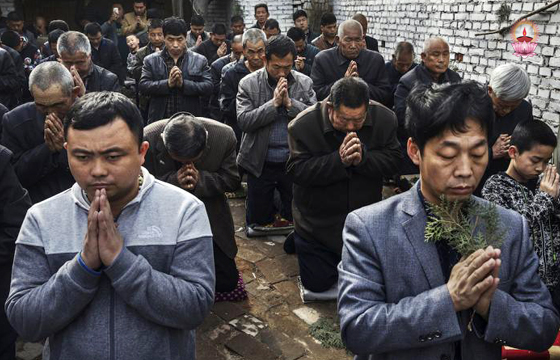
Baoding, priests, nuns and seminarians seized by government officials
Catholic sources in Hebei say that on the morning of November 2, two priests from the unofficial community of Baoding and more than a dozen seminarians and nuns from the same community were forcibly taken away by government officials. After a few hours, two seminarians were released.
On the same day, Fr Lu Genjun, former vicar general of Baoding, was taken away. Until now, no one knows where they are being held.
A priest from the underground community of Baoding, commenting on the incident, pointed out that the abduction took place shortly after the renewal of the provisional agreement between China and the Vatican. He asked all Catholics to pray for the kidnapped and for full religious freedom in China.
The diocese of Baoding, with over 500,000 faithful, is one of the cornerstones of the unofficial community. Its bishop, Msgr Giacomo Su Zhimin, has been missing in police custody since 1997 and nothing is known about his fate since then.
His coadjutor bishop Francesco An Shuxin, after a long period of imprisonment, decided to enter the official church.
-AsiaNews
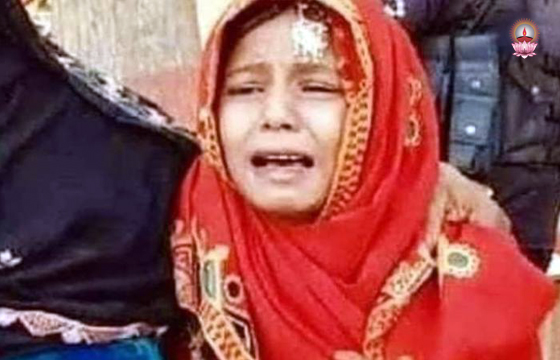
Karachi: Court approves the conversion and marriage of 13-year-old Arzoo Raja. The mother’s desperation
The High Court of Sindh in Karachi has agreed with the kidnappers of Arzoo Raja, a 13-year-old girl who, after being kidnapped, was converted to Islam and forced into a forced marriage with a 44-year-old man.
The court, to which the kidnappers had turned after being accused by the girl’s family, agreed with them, stating that Arzoo had freely accepted Islam and freely married 44-year-old Ali Azhar. The court also ordered that no arrests be made.
During the court proceedings, Arzoo’s mother, Rita Masih, burst into tears (see video): “Let me see my daughter, she’s in there but they [the kidnappers, the police and the court] won’t allow me to see my innocent little daughter. Arzoo, my sweet-heart, come to your mom and give me a big hug, my dear daughter. Your sister got sick from what happened to you; your brother no longer eats because they want you home. My daughter is only 13, she is innocent. They [the kidnappers] keep lying and won’t let me meet my little girl. I want my daughter back! Please, please, help me!”
Then Rita Masih passed out, but the court, the police and the kidnappers did not allow her to meet her daughter. In another room, Arzoo was crying (see photo 1) and spread her arms as if to hug her mother, but the police blocked her and kept her away.
In recent days, demonstrations were held throughout the country to denounce the violence against minorities, forced marriages and the specific case of Arzoo Raja.
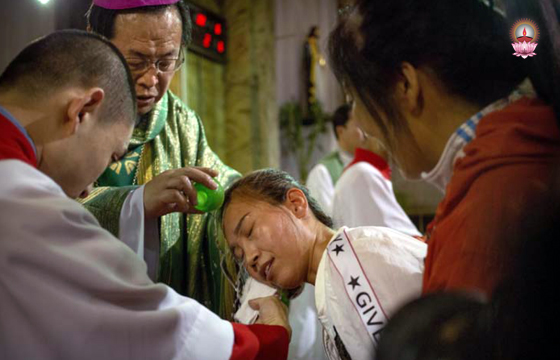
Xiaoyu, left standing in class because he believes in God
A young teenager named Xiaoyu has had to endure stand-ing in class for over a month, in punishment because he believes in God and because he dared to challenge his teacher who wanted to convince him not only of the theory of evolution, but also of non-existence of God.
The testimony sent to us by Fr Stanislaus, a priest from north-eastern China, is anonymous out of respect for the young man and the teacher. But it is very significant of the campaign implemented by the United Front to curb the faith among young people. This happens not only with the ban on going to Mass for minors under 18, but also with checks and disciplinary measures among teachers and students if any of them declare themselves a believer.
I was surprised, but also moved when a faithful told me about his son. In class, the professor declared: “The Bible says that man was created by God, this statement is wrong. God does not exist, man evolved from apes, proof of this is Darwin’s Theory of Evolution and the fossil anthropoids…”
After that, the professor asks Xiaoyu and he replies: “Professor, I don’t understand. How does the Theory of Evolution prove the non-existence of God? Although humans evolved from apes, where did they [the apes] come from? How can it be proved that they were not created by God? How is the beginning of all existence?…”
Asian Catholic bishops welcome Biden’s victory in US elections
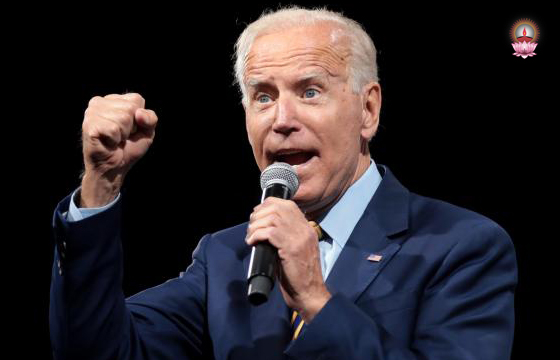
The Federation of Asian Bishops’ Conferences (FABC) welcomed the election of Joe Biden as president of the United States of America.
“We warmly send our prayerful wishes and congratulations to the people of America and the President-Elect Joe Biden,” read a statement signed by Cardinal Charles Maung Bo, FABC president.
The prelates noted that with the election of Biden the United States “enters into a new phase in their glorious history, affirming democracy and universal good.”
“President-Elect Joe Biden comes from a long tradition of Catholic faith-based life. His concern for the cry of the earth and the cry of the poor is a refreshing welcome,” read the bishops’ statement.
“The world with its poor and its climate challenges look forward to the USA fortifying the global fight against global warming and poverty,” it added.
“With prayerful wishes we welcome him and do hope his tenure will pay greater attention to countries in the margins like Myanmar,” read the statement.
The federation of Catholic bishops’ conferences expressed hope that the United States “will play its leadership role in the company of international organizations like the UN.