

A Canadian man is set to join hundreds of shackled inmates on China’s degrading death row as they await agonising lethal injections or firing squads. Robert Schellenberg, believed to be 38, from Abbotsford, British Columbia, was detained by the Chinese authorities for drug smuggling and after a retrial he had been condemned to die. Robert Schellenberg is now on death row in China where doom-ed inmates are caged in humiliating conditions.
Hundreds of Chinese citizens are handed the death penalty each year – more than the rest of the world combinedCredit: AFP A ‘cell trustee’ removes shoes of a prisoner before she is taken away to be killedCredit: chinasmack.com
Schellenberg, who maintains his innocence, has been locked up in China since 2014, when he was accused of attempting to smuggle 225kg of methamphetamine to Australia. In December 2018 he was sentenced to 15 years but after he appealed a retrial was ordered and the Dalian intermediate people’s court instead ordered his execution.
It comes as human rights organisation Amnesty Inter-national has branded China the world’s top executioner.
Schellenberg and others facing death are sent to detention centres where they await their fate on death row in tiny overcrowded cells or in solitary confinement. According to the blog Dui Hua, those on death row wait just two months before being put to death compared to an average of 15 years in the United States.
It says the doomed prisoners are degraded by being shackled at all times by their hands and feet.
Cell trustees help them to eat and go to the toilet and strip them ready for execution after which the chains are removed and cleaned.
Firing squads and lethal injections are two favourite methods of the death penalty used by China.
Category Archives: Asian
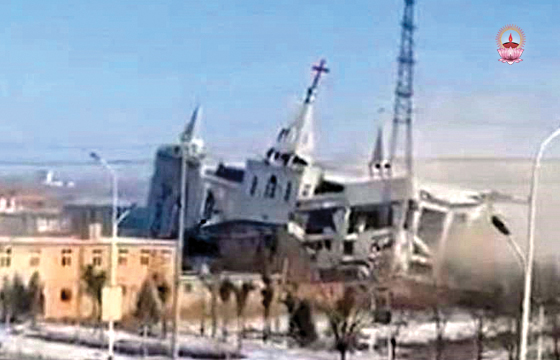
China arrests leaders of Evangelical church demolished in 2018
Authorities in China have arrested leaders and members of a prominent evangelical church that was destroyed with dynamite about three years ago, sparking a global outcry.
Nine leaders and members of the Golden Lampstand Church, a house church in Linfen in Shanxi province, northern China, were arrested on August 7 in a “well-prepared and coordinated” public security operation, reported Bitter Winter, a magazine on religious liberty and human rights.
Among the detainees were Pastor Wang Xiaoguang and Evangelist Yang Rongli. Both had previously been arrested in 2009. Before it was demolished with explosives by local authorities in January 2018, the Golden Lampstand Church was a mega-church and one of the largest churches in China.
Its congregation was part of a network of 50,000 members and the church was constructed at an estimated cost of US$2.6 million, according to Bitter Winter. It was the second destruction of a church in China in one month after a Catholic church was destroyed in the neighbouring province of Shaanxi, about 20 years after it was opened, The Guardian reported.
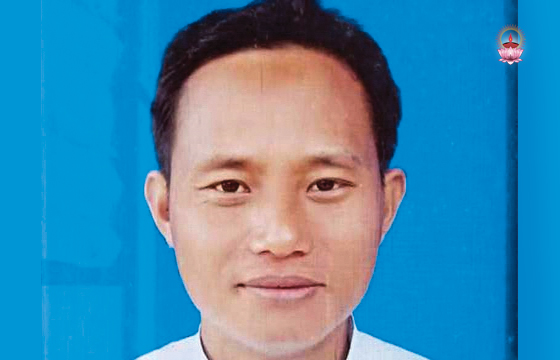
Abducted priest, catechist released in Myanmar’s Chin state
A priest and a catechist from Hakha Diocese in Myanmar’s Chin state who were arrested by a local militia have been released following mediation by Catholic leaders.
Father Noel Hrang Tin Thang and a catechist were arrested by the Chinland Defense Force (CDF) while they were traveling from Surkhua to Hakah on July 26. They are from the Church of Our Lady of the Rosary Parish in Surkhua. They were released on Aug. 4 evening following the intervention of church leaders, according to local sources. “The pair were in good health as they were treated well during nine days of detention. They returned to their parish yesterday evening,” a church social worker from Hakha told. He said the release followed agreeing to the demands of the CDF, which included transferring the priest from Surkhua to Hakha to avoid contact with the military and an agreement not to undertake government projects.

Chinese authorities raid Zoom church service
Police officers and Chinese Communist Party officials raided a church in Guangdong Province, which advocates for justice in China, while its pastor and elder were leading an online worship service on Zoom, forcing the two to stop preaching.
Security agents, police officers and other officials surrounded the Shenzhen Trinity Gospel Harvest Church in Shenzhen city and forced Pastor Mao Zhibin and Elder Chu Yanqing to stop preaching, the U.S.-based group China Aid reported.
The incident took place earlier on July 11, about three months after a church member, Shi Minglei, also known as Hope, fled to the United States. Hope was also attending the online service that was raided.
Pastor Mao and elder Shen Ling also recently signed “A Joint Statement by Pastors: A Declaration for the Sake of the Christian Faith,” led by Pastor Wang Yi of the heavily persecuted Early Rain Covenant Church. In April, several members of Early Rain Covenant Church were arrested for participating in an Easter worship service on Zoom and ordered to cease all religious activity.
Persecution watchdog group Interna-tional Christian Concern reported at the time that the Christians were participating in a Zoom worship service from their homes on Easter Sunday when six leaders were arrested and detained by the Public Security Bureau.
The 5,000-member Sichuan house church has not been able to gather in person since the communist regime shut down the church in 2018 and arrested their pastor and other leaders. Since then, it has opted to gather online. “At that time I was also in the Zoom call, but there was a long period of time where I did not hear a thing,” a member of ERCC was quoted as saying. “I thought it’s the network connection issue at first, but I soon heard a quarrel erupt. Our co-worker Wang Jun was questioning some people, [saying], ‘Who are you to do this [to us]?’”
Open Doors USA, which monitors persecution in over 60 countries, estimates that there are about 97 million Christians in China, a large percentage of whom worship in what China considers to be “illegal” and unregistered underground house churches.
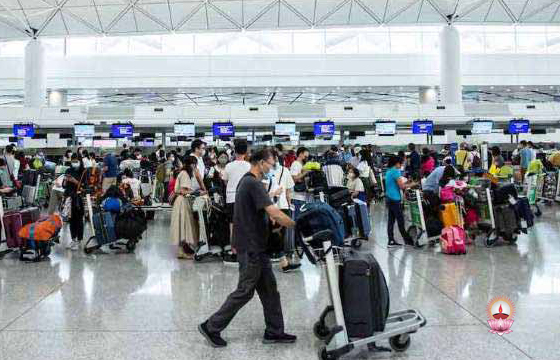
Airport echoes with sobs and farewells in Hong Kong exodus
Twice a day Hong Kong’s virtually de-serted airport fills with the sound of tearful goodbyes as residents fearful for their future under China’s increa-singly authoritarian rule start a new life over-seas, mostly in Britain.
London flights tend to leave in the afternoon and late evening, and for a few hours it briefly feels like the pandemic no longer exists as the airport comes to life.
Check-in desks fill up with crowds of passengers wheeling as much luggage as their tickets will permit.
Accompanied by the loved ones they leave behind, the scenes are emotionally charged and shadowed by a palpable pall of sorrow.
One family has brought along their favourite rice cooker, another a taste of home in the form of local shrimp noodles.
Some take a moment to pray, others pose for a final group photo or share gifts. An elderly lady hands her depart-ing grandchildren tradi-tional good luck red envelopes containing money.
Most of those leaving pause for a final hug before passing through the departure gates, the sound of sobbing continuing long after they have disappeared from view.
Clutching his British National Overseas (BNO) passport, 43-year-old media worker Hanson said he began making plans to leave when he saw footage of police beating democracy supporters in a subway train during protests two years ago.
Then came a new national security law which China imposed on Hong Kong to snuff out dissent.
“It will be a big change for me, quitting my job and starting anew in a foreign place,” he told AFP. “I will miss Hong Kong a lot, but the situa-tion has deteriorated too fast, so I have to go.”
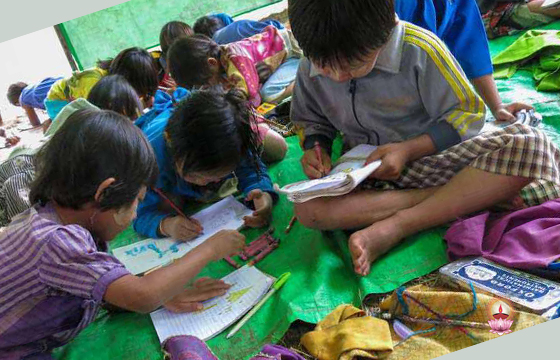
Korean charity pledges help to Myanmar refugees
A South Korean priest-run charity is raising funds to provide tents and essential supplies to 300 refugees in Kayah state, a Catholic stronghold in eastern Myanmar. Korea Hope Founda-tion, a charity based in capital Seoul, has Father Choi Ki-sik as chairman of its board. The priest in Seoul Archdiocese has appeal-ed: “Let’s work together for a world where justice and peace flourish. Please join us.”
Father Choi said the refugees from Kayah were forced to flee their homes to avoid death. They are battling cold, hunger and poor sanitation during a long rainy season supply tents, sleeping bags, coats, raincoats, flu and malaria prevention medicines and hygiene products to the refugees, the Catholic Times of Korea reports. The foundation held an emergency support cam-paign in April and May to support the Myanmar Democratization Movement, raising 55 million won (nearly US$47,000) that helped in covering transporta-tion, communication costs and food and medicines for activists and 2,640 refugee families.
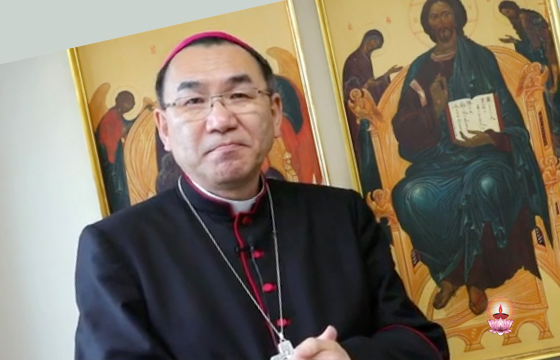
Japan prelate named secretary general of Asian bishops’ federation
Japanese Archbishop Tarci-sio Isao Kikuchi of Tokyo has been appointed as the new Se-cretary General of the Federation of Asian Bishops’ Conferences.
Archbishop Kikuchi replaced Bishop Stephen Lee Bun-Sang of Macau, who resigned from the post this month.
The FABC announced the archbishops’ appointment in a letter sent to its member episcopal conferences on Thursday, July 22. As secretary general, among his duties is to direct activities of FABC’s central secretariat, exe-cute its resolutions and instru-ctions, and coordinate the work of the federation’s offices.
Born in Miyako, Iwate Pre-fecture in 1958, he was ordained a priest for the Society of the Divine Word on March 15, 1986.
He was sent to Ghana’s Korofidua diocese following his ordination, becoming the first Japanese priest to go to Africa as a missionary.
In 1999, he was elected provincial superior of the SVD missionaries in Japan.

Bangladeshi Catholics celebrate the first local priest to take up a Vatican diplomatic post
Pope Francis appointed Fr Linku Lenard Gomes, 39, as Secretary to the Apostolic Nun-ciature in Panama on 1 July.
The clergyman received the decision with a mixture of emo-tion and amazement. “Although I am not the most eligible, God chose me for his work. I will surely use my talents to perform my service in the best possible way.”
A native of the Diocese of Rajshahi, Fr Linku is the first priest from Bangladesh to join the Vatican diplomatic corps. He is scheduled to take up his post on 1 August. The priest is grate-ful to Bishop Gervas Rozario of Rajshahi for “encouraging me to pursue higher studies in Canon Law. I shall never stop thanking him.”
Fr Linku was born on 17 November 1981 in Natore, Borni parish, Diocese of Rajshahi, in a deeply devout Catholic family of six sons and two daughters.
He became a priest on 27 December 2013 and is one of 50 priests and nuns from Bangladesh to be engaged in missionary work abroad, a sign of an increasingly missionary vocation of the local Church.
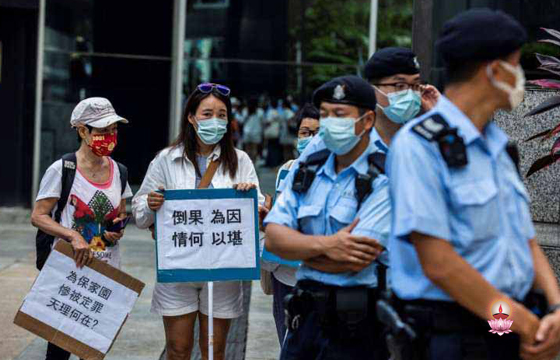
Hong Kongers arrested for sedition over children’s books
Five members of a Hong Kong union behind a series of children’s books about sheep trying to hold back wolves from their village have been arrested for sedition, police announced on July 22.
The arrests by the new national security police unit, which is spearheading a sweeping crackdown on dissent, are the latest action against pro-demo-cracy activists since huge and often violent protests convulsed the city two years ago.
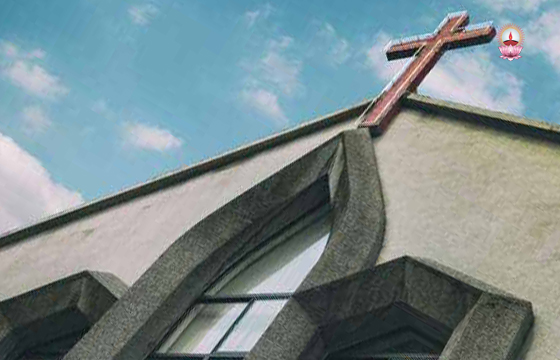
Indonesian police arrest 3 for attacking Protestant church
Police have arrested three people in Indonesia’s East Kalimantan province for attacking a Protestant church.
The attackers threw stones at the church belonging to the Congregation of Christ Church in the provincial capital Samarinda on July 8, smashing its windows, according to police. The three were arrested soon after the early-morning attack after police examined the church’s CCTV footage.
Samarinda’s police chief, Inspector Creato Sonitehe Gulo, told reporters that the attackers were vendors based in front of the church.
They were angry at not being able to tap into the church’s electricity supply to light their stalls after it was shut off when the church closed recently due to Covid-19 restrictions.
The attack was not motivated by religion or race, Gulo said.
Nevertheless, Reverend Gomar Gultom, chairman of the Communion of Churches in Indonesia, condemned the attack.
“We are really concerned about such a violent act against a place of worship, particularly during this pandemic. We all want a peaceful life in this difficult situation,” he told on July 9.
The Protestant pastor called on the church’s members not to retaliate.
Reverend Analita Migang, chairwoman of the East Kalimantan chapter of the Communion of Churches in Indonesia, said the church’s pastor intends to meet with the disgruntled vendors to iron out the problems.