
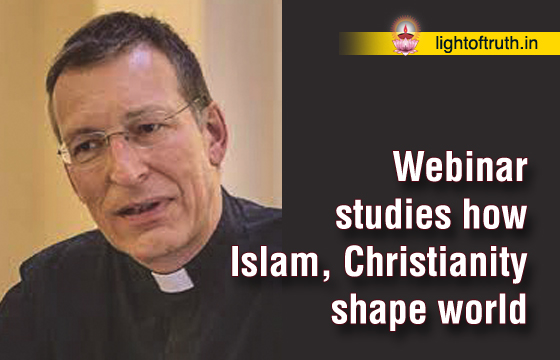
A webinar heard a world re-nowned Jesuit Islamic scholar ex-pounding how Islam and Christia-nity now shape the world.
The August 29 program on “Political Religion: How Islam and Christianity Shape the World” was webinar jointly organized by the Institute of Dialogue between Reli-gions and Cultures, Loyola College, Chennai and Islamic Studies Asso-ciation, Delhi.
Father Felix Körner, who teaches Theology of Religions at Berlin’s Humboldt University, invited his listeners to penetrate through the various identities that one holds to reach the deepest form of one’s identity as the God given vocation to participate in God’s project for oneself and for the world.
Such an understanding would make both Christians and Muslims understand that their religions call them to exercise power with respon-sibility so that the power turns into service of the other. It will help liberate humans from all forms of slavery and lead to the empower-ment of the marginalized, added Father Körner, who has specialized in Islamic Studies and Catholic theology.
He hold doctoral degrees in both disciplines and has taught at the Jesuit run Pontifical Gregorian University until 2019.
Christians and Muslims live in diverse contexts and often find themselves as minorities among others. The Jesuit scholar invited both Christians and Muslims to reflect on their ‘weakness’ not as a burden but as grace; a gift and a task.
It’s a gift since ‘weakness’ transforms ‘unruly forms of power’ into service and a task since the voices of the vulnerable make the poor visible and audible in the public sphere. Father Korner called upon both communities to embrace pluralism as an opportunity to become an inspiration for society: a presence that heals without hidden agenda and supports the other with competence and without competing compulsions.
Category Archives: Asian
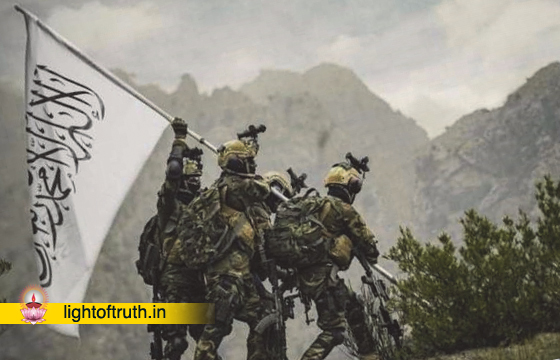
Afghan Christian vows to continue God’s work under Taliban rule
An Afghan Christian has tearfully pleaded with Christians across the globe to not forget the underground church following the Taliban takeover of his country. In a four-minute video, the man says he feels abandoned under Taliban rule but pledges to “continue God’s work” in the conflict-torn country.
Global Catalyst Ministries, a Christian group, published the footage on Aug. 19, several days after the Taliban captured Afghan capital Kabul and established control over the Central Asian country.
In the video, the face of the man is blurred and his voice changed, presumably to protect his identity. He speaks in his native language but the video has English subtitles.
Despite the tears and fears that have gripped the small Christian community, the man declares: “We are not leaving the field.”
The man begins the video with greetings — “Hello, dear sisters and brothers” — on the first day under Taliban rule in Afghanistan.
“I don’t know what the future of this country will be. We are not able to control our emotions because we’ve worked so hard for 20 years. All of our work over the past 20 years has been lost overnight,” he says
“Only God understands how much pain we have and how broken our hearts are.” As his voice chokes in emotion, he says it was not the fear but the collapse of the country that had brought tears to Christians’ eyes.
“We are crying not out of fear but because our hearts ache for our beautiful country. It has now been destroyed by this savage and extremist group. Every precious thing of value in our nation is now destroyed,” he says.
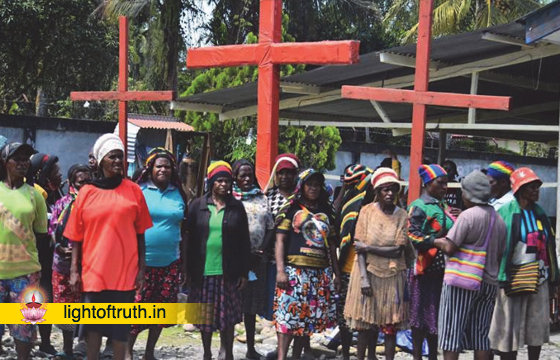
Scars of Papua conflict weigh on Indonesia’s vaccine drive
“William” is refusing to take a coronavirus vaccine because he fears Indonesia’s military will use the country’s inoculation programme to poison him and wipe out his fellow Papuans.
Decades of conflict, racism and human rights abuses are fuelling Covid conspiracy theories among his neighbours at a time when their breakaway region is facing a renewed threat from the pandemic.
“I won’t take a vaccine if it’s brought here by Indonesia,” William, who asked not to use his real name, told AFP.
He said he would gladly sign up for any dose administered directly by the World Health Organization.
“But [many people] here are worried that if the jabs come through Indonesia they will be replaced with some other chemical substance that will kill us,” he added.
There is no evidence of a genocidal plan by Indonesia, which has drafted the armed forces to help run a nationwide vaccination drive, including in Papua. But a widespread hatred of the military runs deep in the region, located on the eastern edge of the Southeast Asian archipelago nation and just north of Australia.
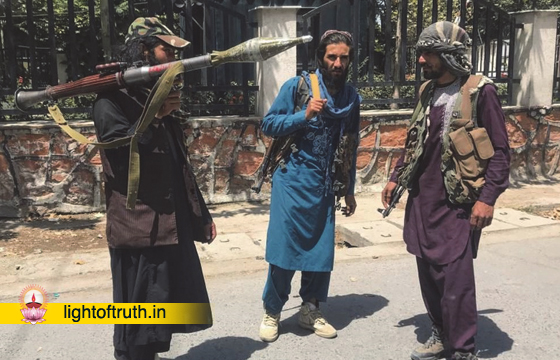
Papal foundation warns of ‘bleak future’ for religious freedom in Afghanistan
There’s an estimated 200 Catholics in Afghanistan – a tiny minority within the minority of around 7,000 Christians – and days after the Taliban took control of the country following the withdrawal of U.S. troops, a papal charity is sounding the alarm over their situation.
Aid to the Church in Need said it sees “a black future for religious freedom” in Afghanistan. Zabihullah Mujahid, spokesman of the Taliban, declared on Twitter that it’s now officially the “Islamic Emirate of Afghanistan.”
Thomas Heine-Geldern, executive president of the pontifical foundation, expressed profound concerns about the seizure of power in the Central Asian nation.
“During the rule of the previous Emirate of Afghanistan, the Taliban imposed a strict version of sharia law nationwide,” he said. “We can expect that Sunni Islam will be the official religion, Sharia law will be re-imposed, and hard-won freedoms for human rights, including a relative measure of religious freedom, over the last 20 years will be revoked.”
The Taliban ruled Afghanistan between 1996 to 2001.
This concern is shared by the Vatican, that ran a cover story in its newspaper asking about the future of the women in Afghanistan.
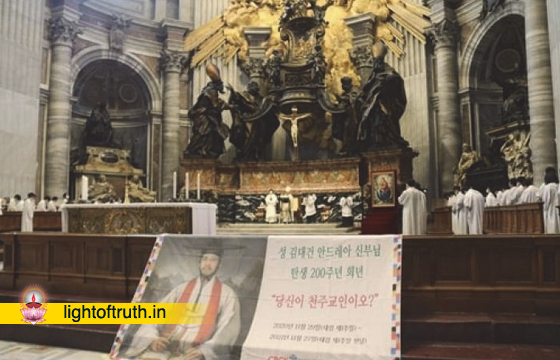
Marking the bicentenary of Saint Andrew Kim by praying for Korean unity
Korea’s Catholic community on Saturday marked 200 years since the birth of Saint Andrew Kim Tae-gon, the first Korean-born priest who was killed in hatred of the faith in 1846 at the age of 25.
Eucharistic liturgies were held in South Korea’s 1,750 churches to commemorate the anniversary, along with the first solemn Mass celebrated in Korean in Rome’s St Peter’s Basilica.
Last Saturday afternoon, Archbishop Lazzaro You Heung-sik led the service in the presence of representatives of Rome’s Korean community. A few weeks ago, the former head of the Diocese of Daejeon was appointed the new prefect of the Congregation for the clergy in the Vatican.
On the occasion of Saint Andrew Kim’s birth, Pope Francis released his own message to Korean Catholics, which Archbishop You read during Mass.
in addition to praising the heroic testimony of the martyr Andrea Kim, the pontiff publicly thanked Korean Catholics for donating anti-COVID-19 vaccine doses to the poorest countries through the Vatican. “This is a strong invitation for a greater commitment to the cause of the least of the world,” Francis said.
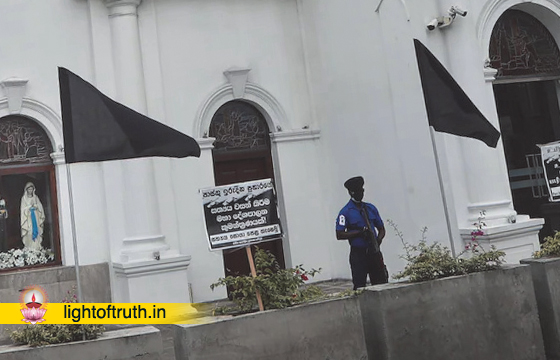
With black flags, Sri Lanka Christians protest bombing probe
Sri Lanka’s Christian community hoisted black flags at churches and homes on August 21 to express anger over the government’s investigation into the 2019 Easter Sunday bomb attacks, which killed 269 people.
Twenty-five people were charged last week in connection with the bombings. But the country’s Catholic Church says these could be “smaller fish,” and accuses the government of still not taking steps to identify the true conspirators. The head of the archdiocese of Colombo, Cardinal Malcolm Ranjith, has raised questions over allegations that state intelligence personnel knew and met with the attackers. Two local Muslim groups that had pledged allegiance to the Islamic State group were blamed for the six near-simultaneous suicide bomb attacks, which hit three churches and three luxury hotels on April 21, 2019. It is not known if the groups had actual links to the Islamic State.
Under cloudy skies, a row of large black flags billowed in the wind Saturday in front of St Anthony’s Church, which was targeted in the 2019 attacks. Behind a concrete barrier, religious statues overlooked armed police and signs that read: “Hiding the truth is a grand political conspiracy.”
In some areas, Muslim residents hoisted black flags in a show of solidarity. Church bells tolled at 8:45 a.m., the time the first blast occurred. Prayer services were held inside St. Anthony’s, but with empty pews because of a 10-day coronavirus lockdown that began late Friday.
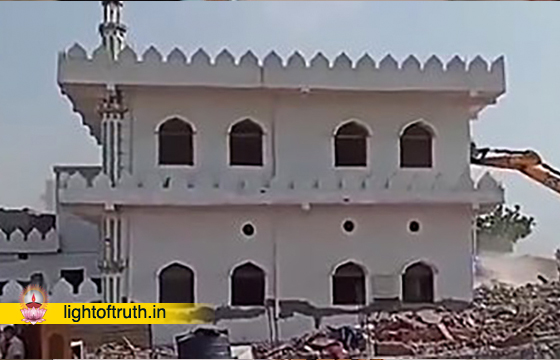
Pakistan province demolishes Catholic church, despite protests
A Catholic church serving more than 300 Christian families in Pakistan’s commercial capital of Karachi was demolished Aug. 24 despite resistance from a civil society group and warnings from U.N. human rights experts.
The Save Karachi Movement, a group of lawyers, human rights defenders, journalists and minority activists, confirmed the demolition of St. Joseph Church on its Twitter account. It was part of a larger demolition plan to prevent flooding, government officials said.
It is reported that Save Karachi Movement said the anti-encroachment squad of the Sindh provincial government tore down the building, despite protests from the Christian community.
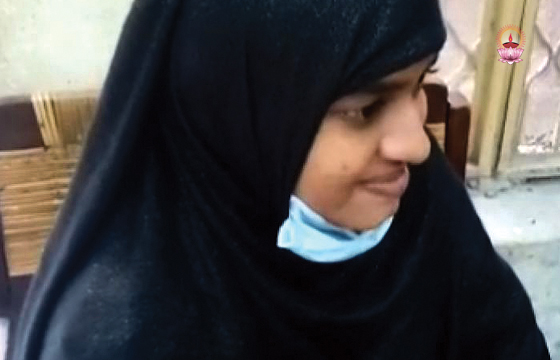
Faisalabad: another Christian girl kidnapped and converted to Islam
Another Christian girl has been kidnapped and converted to Islam in Pakistan.
Speaking to AsiaNews, Chashman’s father, Gulzar Masih, said that on 28 July, he had gone to her school to pick her up; not finding her, he had immediately gone to the police to report the disappearance of the 14-year-old. A few days later, the kidnappers sent the family a video and documents in which the girl claims to have converted of her own free will.
Gulzar, a rickshaw driver by profession, went back to the police station to get some answers, to no avail.
The story came to light only after Lala Robin Daniel, a Faisalabad-based human rights activist, got involved. “Punjab authorities should do their job to free girls who are kidnapped,” he said.
Daniel called for legal action against the kidnappers. “As long as kidnappings continue undisturbed, girls and their families will feel unsafe.”
Muhammad Ijaz Qadri, district president of the Sunni Tehreek organisation, released a letter certifying Chashman’s conversion to Islam, whose “Islamic name from now on will be Aisha Bibi.”
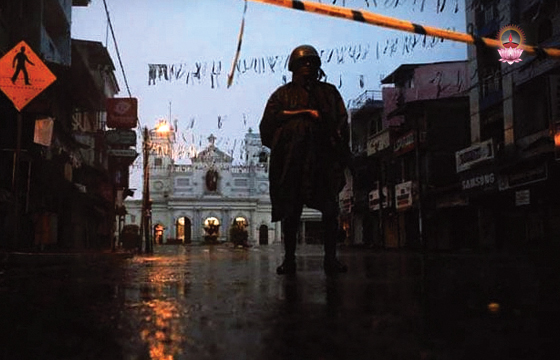
Sri Lanka files charges against 25 Easter bombing suspects
Sri Lanka has filed 23,270 charges against 25 people in connection with the 2019 Easter Sunday suicide bomb attacks on churches and hotels that killed 269 people, the president’s office said Wednesday.
The charges filed Tuesday under the country’s anti-terror law include conspiring to murder, aiding and abetting, collecting arms and ammunition, and attempted murder, it said.
The attorney general also asked the chief justice to appoint a special three-member high court bench to hear the cases speedily, it said in a statement.
Two local Muslim groups that had pledged allegiance to the Islamic State group were blamed for the six near-simultaneous suicide bomb attacks on April 21, 2019. The blasts targeted three churches and three hotels.
Another suicide bomber who had entered a fourth hotel left without setting off his bomb, but later committed suicide by detonating his explosives at a different location.
Friction and a communication breakdown between then-President Maithripala Sirisena and then-Prime Minister Ranil Wickremesinghe were blamed for the government’s failure to act on near-specific foreign intelligence warnings ahead of the attacks. That led to the election of President Gotabaya Rajapaksa later in 2019 on a platform of national security.
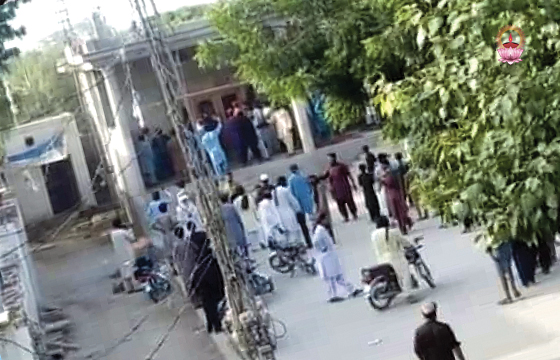
Eight-year-old becomes youngest person charged with blasphemy in Pakistan
An eight-year-old Hindu boy is being held in protective police custody in east Pakistan after becoming the youngest person ever to be charged with blasphemy in the country.
The boy’s family is in hiding and many of the Hindu community in the conservative district of Rahim Yar Khan, in Punjab, have fled their homes after a Muslim crowd attacked a Hindu temple after the boy’s release on bail last week. Troops were deployed to the area to quell any further unrest. On Saturday, 20 people were arrested in connection with the temple attack.
The boy is accused of intentionally urinating on a carpet in the library of a madrassa, where religious books were kept, last month. Blasphemy charges can carry the death penalty.
The Guardian knows the name of the boy and family members, but has chosen to protect their identities for their safety.