

The new wave of Covid-19 in Vietnam is putting a strain on the poor. How-ever, it is also an opportunity for many to discover the vitality of Catholic realities as in the parish of Hòa Hung, in the archdiocese of Ho Chi Minh City, which is not at all discouraged in these difficult times.
In 1946, the Catholic community in Hòa Hung numbered just 46, but today it has grown to about 9,000. In the compound there is rice and bread distribution for the poor, a drinking water station, a hostel for female students, a support group for those who live by collecting rubbish. Father Joseph Ph¡m Bá Lãm, parish priest, explains that the rice distribution has been active for seven years now and is supported by monthly offerings from benefactors.
“It continues to operate even today with the pandemic,” he explains, “while members of the Catholic Association visit the poorest families”. As for the drinking water station, Father Lãm says it was set up three years ago and provides clean water every day to all the residents of the neighbourhood, Catholics and non-Catholics alike.
The Pastoral Council creates the conditions for all the faithful of the parish to participate in the activities. The groups of elderly people,” says Peter Nguyen, one of the leaders, “have been working together with the Dominicans. The group of Catholic mothers is involved in charitable activities. The Eucharistic Youth Movement has also set up aid missions for people living in remote areas in the mountains: before leaving, a project is prepared with the Catholic Association of the parish, which is then checked on return”. The parish has also asked the local authorities for a list of poor families living in the neighbourhood, and on the basis of this information is supporting them all with rice and essential goods.
Category Archives: Asian
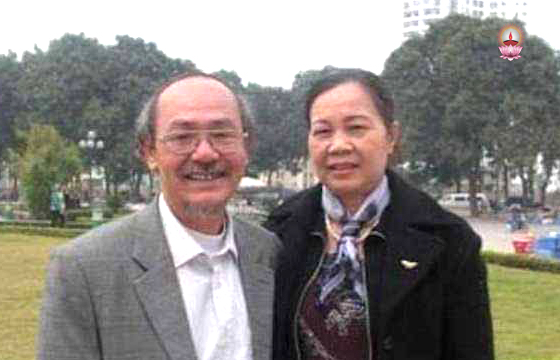
Vietnam jails dissident writer on anti-state charge
A court in Hanoi has jailed a dissident writer who used to work for a state-run radio station for satirizing government leaders.
On July 9, the People’s Court of Hanoi City sentenced Pham Chi Thanh to five-and-a-half years in jail for “making, hoard-ing, disseminating and spreading information and documents against the Socialist Republic of Vietnam,” under the Penal Code’s Article 117.
Thanh, who used to work as an editor at the state-controlled radio station Voice of Vietnam until he was sacked for writing articles criticizing China in 2007, will serve five years’ probation after finishing his jail term. He was also fined 18 million dong (US$782) for selling his book The thien hanh dao hay dai nghich bat dao (Holder of the mandate of heaven or great immoral traitor).
The 69-year-old dissident writer, who was arrested in May 2020, was accused of distributing 220 copies of his book to readers in Vietnam and abroad. His self-published book includes his posts that allegedly “distorted information and vilified the people’s government that caused social concern.”
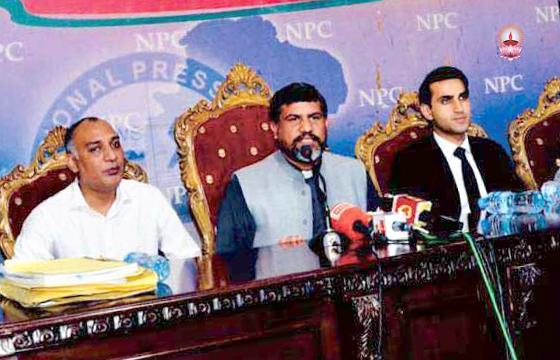
Pakistani bishop rejects bill on minorities’ properties
A Lutheran bishop in Pakistan has opposed an act that mandates a federal ministry to sell the properties of religious minorities.
Under the Protection of Communal Properties of Minorities Act, 2020, a “ministry concerned” is mandated to issue a no-objection certificate for the sale / purchase / transfer / gifts of minority properties on the re-commendation of the National Commission for Minorities.
The National Assembly’s standing committee on religious affairs and interfaith harmony has approved the bill.
“We reject this ordinance. It only paves the way for selling these properties. It is a conspiracy against Christians. We shall challenge it in court,” said Bishop Jimmy Mathew of Mardan in Khyber Pakhtunkhwa.
The bishop, who also spear-heads the Save the Church Property Movement, was addressing a July 6 press conference at the National Press Club Islamabad.
The act has sent shivers of unease through the Church of Pakistan, which has been engaged in court cases to reclaim land from rival factions. The disputed Protestant properties include schools, shops, church compounds and missionary and educational organizations.
Christian schools struggle to survive in Pakistan
Yousaf Adnan remembers retiring as principal of a Pakistani high school in 2011 due to a shortage of funds.
“After serving for two decades in the Catholic school, my salary was only 5,700 rupees [US$36]. The teachers used to get half of that amount. The ceiling fans were as old as our careers,” Adnan, 56, told.
“Summers were especially tough for the students amid frequent power cuts. There was no generator. Our parish priest had lost interest in the building.”
St Paul High School was located in Hajvery Town, a Christian neighbourhood of Faisalabad Diocese with more than 400 families. Students, most of them from poor families, paid 150-300 rupees in monthly fees.
The school officially closed in 2014. One of the remaining teachers is now running the facility on a self-help basis with only 60 children.
“It is one of the 63 schools that closed in Faisalabad Diocese in recent years. Most of them were primary schools [up to grade 5],” said Adnan, who now runs an organization for minority rights.

Bangladesh’s churches struggle to serve as Covid-19 rages
Churches in Bangladesh are struggling to provide the faithful with spiritual and pastoral care and to assist marginalized communities amid a drop in donations during the worsening Covid-19 situation.
A deadly third wave of the pandemic hit the country in June as the more contagious Delta variant caused a massive spike in infections and deaths. The country registered its highest daily total of 11,651 cases on July 8, a day after its daily death toll passed 200 for the first time since Bangladesh recorded its first three cases in March last year. Data suggests the virus has spread to rural heartlands as districts close to the Indian border record more infections and deaths amid an acute shortage of beds, oxygen and medical staff.
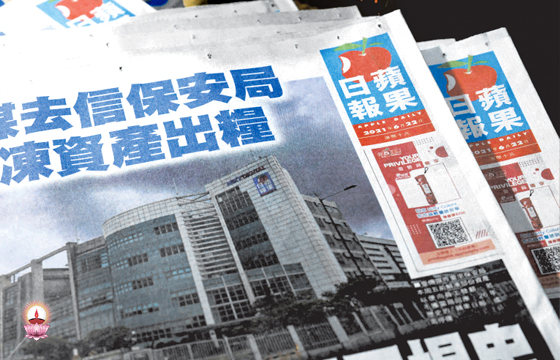
Pro-democracy newspaper Apple Daily shutting down after raid in Hong Kong
The pro-democracy Hong Kong newspaper Apple Daily will be shutting down on June 24 , one week after the arrest of five of its editors and executives under a year-old national security law.
As The Associated Press reports, the board of directors for the newspaper’s parent company Next Media, said in a statement that its online and print editions would cease production due to ”the current circumstances prevailing in Hong Kong.”
The newspaper had initially said it would continue its reporting. It printed 500,000 copies the day after the arrests, five times more than it usually does. However, Apple Daily reported that management made the decision to shut down out of concern for employee safety as well as staffing issues.
Last week, five editors and executives for Apple Daily were arrested on charges of colluding with a foreign country, with authorities citing over 30 articles that they claimed played a ”crucial part” in foreign countries issuing sanctions against China.
This is the first time that the national security law has been used against journalists for something they published, the AP notes. Under this law, much of the company’s assets were also frozen, with the company’s board of directors requesting that some of its assets be released in order to pay wages earlier this week.
The New York Times notes that Apple Daily’s criticism of authorities has sparked concerns from the Communist Party of China for several decades. Shortly after the new national security law was passed last year, the newspaper’s founder, Jimmy Lai, was arrested at his home.
Lai, 73, was sentenced to 14 months in prison in April on charges of attending and organizing an unlawful protest.
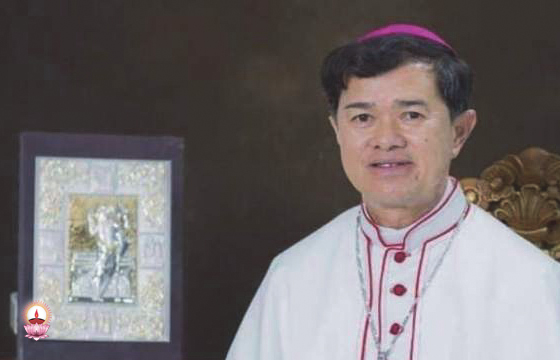
Thai Catholics and Buddhists strengthen ties
Catholic and Buddhist leaders in northern Thailand have been engaging in dialogue seeking to strengthen unity and harmony among followers of both faiths for the common good.
Interfaith dialogue is an integral part of the Catholic Church’s pastoral plan, said Archbishop Anthony Weradet Chaiseri of Tharae and Nonseng Arch-diocese that covers the four northern provinces of Kalasin, Mukdahan, Nakhon Phanom and Sakon Nakhon. Dialogue with Buddhists is vital for Christians in a nation shaped by the strong cultural and religious legacies of Buddhism, he said.
Archbishop Chaiseri made the observations after recently meeting with Sutham Suthammo, a promi-nent Buddhist monk and abbot of the Forest Monastery in Kesetsrikhun in Nong Phai.
“The Church wants to promote and strengthen relations with the representatives of the local Buddhist community,” Archbishop Chaiseri told the Vatican’s Fides news agency.
“A stronger collaboration with the Buddhist community can help us work together for the common good, peace, harmony and development.” Buddhists make up about 95% of Thailand’s more than 69 million people. Christians are a small minority accounting for about 1%.
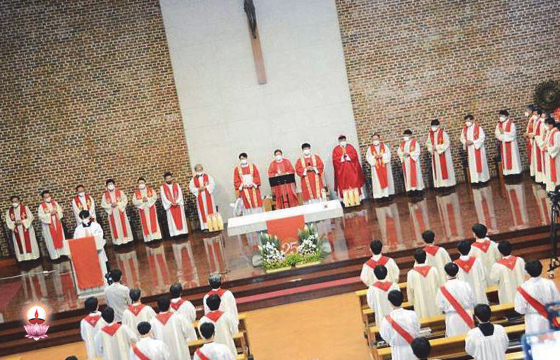
Korean archdiocese plans contest to revitalize church music
A Catholic archdiocese in South Korea will hold a musical contest with an aim to revitalize church music and to provide the faithful with an opportunity to reflect and practice pastoral priorities of the Church.
The Archdiocese of Daegu, which covers the third largest metropolitan area after capital Seoul and Busan, is launching the Creative Artist Contest that focuses on a 10-year pastoral plan recently adopted by the arch-diocese.
The pastoral plan announced by Archbishop Thaddeus Hwanki Cho is based on the theme “Community living the joy of the Gospel together.”
Any faithful can participate in the contest and all have been asked to submit traditional church music and music on Catholic life with core values of the pastoral plan such as the Word of God, fellowship, liturgy, love of neighbours and missions.
In cases of church music, both single-voice and mixed choral songs with three or more voices that can be used in liturgy are acceptable, while music on Catholic life should be in single-voice form that anyone can sing easily.
The deadline for submissions is Sept. 30 and results of the contest screening will be announced in December. The prizes will be conferred during a grand ceremony next January.
A total of 20 million won (US$17,600) will be awarded to winners — 3 million won for the first prize, 2 million won for second, and 1 million won for others.
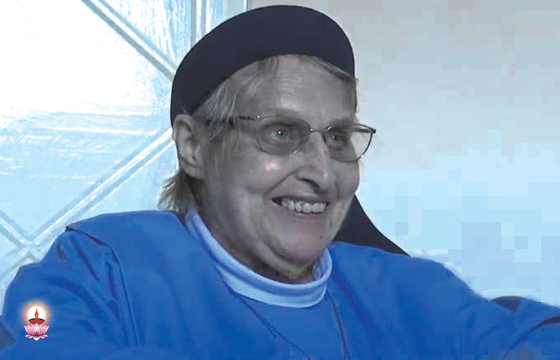
Indonesian Catholics mourn death of Dutch-born nun
Catholics in Indonesia’s Ruteng Diocese are mourning the death of a Dutch-born nun who spent more than half of her life doing family pastoral work in their diocese.
Sister Robertilde Wihelmina van Der Meer from the Congregation of Servants of the Holy Spirit (SSpS) died on June 18 at 87 and was buried at the congregation’s cemetery in Ruteng on June 21.
News of her death prompted many Catholics, including the district government, to express their condolences on social media for the friendly nun.
Sister Natalia Maria Naki, director of SSpS-run St. Raphael Hospital in Cancar, 15 kilometers west of Ruteng, who had lived with Sister Robertilde since 2012, said the nun showed “total devotion to the people she served.”

Cardinal Advincula is installed as Manila’s new archbishop
Cardinal Jose Advincula was installed as the new archbishop of Manila in a ceremony at the Philippine capital’s historic cathedral on June 24.
The 69-year-old cardinal from Capiz became the 33rd archbishop of the country’s largest diocese, succeeding Cardinal Luis Tagle, now prefect of the Congregation of the Evangelization of Peoples in Rome.
The installation was attended by the papal nuncio, Archbishop Charles Brown, along with another former Manila arch-bishop, Cardinal Gaudencio Rosales, and apostolic administrator Bishop Broderick Pabillo.
Several other bishops were also present as were a limited number of priests and civic officials in a ceremony that was scaled down to avoid the spread of Covid-19.
Cardinal Advincula, who is the sixth Filipino to hold the office, promised to fulfill his new mission by listening and knowing his sheep — Manila’s poor and marginalized.