Category: Asian

  • Christians in Pakistan March and Pray After Eviction Order

    Christians in Pakistan March and Pray After Eviction Order

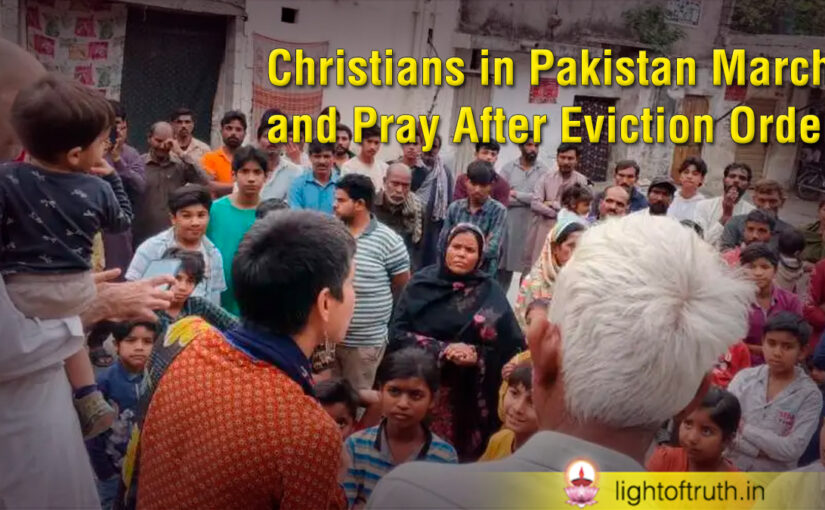
    Thousands of Christians in Islamabad marched through the narrow streets of their settlements on March 11 after authorities ordered them to leave their homes within three days.

    The eviction notice was issued by the Capital Development Authority to residents of Rimsha Colony and Akram Masih Gill Colony, where about 25,000 people live. Most of them are Christians. Officials told residents to move out by March 13 and take their belongings, warning that no extra time would be given.

    The announcement caused panic among families who fear losing their homes. On the morning of March 12, residents surrounded vehicles from the development authority, forcing them to leave the area.

    In response, thousands of Christians held a peaceful march. Carrying a large cross, they walked through the streets singing psalms and shouting “Hallelujah.” The march ended at Awami Church where prayers were held. Church leaders also asked people to fast and pray for the safety of their families and homes.

    Human rights groups have strongly criticized the eviction plan. The Human Rights Commission of Pakistan said it was alarmed by the attempt to remove the residents without proper resettlement. The group urged the government to stop the eviction until the families are given safe housing.

    Church leaders and Christian organizations are now working with rights groups and political leaders to prevent the forced eviction and protect the community. Many residents say they only want the right to live peacefully in their homes.
  • Nun Brings Safe Motherhood Care to Remote Bangladesh Village

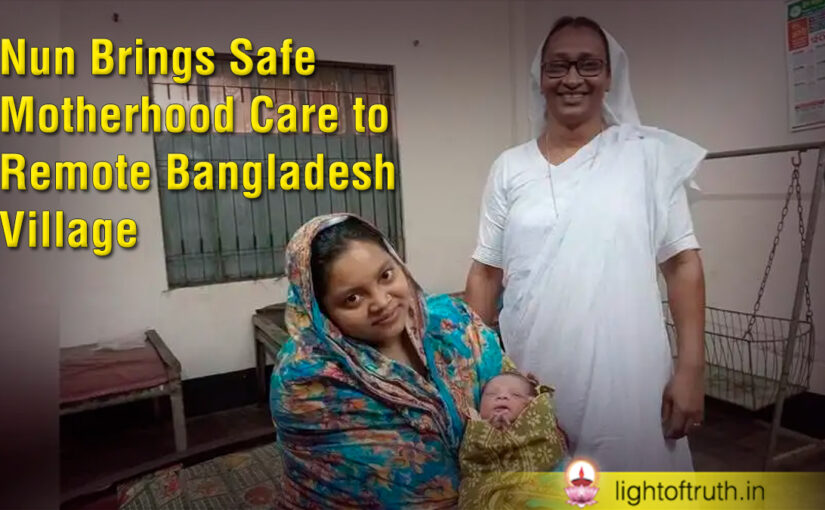
    Nun Brings Safe Motherhood Care to Remote Bangladesh Village

    In a remote area of southern Bangladesh, where well-equipped hospitals are difficult to find, a Catholic nun has become a source of hope for many pregnant women. Sr. Lucky Gomes of the Little Handmaids of the Church provides safe, compassionate and affordable maternity care at the Aloka Health Centre.

    The small health center, located in Gournadi, has earned the trust of the local community. It focuses on traditional childbirth and tries to avoid unnecessary surgical deliveries. Because of this, families from different religions — Muslims, Hindus, Christians and Buddhists — come to the center seeking care.

    Bangladesh has seen a sharp rise in caesarean births in recent years. Reports show that more than half of all deliveries now happen through surgery, especially in private hospitals where the cost can be very high. Many health experts warn that unnecessary C-sections may create health risks for mothers and babies.

    In contrast, the Aloka Health Centre promotes safe natural delivery whenever possible. One young mother, 22-year-old Sumaiya Akhtar, said giving birth there “felt like home.” Her delivery cost only about 4,000 taka, far less than the 30,000 taka often charged in private hospitals for a cesarean birth.

    Sr. Gomes joined religious life in 1999 and studied nursing at Kumudini Nursing College. After more than 20 years of service, she continues to help women through pregnancy, infertility struggles and natural family planning, bringing hope and care to rural families.

  • Sri Lankan Woman Credits Jesus for Healing, Prepares for Baptism

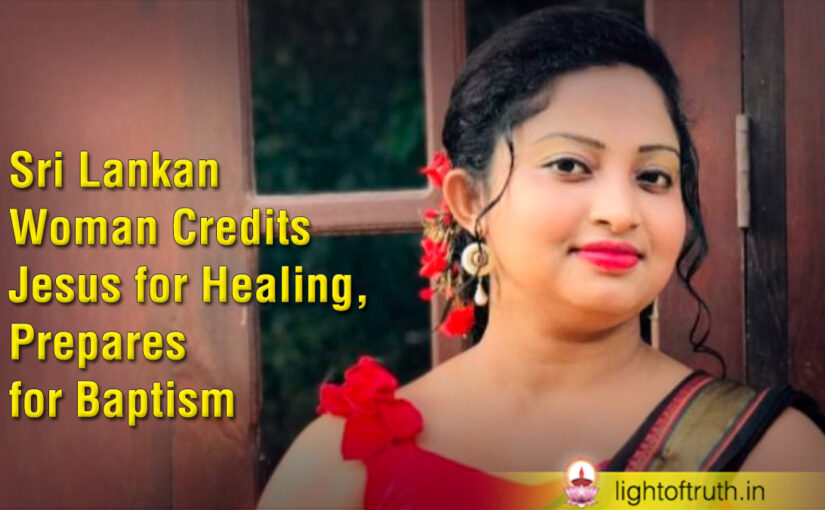
    Sri Lankan Woman Credits Jesus for Healing, Prepares for Baptism

    A 20-year-old woman from Sri Lanka says a remarkable healing from a long-term illness has led her to embrace the Christian faith.

    Sachini Dilshani Weerakoon suffered for nearly eight years from a painful skin condition that caused open blisters on both her legs. Doctors said the wounds were linked to an autoimmune disease. Almost every month, more than 30 blisters would appear on her legs, often bursting into bleeding sores. The condition made it difficult for her to sleep, work, or travel, and she frequently experienced severe headaches.

    In May 2025, however, the blisters suddenly stopped appearing. Weerakoon believes this was a miracle through Jesus Christ. “I believe Jesus healed my legs completely,” she said.

    Now she is preparing to be baptized during the Easter Vigil on April 4 at St. Jude the Apostle Church in her village of Ashokapura.

    Ashokapura, located about 225 kilometers north of Colombo in the Anuradhapura region, is mostly Buddhist. About 400 Buddhist families live there along with around 30 Catholic families. The Buddhist temple and Catholic church stand close to each other, and people from both religions often support each other’s religious events.

    Weerakoon was born into a Buddhist family but was familiar with Christian practices from childhood. Her family often visited the church to light candles and pray for blessings. After marrying a Catholic two years ago, she began praying before the statues of Jesus and Mary at home and visiting the Marian shrine of Our Lady of Madhu Shrine.

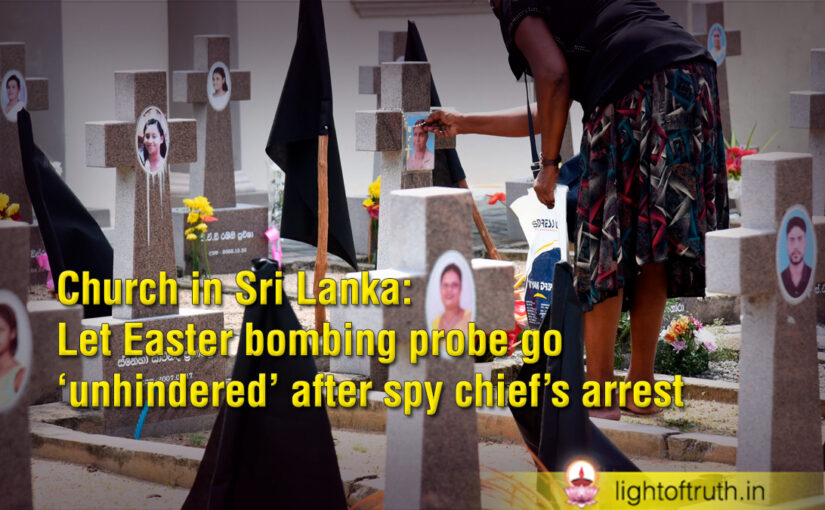
  • Church in Sri Lanka: Let Easter bombing probe go ‘unhindered’ after spy chief’s arrest

    Church in Sri Lanka: Let Easter bombing probe go ‘unhindered’ after spy chief’s arrest

    The Catholic Church in Sri Lanka has urged authorities to ensure that the ongoing investigation into the 2019 Easter Sunday bombings proceeds without political interference, following the arrest of a former intelligence chief on allegations of conspiracy and aiding the attacks.

    Father Cyril Gamini Fernando, spokesperson for the Roman Catholic Archdiocese of Colombo, addressed a packed press conference at the archbishop’s residence on Feb. 26. He appealed for patience and called for the legal process to be allowed to take its course without obstruction from any quarter.

    The appeal came a day after the arrest of retired Major General Suresh Sallay, who headed Sri Lanka’s military intelligence at the time of the coordinated suicide bombings on Easter Sunday 2019. The attacks targeted three churches and three luxury hotels, killing 279 people, including 45 foreign nationals, and injuring more than 500 others.

    Two Catholic churches — St. Anthony’s Shrine and St. Sebastian’s Church — accounted for nearly two-thirds of the casualties, making the Christian community one of the hardest hit.

    Church leaders reiterated that the rule of law must prevail, emphasizing that no individual, regardless of position or status, should be considered above the law. They stressed that anyone found responsible for criminal wrongdoing must be held accountable through a fair and impartial judicial process.

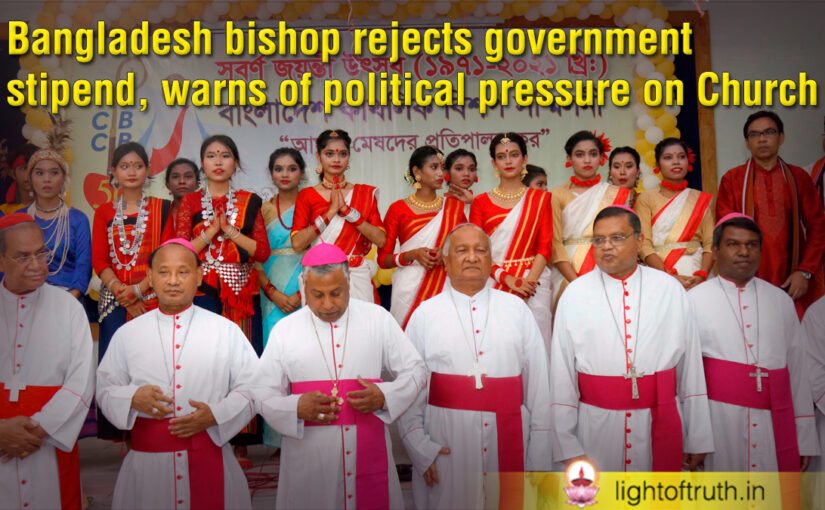
  • Bangladesh bishop rejects government stipend, warns of political pressure on Church

    Bangladesh bishop rejects government stipend, warns of political pressure on Church

    The newly elected government of Bangladesh has announced a monthly allowance for religious clergy, marking the first initiative of its kind in the Muslim-majority country’s history. However, a Catholic bishop has indicated that the Church will decline the funds, citing concerns about possible political pressure.

    The decision was taken during a cabinet meeting on Feb. 21 chaired by Prime Minister Tarique Rahman. Speaking to journalists afterward, government adviser Mahdi Amin said the proposal fulfills one of the ruling party’s election promises to provide a monthly honorarium and festival allowance to religious leaders from mosques and other faith communities.

    While the exact amount of the allowance has not been disclosed, Amin said implementation would begin in selected areas before Eid al-Fitr, expected in the third week of March.

    The announcement represents a significant policy shift, as Bangladesh has not previously provided direct monthly financial support to clergy across religious traditions.

    Christians make up a small minority in the country of approximately 170 million people, numbering around 600,000. According to the 2019 Bangladesh Catholic Directory, there are 119 parishes and 52 sub-parishes across eight dioceses. The directory lists 233 diocesan priests and 176 missionary priests serving in Bangladesh, many of whom are engaged not only in parish ministry but also in education, healthcare, and youth formation.

    Church leaders have expressed concern that accepting state funding could compromise the Church’s independence and moral voice.

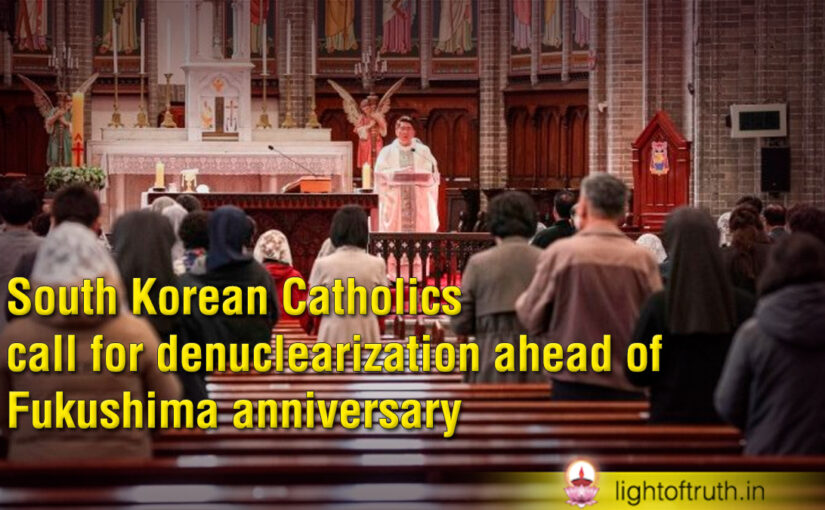
  • South Korean Catholics call for denuclearization ahead of Fukushima anniversary

    South Korean Catholics call for denuclearization ahead of Fukushima anniversary

    Catholics in the southwest of the South Korea have launched a series of public Eucharistic celebrations titled the “Gwanghwamun Mass Against Nuclear Power Plants,” marking the lead-up to the 15th anniversary of the Fukushima Daiichi nuclear disaster on March 11.

    The Masses, held from February 13 to March 6, began with an opening celebration in front of the Sejong Center for the Performing Arts in Seoul’s Jongno district. Clergy, religious, and lay faithful gathered to pray and voice concern over government policies related to nuclear energy.

    The initiative seeks to support calls for halting the extension of ageing nuclear power plants and reconsidering plans to construct new facilities. During the opening liturgy, Father Yang Ki-seok presided, placing a symbolic drum representing radioactive waste before the temporary altar.

    In his homily, Father Yang recalled the lasting impact of the Fukushima disaster and criticized what he described as a renewed push for nuclear expansion. He questioned the extension of the lifespan of the Kori nuclear unit and proposals for additional plants, cautioning about long-term environmental and safety risks.

    While acknowledging arguments that nuclear energy is needed to power artificial intelligence data centers and semiconductor complexes, he noted that nuclear plants require more than a decade to become operational. He instead advocated for renewable alternatives such as solar and wind power, which can be installed within a few years and provide sustainable energy for the nation’s future industries.

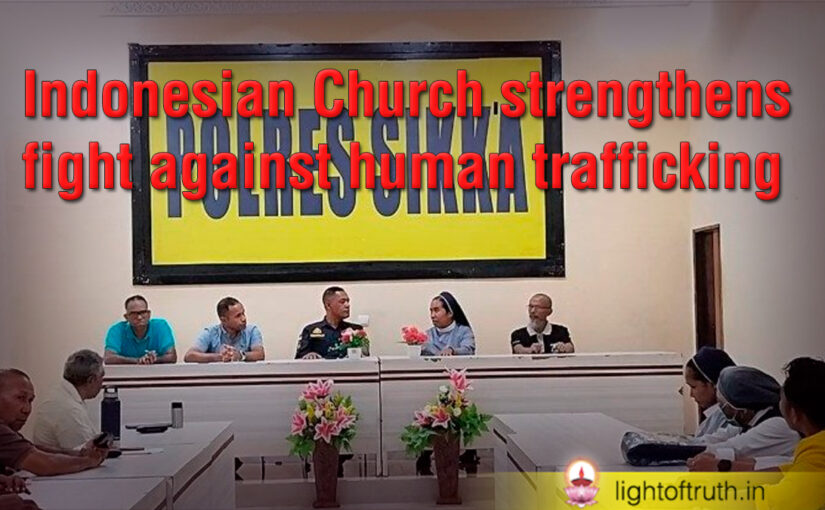
  • Indonesian Church strengthens fight against human trafficking

    Indonesian Church strengthens fight against human trafficking

    The Catholic Church in Flores has intensified efforts to combat human trafficking after 13 young women were rescued from alleged exploitation at a nightclub in Sikka Regency.

    The women, aged 17 to 26 and originally from West Java, sought protection in January 2026 after reportedly suffering physical violence, sexual exploitation, and severe labor abuse. They are currently receiving shelter and assistance at a safe house run by Tim Relawan untuk Kemanusiaan Flores (TRUK-F), a humanitarian network supported by the Society of the Divine Word and the Missionary Sisters Servants of the Holy Spirit. The victims are being provided with psychological, pastoral, and legal support as their case proceeds through the courts.

    The incident has raised alarm in East Nusa Tenggara. On February 9, the Sikka Human Rights Network organized a peaceful demonstration at the local legislative council in Maumere, calling for a thorough investigation and stricter enforcement of anti-trafficking laws. Priests, religious sisters, seminarians, and lay advocates urged authorities to strengthen oversight of entertainment venues and better protect vulnerable workers.

    Sister Fransiska Imakulata, SSpS, director of TRUK-F, said the organization has assisted trafficking victims since 2000 and described the case as part of a recurring pattern. She cited previous incidents involving minors and migrant workers lured by promises of high salaries and stable employment.

    She warned that women and children remain especially vulnerable, though men are also at risk when poverty forces migration. “When a victim suffers, the consequences extend to the entire family,” she said.

  • Filipinos celebrate 40th anniversary of People Power in Rome

    Filipinos celebrate 40th anniversary of People Power in Rome

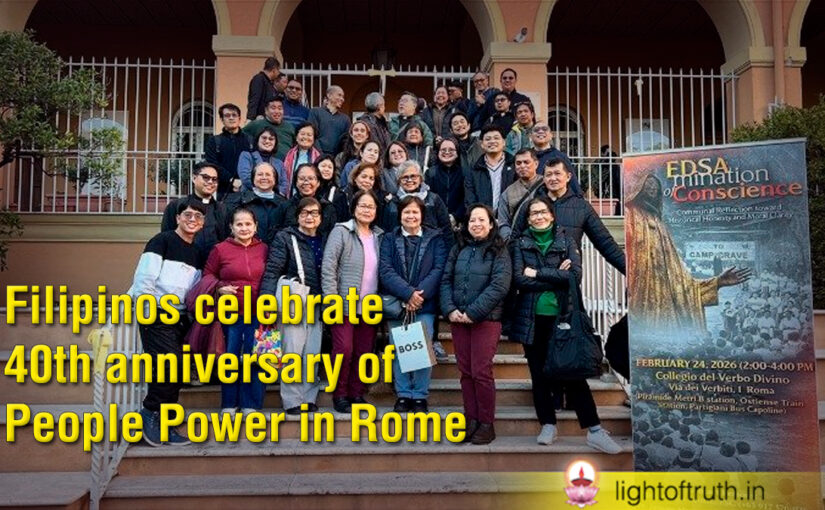
    On February 25, Filipinos around the world commemorated the 40th anniversary of the EDSA People Power Revolution, remembering the peaceful uprising that ended two decades of dictatorship in the Philippines in 1986.

    The largely unarmed movement was sparked by an appeal from the late Jaime Sin, who urged citizens to gather along Epifanio de los Santos Avenue in Manila. Thousands responded, including priests, religious sisters, and lay faithful who stood before tanks and soldiers, offering prayers and rosaries. The revolution became a defining moment in Philippine history and a powerful testimony to the Church’s moral leadership, faith, and nonviolent resistance.

    In Rome, Filipino priests, religious, students, and overseas workers marked the anniversary with a communal reflection on February 24 at the Collegio del Verbo Divino. The program, titled “EDSAmination of Conscience: Communal Reflection about Historical Honesty and Moral Clarity,” invited participants to revisit the revolution’s meaning in today’s social and political climate.

    The gathering was spearheaded by Br. Armin Luistro, FSC, Fr. Jerome Marquez, SVD, and Fr. Albert Alejo, SJ. Participants shared memories and reflected on how the spirit of EDSA continues to challenge Filipinos.

    In his opening remarks, Fr. Marquez emphasized that even far from home, Filipinos remain deeply connected to their nation. He described EDSA not merely as a historical event but as part of the Filipino moral conscience. Acknowledging ongoing divisions over justice and human rights, he called the gathering a space for courage, truth, and renewed love of country.

  • American sister ends 40 years in Bangladesh forming priests, founding school

    American sister ends 40 years in Bangladesh forming priests, founding school

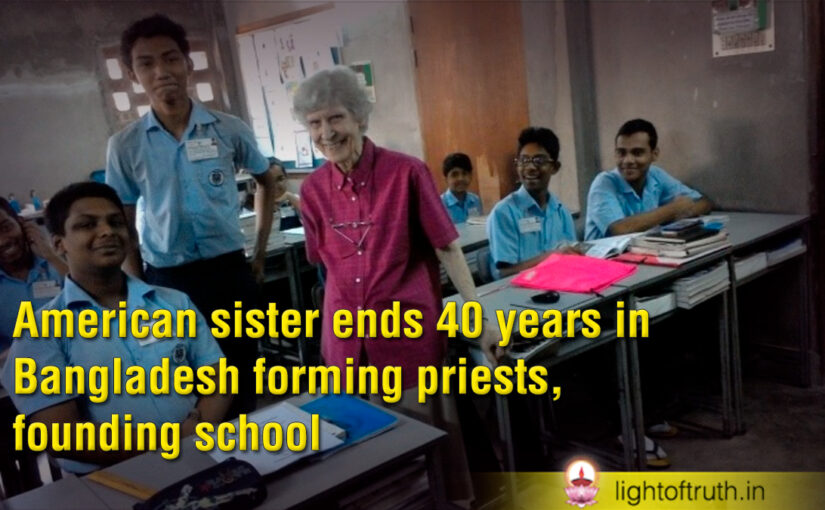
    For nearly four decades, Sister Miriam Francis Perlewitz has lived a quiet but extraordinary missionary life in Bangladesh, a Muslim-majority nation where Catholics represent a tiny minority.

    An American missionary sister, Scripture scholar, and educator, she has shaped generations of Catholic priests while also transforming grassroots education for children of all faiths. Today, she stands as one of the last American nuns still serving in the country — and as her advanced age signals an imminent departure, her story emerges as a rare testimony to missionary perseverance, women’s leadership, and faith lived from the margins.

    Sister Miriam arrived in Bangladesh in 1985, initially to teach sacred Scripture part time at Holy Spirit Major Seminary in Dhaka. At the time, Bangladesh faced daunting challenges: widespread poverty, limited access to education, and pervasive illiteracy. The idea of a woman teaching future priests — let alone in South Asia — was uncommon and controversial.

    Yet what she encountered immediately disarmed hesitation. “The friendliness and welcoming attitude of the students, as well as the questions I had about applying the message of Scripture in a Muslim environment, deeply touched me,” she told EWTN News.

    For several years, she divided her time between Maryknoll’s major seminary and Bangladesh. When Maryknoll closed its school of theology in 1992, she made a decisive choice: She would remain full time in Bangladesh. That decision would shape the Church in the country in lasting ways.

    For more than two decades, Sister Miriam taught sacred Scripture at Holy Spirit Major Seminary, forming generations of priests — including men who would later become bishops and archbishops. Her presence itself was a quiet challenge to convention.

    “First of all, the fact that I was a woman, involved in a ministry that was considered to be a man’s field, was questioned,” she recalled. Initially, some Church authorities hesitated. But the seminarians themselves defended her role. “When the students supported and spoke in my favour, the ‘powers that be’ decided to allow me to continue.”

    What followed was a deeply collaborative ministry. Sister Miriam describes her seminary years not simply as academic formation but as a shared spiritual journey. “We became ‘one’ in the endeavour,” she said, united by the goal of passing on the Gospel — “the good news that God became man so that man may become one again with God.” For her, the word “man” was always inclusive, embracing all humanity.

  • China’s Catholic bishops back worship limits, prompting call for Vatican action

    China’s Catholic bishops back worship limits, prompting call for Vatican action

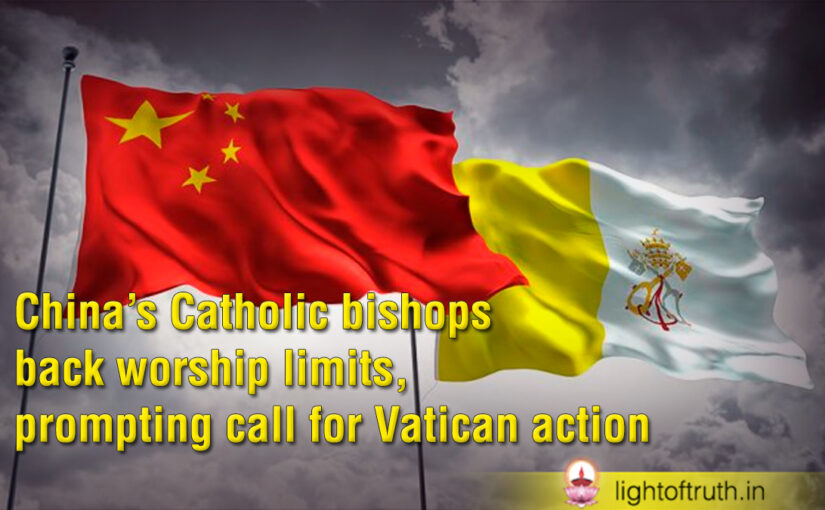
    The state-sanctioned Bishops’ Conference of the Catholic Church in China (BCCC) backed the government’s ban on unregistered clergy engaging in pastoral work and using unapproved sites for worship. The BCCC said in a Feb. 4 statement that “religious groups must comply with relevant laws and regulations when conducting religious activities,” describing compliance as a matter of “national and public interest.” The statement aligned with the Chinese Communist Party’s controls over the region.

    Nina Shea, Hudson Institute senior fellow, called on Pope Leo XIV to summon the Chinese Catholic bishops’ conference for supporting the “suppression of Chinese Catholicism.” “That the heads of these entities are the bishops of Beijing and Shanghai, China’s most important dioceses, is shameful,” she told EWTN News. “Pope Leo should immediately summon them to Rome to review their episcopal authority.” Chinese Communist Party (CCP) controls stipulate that religious activities occur in “registered” religious venues by “certified and registered religious personnel.”

    Though the bishops noted religious groups may request to carry out their activities in a temporary location with prior permission from the government, no unauthorized clergy may ever preside over such activities for any reason, according to Article 40 of the Regulations on Religious Affairs.

    Shea, who also directs the Center for Religious Freedom, said: “Supporting the CCP ban on unregistered clergy and churches directly conflicts with Vatican policy.” “[Pope Leo] should disclose the content of the Holy See’s provisional agreement with China and review whether this new Chinese policy constitutes a breach of the agreement’s terms or even of its spirit,” she said.

    Shea cited a 2007 letter from Pope Benedict XVI to the Chinese Catholic Church in which the late pontiff described the Chinese government’s bid to impose its own structure on the Church in China as “incompatible with Catholic doctrine.”

    Shea said the Vatican’s 2019 pastoral guidance to members of the Chinese Catholic Churchaffirmed that a cleric had the right to “individually follow one’s conscience on whether to refuse to take the pledge renouncing foreign influence, such as papal influence — a pledge required to register with the state’s Chinese Patriotic Catholic Association and its bishops’ conference.”

    “This new position in support of banning and criminalizing those clergy who refuse to take the pledge renouncing papal authority lays bare these entities as mere party tools for communist control and suppression of Chinese Catholicism,” Shea said.