

In celebration of the next World Youth Day (WYD), the Catholic Church in South Korea hosted a grand launch event at the Myeongdong Cathedral in Seoul on July 28.
The occasion, which drew more than 1,000 young attendees, consisted of various events intended to reflect the theme “Hope Ignites in Seoul. Success for WYD Seoul 2027.”
During the inauguration ceremony, a flag parade was held in which both young Koreans and international attendees carried colourful flags from 193 different countries into the cathedral.
Following the parade, a puzzle ceremony commenced in which the young participants pieced together the various flags to form the words “WYD SEOUL 2027.”
According to LiCAS News, the highlight of the ceremony was the kickoff declaration in which Archbishop Peter Chung Soon-taick shared that preparing for World Youth Day would be a good opportunity for young people to become “miracle-makers.”
Chung, who serves as the chair of the local organizing committee for WYD Seoul 2027, marked the official start of preparations with this declaration alongside two young Korean delegates.
Gleison De Paula Souza, secretary of the Vatican’s Dicastery for the Laity, the Family, and Life, also discussed Seoul’s rich cultural history and selection as the host city for WYD.
Additionally, a research team conducted by the KDI School of Public Policy and Management’s Professor Taejun Lee presented an analysis forecasting the economic impact of WYD Seoul 2027. Among the projections of trillions of dollars expected to be generated from the event, it is forecast that 24,725 jobs will also be created related to World Youth Day 2027, according to LiCAS News.
The ceremony’s concluding Mass, which included a universal prayer said in multiple languages, was celebrated by Chung alongside Cardinal Andrew Soo-jung Yeom, Bishop Paul Kyung-sang Lee, Bishop Titus Sang-Bum Seo, and Bishop Job Yo-bi Koo.
Category Archives: Asian

Pakistan: young Christian widow beaten in the countryside by Muslims after accusing her of blasphemy
A young Christian mother of two in Pakistan ran for her life after being accused of blasphemy before being cornered in a field and beaten by a mob. Saima Farhad Gill, a widow, living in a village, near Gojra, in the Punjab, was saved by police and placed in custody after being charged under Pakistan’s notorious blasphemy laws. Saima’s neighbours in Chak 304 Kator, claimed they had found in the bin documents bearing the name of her daughter, Emma, aged nine, which included ripped pages containing the Qur’an. The enraged mob blocked the roads. The police were able to reach Saima and she was taken into custody in Toba Tek Singh. Saima, who is about 33, on 7th August was charged under 295B of the Pakistan Penal Code in which the sentence for desecration of the Qur’an is life imprisonment.
Saima’s maternal uncle is now looking after Emma, and her brother, Saviour, aged seven. Speaking to Catholic charity Aid to the Church in Need (ACN), which supports persecuted and other suffering Christians, prominent Pakistan Catholic priest Father Bonnie Mendes said: “Saima has had a hard life after losing her husband in a road accident in September 2019. “She continued with courage, giving her children education in a private school, a few kilometres from her home.
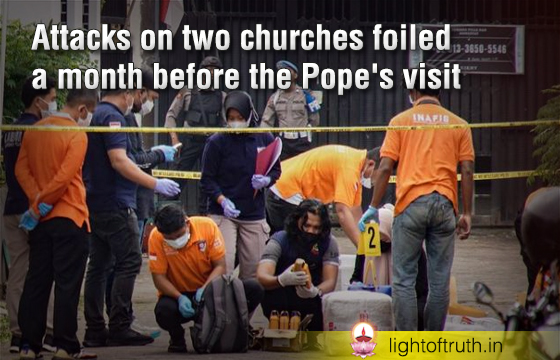
Attacks on two churches foiled a month before the Pope’s visit
A little more than a month before Pope Francis’s visit to Indonesia, two Catholic churches were in the crosshair of Islamic extremists. Densus-88 Polri, the counter-terrorism unit of Indonesia’s national police, foiled suicide attacks against the two places of worship in Malang, East Java.
This sends a warning signal ahead of the pontiff’s apostolic journey to Southeast Asia and Oceania from 2 to 13 September, raising questions about security and sectarian violence in Indonesia. Asked by local media about the affair, Brigadier General Trunoyudo Wisnu Andiko said that “two churches were targeted,” but he did not add further details about the operation and its timing. Indonesian police dismissed rumours that the terrorist operation was linked to the papal visit to the country, which has, for long time, sought to show the world a moderate version of Islam.
Speaking about the foiled attack at the heart of Catholicism in East Java, General Andiko explained that the three suspects arrested are politically linked to the extremist group called Daulah Islamiyah. At night, the Densus-88 Polri unit raided a rented house in Jeding, a village in Junrejo district, Batu regency, about 25 km from Malang. The city of more than 820,000 people is home to many Christian religious groups and congregations, as well as the famous Widya Sasana School of Philosophy and Theology, where hundreds of seminarians study.
One of the three suspected terrorists arrested is known as “Hok”, a high school student believed to be one of the would-be suicide attacker.Yesterday afternoon, he reportedly admitted under questioning that he wanted to blow himself up in one of the churches in Malang, after he was indoctrinated “for six or seven months” by Daulah Islamiyah.“The social media of the terror group seriously affected his mindset,” said Densus 88 police spokesman Senior Superintendent Aswin Siregar speaking to AsiaNews. The young man used some of the money he received from his family to buy bomb material.
The police detained Hok’s parents on board a train bound for the capital, Jakarta. However, since they found no dangerous material in their possession, the two were released. The counter-terror squad did confiscate materials – triacetone triperoxide (TATP) – to make a bomb better known as the “Mother of Satan” for the big blasts it generates. Police also found other items, including iron balls, which terrorists usually add to amplify the damage of the blast and cause more victims.
Indonesia, the world’s most populous Muslim nation, has in the past been the scene of several attacks on churches or acts of intolerance against minorities, including Christians, Ahmadi Muslims, and others.

Pope Francis offers message of hope for the Chinese people
In an interview with the Chinese Province of the Society of Jesus, Pope Francis says China is a “great people” that “must not waste its heritage”, and repeats his desire to make an apostolic journey to the country. The heart of the interview given by Pope Francis to Father Pedro Chia, director of the press office of the Chinese Province of the Society of Jesus, is “a message of hope” and a blessing for the entire Chinese people. It is an interview with a strong spiritual focus, punctuated by the Pope’s personal memories and his reflections on the future of the Church.
The Pope does not hide his desire to visit China, particularly the Shrine of Sheshan in the Songjiang District, dedicated to the Blessed Virgin Mary, Help of Christians. In the Asian country, he says, he would like to meet with local bishops and “the people of God who are so faithful”. “It is a faithful people”, he continues. “They have gone through many things and remained faithful”. To young Chinese Catholics, in particular, the Pope emphasizes the concept of hope, even though—he notes— “it seems tautological to me to give a message of hope to a people who are masters of hope” and “of patience in waiting”. And this, he highlights, “is a very beautiful thing”. The people of China are “a great people” who “must not waste their heritage”, Francis adds; on the contrary, “they must patiently carry forward their legacy”.

SIGNIS Secretary General calls for synodality and solutions journalism in AI-dominated future
The National Catholic Social Communications Convention 2024, held in Batangas, Philippines, brought together social communicators, media professionals, and Church leaders to discuss the use of artificial intelligence (AI) in their work. The keynote address by Dr. Peter Monthienvichienchai, Secretary General of SIGNIS – the World Catholic Association for Communication, underscored the need to assess if and how AI can enhance authentic human encounters in the missions of social communicators.
Dr. Monthienvichienchai posed a pivotal question: “In deciding when and how we use AI in our ministries, we must ask, will this take us closer or further away from our readers, from our parishes?” He emphasized that while AI offers speed and efficiency, for missions, the processes and taking the synodal journeys with those we are writing about and writing for are crucial. “In many cases, truly listening is not only the process, but also the solution,” he stated, echoing a previous speech by Sr. Nina Krapic from the Dicastery for Communication.
The concept of synodality, which involves walking together and truly listening to one another, was central to Dr. Monthienvichienchai’s message. He urged social communicators to ensure AI fosters community and solidarity, rather than creating distance. Dr. Monthienvichienchai also advocated for solutions journalism, which focuses on reporting potential solutions alongside problems. He suggested AI could aid in analyzing data and identifying trends, but stressed the need for keeping in mind the purpose of social communications.
He urged social communications professionals to not only tell the story of the final successful mission, but to also equally cover the challenges and failures that happened along the way.
This, he pointed out, will allow those who are not part of the mission and perhaps also those who are not Catholics, to fully appreciate what the Church is doing to support those on the fringe of society.
Workshops and panel discussions at the convention explored AI’s practical applications in social communications. Industry leaders shared best practices, noting AI’s potential to enhance storytelling and audience engagement. However, there was a consensus on the necessity of human oversight and ethical use of AI. The convention’s theme, “Authentic Influencers (AI) for an Empowered Church”, highlighted AI’s transformative potential in social communications.
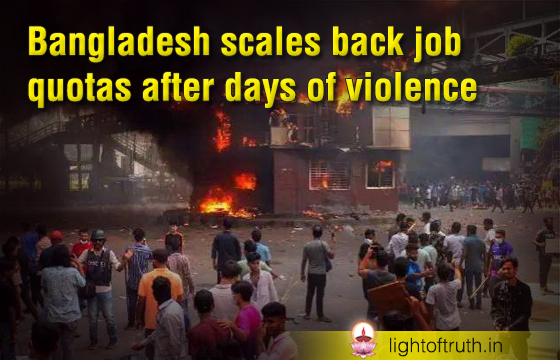
Bangladesh scales back job quotas after days of violence
Bangladesh Supreme Court reversed its earlier decision to reintroduce quota system in civil service jobs, following weeklong deadly violence that left nearly 200 killed, thousands injured, and state properties worth millions of dollars vandalized and gutted. The full bench of the Appellate Division said the government should reserve only a seven percent quota for public service jobs against the 56 percent quota policy previously. The next day, the ruling Awami League government issued a gazette to implement the court order.
The peaceful movement led by university students in the capital Dhaka and other major cities turned violent after police along with pro-government students attacked protesters last week. The attacks intensified the protests which later spread across the country. The government imposed a nationwide curfew, deployed the military, and cut off the internet for five days to restore law and order. Student activists welcomed the court verdict and urged the government to fulfill their demands including justice for the violence and killings.

Church leaders praise Pakistan amendment raising legal age for marriage of Christians
Pakistan’s National Assembly unanimously approved the raising of the minimum legal age for marriage to 18, amending a 19th-century law allowing the marriage of Christian children.
The Christian Marriage Act of 2024 amended an 1872 British rule allowing marriage at 13 for girls and 16 for boys, raising the age to 18 for both genders. The law was approved amid incidents of child marriage, kidnapping, and forced conversion in Pakistan, where about 19 million Pakistani women are victims of child ma-rriage, according to 2018 data.
The act was first introduced to the Senate last year by Sen. Kamran Michael as an update to the 1872 law and was approved on July 9 of this year after Na-veed Aamir Jeeva, a Christian from Punjab province, introduced it to Pakistan’s sovereign legisla-tive body, the National Assem-bly.
The act applies to Christians in the Islamabad Capital Terri-tory, a territory in the north-western area of the Punjab region surrounding Islamabad, the capital of Pakistan. Local Catholic lead-ers including the president of the Catholic Bishops’ Conference of Pakistan, Bishop Samson Shukar-din, and the National Commission for Justice and Peace have since hailed the act for protecting girls from forced conversions and child marriages, which is very common in Pakistan.
The new amendment may help prevent the practice of abducting young girls from the minority population of Christians and the forcing of them to convert to Islam and marry an older man. Fewer than 2% of Pakistanis are Chri-stian and Hindu, respectively. Sunni Islam is the majority reli-gion, at about 83% of the popu-lation, while Shia Islam is about 12% of the population.

Canonization process for first Korean Cardinal begins
The Vatican has approved the sainthood process for first Korean Cardinal Stephen Kim Sou-hwan, known for his love for the poor, efforts for lay participation in the Church, and support for demo-cracy.
The Vatican has allowed the launch of the sainthood process for Cardinal Stephen Kim Sou-hwan, the first Korean cardinal known for his initiatives in interfaith dia-logue, lay participation and pro-democracy stance.
In a statement, the Archdio-cese of Seoul said it has received the “no objection” letter from the Vatican’s Congregation for the Causes of Saints to start the process. Archbishop Peter Chung Soon-taick of Seoul received the letter on June 18, allowing the archdiocese to venerate Cardinal Kim as a “Servant of God.”
Kim was born in 1922 and ordained a priest in 1951. He was ordained as the bishop of Masan diocese in 1966 and the archbishop of Seoul in 1968. In 1969, Pope Paul VI made him a cardinal.
He is credited for working to implement the spirit of the Second Vatican Council. He is hailed for strengthening the Korean Church amid various trials and tribula-tions, including political turmoil under a series of military regi-mes.
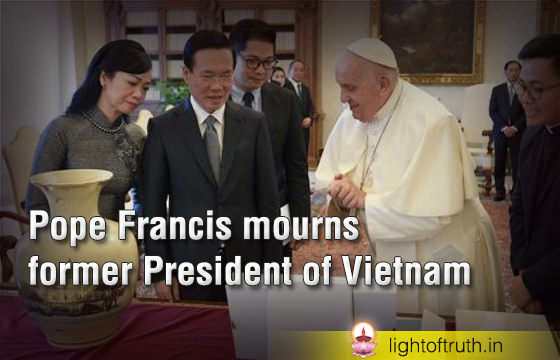
Pope Francis mourns former President of Vietnam
Pope Francis has expressed his condolences for the death of Nguyen Phú Trong, and the Ge-neral Secretary of the Communist Party of Vietnam and the country’s former President.
In a telegram sent on his behalf by the Holy See’s Secretary of State, Card. Pietro Parolin, to the country’s current President, Gene-ral Tô Lâm, the Holy Father ex-pressed his closeness to all who mourn the long-serving leader of the Asian country, who died at age 80 last week, after battling an illness.
“Having learned of the death of His Excellency Nguyen Phú Trong, General Secretary of the Communist Party and former President of the Socialist Re-public of Vietnam,” the telegram began, “His Holiness Pope Fran-cis sends condolences to all who mourn his loss, especially his fa-mily, together with the assurance of his prayers for their consolation and peace.”
In the text, the Holy Father expressed “particular apprecia-tion” for the late President’s role “in fostering and promoting the positive development of the relations between Vietnam and the Holy See.”
Pope Francis concluded his message by affirming his spiritual closeness to President Tô Lâm and to all his fellow citizens at this time of sorrow for the nation.
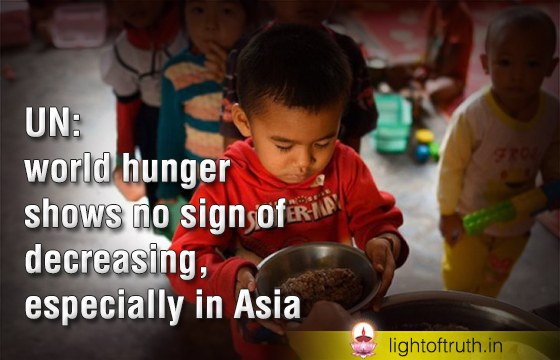
UN: world hunger shows no sign of decreasing, especially in Asia
Some 733 million people suffered from hunger last year, that is one person in 11,152 million more than in the pre-pandemic period (2019). This is the third consecutive year that the number is not decreasing, remaining “stu-bbornly unchanged,” this according to a report on The State of Food Security and Nutrition in the World (SOFI) released by the Food and Agriculture Organisation of the United Na-tions (FAO) and four other agencies. The document, presented in Rio de Janeiro, Brazil – the country that holds the rotating presidency of the G20 this year – underscores the fact that the fight against hunger has suffered a 15-year setback.
Undernourishment levels are comparable to those of 2008-09 and the Sustainable De-velopment Goal of Zero Hunger appears un-achievable by 2030, despite some improve-ments in specific areas, like breastfeeding or stunted children. Instead, if current trends continue, 582 million people will be chronically undernourished by the end of the decade, 130 million more than in the pre-COVID-19 period. At the regional level, there are wide variations. In Asia, the percentage of people afflicted by food insecurity and malnutrition has stabilised at 8.1%. But hunger is still a huge problem for the region, home to more than half of the world’s hungry people, or 385 million people.
South Asia has the highest percentage, with 13.9% undernourished (almost 281 million), while in East Asia the figure is less than 2.5% and it is just over 6% in Southeast Asia. Food insecurity (defined as the situation in which an individual is without food for one or more consecutive days) also continues at record levels in South Asia, but the worst data come from Africa, where 58% of the population is in this condition. In South Asia, 2023 saw a drop to 41.1% (compared to 24.8% in the region), equal to 833.4 million people.
Only Central Asia has seen improvements over 2021, with 2.4 million fewer people suffering from severe or moderate food in-security, even though 16.6% of the population is still affected.
Compared to the past, hunger today affects men and women almost equally, the United Nations points out, thanks mainly to improve-ments in the conditions of women around the world. Asia, on the other hand, has the highest number in absolute terms, with over 1.65 billion people who cannot afford a healthy diet.