
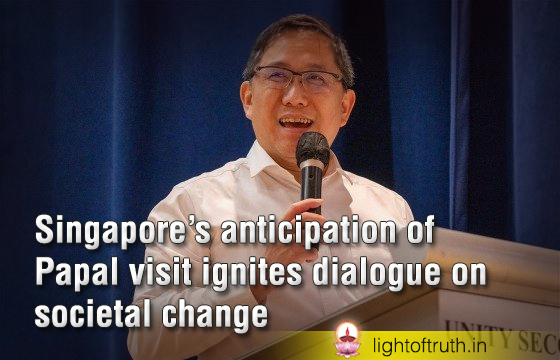
As the nation prepares for its first papal visit in nearly four decades, the dialogue about the interplay between faith and public policy is intensifying. The visit by Pope Francis on September 11–13 is eagerly anticipated, not only by the local Catholic community but also by the broader society, given its potential to influence discussions on a range of pressing issues, including social justice, family values, and education.
Catholic parliamentarian Alex Yam, known for integrating religious values into his political work, emphasized the importance of upholding the dignity of every individual. ”As Catholics, we are called to uphold the dignity of every person, no matter their circumstances in life, outlook, or sexual orientation, since we are all created in the image and likeness of God,” he said.
This message resonates as Singapore grapples with societal shifts such as rising divorce rates and declining birth rates, challenging traditional family structures.
Yam referenced the Church’s position as articulated by Pope Francis in his apostolic exhortations, Evangelii Gaudium and Amoris Laetitia. ”The sanctity of marriage and human sexuality is an area where the Holy Father has upheld traditional Catholic teaching,” he remarked. Yam stressed the need for policies that strengthen families, promote healthy relationships, and provide support for those in difficulty. He highlighted the Pope’s endorsement of an educational approach that emphasizes human values, solidarity, and respect for diversity, advocating for a holistic system that nurtures intellectual, emotional, and spiritual development. ”This allows for more diversity and creativity in our society and economy, which, in turn, builds a more resilient workforce,” he said.
On economic disparities, Yam emphasized the Church’s commitment to the preferential ‘Option for the Poor’, a principle underpinning policies aimed at fostering a more equitable society. ”
Category Archives: Asian
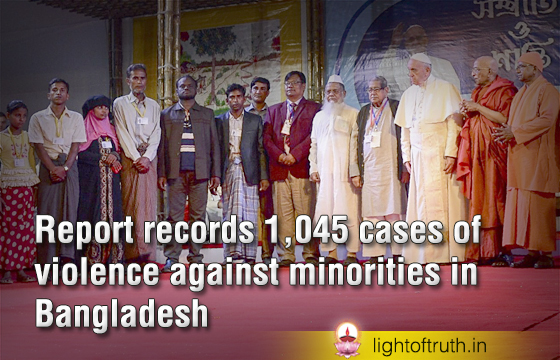
Report records 1,045 cases of violence against minorities in Bangladesh
Persecution of ethnic and religious minorities in Bangladesh continues unabated amid a lack of justice and impunity for perpetrators, a Bangladeshi minority forum says. The Muslim-majority Asian nation witnessed some 1,045 cases of human rights violations against minorities, according to the latest annual report of the Bangladesh Hindu Buddhist Christian Unity Council (BHBCUC).
The interreligious forum’s findings are based on media reports from July 2023 to June 2024. During this period, 45 members of minority communities were murdered and there were 10 attempted murders and 36 death threats.
A total of 479 people were attacked, physically abused or injured, and 11 were victims of extorsion. The violence included 25 gang rapes, while 12 people were abducted, went missing or forced to convert. Eight were arrested on false charges of blasphemy.
The report also recorded 102 attacks, acts of vandalism, looting and arson against homes and businesses belonging to minority communities. According to the BHBCUC, 70-75 per cent of the violence is centred on land grabbing, often under the influence of political parties and with the complicity of government agencies. The findings reported 47 incidents of land and homestead encroachment and 45 cases of land occupation, eviction activities, and threats, as well as 11 threats or attempts of expulsion.
The parliamentary elections in January this year saw 32 incidents of communal violence while local elections reported five incidents of this kind. At the press conference presenting the report, BHBCUC secretary general Rana Dasgupta, a Supreme Court lawyer, affirmed that these incidents are part of organised violence. He noted that the influence of extremist groups is growing in all areas, including the government administration, politics, and society, making minority communities more insecure and distrustful, forcing many of their members leave the country.
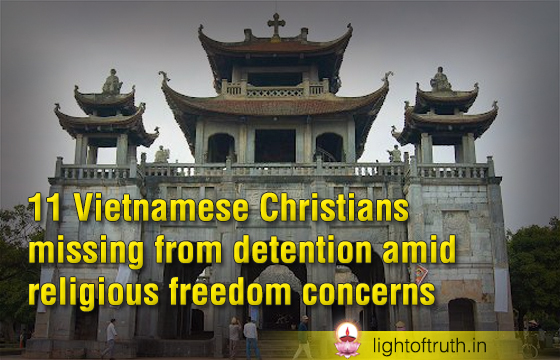
11 Vietnamese Christians missing from detention amid religious freedom concerns
Eleven Vietnamese Christians, including five Catholics, are reportedly missing from detention, according to a recent report from International Christian Concern (ICC), a U.S.-based advocacy group. The ICC report, released on July 5, claims the missing individuals were sentenced between 2011 and 2016 to a combined total of 90 years and eight months in prison for their religious activities. Their current whereabouts are unknown. According to the report, the five missing Catholics — identified by the names of Runh, A Kuin, A Tik, Run, and Dinh Kuh — were allegedly accused of “undermining national unity policy” for their participation in the Ha Mon Catholic Church, which lacks government approval. The report also mentions six Protestant detainees among the missing, including four who were allegedly accused of involvement with Degar Protestantism, a movement not recognized by Vietnam’s government.
Rep. Glenn Grothman, R-Wisconsin, commented on religious persecution in Vietnam in 2022, stating: “The United States has a role as a leader to promote and defend religious liberty on the world stage, and that starts with denouncing the Vietnamese government for its track record of religious persecution.”
The U.S. Commission on International Religious Freedom (USCIRF)has consistently raised concerns about religious freedom in Vietnam. In its 2024 report, USCIRF recommended that Vietnam be designated a “country of particular concern” for its violations of religious freedom. A 2019 USCIRF report noted that Vietnam’s Law on Belief and Religion, which went into effect in 2018, has been problematic in its implementation.

Historic Cathedral in the Philippines Designated as National Shrine
In a significant and symbolic gesture, the 17th-century Cathedral of Maasin in Southern Leyte has been declared a national shrine. This announcement, celebrated by the local Catholic community, underscores the cathedral’s importance as a centre for devotion and pilgrimage. Monsignor Oscar Cadayona, the vicar general of the Diocese of Maasin, expressed that this designation signifies a profound blessing for the faithful devotees of Nuestra Amada Señora de la Asunción (Our Beloved Lady of the Assumption). “This honour is a testament to the divine grace bestowed upon our community,” Cadayona shared with UCA News. As a national shrine, the Cathedral of Maasin, now officially known as the Diocesan Shrine of Our Lady of the Assumption, will be under the over-sight of the Catholic Bishops’ Conference of the Philippines (CBCP). This prestigious recognition marks it as the first national shrine in the Eastern Visayas region, which encompasses six provinces and a predominantly Catholic population of around four million people. The announcement was made during the 128th plenary session of the CBCP in Cagayan de Oro City, Mindanao, on July 6, 2024. The CBCP acknowledged the cathedral as a pivotal site for religious devotion and pilgrimage. “We look forward to welcoming pilgrims from across the Philippines,” Cadayona added. Mayor Nacional Mercado of Maasin City hailed the declaration, noting that it transforms Maasin into the pilgrimage capital of Eastern Visayas. “Our city is immensely honoured and blessed by this recognition,” Mercado stated on July 7.

Holy See encourages Catholics in Philippines to ‘listen to their pastors’ on divorce bill
Vatican Secretary for Relations with States and International Organizations Archbishop Paul Gallagher said the Holy See would encourage Catholics, particularly political leaders, in the Philippines to “listen to their pastors” regarding the latest divorce bill, which passed the country’s lower house of government in May.
At a press briefing held, during his visit to the southeast Asian nation from July 1-5, Gallagher addressed the topic of the Absolute Divorce bill, which passed the Philippines’ House of Representatives on May 22 with 131 votes in favour of the bill. One hundred and nine members of the house voted against the bill and another 20 declined to vote.
“And at the pastoral level, the question is within the competence of the bishops’ conference of the Philippines and the individual bishops,” he said. “I would presume, because it is an important issue, that they will be discussing it. So we [the Holy See] will look forward to hearing from the bishops on this in a matter which is principally of their concern.”
Since May, Filipino bishops and priests have been active in addressing the issues seen as grounds for “absolute divorce” including violence, drug addiction, and alcoholism.
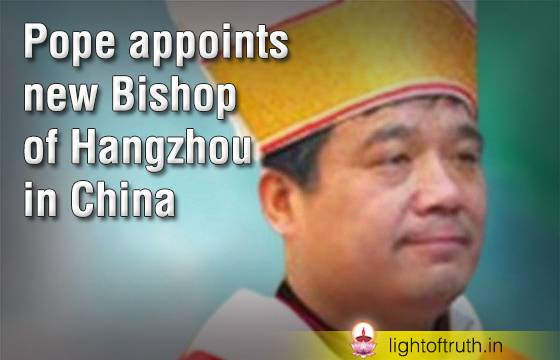
Pope appoints new Bishop of Hangzhou in China
Giuseppe Yang Yongqiang is the new bishop of Hangzhou, the capital of Zhejiang province in China. “As part of the dialogue concerning the implementation of the Provisional Agreement between the Holy See and the People’s Republic of China.” A Statement released by the Holy See Press Office last Saturday, June 22, “On June 12, 2024, the Holy Father appointed Giuseppe Yang Yongqiang as bishop of Hangzhou (Zhejiang province, China), transferring him from the See of Zhoucun (Shandong province, China).” The solemn Eucharistic liturgy for the bishop’s installation in his new episcopal seat will be celebrated in Hangzhou Cathedral on Thursday, June 27. Giuseppe Yang Yongqiang was born on April 11, 1970, in Boxing (Shandong), into a Catholic family. In 1987, he entered the Holy Spirit Seminary in Jinan. He conducted his philosophical and theological studies at that seminary and at Sheshan Seminary in Shanghai.
On June 15, 1995, he was ordained a priest. After serving as a parish priest, he was sent to further his education at the National Seminary in Beijing. Subsequen-tly, he served as a lecturer at the Holy Spirit Semi-nary. Appointed coadjutor bishop of Zhoucun, he was consecrated on November 15, 2010, and on February 8, 2013, he succeeded Bishop Ma Xuesheng in leading that diocese. On June 12, 2024, Pope Francis appointed him bishop of Hangzhou.
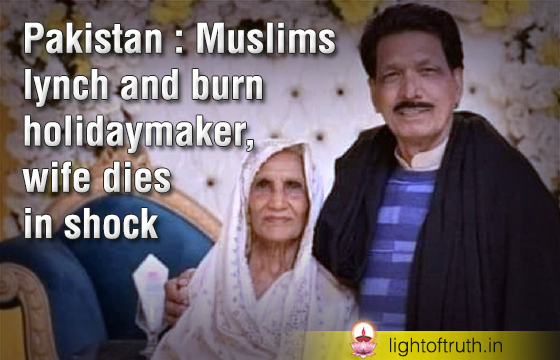
Pakistan: Muslims lynch and burn holidaymaker, wife dies in shock
A new tragedy linked to blasphemy has unfolded in Pakistan, where cases of lynching mobs acting with impunity in the name of religion are becoming more and more frequent amid the inaction of the authorities and the silence of international community. The latest incident occurred on June 22 in the Swat Valley. The victim, Mohammad Ismail, was on vacation when he was attacked and torched alive for burning pages of the Qur’ân. Such a story clearly illustrates how Pakistan state is incapable of guaranteeing safety and security to its citizens. Instead, powerful groups rule, their violent ideology contributing to the list of innocent victims, people like Mashal Khan, Shama and Shahzad, Priyantha Kumara, Nazir Masih, and now Mohammad Ismail.
Another victim is Allah Rakhi, the widow of 72-year-old Christian Nazir Masih, who died from the effects of the traumatic experience of seeing her husband killed. Since 1987 when blasphemy became an offence, dozens of people have been reportedly lynched by mobs, based on specious charges used to settle personal scores, exact revenge, justify extrajudicial killings, and target religious minorities, like Christians and Ahmadis. In this latest case, police had arrested Mohammad Ismail and charged him with blasphemy for burning Arabic-language papers. But an angry mob came to the Madyan Swat police station demanding the officers hand over the man to be executed on the spot. When police refused, a group stormed the station. After injuring some agents and vandalising the premises, they took the victim from his cell to lynch, and burnt him alive while shouting extremist slogans.
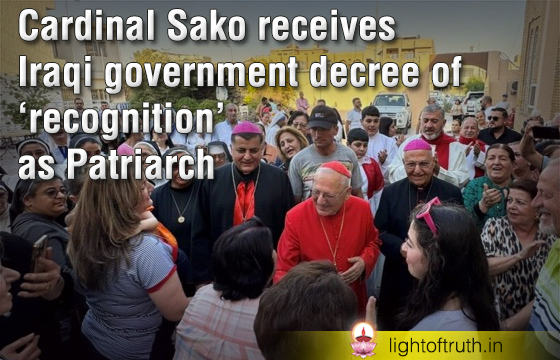
Cardinal Sako receives Iraqi government decree of ‘recognition’ as Patriarch
Iraq’s Prime Minister Mohammed Shia’ al-Sudani issued a decree “to appoint Patriarch Louis Raphaël Sako as Patriarch of the Chaldeans in Iraq and in the world”, restoring his “institutional recognition” rescinded last July. Cardinal Sako had refused to return to Baghdad for almost a year since President Abdul Latif Rashid revoked Decree 147, which recognised the cardinal in legislative terms as head of the Chaldean Catholic Church with responsibility for its endowments.
He moved his residence to Erbil, in Iraq’s northern Kurdish region, returning to the capital briefly in April on the prime minister’s invitation but leaving disappointed that the decree was not restored. A statement from the patriarchate offered “thanks and gratitude to the Christian and Islamic Shiite and Sunni religious authorities…who supported [the patriarch] in the crisis of with-drawing the decree”, as well as international actors including the US State Department.
In a homily during Mass at Baghdad’s Mar Gorgis Church on 12 June to mark his return to the city, Sako said that Chaldean Christians “are one of the colours of the beautiful fabric of Iraq that must be preserved” and defended their historic place in the region.
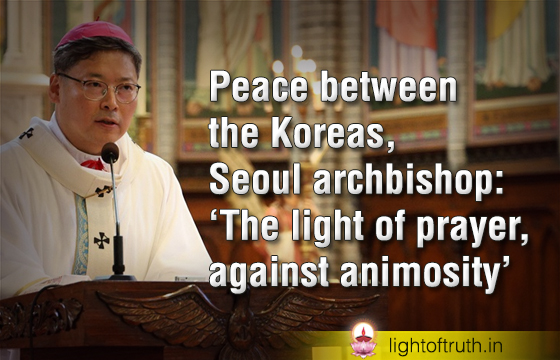
Peace between the Koreas, Seoul abp: ‘The light of prayer, against animosity’
“Even though the situation between the two Koreas may appear bleak we Christians can-not remain in despair. On the contrary, it is precisely in this age of growing animosity that our prayer can illuminate our time with a greater light.” This is the message the Archbishop of Seoul Peter Chung Soon-taick issued on the occasion of Day of Prayer for Reconciliation and Unity of the Korean people, coinciding with the 73rd anniversary of the be-ginning of the war that led to the painful wound of separation bet-ween Seoul and Pyongyang.
The anniversary falls this year at a time particularly marked by tension. Seoul woke up to news of the launch of 350 more balloons carrying waste from the North to South Korea overnight, in what was the fifth such launch since late last month. About 100 balloons, carrying mostly waste paper and rubbish, landed in the capital and the northern part of Gyeonggi province.
For his part, President Yoon Suk Yeol paid a visit to the US aircraft carrier Theodore Roosevelt (CVN-71), which called at the naval port in the southeastern city of Busan, ahead of joint exercises between South Korea, the US and Japan that will kick off tomorrow and are aimed at countering the growing threats from North Korea.
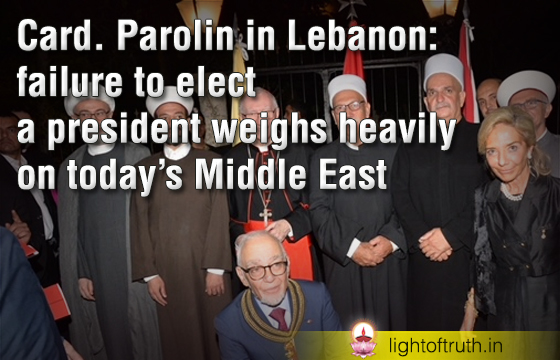
Card. Parolin in Lebanon: failure to elect a president weighs heavily on today’s Middle East
At the invitation of Marwan Sehnaoui, President of the Lebanese Association of the Sovereign Order of Malta, the Secretary of State of the Holy See, Cardinal Pietro Parolin, was in Lebanon on a five-day visit (23-27 June) to see the Order’s humanitarian activities, as well as meet with the country’s authorities, the local Church, and representatives of Islamic religious authorities.
Card. Parolin celebrated Mass on the Solemnity of Saint John the Baptist, Patron Saint of the Order of Malta, in the Church of St Joseph of the Jesuit Fathers, in the presence of the Commander-in-Chief of Lebanon’s Armed Forces, General Joseph Aoun. This provided him with an opportunity to relay the Holy See’s concerns about the detrimental delay in electing a president.
Lebanon has been without a head of state since November 2022, due to a power game by the Shia community, led by Hezbollah, which is seeking to impose its candidate, and the lack of consensus within the Maronite community, from whose ranks the president must be picked in accordance with the constitution.
In his homily on Saint John the Baptist’s Day, the Holy See’s secretary of state echoed the Vatican’s concerns in the matter. “The Church in Lebanon must also bear witness, according to her high mission to keep alive and effective the message of ‘living together’,” he said. “In this regard, allow me to stress that we have felt a great void for months. A Christian voice is missing, one that would undoubtedly make the difference; the voice of the President of Lebanon is missing. This absence weighs heavily at this very serious time for the Middle East.”