Category: Asian

  • Nepal criminalizes religious conversion under new law

    Nepal criminalizes religious conversion under new law

    Religious communities in Hindu-majority Nepal need to press for changes to a new law impacting on religious freedom, which is inconsistent with the nation’s international commit-ments. While there has been ongoing discussion of some specific aspects of the law, many Christian leaders have yet to grasp its wider implications.

    On Aug. 9, amendments were made to the country’s 164-year-old general criminal code, known as the Muluki Ain. The revised criminal code imposes sanctions for several offences not included in the old law.

    Aspects of the new law can be considered as reforms.

    However, it also incorporates ‘anti-conversion clauses’ which effectively narrow religious freedom, notably for minorities.

    One government repre-sentative previously main-tained that the criminal code amendments would protect freedom of religious belief, but within certain limits.

    A critic of this justi-fication compared it to allowing a bird to fly freely, but only within a narrow cage.

    In late 2015, Kamal Thapa, then deputy prime minister, maintained that changes to be introduced to the criminal code would ensure full religious freedom.
  • Sri Lankan bishops condemn govt’s decision to legalize abortion

    Sri Lankan bishops condemn govt’s decision to legalize abortion

    Bishops in Sri Lanka have condemned a government move to allow abortion in some circumstances. Cabinet has approved presentation of a bill to parliament to legalize abortion when a pregnancy is due to rape or if a fetus is diagnosed with a “lethal” congenital malformation. The Sri Lankan bishops’ conference stressed that the church believes life begins at conception. A person could not safeguard their own rights at the expense of violating somebody else’s rights, said Bishop Valence Mendis of Chilaw, secretary general of the bishops’ conference.

    Bishop Mendis, in a joint statement with Bishop J. Winston S.Fernando, president of the bishops’ conference, defended the “right to life” of an unborn child. An estimated 600 illegal abortions take place in Sri Lanka every day, including many in factory zones where large numbers of women work.

  • Christian student in Pakistan killed by Muslim classmates

    Christian student in Pakistan killed by Muslim classmates

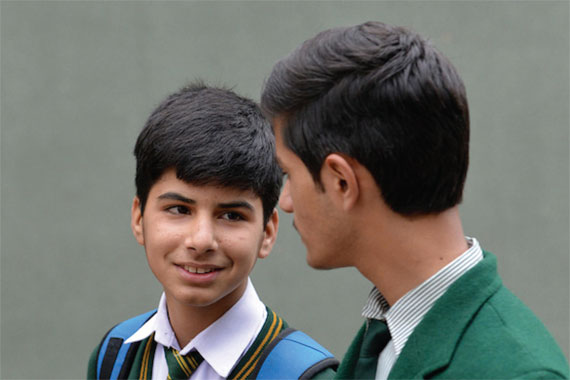
    Classmates beat a Christian student in Pakistan to death three days after starting his new school because he drank water from a cup meant for Muslim students, his family says. Sheron Masih was a Grade 9 student at a govern-ment-run school in Burewala, in Punjab province.

    He was killed because he was a Christian, the student’s father, Elyab Masih, told ucanews.com by phone. “On his first day at his school, a teacher called my son a chuhra and kicked him out of the class for not wearing school uniform,” he said. “My son was so terrified, he skipped school the next day.”

    Chuhra is a derogatory term aimed at Christian sanitary workers.

    “I bought him a new uniform after which he agreed to return to school. Later in the day I was told that my son was dead after being assaulted by his class-mates,” he said.

  • Military claims priest still hostage in devastated Marawi

    Military claims priest still hostage in devastated Marawi

    The vicar-general of the Prelature of Marawi and several other Catholic hostages taken by militants inspired by the so-called Islamic State (IS) are still alive after more than three months of fighting in the southern Philippine City.

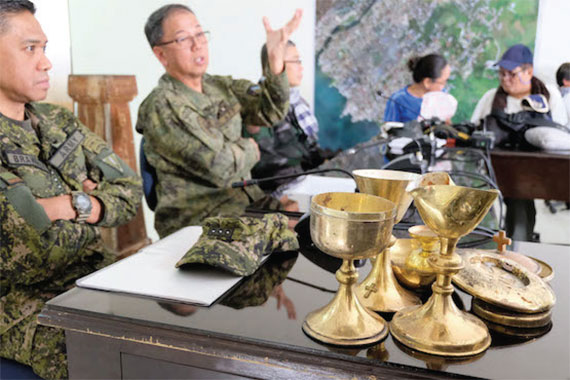
    At a press conference announcing the retaking of St Mary’s Cathedral, Major General Carlito Galvez, commander of government forces in Marawi, denied social media reports that terrorist gunmen may have spirited Father Teresito Soganub out of the city. The military presented gold-plated religious items including chalices and crucifix recovered by troops from the cathedral, which rebels abandoned on Aug. 25. Some of the items were damaged when the terrorists stormed the church on May 23, the first day of the conflict.

    Marilyn Suganob-Ginni-van, a younger sister of the priest, said the family was glad to hear the information. “We are continuously praying for his safety and the other hostages. May God spare them [from death],” she told ucanews.com in a text message. “In two or three weeks’ time,” Galvez said the military expects the city to return to normal, as the battle zone has narrowed to just “400 to 600 square meters.” Captain Jo-ann Petinglay, spokesperson of Joint Task Force Marawi, said the cathedral needs repairing after many bullets struck the building. “It’s not totally wrecked. There was damage to the walls [from bullets],” she added. Earlier, IS-linked websites released a video showing fighters toppling over statues and desecrating icons before trying to set fire to the cathedral.

  • Churches in Pakistan: solidarity with Rohingya Muslims in Myanmar and immediate truce

    Strong condemnation of the attacks suffered by the people of Rohingya in Myanmar, and full solidarity and closeness to the Muslim population: this is a de-claration signed by the President of the Catholic Bishops’ Confer-ence of Pakistan, Archbishop Joseph Coutts, and by the Presi-dent of the National Commission “Justice and Peace” (NCJP), Bishop Joseph Arshad.

  • Nepal to criminalise evangelisation and religious conversion

    Nepal to criminalise evangelisation and religious conversion

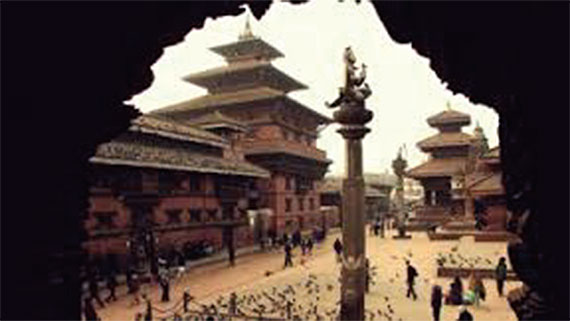
    The Nepalese president is expected to approve a bill that will outlaw any attempt to convert someone to a different faith, alongside the “hurting of religious sentiment.”

    The country’s parliament passed the law, which will effectively ban evangelisation, on 8th August as fears grow of a crackdown on religious minorities, especially the country’s small Catholic population. Anyone convicted under the new law, including foreign visitors, could face up to 5 years in prison for seeking to convert a person or “undermine the religion, faith or belief that any caste, ethnic group or community has been observing since sanatan [eternal] times.

    Anyone who “hurts religious sentiment” also faces up to two years in prison and 2,000 rupee fine. Although the bill does not mention any religious group specifically, it is similar to Pakistan’s blasphemy law, which is frequently abused to harass minorities, particularly Christians. Nepal is over 80% Hindu, with Christians making up barely one per cent of the population.

    International free speech group the Alliance for Defending Freedom (ADF) says that in 2016 eight Christians were arrested in Nepal after sharing a comic book on Jesus with children. Since the overthrow of the monarchy in 2008, Nepal’s republican regime has become increasingly authoritarian. The country’s government has been dominated by Moaists and Leninists who have struggled to establish a stable government.

    A new constitution, finally approved in 2015, already forbids any attempt to convert a person from one religion to another, but no law to that effect has been formally enacted until now.
    Tehmina Arora, legal counsel and director of ADF India, said: “International law and the human rights treaties the country has signed protect religious minorities. They explicitly allow conversion, missionary work, and public worship. Nepal risks returning to a totalitarian society in which individual rights are being severely curbed.”

  • Christianity grows in North Korea despite persecution 

    Christianity grows in North Korea despite persecution 

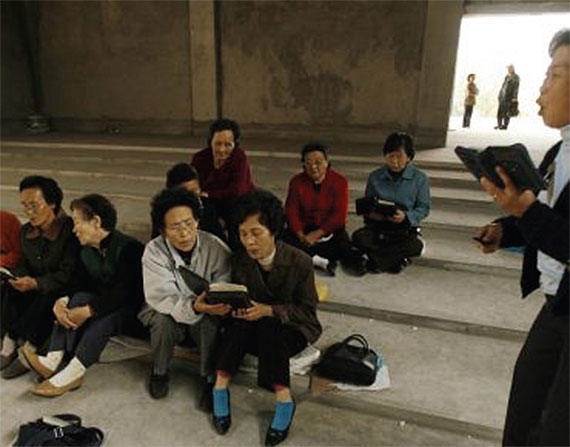
    North Korea’s underground Christian community is thriving despite followers of Christ suffering horrific torture and brutal deaths at the hands of the communist government, according to Fox News.

    According to Open Doors, a Christian persecution watchdog site, North Korea has ranked No. 1 as the deadliest place for Christians for the last 16 years. Yet, North Korea still has an estimated Christian population of around 9 million people, or 36 percent of North Korea’s total population.

    The Korea Risk Group told Fox News that North Korea’s Constitution maintains a non-discriminatory policy concerning the practice of religion, but this is just a facade to please visiting foreigners. Foreign diplomats and tourists are wheeled past state-run churches and mosques for various faiths. Each of these churches has the appropriately dressed clergy worshiping at the appropriate alters with congregations of people passing around collection plates.

    According to the Korea Risk Group, this is a show performed by hand-picked state workers. The reality is that Christianity is seen as dangerous to the state, according to Fox News. Those caught practicing it face the harshest penalties.

  • Catholic priest averts bloodbath in Mindanao convent

    Catholic priest averts bloodbath in Mindanao convent

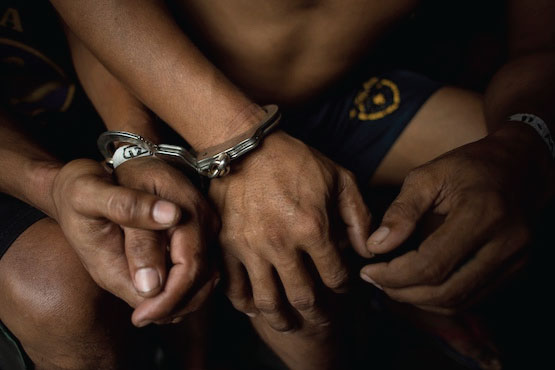
    A Catholic priest convinced an armed and allegedly “drug-crazed” former choir member to surrender peacefully after he barged into a convent in the southern Philippine island of Mindanao on Ag.23, police said.

    Father Roniedon Val-moria, parish priest of San Isidro Labrador parish in Naawan town in Misamis Oriental province, emerg-ed safe after almost four hours of negotiations between police and the suspect, Lavernton Rogedas. The priest said Rogedas used to sing in the parish choir.

    “He barged into the convent with a gun. I was not taken as hostage,” the priest said in a radio interview. “He was just there to seek safety from the policemen who were running after him.”
    Father Valmoria said he pray-ed for the suspect and convinced him to surrender peacefully.

    Senior Supt. Rolando Destura, Misamis Oriental police director, said Rogedas was carrying a .45 caliber handgun and was high on drugs.

    Rogedas had gone to the Naawan police station to clear a relative who was implicated in illegal drugs. Police said they noticed a gun tucked into his waistband and asked for it.

    Rogedas resisted, briefly brandished the gun and then ran to the convent, which is near the police station, Destura said.

  • Spiritual poverty and fatalism a drawback for Nepal

    Spiritual poverty and fatalism a drawback for Nepal

    Fatalism, including acce-ptance of harmful traditions, exacerbates poverty in Nepal.

    However, a lack of spiritual awareness and fatalism are also impedi-ments to progress among educated, well-to-do families.

    Karma, the idea that a person’s fate results from their deeds in a past life, can constitute an escapist mentality.

    Fatalism, that can be reflected in traditional plays and folk songs dealing with day-to-day struggles and sorrows, needs to also be subject to intellectual reflection. Nepalese society is still trapped by cultural malpractices and superstitions.

    There has been a huge gap between Nepal and developed nations in terms of social development. Notwithstanding the sharing of some modern technologies, including social media, Nepal’s lack of sequential development has widened a generation gap.

    For example, children in the 1990s still played with clay and stone. How-ever, the newest genera-tion jumped to smart-phones. More positive aspects of Nepalese socio-cultural and religious values have been degraded and confused. Spiri-tuality and social education have been usurped by militancy and street vandalism in support of political demands.

  • Pakistani Christian dies in jail, authorities accused of neglect

    Pakistani Christian dies in jail, authorities accused of neglect

    Leading Catholic human rights advocates in Pakistan are calling for authorities to take action after a Christian prisoner died in jail due to a lack of proper medical attention.

    Dominican Father James Channan, the Director of Peace Centre Lahore, told Crux the death of Indrias Masih was the “result of negligence” by the authorities in the jail.

    Masih was one of 42 people arrested as suspects in the lynching of two Muslims in the aftermath of a March 15, 2015, terrorist bombing of Christ Church, a Catholic church in Lahore’s predominantly Christian Youhanabad neighbourhood.

    The two Muslims were suspected by a mob of having been involved in the attack, a charge their families and the authorities deny.

    Christian leaders in the city say Masih himself was innocent of being involved in the revenge attack.

    He died on August 13 of gastrointestinal tuberculosis. Channan called his death “sad and shocking.”

    The National Commission for Justice and Peace, an office of the Pakistani bishops’ conference, said the family and community are demanding the government treat this incident as a murder case.
    “His untimely death was a result of negligence on the part of jail authorities, poor prison conditions, consumption of unclean water and food. His deteriorating health was continuously neglected by the jail authorities. According to the family, Indrias was a healthy person and never had any major ailments before his arrest,” the NCJP said in a statement.

    Bishop Joseph Arshad, the Chairperson of the NCJP, said police sensitivity should be made a priority, adding the police are often inconsiderate towards the sick and needy.