Category Archives: Asian

Will a visit from Pope Francis compel Aung San Suu Kyi to act?

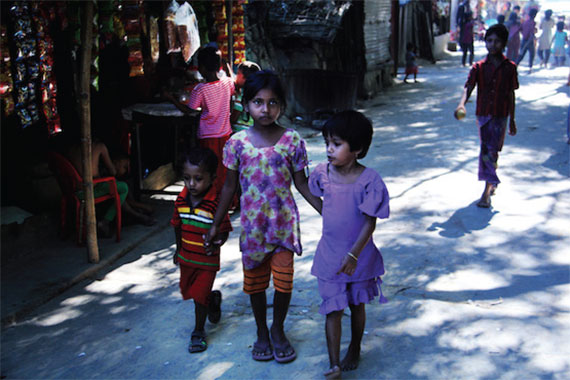
For the past three weeks, the world has watched aghast as Myanmar’s military has carried out the latest, most deadly phase of a five-year operation against the Muslim Rohingya people who number about 1.1-1.3 million.

It has been an outrageously outsized reaction by Myanmar’s notorious military, known as the Tatmadaw, to a small attack by what is, thus far, a threadbare insurgency that has taken clearer shape as the Arakan Rohingya Salvation Army. It’s o15f little surprise that the Rohingya, who have suffered waves of persecution and terrorisation by Myanmar’s military, and Burma’s before it, for countless decades, have finally decided to fight back. That is now being used as an excuse for what the UN High Commissioner for Refugees has called a textbook case of ethnic cleansing. In forcing roughly half the Rohingya population from their homes, it’s hard to call it anything else.

At the same time, the world has been bewildered, then dismayed, as arguably the most internationally (and domestically) beloved Nobel Peace Prize Laureate since Nelson Mandela, Myanmar’s state counsellor, foreign minister and de facto leader Aung San Suu Kyi has remained all but silent. When she has opened her mouth, it has only been to put her foot in it by introducing red herrings such as the alleged complicity of NGOs in the insurgency. She remains unable, for largely political reasons, to utter the word Rohingya or even to make comments of any concern about the fate of the latest victims of one of the world’s most murderous militaries.

Chinese authorities ban children going to churches

Communist authorities are continuing to tighten their grip on practising Christians with at least four regional governments across China issuing notices that restrict children from joining Christian groups and attending religious activities.

The ban includes turning children away from churches even if they attend with their parents and teachers. Additionally, the ban includes promises that officials will launch investigations into both government approved churches and underground congregations who operate outside the tightly controlled official Beijing-run Catholic and Protestant churches.

The latest move comes as part of a concerted crackdown on religion that began with a three-year cross removal campaign in the Christian stronghold province of Zhejiang. The state’s move against religions became official last year when Chinese leader Xi Jinping instituted formal plans to “sinicize” religion with the intention of bringing more religious followers under the control of the ruling Communist Party, which itself is officially atheist and forbids members from practising.

“An emergency notice from the higher authorities strictly forbids all secondary and primary school teachers, students and toddlers to join Catholic or Protestant churches,” the school district of Yonglin in Wenzhou, eastern Zhejiang, said in a note to all primary schools, adult educational institutes and kindergartens.

Maria, a Catholic laywoman in the district who identified herself by her baptismal name, told ucanews.com that about her daughter’s teacher sent an audio and written message to the parents’ chat group “asking us not to bring children to the church.”

The teacher indicated the education bureau issued that instruction while adding that an inspection team would launch open and undercover investigations to find out how many children went to the church.

On Aug. 12, the local street committee office also sent officials to churches to persuade parents not to take their children there. However, Maria said, there were still many children participating in the procession for the feast of the Assumption of Mary, one of the four most important feasts for the China Church, on Aug. 15.

In another incident,  a church-run summer camp that two Protestant classmates of her niece attended, was eventually disbanded and all participants sent home, Maria said.

“The move by the authorities is unnecessary. Even if they are not allowed to go to church, we parents can pass on our religious belief to our kids at home,” Maria said while admitting that recent events had her concerned.

Nepal criminalizes religious conversion under new law

Religious communities in Hindu-majority Nepal need to press for changes to a new law impacting on religious freedom, which is inconsistent with the nation’s international commit-ments. While there has been ongoing discussion of some specific aspects of the law, many Christian leaders have yet to grasp its wider implications.

On Aug. 9, amendments were made to the country’s 164-year-old general criminal code, known as the Muluki Ain. The revised criminal code imposes sanctions for several offences not included in the old law.

Aspects of the new law can be considered as reforms.

However, it also incorporates ‘anti-conversion clauses’ which effectively narrow religious freedom, notably for minorities.

One government repre-sentative previously main-tained that the criminal code amendments would protect freedom of religious belief, but within certain limits.

A critic of this justi-fication compared it to allowing a bird to fly freely, but only within a narrow cage.

In late 2015, Kamal Thapa, then deputy prime minister, maintained that changes to be introduced to the criminal code would ensure full religious freedom.

Sri Lankan bishops condemn govt’s decision to legalize abortion

Bishops in Sri Lanka have condemned a government move to allow abortion in some circumstances. Cabinet has approved presentation of a bill to parliament to legalize abortion when a pregnancy is due to rape or if a fetus is diagnosed with a “lethal” congenital malformation. The Sri Lankan bishops’ conference stressed that the church believes life begins at conception. A person could not safeguard their own rights at the expense of violating somebody else’s rights, said Bishop Valence Mendis of Chilaw, secretary general of the bishops’ conference.

Bishop Mendis, in a joint statement with Bishop J. Winston S.Fernando, president of the bishops’ conference, defended the “right to life” of an unborn child. An estimated 600 illegal abortions take place in Sri Lanka every day, including many in factory zones where large numbers of women work.

Christian student in Pakistan killed by Muslim classmates

Classmates beat a Christian student in Pakistan to death three days after starting his new school because he drank water from a cup meant for Muslim students, his family says. Sheron Masih was a Grade 9 student at a govern-ment-run school in Burewala, in Punjab province.

He was killed because he was a Christian, the student’s father, Elyab Masih, told ucanews.com by phone. “On his first day at his school, a teacher called my son a chuhra and kicked him out of the class for not wearing school uniform,” he said. “My son was so terrified, he skipped school the next day.”

Chuhra is a derogatory term aimed at Christian sanitary workers.

“I bought him a new uniform after which he agreed to return to school. Later in the day I was told that my son was dead after being assaulted by his class-mates,” he said.

Military claims priest still hostage in devastated Marawi

The vicar-general of the Prelature of Marawi and several other Catholic hostages taken by militants inspired by the so-called Islamic State (IS) are still alive after more than three months of fighting in the southern Philippine City.

At a press conference announcing the retaking of St Mary’s Cathedral, Major General Carlito Galvez, commander of government forces in Marawi, denied social media reports that terrorist gunmen may have spirited Father Teresito Soganub out of the city. The military presented gold-plated religious items including chalices and crucifix recovered by troops from the cathedral, which rebels abandoned on Aug. 25. Some of the items were damaged when the terrorists stormed the church on May 23, the first day of the conflict.

Marilyn Suganob-Ginni-van, a younger sister of the priest, said the family was glad to hear the information. “We are continuously praying for his safety and the other hostages. May God spare them [from death],” she told ucanews.com in a text message. “In two or three weeks’ time,” Galvez said the military expects the city to return to normal, as the battle zone has narrowed to just “400 to 600 square meters.” Captain Jo-ann Petinglay, spokesperson of Joint Task Force Marawi, said the cathedral needs repairing after many bullets struck the building. “It’s not totally wrecked. There was damage to the walls [from bullets],” she added. Earlier, IS-linked websites released a video showing fighters toppling over statues and desecrating icons before trying to set fire to the cathedral.

Churches in Pakistan: solidarity with Rohingya Muslims in Myanmar and immediate truce

Strong condemnation of the attacks suffered by the people of Rohingya in Myanmar, and full solidarity and closeness to the Muslim population: this is a de-claration signed by the President of the Catholic Bishops’ Confer-ence of Pakistan, Archbishop Joseph Coutts, and by the Presi-dent of the National Commission “Justice and Peace” (NCJP), Bishop Joseph Arshad.

Nepal to criminalise evangelisation and religious conversion

The Nepalese president is expected to approve a bill that will outlaw any attempt to convert someone to a different faith, alongside the “hurting of religious sentiment.”

The country’s parliament passed the law, which will effectively ban evangelisation, on 8th August as fears grow of a crackdown on religious minorities, especially the country’s small Catholic population. Anyone convicted under the new law, including foreign visitors, could face up to 5 years in prison for seeking to convert a person or “undermine the religion, faith or belief that any caste, ethnic group or community has been observing since sanatan [eternal] times.

Anyone who “hurts religious sentiment” also faces up to two years in prison and 2,000 rupee fine. Although the bill does not mention any religious group specifically, it is similar to Pakistan’s blasphemy law, which is frequently abused to harass minorities, particularly Christians. Nepal is over 80% Hindu, with Christians making up barely one per cent of the population.

International free speech group the Alliance for Defending Freedom (ADF) says that in 2016 eight Christians were arrested in Nepal after sharing a comic book on Jesus with children. Since the overthrow of the monarchy in 2008, Nepal’s republican regime has become increasingly authoritarian. The country’s government has been dominated by Moaists and Leninists who have struggled to establish a stable government.

A new constitution, finally approved in 2015, already forbids any attempt to convert a person from one religion to another, but no law to that effect has been formally enacted until now.
Tehmina Arora, legal counsel and director of ADF India, said: “International law and the human rights treaties the country has signed protect religious minorities. They explicitly allow conversion, missionary work, and public worship. Nepal risks returning to a totalitarian society in which individual rights are being severely curbed.”

Christianity grows in North Korea despite persecution 

North Korea’s underground Christian community is thriving despite followers of Christ suffering horrific torture and brutal deaths at the hands of the communist government, according to Fox News.

According to Open Doors, a Christian persecution watchdog site, North Korea has ranked No. 1 as the deadliest place for Christians for the last 16 years. Yet, North Korea still has an estimated Christian population of around 9 million people, or 36 percent of North Korea’s total population.

The Korea Risk Group told Fox News that North Korea’s Constitution maintains a non-discriminatory policy concerning the practice of religion, but this is just a facade to please visiting foreigners. Foreign diplomats and tourists are wheeled past state-run churches and mosques for various faiths. Each of these churches has the appropriately dressed clergy worshiping at the appropriate alters with congregations of people passing around collection plates.

According to the Korea Risk Group, this is a show performed by hand-picked state workers. The reality is that Christianity is seen as dangerous to the state, according to Fox News. Those caught practicing it face the harshest penalties.

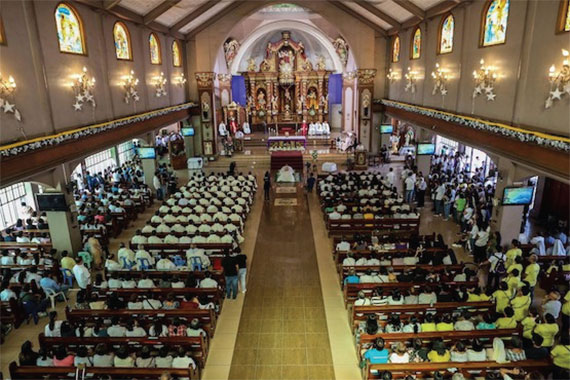
Catholic priest averts bloodbath in Mindanao convent

A Catholic priest convinced an armed and allegedly “drug-crazed” former choir member to surrender peacefully after he barged into a convent in the southern Philippine island of Mindanao on Ag.23, police said.

Father Roniedon Val-moria, parish priest of San Isidro Labrador parish in Naawan town in Misamis Oriental province, emerg-ed safe after almost four hours of negotiations between police and the suspect, Lavernton Rogedas. The priest said Rogedas used to sing in the parish choir.

“He barged into the convent with a gun. I was not taken as hostage,” the priest said in a radio interview. “He was just there to seek safety from the policemen who were running after him.”
Father Valmoria said he pray-ed for the suspect and convinced him to surrender peacefully.

Senior Supt. Rolando Destura, Misamis Oriental police director, said Rogedas was carrying a .45 caliber handgun and was high on drugs.

Rogedas had gone to the Naawan police station to clear a relative who was implicated in illegal drugs. Police said they noticed a gun tucked into his waistband and asked for it.

Rogedas resisted, briefly brandished the gun and then ran to the convent, which is near the police station, Destura said.