Category Archives: Asian

Before pope’s visit, Suu Kyi govt holds prayers for peace

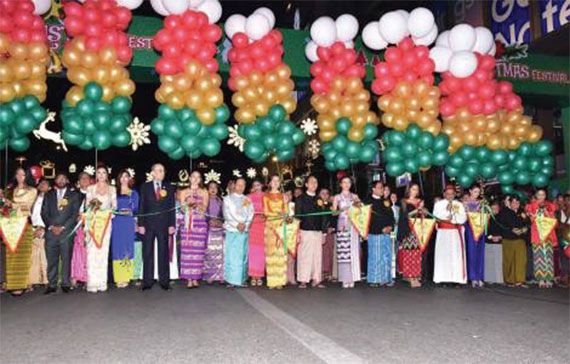
Pope Francis’ visit to Myanmar and neighbouring Bangladesh has coaxed an overdue show of compassion from Aung San Suu Kyi for her Muslim Rohingya countrymen. In tandem with confirmation of the typically packed papal itinerary that begins in Yangon Nov. 27 and winds up in Dhaka six days later, Suu Kyi’s National League for Democracy (NLD) party is launching an unprecedented interfaith peace prayer rally across the country.

In a welcome show of leadership by the ruling NLD party, the event, certain to cause domestic controversy amid the party’s Buddhist base, includes prayers for Rakhine, the state where the ethnic Rohingya Muslims have suffered unspeakable sometimes-deadly mistreatment at the hands of Myanmar’s military.

Myanmar’s first Cardinal Charles Bo told ucanews.com that the Pope’s motto is love and peace: Love among the ethnic groups, among the religious people and the majority Buddhist and other religions. And peace means to end decades-long civil wars, which are still raging in the country’s north.

Manila Archdiocese’s anti-drug program gets boost from pope

A community-based drug rehabi-litation program run by Manila Arch-diocese has received a boost from Pope Francis a year after it’s launch. Card. Luis Antonio Tagle of Manila said the pontiff was excited about the program, called Sanlakbay (One Journey), which has so far helped more than 100 drug dependents. The Manila prelate told the Pope about the community initia-tive during a recent audience.

Vatican requires Indonesian bishop to return ‘stolen money’

The Holy See has asked Indonesian Bishop Hubertus Leteng, who recently resigned over allegations of theft and having an affair, to return the church funds he is accused of stealing. The request over the missing money was not mentioned in an Oct. 11 announcement by Vatican of the resignation.

However, according to Father Robert Pelita, who participated in a meeting between officials of the Vatican, Indonesian Bishops’ Conference and Ruteng Diocese, the request was made directly to Bishop Leteng.

“The Vatican representative said that in principle the money must be returned,” Father Pelita told ucanews.com on October 13, although the Vatican did not say when the bishop should pay it back. Pope Francis approved the resignation of the 58-year-old bishop following the investigation into allegations that he secretly borrowed US$94,000 from the Indonesian bishops’ conference and US$30,000 from the diocese, without providing an accountability report.

However, a diocesan official, who spoke on condition of anonymity, said that at a recent meeting Bishop Leteng promised to return all of the funds.

Since the case went public, he has repaid 75 million rupiah (US$5,555) of the money he took from the diocese, the source said.

Bishop Leteng has said he will gradually repay money owed to the Indonesian Bishops’ Conference. Officials at the Indonesia Bishops Conference refused to comment, saying that the case is under the Vatican’s authority.

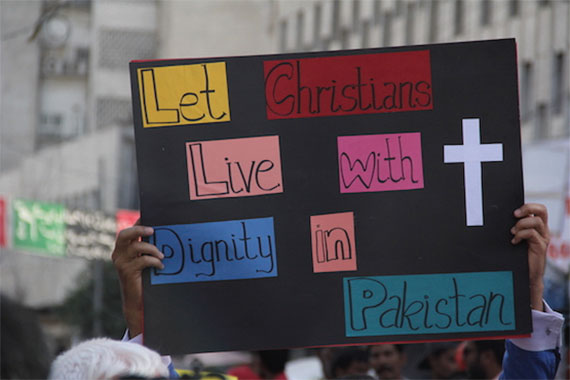
Family looks for answers after Christian boy beaten to death in Pakistan

After the death of their teenage son on his third day of school, his family says they just want to know what happened.

On their son’s third day of high school, the parents of 17-year-old Sharoon Masih learned that he had been in a fight, had suffered a serious injury, and been taken to the hospital. They rushed to the hospital and there found him dead.

“The boys from his class who had brought him there told us that he died in the classroom,” said his mother, Razia Bibi, a Christian woman in a predominantly Muslim country.

Police said that on Aug. 27 another student at the school – in Punjab, Pakistan’s most populous province – kicked Sharoon in the stomach and that he died of internal injuries. The student charged in his death now awaits trial, but police are not calling the attack a hate crime.

Advocates for Christians in Pakistan note that another Christian boy was killed violently this year: On October 9, police killed a 14-year-old Christian boy in an incident still under investigation.

Pakistan is fourth on the list of 50 countries that the U.S.-based non-profit Open Doors – which advocates for persecuted Christians – lists as the most difficult in which to be a Christian.

MYANMAR CARDINAL DEFENDS COUNTRY’S EMBATTLED LEADER

Cardinal Charles Bo of Yangon, Myanmar, has defended his country’s leader in the face of global criticism over the alleged ethnic cleansing of the Rohingya minority. Cardinal Bo said Aung San Suu Kyi, state counsellor, still represented the best hope that Myanmar would emerge from a military dictatorship into a democracy.

He suggested that she did not have the power to stop the expulsion of the primarily Muslim Rohingya from the Buddhist-majority nation.

“As we know, her role has come under scorching criticism,” he said in a message to the 24th World Congress of the Apost-leship of the Sea, which took place in Taiwan 2-6 October.

“Her status is not official under the constitution,” he said, adding, “As long as Daw Aung San Suu Kyi continues, we have hope. She is a strong woman with strong principles.

“Despite the piercing criticisms of the international community, Myan-mar depends on her for many compassionate responses,” he said.

“Our perception is that she is trying to stabilize the fragile democracy,” the cardinal continued. “Democracy is hard won and it took 60 years to reach where the country is.”

Excerpts of the cardinal’s message were released on 6 October by the United Kingdom branch of Aid to the Church in Need.

Defending the Nobel Peace Prize winner, Cardinal Bo said: “The army, like the Thai army, has no patience with democracy and grabbed power from democracy thrice already in Myanmar.

“I think Daw Aung San Suu Kyi has an agenda to pull the country from the grips of the army which controls 25 percent of the parliamentary – and also the important – ministries.

The betrayal of Vietnam’s forgotten Christians

Exasperated after violent interrogations and round-the-clock intimidation at the hands of the Vietnamese government, Y-Man Eban escaped into the forests of eastern Cambodia on July 7, 2015.

“The reason I ran away from my country was that the Vietnamese police interrogated me four or five times and put me in jail for a week. They beat me a lot,” Eban, 30, a Montagnard Christian, said from Dak Lak province.

Asked why he was arrested, Eban said it was because he sought “the freedom and independence for Dega people.”

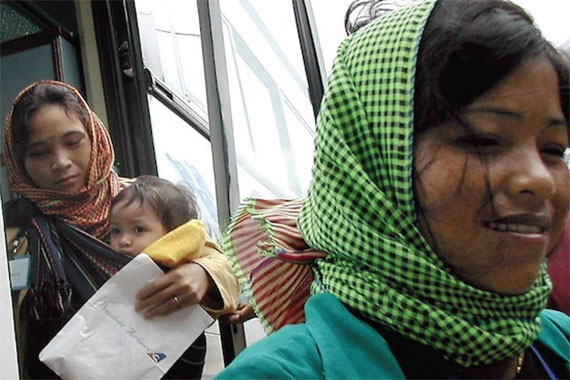
Eban was one of more than 300 Montagnard Christians, the indigenous peoples of the Vietnamese Central Highlands, also known as Dega, who started fleeing into Cambodia three years ago. They there told of oppression at the hands of the Hanoi government.

The latest exodus is the first in about a decade when thousands fled amid crackdowns on protests in 2001 and 2004.  Persecuted for decades due to reasons such as their support for America in the Vietnam War and their faith, there have been widespread accusations of human rights abuses and land grabs in the rolling hills of the Montagnards’ homeland. “Since I came back to Vietnam, the authorities have viewed me as a criminal,” Eban said.

After Party Congress, no respite for religions in China

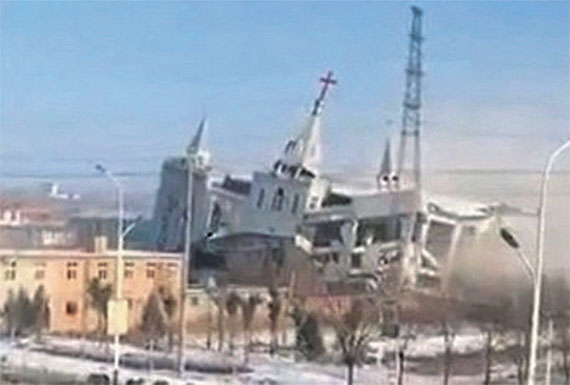
China will convene its 19th Party Congress on Oct. 18, a key meeting held every five years where President Xi Jinping is expected to receive a second term as the ruling Communist Party’s top leader.

For China’s religious minorities, to say that it has been a difficult year would be an understatement. The government is quickly transforming the Xinjiang Uyghur Autonomous Region into a police state while new laws now mostly restrict the Tibetan region from access to the world outside of China.

But following the 19th Party Congress beginning this month — where Chinese President Xi Jinping will reshuffle his government, selecting the core leadership on the Politburo — human rights monitors fear that, given the current trajectory of the Chinese government, the situation for the country’s religious minorities may become even more tumultuous.

Australian bishops gather in Vatican discuss ‘restoration of trust’

A delegation of Catholic Bishops from Australia has gathered in the Vatican to discuss “restoration of trust” as the country’s most senior Catholic faces allegations of sexual abuse.

The Vatican disclosed the meeting in a statement released on October 7th. The delegation included Archbishop Mark Coleridge of Brisban, Archbishop Denis Hart of Melbourne, and Justice Neville Owen of the Truth, Justice and Healing Council.

That council is coordinating the church’s response to an Australian government inquiry into child sex abuse in various institutions.

The bishops’ delegation discussed “the relationship between the church and society at large, the restoration of trust, and greater participation of the laity in decision-making roles in the church,” the statement said.

Cardinal George Pell, the Vatican’s economy minister, attended a pre-trial court hearing in Melbourne on October 6th over allegations of historical sex offenses.

No details of the allegations have been made public. Cardinal Pell faces a committal hearing in March which will determine whether the case goes to trial.

Philippines Archbishop offers sanctuary to officers willing to testify on drug war killings

Police officers in the Philippines wishing to expose the full extent of the government’s anti-drug killing spree have approached the Church for protection, according to the outgoing president of the country’s bishops’ conference.

“Law enforcers have come forward confidentially to us, their spiritual leaders, to seek sanctuary, succor and protection,” said Archbishop Socrates Villegas of Lingayen-Dagupan.

“They have expressed their desire to come out in the open about their participation in extrajudicial killings and summary executions.”

Indonesians on remote Philippine island embrace Catholic faith

Her parents’ religion did not prevent Evangeline Musaling-Pacinabo to embrace the Catholic faith and help spread the Good News on a remote island in the southern Philippines.

Evangeline’s Muslim parents migrated from Indonesia to the small island of Balut in the southern province of Davao Occidental in the 1940s, during the height of World War II.

As years passed, some of the migrants and their children became Catholics with the blessing of their non-Catholic parents. “A catechist was instrumental in my embracing the faith,” said Evan-geline, who later married a Filipino, and became a catechist.

For the past 22 years, Evangeline has been going around the remote municipality and its nearby islets to share her experience with people and teach them about the faith.

Balut is the sleepy centre of the Sarangani island group that can only be reached after a nine-hour boat ride from General Santos City, the nearest urban centre in Mindanao. The 24,000 population of the island comprises of Muslims and members of the B’laan tribe who mostly rely on fishing and coconut farming to survive.

It is around the fringes of this municipality that Evangeline shares the teachings she learned from seminars and workshops she attended in the parish church.