Category: Asian

  • POPE FRANCIS TO VISIT JAPAN NEXT YEAR

    POPE FRANCIS TO VISIT JAPAN NEXT YEAR

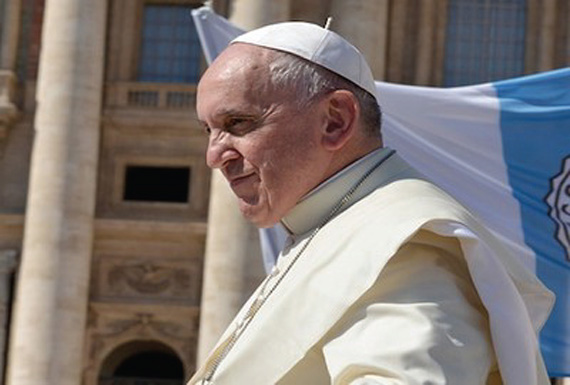
    In a meeting in Rome with a visiting Japanese delegation on Sept. 12, Pope Francis announced plans to visit Japan next year.

    “Since you are here, I would like to announce my intention to visit Japan next year. I hope I am able to fulfil this wish,” Pope Francis told members of the Tensho Kenoh Shisetsu Kenshoukai Association.

    “Thanks again for your visit,”

    the Pope said, telling the visitors to “take back to your wonderful people and your great country the friendship of the Pope of Rome and the esteem of the whole Catholic Church.”

    Members of the association were there with Fathers Renzo De Luca and Shinzo Kawamura. Father De Luca is the Argentine- an-born Jesuit provincial of Japan and was a novice when Pope Francis was his novice master in his native Argentina.

    It is well known that Pope Francis had hoped to be a missionary in Japan after joining the Society of Jesus and becoming a priest. But his superiors believed he did not have the required good health to do so.


  • BANGLADESH CHURCH SETS PRIORITIES FOR THE NEXT DECADE

    BANGLADESH CHURCH SETS PRIORITIES FOR THE NEXT DECADE

    The Catholic Church in Bangladesh plans to treat the welfare of families and poverty, as well as environmental protection and migrant welfare, as pastoral priorities in the next decade. New guidelines state that such an approach would “give witness” to the Church in the low-lying nation.

    A 12-point ‘mission statement’ was issued at the end of a national pastoral workshop of the Catholic Church held on August 28-31 at the Catholic Bishops’ Conference of Bangladesh secretariat in the capital, Dhaka. It was themed ‘Communion: Witness of the Church in Bangladesh.’ Pastoral priorities are to include spirituality of communion in individual, family and social life as well as the formation of faith, evangelization and pastoral services. Also cited was educational opportunities and values formation together with family life and pastoral services to marginalized communities and the poor. Further, priority would be afforded to socio-economic development and self-reliance, inter-religious harmony and Christian unity as well as enhancing religious vocations and services.

  • BURMA CARDINAL: THE ‘WAR’ ON THE KACHIN IS BEING OVERLOOKED

    BURMA CARDINAL: THE ‘WAR’ ON THE KACHIN IS BEING OVERLOOKED

    Cardinal Charles Bo, Burma’s most senior churchman, has said the military are continuing to persecute ethnic Kachin, a predominantly Christian group in a conflict- torn part of the country.

    Speaking on September 1 at a peace forum in South Korea, Cardinal Bo said the suffering the Rohingya have endured has captured the world’s attention. He described their plight as an “appalling scar on the conscience of my country,” ucanews.com reported.

    Yet, he continued, other targeted groups are being overlooked as ethnic fighting rages on in northern Burma, with thousands of ethnic minorities having been injured, killed and displaced.

    “Villages bombed and burned, women raped, churches destroyed, villagers used as human minesweepers and human shields,” Cardinal Bo told peace experts at the Catholic University of Korea in Seoul.
The cardinal elaborated on military air strikes in Kachin in February and a major offensive in April that led to more than 7,000 people being displaced.

    He said a series of “wars” were being waged in Burma against those who espouse religious freedom by forces preaching religious intolerance and hatred.

    Cardinal Bo also lamented a several violent conflicts stemming from land ownership disputes and other concerns including human trafficking, environmental degradation, drug abuse by young people, poverty and a lack of protection of basic rights.

    “These ‘wars’ continue even though Burma has moved over the past eight years through reforms and made a fragile transition from a military dictatorship to a fragile democracy,” he said.

    Sporadic fighting has occurred in the Christian stronghold of Kachin State since the country then known as Burma broke free of its colonial shackles in 1948 by gaining independence from British rule. The situation deteriorated in 2011 when some 100,000 people were displaced. Most of the state’s 1.7 million Kachins are Christians, including 116,000 Catholics.

  • FORMER CHRISTIAN CONFERENCE OF ASIA OFFICIAL DIES

    FORMER CHRISTIAN CONFERENCE OF ASIA OFFICIAL DIES

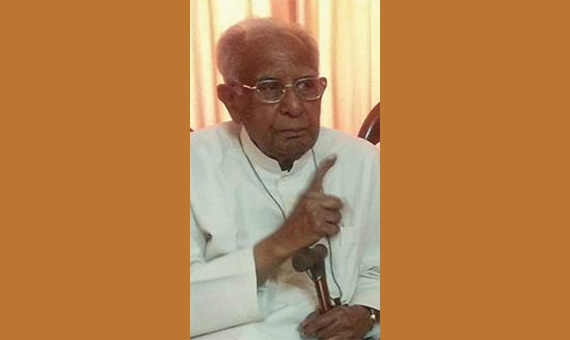
    Bishop John Victor Samuel, a renowned ecumenical leader from Pakistan, died on August 29. His son Ajmal Samuel announced that his father died “after a long and brave fight following a stroke last year.” Bishop Samuel was 87. Bishop Samuel is survived by his wife, Shirin Samuel, three children and their families.

  • Franciscans preach in extremist territory in Mindanao

    Franciscans preach in extremist territory in Mindanao

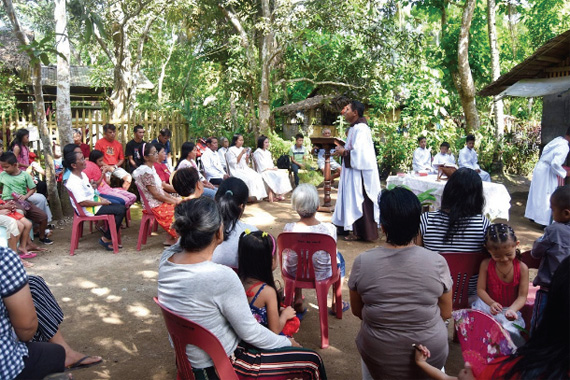
    Undaunted by the danger posed by extremists in the southern Philippine region of Mindanao, Franciscan missionaries hold Masses and other church activities in the mountains of Basilan province, home of the bandit Abu Sayyaf group.

    Franciscan Father Elton Viagedor, pastor of San Roque parish in the town of Lantawan, said they want to show that the church is “centrifugal” in its missionary approach, that it can be “flexible in spreading the mission.”

    “We hold Masses either in the streets or in backyards to show that the church should not wait for people to come to the parish chapel,” the priest told ucanews.com.

    He said it is the Franciscan congregation’s “simple way of responding to the present day challenge of going out of the comforts of the parish or the convents to be with those on the peripheries.”

    “It is on the peripheries that we are transformed,” said Father Viagedor.

    “As Franciscans, I believe that we should be willing to go to the margins, even if they are considered risky and difficult,” said the priest.

    “Such daring is not driven by arrogance but by the simple fact that we are dependent on God’s grace and by the desire to encounter the people on the peripheries,” added Father Viagedor.

    The priest said the Masses he celebrates in the streets are not meant to attract Muslims to convert to Christianity, noting that people in the province maintain a healthy inter-religious and inter-cultural relationship.

    The conflict displaced about 400,000 people.

  • Chinese Catholics: Sinicization is a trap to block the Church and distort the religions

    Chinese Catholics: Sinicization is a trap to block the Church and distort the religions

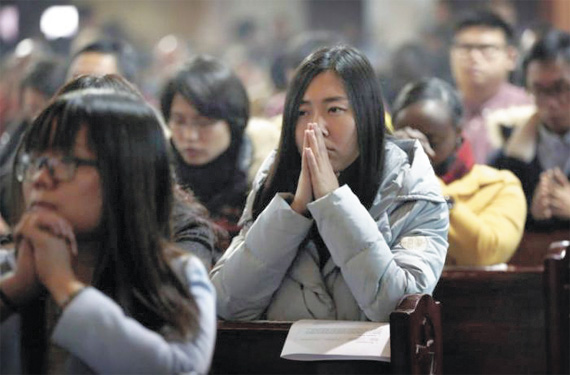
    Sinicization “is a trap,” a way to “intimidate the Catholic Church;” it has the purpose of “distorting the creed of all religious communities” in China. These are the thoughts of two Chinese Catholics, Peter of Hebei, and Paul of Shaanxi referring to the program wanted by Xi Jinping to assimilate religions to Chinese culture and society, a program that provides for submission to the Communist Party and verification of assimilation by the Patriotic Association (PA), the Party’s long arm over religious communities. The PA and the Council of Bishops have already prepared a five-year plan for the implementation of sinicization. By the end of August, every diocese in China will have to present its plan at a diocesan level.

    There is no precise definition of the term “sinicization.” The interpretation depends exclusively on the Party. Hence, sinicization means only the absolute and total obedience to the Party’s wishes.

    And since the Party is atheist, this campaign aims to distort the beliefs of all religious communities. These, in assimilating themselves to the will of the Party, will lose their values and become less credible, so the Party can eliminate all its rivals.

    It is obvious that the Council of Chinese bishops and the Patriotic Association will have to follow the political line of the Party: this explains the five-year plan that was recently published.

  • Third church demolished in China’s Jinan Diocese

    Third church demolished in China’s Jinan Diocese

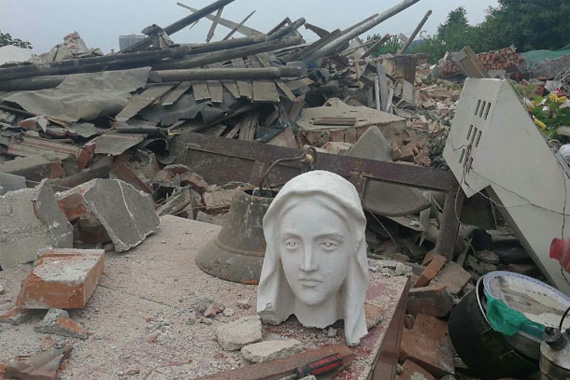
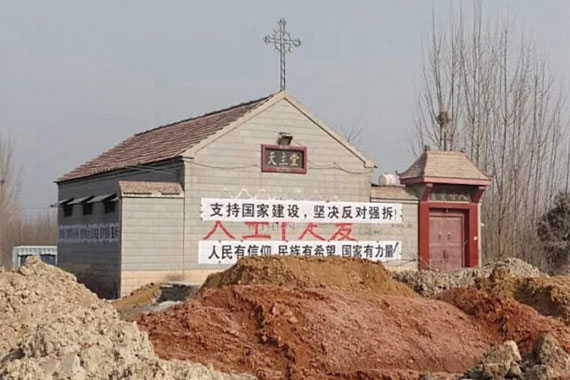
    Qianwang Catholic Church in China’s Shandong province has become the third church in Jinan Diocese to be demolished by local authorities this year.

    Liangwang Catholic Church was bulldozed on July 17 following the demolition of Shilihe Catholic Church, but a Catholic source told ucanews. com that the latter church would be rebuilt in another place.

    More than 170 officials demolished Qianwang Church in Huashan town of Jinan city’s Licheng district on Aug. 13, according to a source.

    He said authorities “had no explanation or solution and then forcibly demolished it.” A Marian statue and a statue of Jesus were destroyed, while the church’s alms box disappeared.

    The source accused officials of ignoring the law, regulations on religious beliefs and the basic demands of the faithful. Such a barbaric demolition of the church had seriously hurt the trust of the faithful in the local authority, he said.

  • Nepal’s new law puts squeeze on Christians

    Nepal’s new law puts squeeze on Christians

    The enactment of new legislation criminalizing religious conversion in Nepal has sparked a heightened sense of fear and insecurity among Christian minorities.

    The Civil and Criminal Codes, which came into effect on Aug. 17 to replace the General Code that was in place for 165 years, comprise a set of laws guiding civil and legal proceedings including restrictions on religious conversion, in the Hindu-majority nation. One new law states that anybody who encourages or is involved in religious conversion using any means will be booked under a criminal offense and will face a jail term of five years and a fine of 50,000 Nepalese rupees (US$445). Any foreigner found guilty of encouraging or promoting religious conversions will be deported within a week.

    Christian leaders believe the move is targeted at Christians, who have been accused of forceful proselytizing of Nepalis, particularly those from vulnerable and lower castes. They fear the law will be used as a tool to harass and persecute Christian minorities for practicing their religion.

    “The Christian community is alarmed about this new law. This is like a saw that is always hanging on top of us and can be used any time against us,” said Father Silas Bogati, vicar general of the Apostolic Vicariate of Nepal.

    It is a basic fundamental right of an individual to accept or practice any religion or any belief, he said. “With the new law implemented, we feel that our freedom of religion has been hampered and it looks like we will not be able to even practice our own religion in a fair manner,” Father Bogati added. The Federation of National Christian Nepal, believes the move is a regressive step that hurts the sentiments of Christian minorities who had earlier welcomed Nepal’s decision to adopt secularism.

    The law goes against the principles of secularism, democracy and human rights and aims to restrict the freedom of religion of more than three million Christians who are associated with nearly 12,000 churches in Nepal, said federation chairman C.B. Gahatraj.

  • Tamil Catholics dig deep for Myanmar church

    Visitors to a Tamil Catholic village in Myanmar are greeted by the Holy Cross at its entrance and can see St Anthony’s Church even before they arrive in the centre.

    Yaw Han, 24, is proud of being a Catholic in Hton-Bo-Quay in Kayin State after a community effort helped fund construction of a new church building in 2016-17.

    His family donated 2 million kyats (US$1,380) to the project, helped by his two elder brothers saving money from their salaries in Malaysia.

    “We willingly made donations and did not feel it was a burden despite most villagers struggling for their daily survival with traditional agriculture work,” Yaw Han told ucanews. com.

    He helps his family to grow rice when he is not taking part in activities as the village’s youth leader. His youth group contributed 300,000 kyats to the church project while other organizations including a mothers’ group, pastoral council and women’s group donated a total of 16 million kyats.

    About 100 young men and women from the village who are working in Malaysia, Singapore and the United States contributed about 38 million kyats of the overall project cost of 170 million kyats (US$117,300).

  • Chinese authorities bulldoze church in Jinan province

    Chinese authorities bulldoze church in Jinan province

    A second church has been demolished by authorities in China’s Jinan province — and a third church is expected to suffer the same fate soon.

    After Liangwang Catholic Church was demolished on July 17, local Catholics prayed at the site and protested the unreasonable behaviour of authorities.

    Shilihe Catholic Church was demolished earlier this year and sources expect Wangcun Catholic Church to soon be reduced to rubble.

    All three churches were in normal use and legal churches officially registered with the religious administration, according to a source in Jinan.

    Liangwang Church was built in 1920. During the Cultural Revolution, it was classified as a private house. After lengthy legal procedures, the church was rebuilt in 2006.

    At noon on July 17, three female church members were on duty at the church when more than 40 people forced their way in, searched the members, took their mobile phones and made them leave the church.

    Another 30 people later arrived to help with the demolition, which went ahead despite the church still containing many items.

    The church was built on land that was distributed by Liangwang village and had been granted a permit for legal activities. It was demolished because its area in Pian district is to be developed with new buildings and infrastructure. After the demolition, the parish priest and president complained to authorities but have not received any reply.

    “The stools, altars and dedication boxes were all pressed into the ruins. The ruins later became a fire and all the items were burned out,” said a church member.