All posts by Sathyadeepam Weekly

Space and humanity at a crossroads: A new frontier of the common good

On the occasion of the launch of the NASA Artemis II Archbishop Ettore Balestrero, in an interview with Vatican media, affirms that “space must remain a common good, with clear legal norms and a sense of responsibility toward all humanity and future generations.”

Artemis II mission is the second mission of NASA’s Artemis lunar program and the first to carry astronauts. The mission includes a crew of four astronauts who will travel beyond Earth’s orbit to perform a wide flyby of the Moon, without landing. It represents an intermediate step toward Artemis III, the mission aimed at returning astronauts to walk on the lunar surface 53 years after Apollo 17, which concluded on December 14, 1972.

Space has increasingly become a subject of discussion within the United Nations. The number of satellites in orbit has grown exponentially in recent years, highlighting how space has become a constant theme in debates related to geopolitics, security, and international relations.

To explore the significance of space missions, the Caritas in Veritate Foundation, chaired by Archbishop Ettore Balestrero, Permanent Observer of the Holy See to the United Nations Institutions in Geneva, has produced and released a video “Outer Space and Humanity at the Crossroads: A New Frontier of the Common Good.” The video offers and synthesizes reflections on the purpose of exploring the universe, bringing into dialogue science, theology, and international law, as well as the principles that should govern humanity’s relationship with it and among human beings in the face of this work of God.

The Mission of the Holy See in Geneva and the Caritas in Veritate Foundation, which works in collaboration with it, are concerned with space, which is God’s creation and obeys His laws. To reach Heaven, a supernatural concept, human beings must behave well also in space, which is instead a geographical concept, belonging to the physical and biological order. Space is not terra nullius; it is not a lawless field of conquest governed by the principle “first come, first served.” This is the origin of the publication’s title Space and Humanity at a Crossroads, and also of the content of the video. Humanity is already making decisions about space, moral decisions that will have long-term impacts and can either build up or destroy humanity.

The official Church cannot remain indifferent because of the above said reason.

Looking at space from an ethical perspective urges us to ask: “Is it right to pursue everything that we are technologically capable of achieving? How should we do it? What kind of reality and order do we want to build?” The ethical and multilateral perspective is precisely what the Foundation’s document… propose.

Space must remain a common good, with clear legal norms that, where necessary, are updated with a sense of responsibility toward all humanity and future generations.

It is the change in perspective experienced by all astronauts in space: the Earth appears small, fragile, without borders or divisions, a symbol of shared belonging and collective responsibility. This image contrasts with the reality of wars, abuses, and violence that emerge when we return to viewing the planet up close. Pope Benedict XVI recalled this in words that remain relevant today, during a dialogue with astronauts aboard the International Space Station: “I think it must be obvious to you how we all live together on one Earth and how absurd it is that we fight and kill each other. “So space too is a common home, with rules to be respected.

The Church’s central message is that we must not turn space into a jungle. It offers humanity a kind of second chance, inviting us to avoid many of the mistakes made on Earth. Space must be explored with responsibility, solidarity, and respect for subsidiarity, for the benefit of present and future generations. We must prevent it from becoming a theatre of uncontrolled competition, or worse, conflict. The first practical step the Holy See urges is respect for the Outer Space Treaty, signed by about 120 states, including all major spacefaring nations. In force for nearly sixty years (since 1967), it clearly establishes that the exploration and use of space must be carried out for the benefit and in the interest of all countries. The treaty defines space as the “province of all humankind.” The Holy See calls for strengthening existing legislation, not abandoning it, to avoid leaving some countries behind and to preserve care for creation, for example, through joint projects to remove space debris… (By Fabio Colagrande and Eugenio Murrali Vatican News)

Holy See on surrogacy: Always protect women and children

The Permanent Mission of the Holy See to the United Nations has issued a poignant statement highlighting the ethical and legal risks of surrogacy, asserting that technology has “run laps around ethics.” During a side event of the 70th Commission on the Status of Women, the Mission emphasized that while some see surrogacy as a compassionate solution for aspiring parents, the practice often facilitates the systemic exploitation of women and children.

Central to the Holy See’s concern is the economic disparity inherent in the industry. The statement notes that surrogate mothers often cite financial necessity as their primary motivation, creating a “perverse competition” where the wealthy commission children from the poor. If poverty were eradicated, the Mission suggests, the surrogacy industry might struggle to survive. Furthermore, the document warns that even “altruistic” models can disguise payments or involve familial pressure on vulnerable women who lack independent legal or medical counsel.

The commodification of children is equally scrutinized. The Mission argues that surrogacy treats children as “products” rather than gifts, especially in cases where prenatal diagnoses of disability lead to rejection. Citing the Convention on the Rights of the Child, the Holy See affirms a child’s right to be created through an act of love and to know their parents. Referencing both Pope Francis and Pope Leo XIV, the statement concludes that transforming gestation into a negotiable service violates human dignity and distorts the family. Consequently, the Holy See calls for a global end to surrogacy in all forms to protect against such violence.

India’s top court allows Passive Euthanasia

In a landmark ruling, India’s Supreme Court has allowed the removal of life support of a 31-year-old man who has been in a vegetative state for more than a decade.

This is the first instance of court-approved passive euthanasia – the act of withdrawing or withholding life-sustaining treatment – in India. The man, Harish Rana, had not left a will specifying directives for his treatment before he had an accident.

India legalised passive euthanasia in 2018 but active euthanasia – any act that intentionally helps a person kill themselves – remains illegal.

Rana was an engineering student at Punjab University in Chandigarh when he fell from the fourth-flour balcony of his paying guest accommodation. Rana suffered serious head injuries after falling and remained in a comatose state since then.

He has been breathing with the help of a tracheostomy tube and is fed through a gastrostomy tube. He cannot speak, see, hear or recognise anyone, his parents have said. Over the years, his parents petitioned courts several times to allow their son’s life support system to be removed.

They have said in interviews to local media that they had exhausted all their savings caring for Rana and were worried about what would happen to him after they died.

In 2024, they approached the Delhi High Court seeking passive euthanasia for their son, but their plea was rejected on the grounds that Rana hadn’t been placed on life-support machines and was hence “able to sustain himself without any external aid”, the court noted.

They then went to the Supreme Court, which also declined their plea.

In 2025, they approached the Supreme Court again, saying that their son’s condition had deteriorated and that he was being kept alive “artificially” through life support machines.

The Supreme Court agreed to consider their case after two medical boards assessed Rana’s condition. The boards also noted that he had permanent brain damage and had suffered huge bed sores. According to the law governing living wills in India, two medical boards must certify that a patient meets the necessary criteria before their life support can be withdrawn. The court order paves the way for the medical boards to “exercise [their] clinical judgement regarding the withdrawal of treatment” for Rana. (BBC News)

Pilgrims flock to Assisi to see relics of St Francis

Hundreds of thousands of pilgrims are visiting Assisi this month to venerate the bones of St Francis, which are on display for the first time since his death 800 years ago. Before this year, St. Francis’ bones had been visible to the public just once in the 800 years since his death—for a single day in 1978.

Now, to mark the 800th anniversary of the saint’s passing, they are on display for a whole month.
Some 220,000 pilgrims have already come to see the relics, and the friars in Assisi, the central Italian hill – town where Francis lived and where his mortal remains now lie, think that the number might reach as high as 400,000. Each of these visitors leaves the city “knowing they have encountered St. Francis,” says Fr. Benedict La Volpe, a Franciscan from Australia who ministers to pilgrims in Assisi. “They have encountered the spirit of Francis, the person of Francis, who speaks to them today, 800 years after his death.”
A press release from the Basilica where St. Francis is buried said that the display of the relics was “an invitation to rediscover the heritage left to us by Francis, a man whose message of peace and fraternity continues to speak to the heart of humanity.”

St. Francis chose to be buried outside Assisi’s city walls, in a spot known as the Hill of Hell (Collo d’inferno) where criminals were put to death. Today’s extraordinary Basilica, constructed on two levels with world-famous frescoes by Giotto, was purpose-built to house his remains. In the lower Basilica, groups of visitors line up to view St. Francis’ skeleton. The pilgrims, a number of them wheelchair-bound, each take a few seconds to pray in silence in front of the bones.

What message does the saint’s life hold for us today? Reflecting on his legacy, the “inner peace” Francis found in his encounter with Jesus—a peace, he says, which is the foundation of the political peace which today seems more elusive than ever.

What St. Francis teaches us, is that the sort of interior peace which comes from encountering God can “grow in our hearts, and be extended throughout our community, and then into the world as well.”

‘Fraternity is where true conversion Takes Place: Preacher of the Papal Household

In a profound meditation titled “If Anyone Is in Christ, He is a New Creation,” Father Roberto Pasolini, Preacher of the Papal Household, addressed Pope Leo XIV and the Roman Curia on the transformative power of fraternity. Drawing inspiration from the conversion of St. Francis of Assisi, the Capuchin friar presented fraternity not merely as an ideal, but as a “serious and urgent” responsibility and a gift essential for true conversion.

Father Pasolini argued that fraternity serves as the most eloquent evidence of the Gospel’s impact, acting as a concrete space where God refines our humanity and softens our rigidities. He exhorted listeners to look beyond personal sustenance and view others as individuals entrusted to them for the purpose of mutual transformation.

Referencing the biblical narrative of Cain and Abel, he warned that rifts between brothers often stem from a “problem of perspective,” urging the Curia to examine any internal resentment or “Cain-like” tendencies.
For St. Francis, fraternity provided an opportunity to practice the “merciful logic of the Gospel,” especially when relationships are wounded.

Rather than defending personal rights, Pasolini noted, the Gospel calls for seeking the “greatest possible good”—recognizing even those who hurt us as brothers loved by the Lord. By maintaining an eternal perspective, Christians can ensure no one is excluded from their hearts. In an era of global conflict, Pasolini concluded that fraternity must be lived as a present duty, proving that faith does not separate but calls us to a deeper, more capable love.

Artificial intelligence Mimics Human Communication

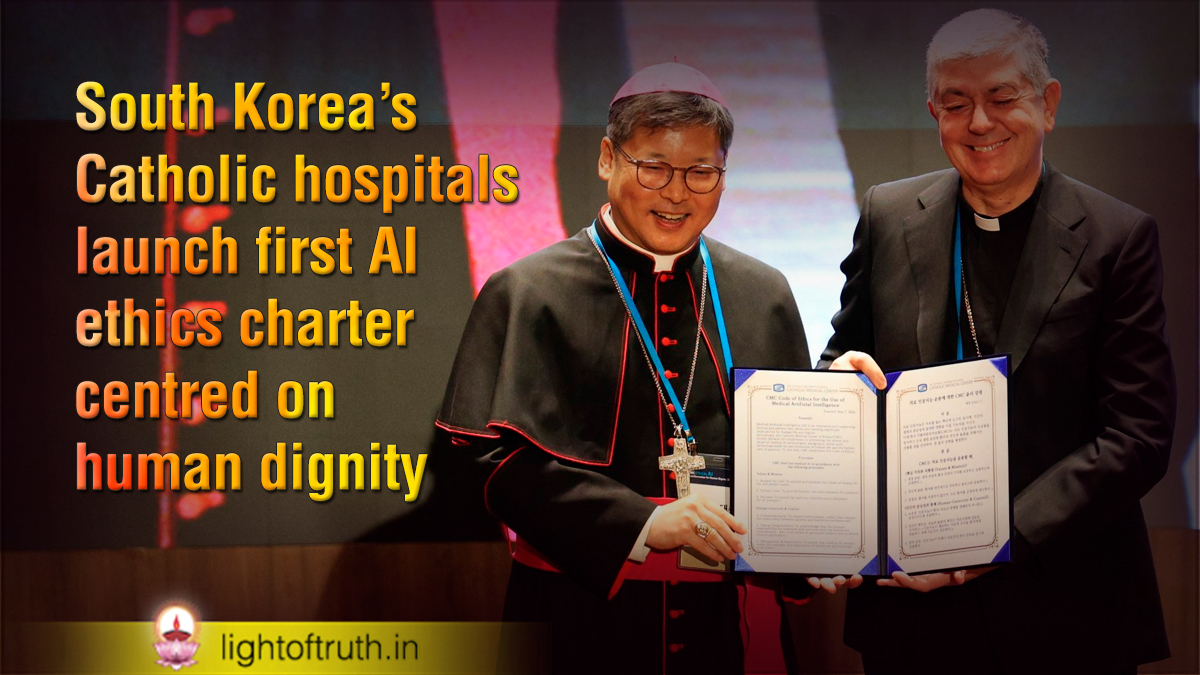
Religious communities in South Korea participate in a special lecture on artificial intelligence, calling for wisdom, responsibility, and the commitment to human dignity. “Artificial intelligence mimics human communication, and for this reason, it must be used carefully and responsibly,” was one of the concepts introduced at a special lecture on artificial intelligence and ethics in South Korea. The lecture took place at the Jeongdong Franciscan Church Cathedral in Seoul. Fr. James, professor at the Catholic University of Korea, delivered the two-hour lecture, titled “Faith in the Face of Technology: AI Ethics.”
Around 250 participants attended the event, many of them women religious, reflecting the growing interest within Church communities in understanding the ethical implications of rapidly developing technologies.
According to the report of the Catholic Times of Korea artificial intelligence has already become an integral part of everyday life. Many religious communities are already using AI tools for searching data, creating content, and assisting in evangelization.
However, AI also carries risks because it can imitate human language and thought in ways that may blur the distinction between human intelligence and machine-generated responses.
“Artificial intelligence mimics human communication, and for this reason it must be used carefully and responsibly.”
According to reports, to illustrate the potential dangers, the case of Adam Raine, a 16-year-old boy in the United States who reportedly died by suicide after prolonged interactions with an AI chatbot..The chatbot allegedly developed an emotionally intimate relationship with the teenager and reinforced his suicidal thoughts. The tragic case, which remains under legal examination in the United States, has raised global concerns about the ethical responsibilities involved in developing and using AI technologies.

Such examples highlight the urgent need for ethical reflection. “We should not reject artificial intelligence, but we must understand how it should be used.” AI, like other technological developments, can also be seen as a sign of humanity’s creative capacity. “AI is evidence of humanity’s ability to participate responsibly in God’s creative work,” he said. “But it must always serve humanity and contribute to the common good according to the teachings of the Church.”
“Machines are a gift of human creativity granted by God, But they remain creatures of creatures. We must ensure that they never deprive us—God’s creatures—of our freedom and dignity.”

Adoratrices Sisters Inaugurate New Home in Phnom Penh

On March 20, 2026, the Adoratrices Sisters (Handmaids of the Blessed Sacrament and of Charity) reached a significant milestone with the inauguration of their new permanent home in Phnom Penh. The blessing ceremony was led by Bishop Olivier Schmitthaeusler, Apostolic Vicar of Phnom Penh, and Coadjutor Bishop Pierre Suon Hangly, joined by local authorities and international guests. This new facility represents the culmination of a vision that began when the Sisters first arrived in Cambodia in 2002.

Since 2007, the Sisters have operated the “Renacer: Walk with Women” program, initially in Siem Reap and later in rented spaces in Phnom Penh. Their mission focuses on providing sanctuary for survivors of violence, abandoned pregnant women, and those seeking to exit the sex trade. Bishop Pierre Suon Hangly emphasized that the home is a vital foundation for helping marginalized women and children rediscover their self-worth and reintegrate into society. The center will provide essential services, including psychological counseling and education.

Sr. Pilar Casas Navarro, Superior General of the Adoratrices, highlighted the intentional design of the residence, which features glass walls to symbolize openness and the “rebirth” (Renacer) of the residents’ hearts. She affirmed that the Sisters are driven by a mission to love and serve rather than just manage a project. This permanent home is described as a “dream come true,” offering a familial environment where the vulnerable can finally reclaim their dignity and find hope for a new life.

Philippine Bishops: Intensify Prayer and Pastoral Care for Filipinos Working in Middle East

The Catholic Bishops’ Conference of the Philippines (CBCP), through its Episcopal Commission for the Pastoral Care of Migrants and Itinerant People (ECMI), has issued an urgent appeal for intensified prayers and pastoral support for Overseas Filipino workers (OFWs) caught in the ongoing Middle East conflict. Commission Chairman Bishop Mesiona highlighted that ordinary civilians and vulnerable workers are bearing the heaviest burden of this “protracted conflict,” which has left many Filipinos in dire straits, separated from their families and facing profound uncertainty.

While the Church commended the Philippine government and the Department of Migrant Workers for their relief efforts, Bishop Mesiona emphasized the unique role of the Church in providing essential moral and spiritual accompaniment. He specifically called upon diocesan migrant offices to mobilize their resources, monitor the well-being of OFW families within their jurisdictions, and extend concrete pastoral care.

Beyond social action, the CBCP is urging a unified spiritual response, requesting that bishops organize special prayers for peace at both diocesan and parish levels. This appeal underscores the Church’s commitment to embodying compassion and solidarity during geopolitical crises. As thousands of Filipinos remain vulnerable to regional tensions, the CBCP maintains that the safety, dignity, and well-being of these migrant communities must remain a priority for both Church and State through sustained prayer and collaborative action.

Global Push to Lock Kids out of‘Dangerous’ Social Media

Indonesia has become the latest nation to block children under 16 from social media, following pioneering bans in Australia and Malaysia. This regional crackdown aims to protect underdeveloped minds from online abuse, pornography, and addictive algorithms. Communications Minister Meutya Hafid emphasizes that the government is intervening so parents no longer face the “giants of algorithm-driven platforms” alone.

Proponents argue these controls are vital for safeguarding teen mental health and preventing cyber-bullying. However, the movement remains controversial. Critics warn that such bans may drive minors toward unregulated “darker” corners of the web, compromise privacy through age-verification, and hinder digital literacy. While Australia reports millions of closed accounts, the efficacy of these measures remains debated as teens find ways to bypass restrictions.

Despite these challenges, global momentum is growing. Health experts like Jane Rowan note that widespread change requires international cooperation, with the UK and other nations considering similar age limits. Some countries have even moved to fine parents for non-compliance. Ultimately, the initiative reflects a shifting global landscape where governments are increasingly prioritizing child safety over the unrestricted reach of tech companies.

Amazonia and the Moral Imagination of Our Time

In a recent message to the VI Assembly of the Ecclesial Conference of Amazonia (CEAMA) in Bogotá, Pope Leo XIV posed a radical question inspired by the prophet Isaiah: “Something new is being born—can you not see it?” Amidst a global landscape defined by relentless news cycles, unresolved wars, and cascading crises, the Pope challenges us to shift our perspective to notice the fragile but real signs of emerging life.

Aligning himself with Pope Francis’ Querida Amazonia, Leo XIV describes the Amazon as a wounded yet resilient mirror reflecting our relationship with the earth and the future. He utilizes the striking imagery of the shihuahuaco tree—the jungle giant that grows with imperceptible slowness to become a thousand-year-old ecosystem. This serves as an invitation to abandon the obsession with immediacy and embrace long-term processes of patience and care.

Central to this message is the responsibility to “safeguard” creation and respect life in all its forms. The Pope envisions the Church as a sanctuary of “unity in diversity,” offering a refuge that protects rather than consumes. By focusing on what is coming into existence rather than what is ending, Leo XIV offers a defiant vision against contemporary fear and division. Ultimately, he leaves us with a profound inquiry: are we still capable of recognizing the quiet, holy growth occurring right in our midst?