All posts by Light of Truth

Three churches reportedly burned down in Sudan

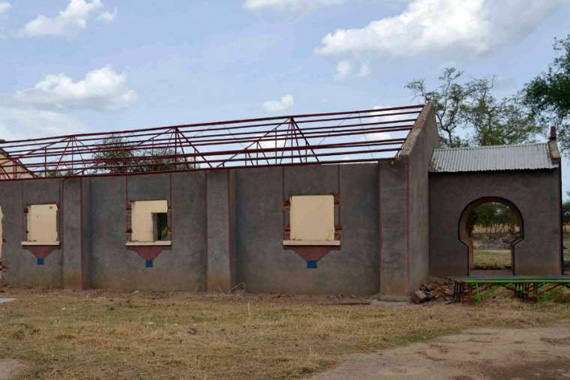
According to a local rights group in Sudan, three churches in a town were burnt down in December 2019 and quickly rebuilt, only to be burnt down again earlier this month.

Human Rights and Development Organization said that a Catholic Church, an Orthodox Church, and a Sudan Internal Church in Bout were burnt down on both Dec. 28 and Jan. 16; the church buildings had been rebuilt in the interim. Bout is the capital of Tadamoun district in Blue Nile state, more than 300 miles south-east of Khartoum.

According to HUDO, the alleged arsons were reported to Bout police each time, “but police did not investigate further or put preventive measures.”

The human rights organization has decried the attack and criticized the government for negligence of religious freedom.

But the Sundanese religious affairs minister, Nasr al-Din Mufreh, has claimed that only one church had been attacked twice.

The Sudan Tribune reported that Mufreh stated “Sudan’s full commitment to protecting religious freedoms.”

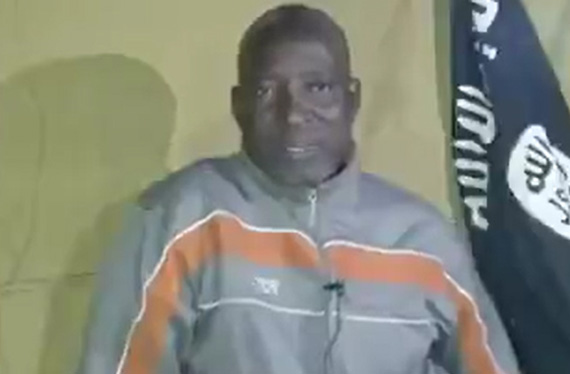
Church leader executed by Boko Haram

A senior church leader in Nigeria, who was abducted in early January, has reportedly now been killed.

Reverend Lawan Andimi, a state chairman of the Christian Association of Nigeria (CAN), was taken during a raid in Michika, a town in Nigeria’s Adamawa State.

A video was later released by a group linked to extremist Boko Haram showing him in captivity.

In it, he said: “I have never been discouraged because all conditions that one finds himself is in the hand of God.

“I still believe that God who made them to act in such a way is still alive and will make all arrangements.

“By the grace of God, I’ll be together with my wife, my children and all my colleagues. Don’t cry. Don’t worry, but thank God for everything. Thank you.”

Investigative journalist, Ahmed Salkida, now says he’s seen a video of his beheading.

Pope Francis appoints woman to senior Vatican position

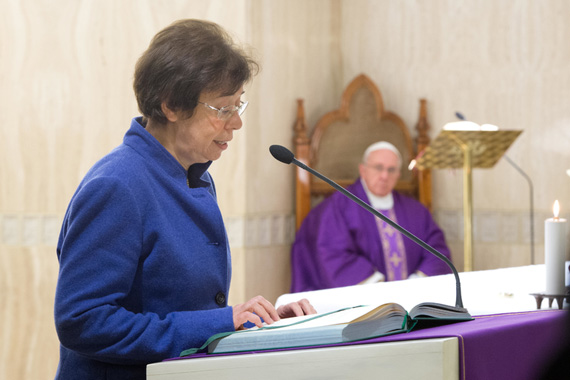
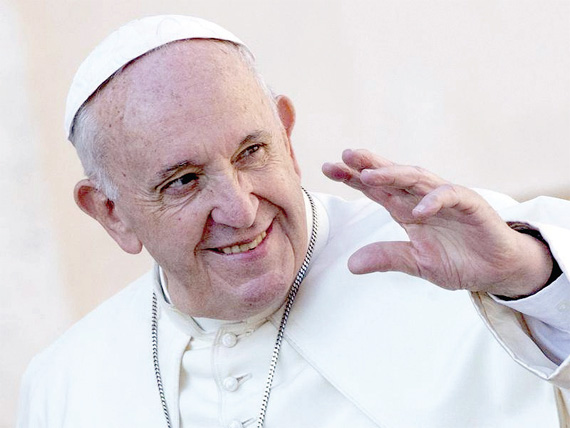
Pope Francis has announced that he is appointing a woman for the first time to a managerial role in the Secretariat of State, one of the most important departments in the Vatican.

Francesca Di Giovanni, who has worked at the Secretariat for 27 years, will be elevated to the position of undersecretary for the section for relations with states. She’ll manage the Vatican’s relationships with multilateral organizations such as the United Nations.

The Catholic Church’s leadership is almost completely male-dominated, and women are not allowed to be ordained as priests. In recent months, how-ever, Pope Francis has expressed a desire to include more women in decision-making roles.

Di Giovanni, who specializes in migrants and refugees and international law, says she was surprised to be appointed as undersecretary. “I sincerely never would have thought the Holy Father would have entrust-ed this role to me,” she said in an interview with Vatican News.

The Secretariat of State deals with the city-state’s operations and diplomatic affairs. Di Giovanni will be the first person to hold this particular position.

Former prostitutes among ex-nuns at Vatican shelter: Cardinal

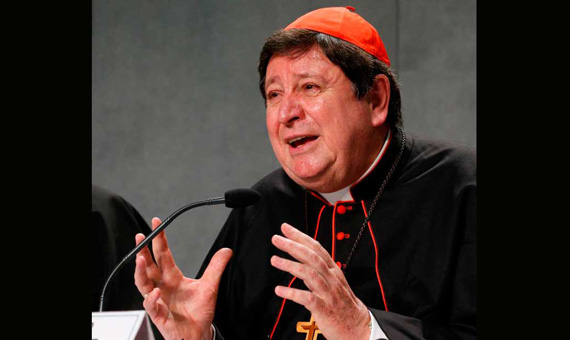
Former nuns “abandoned” by the Catholic Church, including some who became prostitutes to survive, have been sheltered at a Vatican residence for more than a year, a Brazilian cardinal said.

Cardinal Joao Braz de Aviz confirmed the house’s existence at an undisclosed location in the Vatican City during an interview for the February issue of the Vatican’s magazine Women Church World.

In the wide-ranging interview about women’s roles in the Church, Cardinal Braz said existence of the home underscored Pope Francis’ desire to rectify abuses within the Church, such as nuns who are expelled from their convents with nowhere to go. “At times they are completely abandoned,” the cardinal said, according to an advance copy of the issue released on January 23.

“But things are changing. The most significant example is precisely the Pope’s decision to establish in Rome a house to welcome in from the street nuns who were sent away by us, or by the superiors, especially if they are foreigners.”

Cardinal Braz said he had visited the home, and had found “a world of wounds there, but also of hope.” In some cases, mother superiors had withheld documents from nuns who wanted to leave the convent, and in others nuns were just told to depart.

Rebecca Long-Bailey: ‘My faith keeps me going’

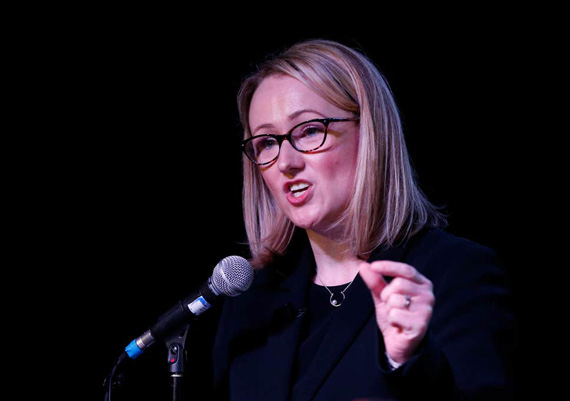
Rebecca Long-Bailey MP, the current shadow business secretary and a practising Catholic, has become the sixth candidate to enter Labour’s leadership contest in Briton.

Long-Bailey struck a strongly left-wing note in her article that announced her campaign, pledging to rebuild Labour “as an insurgent force.” Linking constitutional reform with left-wing economic policy, she argued that her party must “go to war with the political establishment,” positioning herself clearly to the left of her competitors in the contest.

The former solicitor and one-time pawn shop employee has referenced her faith publicly on several occasions.

A graduate of The Catholic High School, Chester, Long-Bailey was elected to parliament in the 2015 election for the Salford and Eccles Constituency. A close ally of the outgoing labour leader, Jeremy Corbyn, she was one of 36 MPs to nominate him in his 2015 leadership bid. She afterwards served in the Shadow Cabinet as Shadow Minister for the Treasury and Shadow Secretary of State for Business. A mother of one, Long-Bailey sends her child to a Catholic school, and is a supporter of Catholic education. If victorious in the leadership contest, she would become only the second Catholic Leader of the Opposition in British history, the first being Iain Duncan Smith, who led the Conservatives from 2001 to 2003.

In an interview at Salford Cathedral for the 2019 Election, General Election, Long-Bailey cited her Catholic faith as a major inspiration: “The teachings I have based my life around drive the work I do every day and the policies I help to create as a politician.”

Papal visit to Indonesia, Papua New Guinea, and East Timor possible in 2020

A visit from Pope Francis to Indonesia, Papua New Guinea, and East Timor may happen in September, according to an Indonesian Muslim leader who met with the pontiff mid January. Sheikh Yahya Cholil Staquf leads the 50 million member Nahdlatul Ulama movement, which calls for a reformed “humanitarian Islam” and has developed a theological framework for Islam that rejects the concepts of caliphate, Sharia law, and “kafir” (infidels).

Staquf met with the Pope, while in Rome for a meeting of the Abrahamic Faiths Initiative, which gathers Christians, Muslim and Jewish leaders to discuss the promotion of peace and fraternity. U.S. Ambassador-at-Large for International Religious Freedom Sam Brownback attended the meetings.

Pope Francis met with the group on Jan. 15. After that meeting, Staquf told CNA that the Pope said he plans to visit Indonesia, East Timor, and New Guinea in September.

The Vatican has not yet confirmed such a trip. Indonesia is home to the largest population of Muslims in the world. The country’s 229 million Muslims make up more than 12% of the global Muslim population. Nearly all of Indonesia’s Muslims are Sunni.

There are 24 million Christians living in Indonesia, 7 million of them are Catholic. Pope St Paul VI visited the country in 1970, and Pope St John Paul II traveled there in 1989.

East Timor is a small country on the island of Timor. It gained independence from Indonesia in 1999, following decades of bloody conflict as the region vied for national sovereignty.

The country’s second president, Jose Manuel Ramos-Horta, shared the 1996 Nobel Peace Prize with East Timorese Bishop Ximenes Bolo, for their efforts to reach a peaceful and just end to fighting in the country. Bishop Belo is now a missionary in Mozambique.

More than 1 million people live in East Timor; more than 98 percent Catholic. It is one of few majority Catholic countries in Southeast Asia. Pope St John Paul II visited East Timor in 1989.

Catholic population of S. Korea grows by 50% in 20 years

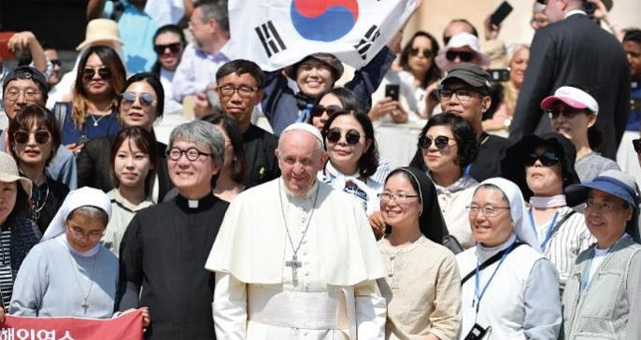
The Catholic Church in South Korea has steadily grown over the past two decades according to a study by the Catholic Pastoral Institute of Korea (CPIK) of the Catholic Bishops’ Conference of Korea (CBCK). 11.1% of South Korea’s population.

The number of Catholics has increased by 48.6 per cent, from 3.9 million in 1999 to 5.8 million in 2018 and today they make up 11.1% of South Korea’s some 51 million population.

A copy of the study report sent to the Vatican’s Fides news agency shows the Diocese of Suwon leading with an increase of 89.1 per cent. It is followed by Daejeon (79.6 per cent) and Uijeongbu (78.9 per cent).

However, the year-to-year growth rate in the Catholic population has gradually slowed to below 1 per cent. In 2000-2001, the Catholic population grew 3.2 per cent and 3.9 per cent, respectively, before falling to the 2 per cent range until 2009. The growth rate dropped to 1.7 per cent in 2010 and briefly rebounded to 2.2 per cent in 2014 due to Pope Francis’ visit to South Korea. It then levelled off at around 1% per year.

As for the ratio of Catholics in the nation’s population, it rose from 8.3 per cent to 11.1 per cent in the 1999-2018 period.

Declining church attendance However, Sunday Mass attendance, considered a key indicator of faith life, has declined by about 10 points, from 29.5% to 18.3% during the past 2 decades.

Taiwan president tells pope of China’s religious persecution

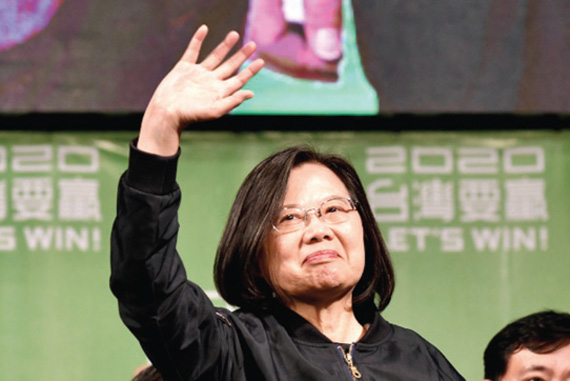
Taiwan’s President Tsai Ingwen has written to Pope Francis to complain about China’s persecution of religion, saying that Beijing aims to threaten its democracy and freedom.

Taiwan has been concerned by the Vatican’s moves to normalize ties with China, especially after a landmark on September 2018 provisional deal on appointing bishops.
Tsai won reelection by a landslide on January 11 after a campaign pledge to protect Taiwan’s sovereignty from Chinese control.

In her letter to the Pope, released by the Presidential Office on Jan. 21, she listed Chinese actions that she said constitute abuses of power, including violence toward Hong Kong protesters and persecution of religious believers seeking to follow their faith.

Responding to a message from Pope Francis for World Day of Peace on Jan. 1, Tsai wrote that Taiwan hopes for a peaceful resolution of its differences with China.

“However, at present dialogue across the Taiwan Strait is filled with difficulties,” she wrote. “The main sticking point is that China has so far been unwilling to let go of its desire to control Taiwan. It continues to threaten Taiwan’s democratic freedoms and human rights by threatening to use force against Taiwan, fake news, cyber attacks and diplomatic means.”

When Chinese Christians adapt Lunar New Year

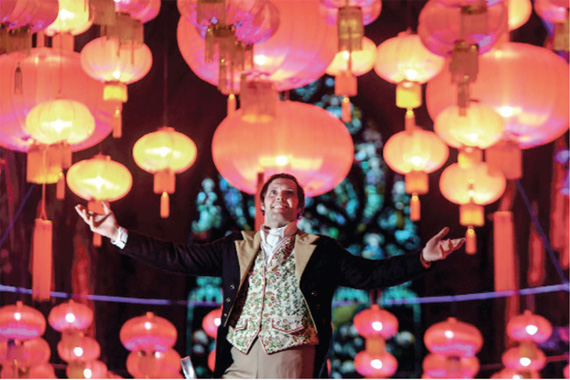
Chinese-speaking people across the world are busy preparing to celebrate the Lunar New Year, which this year falls on Jan. 25. The festival marks the beginning of the Year of the Rat. Chinese Christians, of course, are part of the celebrations, composing and adapting the parallel sentences of greetings typical of the festival.

The expression “parallel sentences” needs a bit of explanation. Chinese alphabets allow the flexibility of writing sentences from top to bottom or left to right. During the Lunar New Year, the Chinese have a tradition of writing two-sentence greetings on two strips of paper, placed vertically on either side of a statue, picture or door. These couplets of greetings came to be known as parallel sentences.

Christians adapt these greetings and also compose their own. Sometimes they may vary among different denominations. In order to understand these sentences, we must return to the context in which these sentences are written. These greetings of four to 10 characters evoke a story, an affirmation of wisdom, or a blessing, corresponding to each other. Concise and poetic, their form and content are meant to reflect a certain beauty. Each sentence sounds like a maxim that highlights an idea; it translates and transports them. The parallel sentences are found in all regions and religious groups of the Chinese world.

Script by Capuchin priest to hit the big screens

Renowned preacher and author, Father Danny Capuchin is set to make a landmark in south Indian film industry with his story and screenplay in the upcoming Malayalam movie titled Varayan (striped).

According to reports made available to media on the first day of the project, Father Danny narrates the story of a young Capuchin priest who lands up in a remote and scary island and the events thereafter.

The lead role of the priest will be played by South Indian film actor Siju Wilson.

The first look poster of the movie was released on Jan 17 by Manju Warrier who is popularly known as the lady super star of Malayalam cinema. The poster features a firebrand young priest in a Capuchin friar’s habit.

Artists and the production team have high expectations for this movie which is reported to have a storyline that will appeal to the masses.

The scriptwriter himself being a Capuchin priest has created an extra interest to this upcoming movie. As the actor Siju Wilson mentioned in an interview, although he initially expected the story to have a religious theme, he was quite surprised by the serious content and entertainment offered by the story.

Father Danny is known for his unique way of preaching and talks both in India and abroad. He is also popular through several programs on television and radio.

He has authored several books including Daivom Peythirangunnu (God is raining down) – a novel in Malayalam; Prakasathinte Nizhal (shadow of light) – a character analysis, Mounam (silence) – a collection of articles. He is also a well known lyricist in Christian music.