
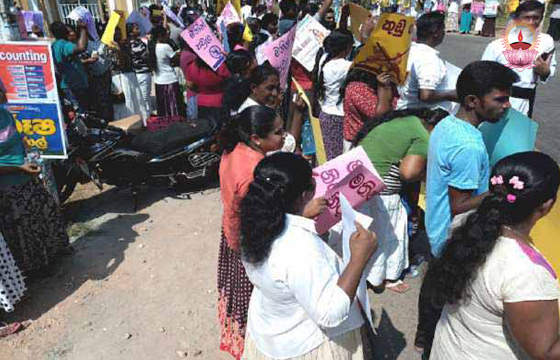
Sri Lankan religious leaders say they are saddened by the efforts of some groups to promote cannabis cultivation at a time when the government is taking strong measures to eradicate drugs from the country.
Ven. Ittapana Dhammalankara Thera, chief prelate of Kotte Sri Kalayani Samagri Dharma Maha Sangha of Siyam Maha Nikaya, said the government should take immediate action to stop all promotions related to cannabis.
“Regular drug raids should be further strengthened and act-ion should be taken to eradicate narcotics from the country. At the same time, the government should make every effort to strictly enforce laws and eradicate drugs including cannabis from the country,” he said.
Experts claim that the country can generate high revenue from the cultivation of cannabis. Recent research has shown that if drugs based on cannabis are manufactured and exported, it will be possible to earn more foreign exchange than is earned from all exports.
Sri Lanka has become a major transit point for traffickers as well as suffering from widespread drug addiction. Cannabis and heroin have become the top two narcotic scourges in the country. Concerns are growing about drug abuse among young people including children.
All posts by Light of Truth

An unforgettable missionary who transformed Bangladesh
American Holy Cross missionary priest Richard William Timm (1923-2020) was a giant among men with a big heart burning with selfless love for humanity.
More than six decades of service in Bangladesh (1952-2016) speak volumes for him, and his death on Sept. 11 in the US brought to an end a golden era of extraordinary missionary life and works that touched the lives of millions of Bangladeshis.
He will be remembered as a pioneering missionary in a land where a small but strong Christi-an community has thrived thanks to great Western missionaries like him over the past five centuries.
Bangladesh can never forget this great icon as he was “an American by blood but a Bangladeshi by spirit.” He is an inseparable part of the history of Bangladesh and his demise saddened many people of other faiths thanks to great memories of his companionship and contributions.

Covid-19 infects 30 Indonesian seminarians
At least 30 seminarians at a minor seminary in Indonesia’s West Kalimantan province have been infected with the coronavirus. Some are currently being treated at a local hospital, while others are self-quarantining.
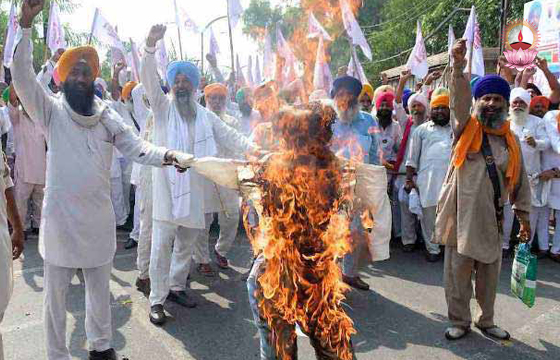
India to tighten foreign funding, social workers upset
Prime Minister Narendra Modi’s government has introduced a bill in India’s parliament to tighten the rules of overseas funding in a move that could adversely affect thou-sands of social workers including Catholic organizations. The government led by the pro-Hindu Bharatiya Janata Party (BJP) on Sept. 20 proposed certain amendments to the Foreign Contribution (Regulation) Act (FRCA), which critics say aims to help the government tightly monitor organizations and silence criticism.
The amendment proposes to decrease an organization’s administrative expenses from foreign funding to 20% from 50%. It also proposes to link leaders of all organizations to their biometric identity cards called Aadhaar.
The proposal also wants to empower the government to stop the utilization of foreign funds by an organization by ordering a “summary enquiry.”
Opposition lawmakers and social workers see the move as a major step to crush dissent and give government unbridled powers to harass certain voluntary organizations in a country where religious minorities continue to complain of being sidelined.
The amendments are expected to sail through parliament because of the BJP’s majority in the house. But it aims to “crush dissent,” opposition Congress leader Adhir Ranjan Chowdhury said in the lower house of parliament.
His party colleagues and another opposition member belonging to Trinamool (Grassroots) Congress supported him.
“This is an example of big brother watching — that is, the central government keeping an eye on all those receiving foreign contributions. It is mainly directed at minority organizations or institutions,” said Saugata Roy of Trinamool Congress.
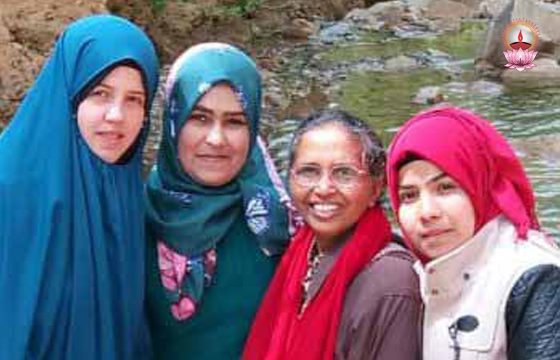
Indian nun’s missionary experience in Algeria
As a missionary, I had always expressed my willingness for the mission “Ad Extra” (towards the outside). I had almost given up the hope when on my 50th birthday the Lord gifted me the mission of Algeria, the largest Muslim country in North Africa, surrounded by the Mediterranean coast. Our God is a God of surprises and reveals Himself in a thousand ways to those open to His presence and action in the world.
On August 27, 2014, I arrived in Oran, one of the four dioceses in Algeria. Along with Sisters Serena De Stefani and Marta Arosio, we started a community in Mascara, a town some 390 km northwest of the national capital of Alger.
We are part of a centre called “El Amel” (the hope) run by an elderly French priest.
I am a nurse by profession and we have a small dispensary where the elderly and women prefer to frequent. This has helped me to develop relationships that gave me easy access to families.
Sr Lucy D’Mello MSII had the opportunity to assist Miloud, Meriam, Kaddur, Zuleika and many others in their sickness who now have gone to their heavenly abode. But my relationship with the family continues as a member. Many are very happy to invite us to participate in celebrations of marriage, new birth and anniversaries. We also visit them in painful moments of sickness or loss of a dear one in the family.
The people are hospitable, warm-hearted, and generous and the religious culture is very visible. Some of the expressions like ‘Inch-Allah’ (if God wants it), ‘Hamou-Allah’ (praise be to God) are frequently used by the majority of the people. The call for prayer five times a day helps me to raise my heart and mind to God, the Father of us all.
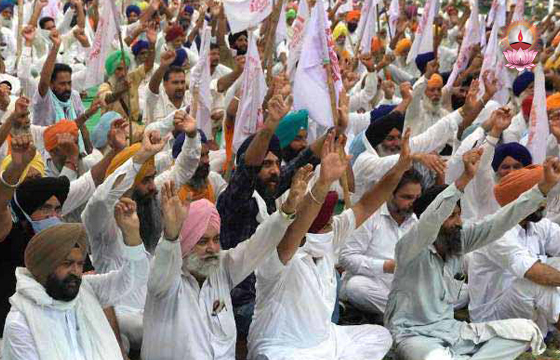
Church group joins protest against India’s new farm laws
Indian farmers are bracing for another major showdown with the federal government after accusing its new farm laws of ignoring their interests and promoting multinational firms.
A church-backed body has joined farmers’ unions in asking the government to withdraw two laws that parliament passed on Sept. 20.
The government, led by Prime Minister Narendra Modi’s pro-Hindu Bharatiya Janata Party (BJP), said the Farmers’ Produce Trade and Commerce (Promotion and Facilitation) Bill, 2020, and the Farmers (Empowerment and Protection) Agreement of Price Assurance and Farm Services Bill, 2020, are measures to reform the farm sector.
But “the new laws are a real threat to the farm sector and the farmers,” said Father Joseph Ottaplackal, chairman of the Indian Farmers Movement (INFAM), a church-backed body based in southern India’s Kerala State.
More than 70% of India’s 1.3 billion people directly or indirectly depend on farming for their sustenance. But some 80% of them – over 700 million – are marginal farmers with less than two hectares of land.
Indian Christians upset at MP’s remarks about missionary
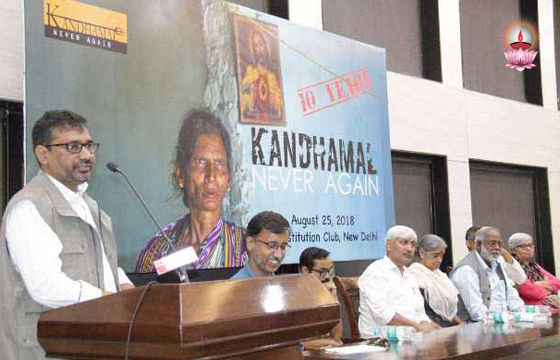
A Bharatiya Janata Party (BJP) leader has alleged that Australian missionary Graham Stuart Staines, who was murder-ed along with his two sons in Odisha in 1999, was involved in conversion activities among tribal people.
During his submission on the debate on the Foreign Contribution (Regulation) Amendment Bill, Satya Pal Singh told parliament that Staines’ organization, the Evangelist Missionary Society, was converting tribal people to Christianity.
“There was uproar over Graham Staines. What happened to him and his two children was wrong,” the BJP leader from the northern State of Uttar Pradesh said on Sept. 21.
“But agencies like the Central Bureau of Investigations, Odisha Crime Branch and the Justice D.P. Wadhwa Commission con-cluded that tribals were being converted there. It was the biggest reason that people turned against Staines.
Suspected Hindu fanatics burned Staines and his sons Philip, 9, and Timothy, 7, inside their jeep on Jan. 23, 1999, in Odisha State’s Keonjhar district.
However, Singh’s remarks have saddened Christian leaders and communities in India.

Tribal Christians tonsured in Jharkhand village
Seven tribal Christians were allegedly beaten, partially ton-sured and forced to chant “Jai Shri Ram.” (Hail Lord Ram) in a Jharkhand village for allegedly slaughtering a cow.
The September 16 incident, reported to the police the next day, came to public only on September 25 when former zilla parishad (district council) member and social activist Neel Justin Beck told a local news portal about it.
Police have confirmed the incident. Shams Tabrez, the superintendent of police in Simdega district where the attack took place, said four of the nine named as accused in the First Information Report have been arrested and the rest would be picked up soon. The FIR also mentions 10 unnamed accused.
Jharkhand had witnessed the lynching of several tribal people and Muslims on unsubstantiated charges of cow slaughter or beef possession during the tenure of its previous BJP-led government (2014-2019). This is the first reported communal attack since an alliance of various secular parties came to power last December.
Tangkhul Churches fast, pray for Naga solution
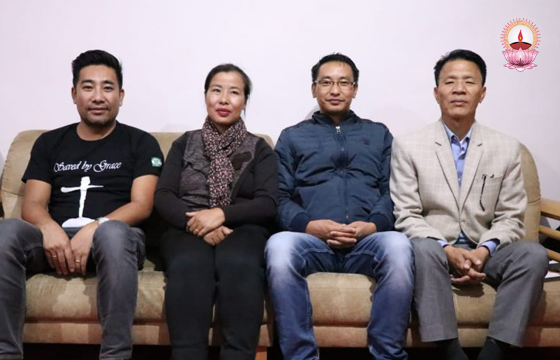
Tangkhul Churches on September 24 fasted and prayed for Naga unity and for peaceful settlement of the Naga political issue. Briefing the media, Remember Rimai, convener of Tangkhul Community Inter-Denomination Churches leaders and a pastor of Union Baptist Church in Ukhrul town, highlighted the main objectives of holding the fasting prayer program across Tangkhul villages. The day is dedicated as “Tangkhul global one day, fasting prayer day” under the banner “Oneness in Christ with Trust,” he added. Rimai said that all the Tangkhul Christians took part in the fasting prayer program at their respective Churches to show support to the collective leadership of NSCN (IM) led by Muivah.
Historic or hysterical? The Modi way and how India was let down
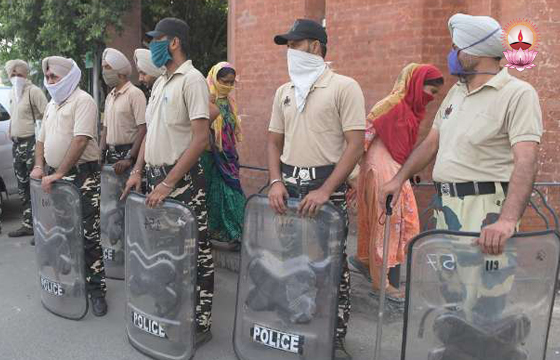
There is a mixed bag in governance in India these days. On one hand, Muslims are demonized, Christians’ charity and philanthropic works are linked to the forced conversion debate and quite often sedition laws or the controversial Armed Forces Special Power Act (AFSPA) are used to silence dissent.
Then there is the latent anguish of the middle class and poor. There is also an agrarian crisis. In any other political set-up, opposition parties could have gone in for the kill and cornered India’s ruling dispensation under Prime Minister Narendra Modi. But often the misguided moves by opposition parties like “creating pandemonium” in parliament come to the rescue of Modi’s publicity wing. The goalposts are changed and the battle which should have been to expose fault lines in the new farm bills goes into another realm.
Steered by an ostensibly decisive and determined Prime Minister, the Indian government is in serious confabulation with the Chinese leadership these days. But there could be a brief lesson for Modi’s leadership to learn from the Chinese context. The reasons could be multiple but how long can Modi brave through the situation with the argument that the Prime Minister of the world’s largest democracy cannot be solely blamed for all the ills and limitations?
“It is appalling that human rights defenders are locked up in overcrowded prisons and continuously denied bail despite calls by the UN to decongest prisons and release political prisoners during the pandemic,” says Josef Benedict, CIVICUS Asia-Pacific civic space researcher.
As many as 332 people were reportedly arrested under the sedition law between 2016 and 2018, though the conviction rates were very poor. Mob lynchings were carried out between 2014 and 2019 in various parts of India and in many instances it has been suggested that there is now perhaps a type of institutionalization of the communal venom.