

Archbishop Felix Toppo of Ranchi on October 16 joined priests, nuns and lay people to form a 5-kilometer human chain to denounce the arrest of an octogenarian Jesuit priest for alleged Maoist links. Many of the more than 1,000 protestors, who lined up in the Jharkhand State capital of Ranchi lit candles, terming it a symbol of hope against the attempts to silence intellectuals and rights activists such as Father Stan Swamy. The 83-year-old priest was arrested on October 8 from his residence near Ranchi by the National Investigation Agency, the federal body to counter terrorism. The priest was taken to Mumbai the following morning.
All posts by Light of Truth
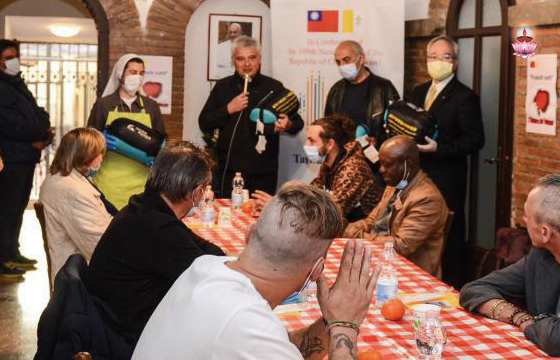
Homeless, Buddhists and Caritas: Taiwan’s national holiday in the name of ‘Fratelli tutti’
On October 10 is the national holiday of the Republic of China (Taiwan). Usually, the Taiwanese embassy to the Holy See invites friends and personalities to a gathering with a generous buffet. This year, in response to Pope Francis’s encyclical “Fratelli Tutti,” the way of celebrating the 109th anniversary of the Republic has radically changed.
With the collaboration of His Holiness’s almsgiver, Card. Konrad Krajewski, Caritas Rome and the Tzu Chi Buddhist Foundation were invited to a Taiwanese-style lunch with the homeless and abandoned people, who are “relegated to the peripheries and destined to become shadows” as the Pontiff often says.
The embassy donated “made in Taiwan” sleeping bags to the homeless and to Caritas, the Tzu Chi Foundation distributed tuna cans and ecological blankets, made from 100% recycled plastic bottles.
The two events took place on 8 October inside Palazzo Migliori, thanks to the assistance of Card. Krajewski, and on 7 October at the Casa Santa Giacinta of Caritas Rome, Fr Benoni Ambarus and Andrea Zampetti, director and general secretary of Caritas Rome.
Ambassador Matthew S.M. Lee says “it was an honour to share the spirit of National Day with our struggling brothers and sisters, as well as the values of inclusion, hospitality and friendship embraced by Taiwan. The Embassy wished to put into practice the Pope’s encouragement in ‘Fratelli Tutti’ in matters of fraternity: ‘Fraternity is not a trend or a fashion… but rather it is the demonstration of concrete acts,’ and to promote cooperation and exchanges interreligious in order to send humanitarian aid where it is most needed.”

Pakistan teen’s abduction, conversion sparks Christian outcry
A teenage Christian girl was kidnapped and forced to marry her Muslim abductor in Pakistan’s port city of Karachi, her family says.
A local Muslim man is accused of abducting 13-year-old Arzoo Masih while she was playing outside her home in Karachi’s St Anthony’s Parish. The Catholic girl is the youngest of four children in her family.
Arzoo’s mother, Rita Masih, said she and her husband were at work on October 13 when they received a phone call from a close relative that Arzoo had gone missing.
The family immediately filed a kidnapping complaint with the police. The crime is punishable by death or lengthy imprisonment in Pakistan.
However, on Oct. 15, the police summoned the family to the station where they were given marriage papers which claimed Arzoo was 18 and had willingly converted to Islam after marrying Ali Azhar, a local Muslim.
Raja Lal Masih, Arzoo’s father, said he was “deeply concerned” over his daughter’s safety. He wanted authorities to trace and bring her home. Masih told that Arzoo was below marriageable age under Pakistani law. “At the age of 13, she is too young to get married,” he said.
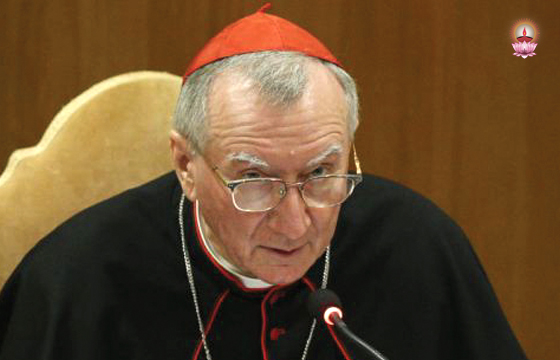
Vatican number two says deal with China on appointment of bishops will be renewed
The deal, which was first signed two years ago and expires, will be renewed for another two years, he said.
Asked by reporters on the sidelines of an event at a Rome university if it was a done deal, Parolin said: “Yes, I can anticipate to you that all will go well… I’ll leave you with a positive signal.”
The accord with Beijing gives the Pope final say over the appointment of Chinese bishops and the government allows all of them, including those hailing from a state-backed Church, to recognise the Pope’s authority.
The deal has been highly contested by the U.S. State Department and conservative Catholics, who say the Vatican has sold out to the communist government. Parolin said the final decision to renew had been made “in the last few days” after final contacts with the Chinese side. The deal would be extended without any new signatures because it was still an provisional deal.
The official announcement is due, he said.
Vatican officials say the agreement is not perfect but establishes a dialogue with Beijing after decades during which Chinese Catholics faithful to the Pope were driven underground.
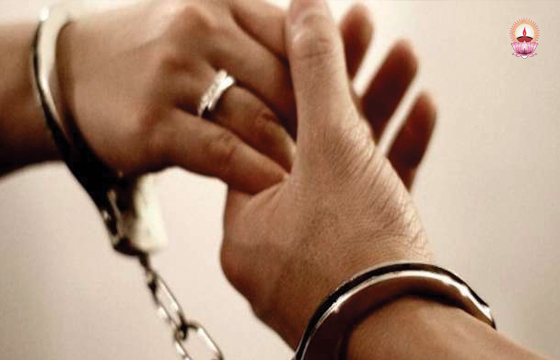
Rights groups slam Pakistan senator’s forced conversion denial
Rights groups have condemned a Pakistani senator’s claim that a fact-finding team led by him could not find any proof of forced conversions among religious minorities in the Muslim-majority nation.
Senator Anwarul Haq Kakar is head of a parliamentary committee set up to look into the increasing incidents of Muslim men kidnapping Hindu and Christian girls and forcefully converting and marrying them.
“The committee, which also included members from other religions, did not find any trace of kidnapping and illegal confinement of Hindu girls who later gave statements in court. Most cases of forced conversions had some degree of willingness on the part of the girl,” Kakar told reporters earlier in Islamabad.
The Parliamentary Committee on Forced Conversions chief, rejected the validity of minority groups’ complaints. He said the marriages were “con-tracts involving willing girls and due to economic circumstances.”
His statement came after the fact-finding team visited Sindh, where most of the country’s Hindus live and where most complaints came from. The comments drew swift condemnation from rights groups.
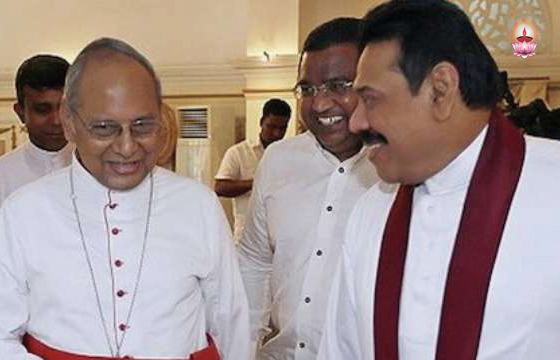
Sri Lankan woman arrested for insulting Cardinal Ranjith
Police in Sri Lanka have arrested a 43-year-old woman on charges of spreading hate between Buddhists and Catholics after she posted a video making various allegations against Cardinal Malcolm Ranjith of Colo-mbo. Sri Lanka’s Criminal Investigation Department arrested the woman on Oct. 18 in capital Colombo, police spokesman Ajith Rohana told media.
The video released on a social media network makes allegations against Cardinal Ranjith, the archbishop of Colombo, and makes a hateful statement fomenting unrest between Buddhists and Catholics, he said.
It “seems to be an attempt to stir religious hatred among Buddhists and Christians,” said Rohana.
The police are “conducting further investigations in this regard,” he said, adding that the woman will be produced before the court on October 19.
“We have constantly informed the public to prevent any propaganda that incites hatred and enmity between religious groups. Then the law has to be enforced,” said the media spokesman.
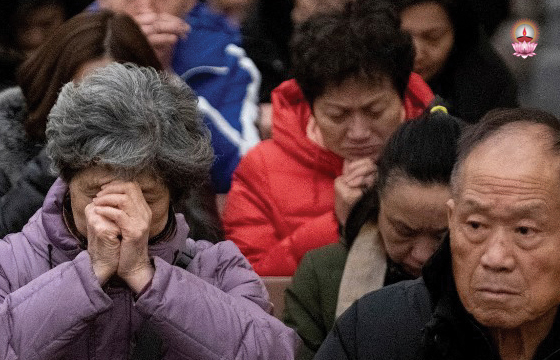
China’s ‘underground’ Catholics wary of Beijing-Vatican deal
The Communist Party is officially atheist and exercises strict control over all recognised religious institutions, including vetting sermons. The provisional deal, signed in September 2018, allowed both Beijing and the Holy See a say in appointing bishops, in an attempt to close the schism in China’s 12-million-strong Catholic community. An announcement extending the deal is widely expected in the coming days. But Washington has put intense pressure on the Vatican to scrap it, saying it has failed to shield Chinese Catholics from persecution. Those that operate without the Communist Party’s blessing claim to have been targeted by authorities in recent years, pointing to the demolition of underground churches, persecution of members and pressure on their clergy to switch sides.
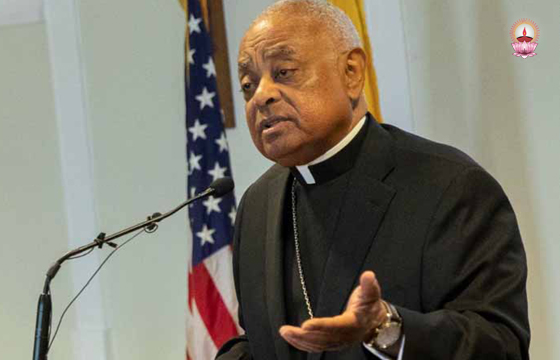
Pope announces 13 new cardinals
Pope Francis announced he will create 13 new cardinals on Nov. 28, including Archbishop Wilton D. Gregory of Washing-ton. The Pope made the announcement at the end of his Angelus address on Oct. 25, telling the crowd in St Peter’s Square the names of the nine cardinals under the age of 80, who will be eligible to vote in a conclave, and the names of four elderly churchmen whose red hats are a sign of esteem and honour.
Once the consistory is held in late November, there will be 128 cardinals under the age of 80 and eligible to vote in a conclave. Pope Francis will have created just over 57% of them. Sixteen of the cardinals created by St John Paul II will still be under 80 as will 39 of the cardinals created by Pope Benedict XVI; Pope Francis will have created 73 of the electors. Italians will continue to have an outsized portion of the electors, rising to 22 of the 128; the United States will stay at nine voters with Cardinal-designate Gregory taking Cardinal Wuerl’s place.
Here is the full list of the new cardinals, in the order named by the Pope:
• Maltese Bishop Mario Grech, 63, secretary-general of the Synod of Bishops.
• Italian Bishop Marcello Semeraro, 72, prefect of the Congregation for Saints’ Causes.
• Archbishop Antoine Kambanda of Kigali, Rwanda, who will turn 62 on Nov. 10.
• Archbishop Gregory, 72.
• Archbishop Jose F. Advincula of Capiz, Philippines, 68.
• Archbishop Celestino Aos Braco of Santiago, Chile, 75.
• Bishop Cornelius Sim, apostolic vicar of Brunei, 69.
• Italian Archbishop Paolo Lojudice of Siena, 56.
• Franciscan Father Mauro Gambetti, custos of the Sacred Convent of Assisi in Assisi, who was to celebrate his 55th birthday on Oct. 27.
• Retired Bishop Felipe Arizmendi Esquivel of San Cristobal de las Casas, Mexico, 80.
• Retired Italian Archbishop Silvano M. Tomasi, a former nuncio, 80.
• Italian Capuchin Father Raniero Cantalamessa, preacher of the papal household, 86.
• Italian Father Enrico Feroci, 80, former director of Rome’s Caritas.
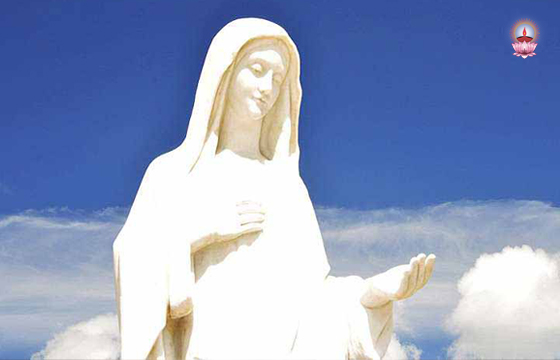
Former spiritual director of ‘Medjugorje visionaries’ excommunicated
A laicized priest who had been the spiritual director to six people who said they experienced visions of the Blessed Virgin Mary in the Bosnian town of Medjugorje has been excommunicated.
Tomislav Vlasic, who had been a Franciscan priest until he was laicized in 2009, was excommu-nicated on July 15 by a decree of the Congregation for the Doctrine of the Faith in the Vatican. The excommunication was announced by the Diocese of Brescia, Italy, where the laicized priest lives.
The Brescia diocese said that since his laicization, Vlasic “has continued to carry out apostolic activities with individuals and groups, through conferences and online; he has continued to present himself as a religious and priest of the Catholic Church, simulating the celebration of sacraments.”
The diocese said Vlasic has been the source of “serious scandal to Catholics,” by disobeying the directives of ecclesiastical authorities. When he was laicized, Vlasic was forbidden from teaching or engaging in apostolic work, and especially from teaching about Medjugorje.
He was in 2009 accused of teaching false doctrine, manipulating consciences, disobeying ecclesiastical authority, and of committing acts of sexual mis-conduct. A person who is excommunicated is prohibited from receiving the sacramentals until the penalty has been lifted.
Alleged Marian apparitions in Medjugorje have long been a subject of controversy in the Church, which have been investigated by the Church but not yet authenticated or rejected.
The alleged apparitions began on June 24, 1981, when six children in Medjugorje, a town in what is now Bosnia and Herzegovina, began to experience phenomena which they have claimed to be apparitions of the Blessed Virgin Mary.
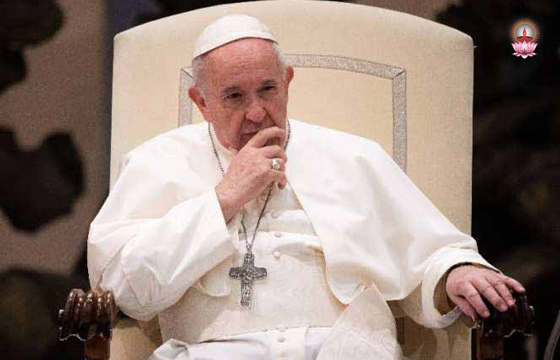
Pope Francis urges Europe’s leaders to rediscover ‘path of fraternity’
Pope Francis warned Europe’s leaders on October 27 that the project of European unity is at risk unless they “rediscover the path of fraternity” that inspired the project’s founders.
In a letter signed on Oct. 22, the feast day of St John Paul II, and released on Oct. 27, the Pope wrote: “We can either continue to pursue the path we have taken in the past decade, yielding to the temptation to auto-nomy and thus to ever greater misunder-standing, disagreement and conflict, or we can rediscover the path of fraternity that inspired and guided the founders of modern Europe, beginning precisely with Robert Schuman.”
He made the remarks in a letter marking three milestones: the 40th anniversary of the founding of the Commission of the Bishops’ Conferences of the European Community (COMECE); the 50th anniversary of the establishment of diplomatic relations between the Holy See and the European Union; and the 50th anniversary of the Holy See’s presence as a Permanent Observer at the Council of Europe.
The letter was addressed to the Vatican Secretary of State, Cardinal Pietro Parolin, who had planned to travel to the Belgian capital, Brussels, on Oct. 28-30.
In the letter, the Pope noted that the cardinal intended to make “significant visits to the authorities of the European Union, the Plenary Assembly of COMECE and the authorities of the Council of Europe.”
But the Vatican announced on Oct. 27 that Parolin had cancelled the trip because of new restrictions seeking to slow the spread of the corona virus.
The Argentine Pope explained in the letter that he wanted to share his reflections on the future of Europe, a continent that he said was “so dear to me,” not only because of his family’s Italian roots, but also because of Europe’s “central role … in the history of humanity.”
He said that the pandemic had underlined the importance of cooperation between European countries and the danger of giving in to “the temptation to go it alone, seeking unilateral solutions to a problem that transcends state borders.”
The Pope made a lyrical appeal addressed directly to Europe, urging the continent not to dwell on past glories.
He said: “Sooner or later, we realize that we ourselves have changed; we find ourselves weary and listless in the present and possessed of little hope as we look to the future. Without ideals, we find ourselves weak and divided, more prone to complain and to be attracted by those who make complaint and division a style of personal, social and political life.” In his letter, the Pope called for a “healthy secularism” in Europe, where believers were free to profess their faith in public.