
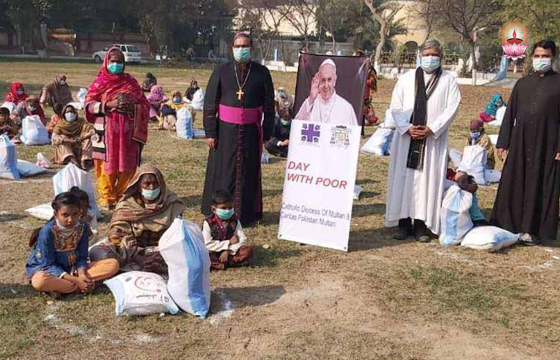
Pope Francis has accepted the resignation of Card. Joseph Coutts of Karachi and transferred Bishop Benny Travas of Multan to take his place as arch-bishop of Pakistan’s largest city.
Cardinal Coutts has headed the southern archdiocese since Jan. 25, 2012. He was appointed chairperson of the Christian Study Centre, a key Christian research centre, in Rawalpindi last month.
Cardinal Coutts was born on July 21, 1945, in Amristar in the Diocese of Jullundur in British India. He was ordained a priest in Lahore on Jan. 9, 1971
Bishop Travas was born in Karachi in 1966 and ordained a priest on Dec. 7, 1990. He served as vicar general of Karachi Arch-diocese and was ordained bishop of Multan on Aug. 15, 2015. He has also served as a professor of canon law at the National Catho-lic Institute of Theology in Kara-chi. Karachi has a population of 20 million. According to the Catholic Church directory 2018, the seaport archdiocese has 182,000 Catholics and 16 parishes. “The son of Karachi has returned,” Father Mario Rodrigues, former rector of St. Patrick’s Cathedral in Karachi, told UCA News.
All posts by Light of Truth
Malaysian Christians pray for missing pastor, disappeared
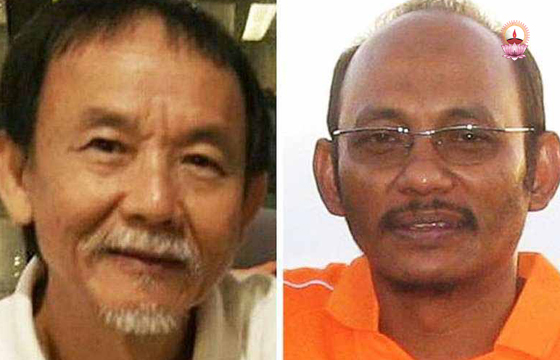
Catholics and Protestants in Malaysia are praying for victims of enforced disappearances as they remember a Christian pastor who went missing four years ago. The prayers of solidarity on the weekends on Feb. 6-7 and Feb. 13-14 are in response to a call from the Christian Federation of Malaysia (CFM), the interdenominational Christian forum in the Muslim-majority country. Archbishop Leow, president of the Catholic Bishops’ Conference of Malaysia, referred to several cases of enforced disappearances that made headlines in recent times. Anglican pastor Richard Koh, 62, went missing on Feb. 13, 2017, from Selangor state in western Malaysia. He had been accused of proselytizing among Muslims in the state by Islamic radical groups.
Indian tribal families caned for embracing Christianity
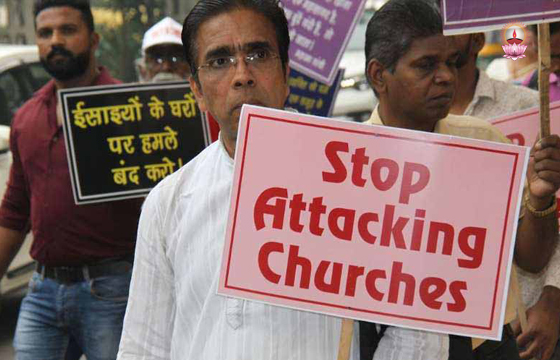
A village court in the eastern Indian state of Jharkhand has ordered families who converted to Christianity to be caned, fined and excommunicated from the community.
Three Korwa tribal families from Khala village of Dhurki in Garhwa district embraced Christianity on Jan. 22, according to media reports.
“There are reports of religious conversion in the area but they are of different denominations as a few small sects are active there. It is a matter of investigation and it should be thoroughly checked as it may give wrong messages among different faiths,” Father Augustin Xess, parish priest of St Paul’s Church in Garhwa, told.
“As far as the Catholic Church is concerned, we don’t promote religious conversion.”
The tribal priest said Hindus, followers of the Sarna tribal religion and a small number of Muslims and Christians have been living in the area peacefully with great respect for all faiths.
“After the news of religious conversion came out, we have alerted our people in the area and asked them to give us an actual report,” he added.
Father Fabianus Sinduria, who coordinates pastoral work in Daltonganj Diocese, told that “we came to know of the incident only through the local Hindi newspaper and are waiting for the final say by the local administration.”
Bhima Koregaon case: Jailed activist’s computer compromised
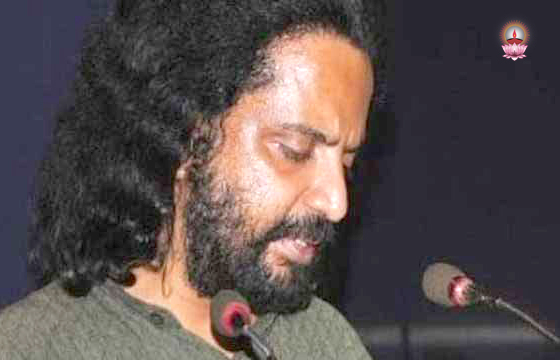
A key accused in the Bhima Koregaon case has moved the Bombay High Court after a US firm revealed that a hacker had planted incriminating evidence on his computer. A report by Arsenal Consulting, a digital forensic analyst from Chelsea, US, has debunked the electronic evidence gathered by India’s National Investigation Agency to arrest Rona Wilson and 15 others in the Bhima Koregaon violence case. Among the arrested is 83-year-old Jesuit Father Stan Swamy, who has been working among tribal communities in the eastern Indian state of Jharkhand.
They were arrest for their alleged ties with Maoist and for inciting riots during a celebratory gathering organized to mark the 200 years of the Koregaon-Bhima battle. On January 1, 2018, the violence at Bhima Koregaon village in Pune district left one dead and injured several others, inclu-ding 10 policemen. Violence erupted after some people, reportedly with saffron flags, pelted stones at cars heading towards the village for the commemoration of the 200 years of Bhima-Koregaon war on New Year’s Day.
The US digital forensics firm, which analyzed an electronic copy of the Wilson’s laptop, concluded that an attacker used malware to infiltrate the laptop and planted documents on it.
According to a report by the Washington Post, Arsenal Consulting found that the letter — along with at least nine others — had been planted in a hidden folder on Wilson’s computer by an unidentified attacker who used NetWire, a malware, to control and spy on the laptop.
According to Arsenal Consulting’s findings, Wilson received emails that appeared to be from a fellow activist, urging him to click on a link to download an innocuous statement from a civil liberties group. But this link actually deployed NetWire, a malicious software that allowed a hacker to access Wilson’s computer.
Pope, bishops express grief over Indian glacier disaster
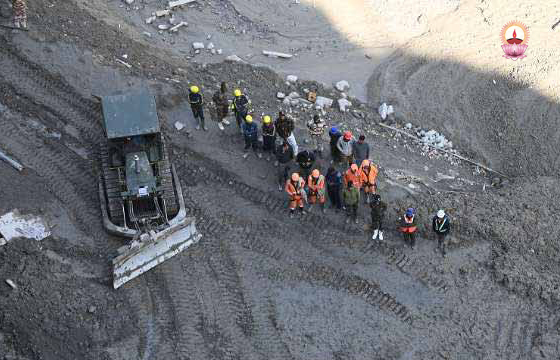
Pope Francis and Indian bishops have expressed grief over a massive glacier burst that killed at least 32 people in northern India.
The tragedy in Uttarakhand’s Chamoli district on Feb. 7 also left more than 170 missing as the rescue operation carried on until late on Feb. 10, media reports said.
“I express my closeness to the victims of the calamity that happened in India where part of a glacier separated itself, provoking violent flooding that devastated two power plants,” Pope Francis said in a tweet on Feb. 10.
“I pray for the workers who died, for their families and for all those who were wounded.”
Cardinal Oswald Gracias of Bombay, president of the Catholic Bishops’ Conference of India (CBCI), said on Feb. 9 that the CBCI expresses its grief and offers its condolences to the family members of all those who have died or are missing as a result of the Uttarakhand glacier calamity.

Christians arrested on conversion charge denied bail in India
Nine Christians charged under a newly enacted anti-conversion law in central India’s Madhya Pradesh state plan to seek bail from the state’s High Court after a trial court denied them bail.
The court in Indore city turned down the bail application on Jan. 27, a day after the Protestant Christians were arrested from a Catholic media centre where they had gathered for a routine prayer service.
Judge Yatindra Kumar Guru denied them bail, saying that “it does not seem appropriate to grant bail to the accused, looking into the facts and circumstances.”
Pastor Patras Savil, who is providing legal help to the detained Christians, said they are now “left with no other option than moving the High Court” for bail.
Police charged 11 Christians with violating Madhya Pradesh’s stringent anti-conversion law after right-wing Hindu activists stormed into a prayer service at Satprakashan Sanchar Kendra, a Catholic media center. They accused the Christians of conducting mass religious conversion.
The media center run by the Society of the Divine Word offer-ed the Protestant group space to conduct prayer services.
The center contacted police when the Hindu activists barged into the center. But the activists demanded police take action against the Christians for violating a new anti-conversion law enacted on Jan. 9.
Catholic theologians rally behind protesting farmers
A national association of Catholic theologians in India has expressed solidarity with farmers protesting against three new farm laws on the borders of the national capital for the past 70 days.
“We the members of Indian Theological Association firmly support the cause of the farmers and all those who strive relentlessly for peace founded on justice. We demand that the government listens to the voice of the poor and repeals the controversial laws,” the theologians assert in a statement issued on February 3.
The association points out that the farmers started the Delhi protests on November 26, 2020, demanding the repeal of the new farm laws and legal guarantee for minimum support price for their agricultural produce.
The Indian agriculture acts of 2020, often referred to as the Farm Bills, are three acts initiated by the Parliament of India in September 2020. They are: the Farmers (Empowerment and Protection) Agreement of Price Assurance and Farm Services Bill, The Essential Commodities Act (Amendment) Bill and the Farmers’ Produce Trade and Commerce (Promotion and Facilitation) Bill.
The Lok Sabha, the lower house of the parliament, approved the bills on September 17, 2020, and the upper house Rajya Sabha passed them three days later. Indian President Ram Nath Kovind gave his assent on September 27, 2020. “The laws have made Indian farmers, most of them own less than one acre, even more vulnerable by giving the levers of power to the big agri-business companies,” the Indian Theological Association (ITA) said in.
Kochi women bead rosaries for 200 years
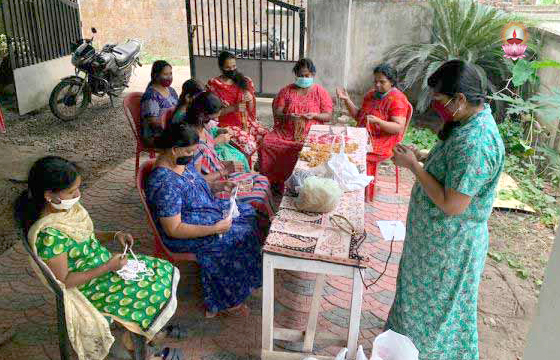
Turning beads into elegant rosaries isn’t merely Vilma Antony’s sustenance. It’s her spiritual calling. She counts the prayers of thanksgiving, devotion, and confession as she strings her silver beads, interspersing this activity with gospel readings at her village home a few miles from the South Indian port city of Kochi. She’s joined by 10 other women who sing and narrate folk stories as they string the sacred prayer beads through the afternoon. Antony’s home is among 2,000 others in Koonammavu — a northern suburb of Kochi city— that has nurtured rosary making for over two centuries. The villagers call it their “little Rome” from which they ship rosaries to different parts of India and beyond, including the United States, Europe, Africa, and Middle East.
Invite Pope Francis, Indian cardinals urge prime minister
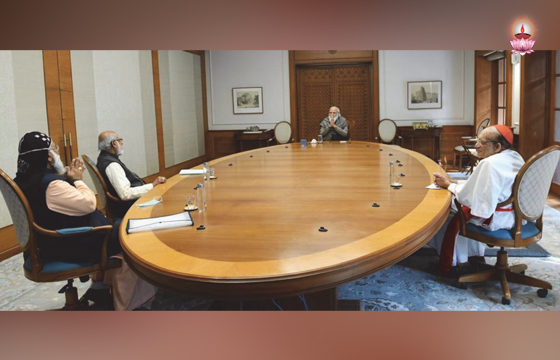
Three Indian cardinals on January 19 met Prime Minister Narendra Modi and requested him to invite Pope Francis to the country.
Talking to reporters after the meeting in Delhi, the cardinals said the prime minister agreed to their request and promised to take a decision soon.
The cardinals are Oswald Gracias, president of the Catholic Bishops’ Confer-ence of India, George Alencherry, the head of the Syro-Malabar Church, and Syro-Malankara Church leader Baselios Cleemis.
The meeting was part of the prime minister’s interaction with heads of various church, initiated by Mizoram Governor P S Sreedharan Pillai, a native of Kerala where assembly elections are due this year.
Cardinals said they have been asking for an invite to the Pope for quite some time and expressed the hope that it would be realized soon. In 2018 there was a growing demand for the Pope to be invited to the country when he visited two Asian neighbors, Bangladesh and Myanmar.
Pope Francis had expressed a desire to visit India during his flight back from a trip to Georgia and Azerbaijan on Oct 2, 2016. He said he would “almost certainly” visit India and Bangladesh in 2017.
On February 7, 2017, three Indian cardinals, including Cardinal Gracias, had met Modi in New Delhi, to discuss the possibility of a papal visit. A bishops’ press release following the meeting said, “The government holds a favorable attitude toward the Pope’s visit to India.”
However, despite efforts by the bishops, the 2017 visit never materialized because of foot-dragging by the federal government led by the pro-Hindu Bharatiya Janata Party (BJP).
“It is overdue. We expect a decision from the PM soon,” said Cardinal Alencherry after the latest meeting with Modi.
(See Focus)
Indian Christian group campaigns for non-halal meat
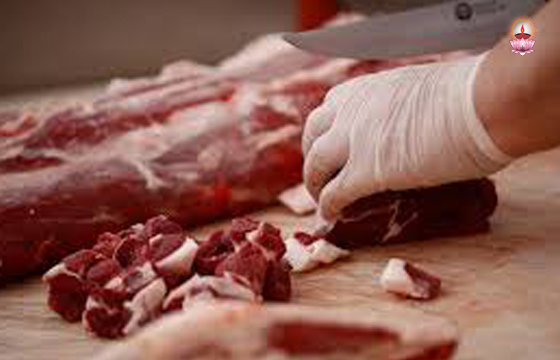
A Christian group in India’s Kerala state has called for promoting non-halal meat among community members rather than the halal meat popular among the Muslim community.
The Christian League is planning to create awareness among Christians about the meat they consume and wants shops to specify what sort of meat they are selling to ensure that Christians get non-halal meat.
“Christians should know what meat are they eating,” said Murphy Thomas, chairman of the inter-denominational league, which claims to address issues concerning the Christian community in the southern state.
“We know many Christians eat halal meat, which has religious importance to Muslims, and therefore we want Christians to avoid it and be aware of shops that sell non-halal meat,” Thomas told on Jan. 13.