
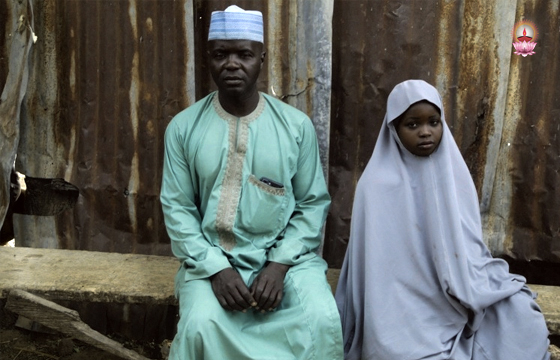
In the early morning hours of Friday, February 26, CNN reported that hundreds of female students had been kidnapped overnight from their boarding school in Nigeria. “They came on about 20 motorcycles and they marched the abducted girls into the forest,” a source told CNN. “The bandits arrived around 1:45 a.m. and they operated ‘til about 3 a.m.”
This outrageous assault took place less than a week following the 3-year anniversary of the abduction of well-known Nigerian kidnapping victim, Leah Sharibu. In a similar invasion, on February 19, 2018, Leah’s school had been attacked, and she and her classmates were abducted by Boko Haram terrorists.
Boko Haram’s kidnapping of Leah Sharibu and her classmates horrifically demonstrated Boko Haram’s radical Islamist agenda. Her classmates, who were released, were Muslim girls. She, alo-ne, refused to deny her Christian faith and has remained enslaved for three years. Leah has reportedly given birth to the child of one of her captors.
Meanwhile, in a related and tragic story of religiously-based kidnapping, on February 25, Christian Pastor Bulus Yakuru, who was seized during a Christmas Eve attack, stated he will be executed within a week if President Muhammadu Buhari does not meet Boko Haram’s demands for his release. In a new video, Pastor Yakuru identified himself and pleaded with Nige-ria’s president, the Borno State governor, and the Christian Association of Nigeria (CAN), the umbrella body of Christians in the country, to intervene and secure his release.
All posts by Light of Truth
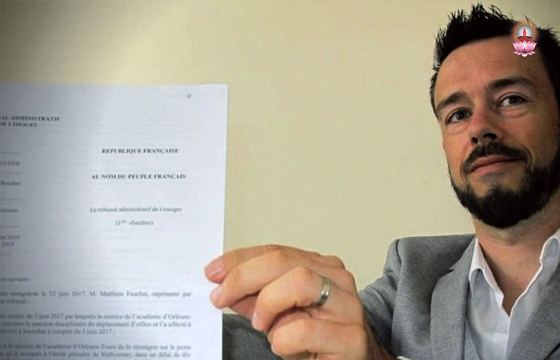
French Court Vindicates Christian History in School
A French public school teacher has been cleared of sanctions for teaching about Christianity.
Matthieu Faucher, an atheist, faced a years-long legal battle after being accused of violating France’s official ”neutrality and secularism” standard by teaching about Christian history.
After school authorities received an anonymous complaint of proselytism, Faucher was suspended — despite parents’ protests. His superiors validated the sanction, and in June 2017, he was assigned to a different school.
Faucher denied failing “in his duty to neutrality and secularism,” and he won a suit against school authorities in a local court. The Ministry of National Edu-cation challenged the court’s decision, which was subsequently validated by an administrative court in Bordeaux on Dec. 22.
While he was happy about the Bordeaux court’s decision, Faucher said that “much bigger things are at play,” including the teaching of the history of religion by secular teachers.
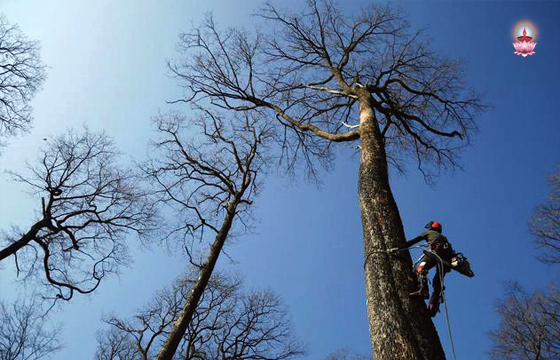
Four oaks, one sacred destiny: Recreating Notre Dame’s spire
Four French oaks that have been standing for hundreds of years in a once-royal forest now have a sacred destiny. Felled Tuesday in the Loire region’s Forest of Berce, they have been selected to reconstruct Notre Dame cathedral’s fallen spire. The 93-metre-high spire, made of wood and clad in lead, became the most potent symbol of the April 2019 blaze when it was seen engulfed in flames, collapsing dramatically into the inferno. Last July amid a public outcry, French President Emmanuel Macron ended speculation that the 19th century peak designed by Eugène Viollet-le-Duc could be rebuilt in a modern style.
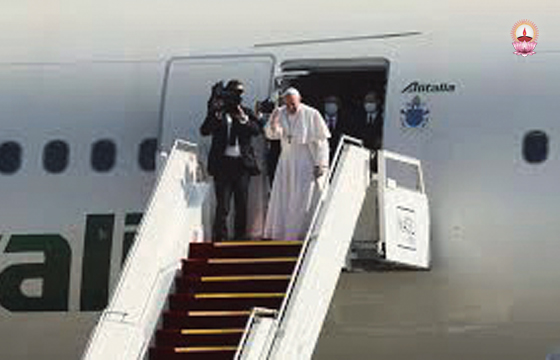
Pope says he’s not afraid of being called ‘heretic’ for outreach to Islam
In his latest in-flight news conference, Pope Francis said Monday he’s not afraid to be called a ‘heretic’ for engaging in dialogue with Muslims; that he felt “imprisoned” during Covid-19 lockdowns; he was “shocked” by the destruction he witnessed in the Iraqi city of Mosul Sunday; and, on inter-national Women’s Day, expressed regret over the exploitation of women, including the practice of genital mutilation.
“Women are more courageous than men, this is true,” he said. “Today, women are humiliated. A woman on the plane [Spanish journalist Eva Fernandez, from Spain’s Radio Cope] made me see the list of prices for women [slaves]” under ISIS.
“I couldn’t believe it. Women are sold. They are enslaved. Also in downtown Rome, the work against trafficking is daily,” the pope said.
Francis also mentioned that there are countries, “primarily in Africa,” that still practice genital “mutilation, mutilation as a rite that needs to be done. But women are still slaves and this is something we have to fight against.”
Women, he continued, are the ones “carrying history,” and this Francis said, is “not an exaggeration. Women carry history forward.”
Human fraternity, the term often used by Francis to describe the aim of interreligious dialogue, is important because men and women are all siblings, the pope said, adding, “We need to move forward with other religions too.”
Francis defined his Saturday meeting with Grand Ayatollah Ali al-Sistani, the highest-ranking Shiite leader of Iraq, as a “second step” in this path towards fraternity after signing a joint declaration with Grand Imam Ahmed el-Tayeb of Al-Azhar, a leading point of reference in Sunni Islam, in 2019.
Without prompting, the pontiff acknow-ledged that when it comes to interreligious dialogue and fostering human fraternity, he takes “risks” because this is “necessary.”
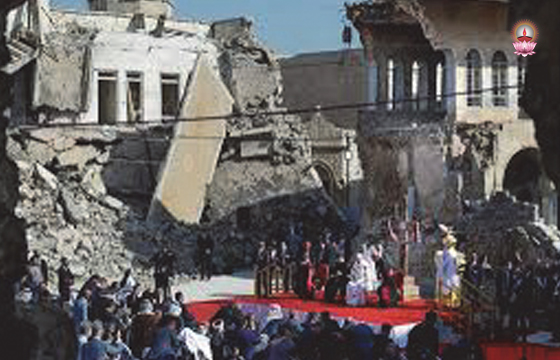
At Mosul Church, Pope Asks Iraq’s Christians to Forgive ISIS and Rebuild
Pope Francis urged Iraq’s Christians this past Sunday to forgive the injustices against them by Muslim extremists and to rebuild as he visited the wrecked shells of churches and met ec-static crowds in the community’s historic heartland, which was nearly erased by the Islamic State group’s horrific reign.
“Fraternity is more durable than fratricide, hope is more powerful than hatred, peace more powerful than war,” the pontiff said during prayers for the dead in the city of Mosul, with the call for tolerance that has been the central message of his four-day visit to Iraq.
At each stop in northern Iraq, the remnants of its Christian population turned out, jubilant, ululating, and decked out in colorful dress. Heavy security prevented Francis from plunging into the crowd as he would normally. Nonetheless, they simply seemed overjoyed that he had come and that they had not been forgotten.
It was a sign of the desperation for support among an ancient community uncertain whether it can hold on. The traditionally Christian towns dotting the Nineveh Plains of the north emptied out in 2014 as Christians—as well as many Muslims—fled the Islamic State group’s onslaught. Only a few have returned to their homes since the defeat of ISIS in Iraq was declared four years ago, and the rest remain scattered else-where in Iraq or abroad.
“It is almost as if we have more churches than people,” Ashur Eskrya, president of Assyrian Aid Society–Iraq, told.
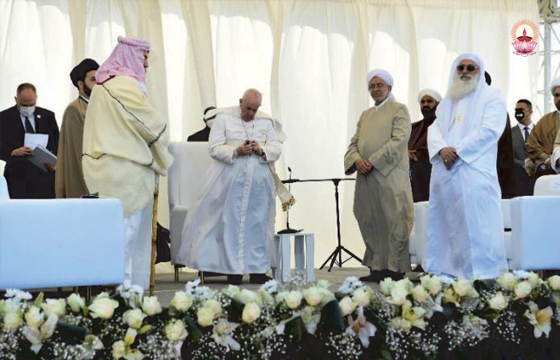
Muslims and Jews: the Pope in Najaf and Ur, the basis for an Iraq of peace and pluralism
The meeting between Pope Francis and Grand Ayatollah
Ali al-Sistani in Najaf and the interfaith prayer in Ur of the Chaldeans are laying the foundations for an Iraq based
on coexistence, pluralism, peace and a multicultural vision.
Analysts and commentators, from Iran to Israel, stress the “historic” significance of this morning’s meeting between the pontiff and the Shia spiritual leader and the dialogue between different faiths in the birthplace of Abraham, father of the three great monotheistic religions.
This “rare and special” event received “an unusually wide media coverage,” said Saad Salloum, journalist and associate professor of political science at Baghdad’s prestigious Al-Mu-stanciriyya University, speaking to AsiaNews about the meeting between Pope Francis and Grand Ayatollah Ali al-Sistani.
Co-founder of the Iraqi Council for Interfaith Dialogue and president of the Masarat Foundation, dedicated to the protection of diversity, Salloum described the meeting as “a symbolic visit between two similar personalities: both with great spirituality but humble; the latter lives in a small house in Najaf, considered the Shia Vatican, while the former resides in a flat in Santa Marta.”
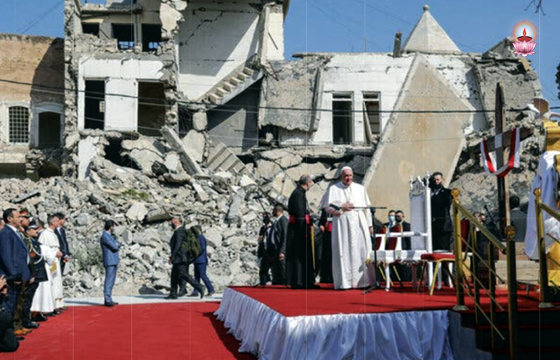
The Pope and restored ruins of Mosul speak to the whole world of hope
An elderly Pope Francis bowing and asking God’s forgiveness for the violence unleashed in the square of the four churches in Mosul; the choral participation of Muslims, Christians, Yazidis and Sabeans, all in traditional costume, survivors of a violent uprooting; the crumbling walls of the churches under reconstruction, where the monument to the martyrs and to those who died under the murderous fury of bloodthirsty hired men is blessed… I was moved to see all these buds of rebirth in a country and especially in a people that risked crumbling away like dust on the wind to disappear.
Iraq, like Iran, influenced by the Zoroastrian tradition, celebrates the new year in spring, on March 21. This year, the new spring came a few weeks earlier, with the pontiff who revealed the resurrection of a people who seemed destined to be swallowed up by terrorism, emigration, division to the eyes of the whole world.
I underline “people” and not “state”: The Iraqi state is still crippled by division, laying mutual blame, yet to rebuild harmony within, but the people show us examples of hope in coexistence and the future. Young Muslims and Christians rebuilding mosques and churches in Mosul is something that has been going on for some time. The Pope highlighted this by showing the power of hope that overcomes oppression; the resurrection that overcomes death.

Iranians are happy about the Pope-Sistani meeting, not the fundamentalists
Pope Francis’s visit to Iraq on March 5-8 has had several repercussions in Iran, especially the meeting between Francis, the leader of world Catholicism, and Ayatollah Ali al-Sistani, one of the most important Shia religious leaders.
Some, including Mohammad Masjedjamei, former Iranian ambassador to the Holy See, mentioned Pope John Paul II’s desire to visit Iraq 21 years ago and the opposition to it by then-leader Saddam Hussein.
For many Iranians, the most important part of the trip was the Pontiff’s visit to al-Sistani, which is of great value for peace in the region and the safety of Iraqi Christians.
At present, Sistani is the world’s most important Shia leader, and the city of Najaf, where he lives, has been for centuries the home of Shia leaders.
After the Islamic Revolution of 1979, Iran’s political clergy sought to change this situation, by trying to turn Qom – the main seat of Iran’s Shia clergy located in central Iran – into the centre of world Shiism.
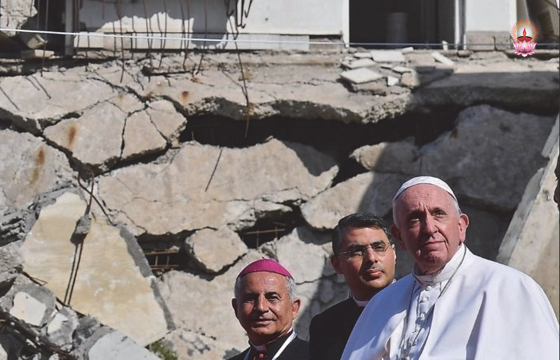
Iraq: Pope’s Trip Leaves Collateral Damage
Pope Francis’ Iraq trip has triggered a tidal wave of mockery on social media, with Muslims gleefully announcing that the Pontiff has surrendered to Isla-mic supremacy, an Iraqi Muslim convert has told Church Militant.
The Kurdish response to Francis on the final day of his visit has been largely negative, as “many Kurds see the pope as a person who flatters wicked people like President Erdoðan,” observed Nasser Aza, an academic from Erbil.
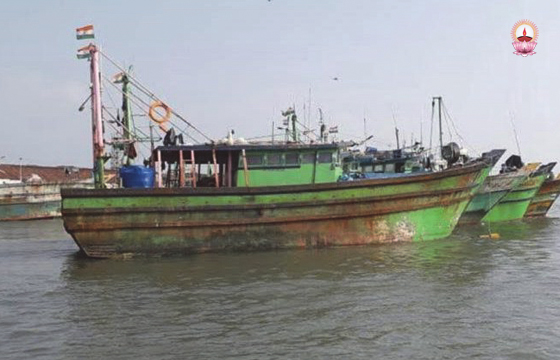
Kerala deep sea fishing row: Latin Church slams govt officials for lapses
The Latin Church in Kerala has lashed out at the state government over the scrapped deal with US-based EMCC International for deep sea fishing and research, stating that the Fisheries and Industries Departments made serious mistakes and that they would have to take responsibility for the issue, instead of blaming bureaucrats.
Bishop Joseph Kariyil of the Cochin Diocese said that he didn’t believe that the Chief Minister was kept in the loop and that the actions of departments concerned were condemnable. The bishop was speaking to the media after a meeting of the Kerala Regional Catholic Council (KRLCC) in Kochi on March 7.
“The CM might have relied on the departments to act responsibly. However it was not for them to sign the pact without studying the issues properly,” the bishop said, the Times of India reported.
The controversy relates to two Memorandum of Understandings signed with EMCC International India, one by the Kerala Shipping Inland Navigation Corporation Limited (KSINC) and one by the Kerala State Industrial Development Corporation Limited (KSIDC). The one by KSIDC was signed in February 2020 while the one with KSINC was signed in February 2021.
The EMCC International, according to the MoUs, will invest Rs 5,324 crore in fisheries research and development for upgrading and promoting the deep sea fishing industry in Kerala.
The government cancelled the MoUs signed with KSINC after the opposition raised allegations of corruption in the deals and also highlighted the concerns of the fishing community, who have warned that foreign trawlers would impact fishermen and lead to unscientific deep fishing that could adversely affect the environment.
“The evidence in my possession or in the hands of opposition leader (Ramesh Chennithala) is a private matter and it’s up to us to decide on when to bring it out. The deal was something that affects everyone, so why didn’t (the government) furnish proof and clear their names, instead of kicking the ball to the opposition’s court, demanding evidence from them,” media reports quoted the bishop as saying.