
Today’s America is facing moral and political divisions that especially challenge our Christian communities. During these times of increasing uncertainty, we need to be aware of dangers that could affect our families and the future our faith.
However, a clear-eyed look beyond our American borders reveals another and even more urgent reality: internationally, Christians are facing immediate, dire, and dangerous circumstances.
“The Guardian,” a politically liberal British publication, published a worrisome statement in a January 2021 article:
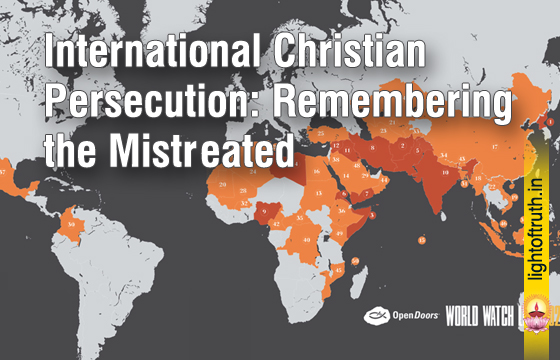
“More than 340 million Christians—one in eight—face high levels of persecution and discrimination because of their faith, according to the 2021 World Watch List compiled by the Christian advocacy group Open Doors. It says there was a 60% increase over the previous year in the number of Christians killed for their faith. More than nine out of 10 of the global total of 4,761 deaths were in Africa.”
Of course, very few of those international Christians look like us, speak our language, or worship as we do. We may not immediately relate to them. Meanwhile, hidden in numerous Muslim countries, are millions of new converts to Christianity from Islam. Sadly, according to radical Islamism, their conversion is grounds for execution.
Random dictatorships and abusive regimes mistreat Christians for reasons of insatiable power and control. But today, surging dangers to Christians are due primarily to two specific causes: radical Islam and communism.
For example, consider the country that is listed by Open Doors as the worst persecutor of Christians in the world: North Korea.
North Koreans are required to “worship” the Marxist-Maoist Kim family in a peculiar, quasi-religious system. North Korean Christians—estimated at some 400,000 people—face particularly horrendous persecution. Torture. Starvation. Rape. Slave Labour. Public Execution. All this for simply possessing a Bible or otherwise practicing Christianity.
China is another serious persecutor, and it cooperates with North Korea’s oppression by sending fleeing Christians back across the common border, likely to torture and death. No higher authority–God–is permitted in either country.
Under Xi Jinping, China is increasingly abusive to Christians. Meanwhile, we see what’s happening to China’s millions of Uighur Muslims—either kept or killed in brutal concentration camps or barely surviving incapacitating surveillance, including facial recognition software, DNA identification, phone tracking, and a social credit system. These technologies are also used to track, capture, and abuse Christians and other religious minorities.
And speaking of global menaces to religious minorities, Iran is another danger-zone. Iranian Christians – particularly converts from Islam – are identified as enemies of Iran’s Shiite mullahcracy and as threats to national security. Arrests and behind-the-scenes violence against Christians are rampant.
Yet an underground movement comprised of converts from Islam is growing miraculously, even while severely repressed. These new Christians have zero rights, yet their courage is astonishing.
At the same time, as “The Guardian” reports, African believers are at high risk across that vast continent.
All posts by Light of Truth
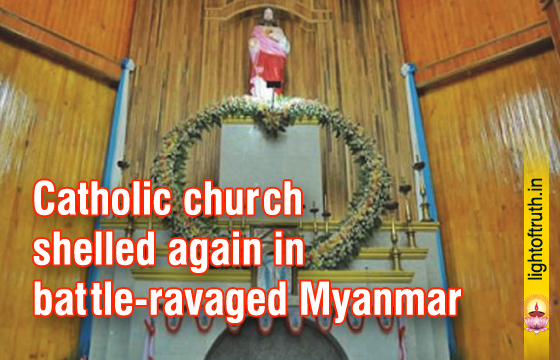
Catholic church shelled again in battle-ravaged Myanmar
Religious buildings including Catholic churches and convents continue to be the primary target of Myanmar’s military, which is reinforcing its troops to crush local militias.
Sacred Heart of Jesus Cathedral in Pekhon town, which belongs to the Diocese of Pekhon in Shan state, was hit by military artillery on Nov. 9.
There were no reported casualties despite the windows and pews being damaged, according to church sources.
The cathedral was also struck by artillery fire in June. The attack came three days after a convent in the same township was hit by military shelling on Nov. 6.
No casualties were reported at the convent of the Sisters of Zetaman, which is situated in Jeroblous Marian shrine in Pekhon township. Fighting between the military and the combined forces of the Karenni army and Karenni People’s Defense Force has intensified since Nov. 2.
More than 10,000 people from Pekhon township have been newly displaced due to the fighting and indiscriminate attacks with heavy weaponry by the military, according to aid workers.
A Catholic social worker said his family were forced to flee from their homes in Pekhon town as artillery shelling fell on his neighbours.
“It was intense fighting, so the majority of people have fled from their homes to safe areas,” he told.
He said the fighting has impacted their response to displaced people as church social workers have also fled their homes and taken refuge in safe areas.
Pekhon Diocese is one of the worst-affected areas along with Loikaw Diocese in Kayah state due to the escalating conflict since May.
More than 100,000 civilians have been forced to seek refuge in churches, convents and makeshift camps even while the military is targeting priests and pastors, bombing and vandalizing churches in the predominantly Christian region of Kayah and Chin states.
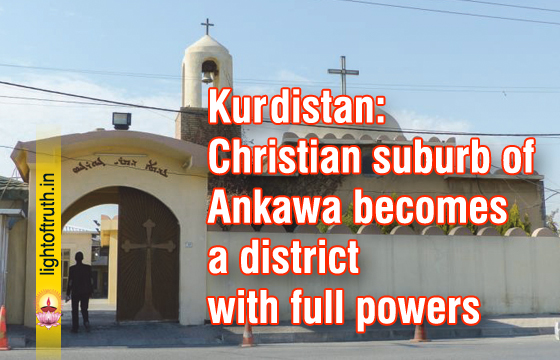
Kurdistan: Christian suburb of Ankawa becomes a district with full powers
Ankawa, the Christian suburb of Erbil, the capital of Iraqi Kurdistan, has been designated a district. In the past it welcomed thousands of Christian families who fled from Mosul and the Nineveh plain following the rise of the Islamic State group.
Kurdistan Region Prime Minister Masrour Barzani made the announcement on Monday during a visit to the area.
Archbishop Bashar Matti Warda of Erbil welcomed this major recognition. It is a “very important decision for Ankawa,” said the prelate, a “strategic” move to maintain the Christian presence in the region and an incentive for Christians to remain and invest in their community.
The decision to increase the degree of autonomy and repre-sentativeness of what was just once a (Christian) suburb is shared by the Kurdistan Interior Ministry, the governor of Erbil and the local provincial council.
With the new status, Ankawa passes under the “administrative control” of its Christian reside-nts, most of whom fled perse-cution from Iraq’s Nineveh plain and Syria, and will become “the biggest district of Christians in the Middle East.”
From sub-district to full-fledged district, residents will be able to elect officials and repre-sentatives, run their admini-strators, be in charge of security and benefit, unlike the past, from a mayor with “direct authority”.
For Kurdish leaders, who took in Christians during the rise of the Islamic State, the goal is to show the international commu-nity that the region is safe for Christians (and non-Christians), thus attracting investments and opportunities for economic development.
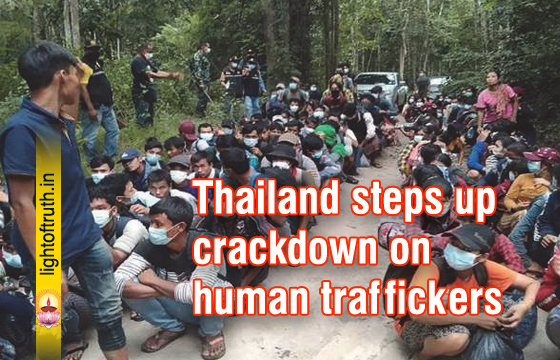
Thailand steps up crackdown on human traffickers
Thai authorities are stepping up their campaign against human traffickers who continue smuggl-ing large numbers of migrants from neighbouring countries.
They are issuing arrest wa-rrants for people smugglers whose assets will be seized if they are convicted of human trafficking, money laundering and other crimes, according to Labour Minister Suchart Chom-klin.
In addition, the Ministry of Labour is seeking to make it easier for migrant workers to enter Thailand legally in order to discourage migrants from relying on people smugglers for entry.
“Migrant workers should not have to wait longer than three weeks before they can enter the country legally under new me-morandums of understanding [between Thailand and its neighbours],” Suchart said at a press conference this week.
Under these pacts with Myan-mar, Laos and Cambodia, up to 80,000 migrant workers from these nations will be allowed to work in Thailand in the first phase, especially in sectors such as construction and food processing that are experiencing severe labor shortages.
At the same time, however, large numbers of migrants continue streaming illegally into Thailand through porous national borders despite stepped-up border patrol measures.
Last week alone, nearly 3,000 illegal crossings were detected, though many more are likely to have managed to stay undetected.
The migrants told police that had each paid either 25,000 baht (US$760) or 26,000 baht to job brokers before entering Thailand with the help of smugglers.

Catacombs to remind Korean Catholics of early persecution
The Archdiocese of Gwangju in South Korea has installed 14 catacomb murals in a Catholic cemetery to help the faithful pray and meditate as well as to learn about the early days of the Church and the persecution of Christians.
Archbishop Hyginus Kim Hee-joong of Gwangju blessed the murals on the wall behind Catholic Park Cemetery in Damyang county of Gwangju on All Souls’ Day on Nov. 2.
The murals on tiles are based on scenes from the Bible, seven each from the Old and New Testaments. Scenes from the Old Testament include Noah’s ark, the Exodus and the story of Jonah. In the New Testament, there are the parable of the lost sheep, the miracle of the five fish and the resurrection of Lazarus.
The initiative for catacomb murals is the brainchild of Archbishop Kim, who took photos of catacombs in Rome when he studied and obtained a doctoral degree in church history from the Pontifical Gregorian University from 1976-86.
His photos have been improved by a team of professionals and transferred to a tiles format.
Father Andrew Heo Woo-yeong, director of the cemetery, said the murals will help the faithful know about Christians of the early Church and how they gathered secretly to avoid persecution from rulers.
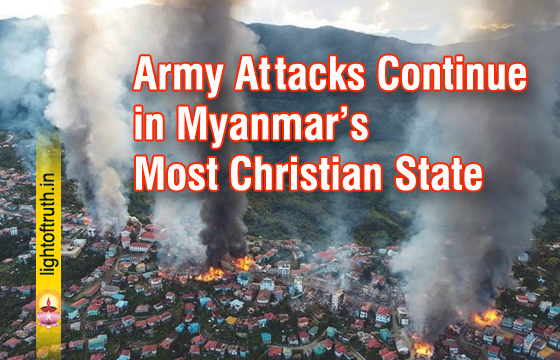
Army Attacks Continue in Myanmar’s Most Christian State
More than 160 buildings in a town in north-western Myanmar, including at least two churches, have been destroyed by fires caused by shelling by government troops, local media and activists reported Saturday.
The destruction of parts of the town of Thantlang in Chin state appeared to be another escalation in the ongoing struggle between Myanmar’s military-installed government and forces opposed to it. The army seized power in February from the elected government of Aung San Suu Kyi, but has failed to quell the widespread resistance.
The Chin state is a heavily Christian area in the otherwise majority-Buddhist country. Over 90 percent of the ethnic Chin people identify as Christian, many of them Baptists after the history of Baptist missionaries in the region.
A government spokesman denied “nonsense allegations being reported in the country-destroying media,” and blamed insurgents for instigating the fighting and setting the fires.
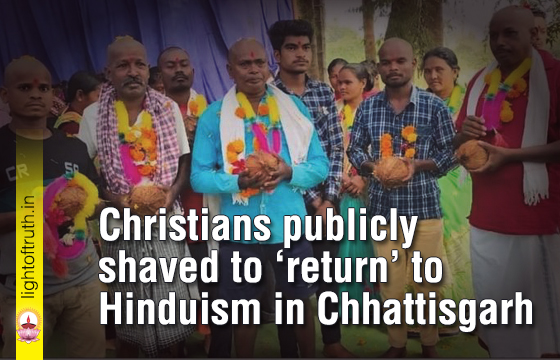
Christians publicly shaved to ‘return’ to Hinduism in Chhattisgarh
To achieve this goal, Hindu extremists shaved their heads and put coconuts in their hands as part of a Hindu religious ritual.
Such acts were accompanied by the threat of seizing land, homes and properties owned by Christians and having them denied access to publicly owned forest land if they did not comply.
“This is a barbaric act and an evident forced conversion,” said Sajan K. George, president of the Global Council of Indian Christians (GCIC).
This, George explained, is “A violation of the fundamental right to religious freedom and respect for the dignity of every person”.
It is “also a way to publicly humiliate, mock and insult Christians, whose daily life is constantly in the crosshairs of right-wing extremist nationalist groups.”
What is more, it “is not an isolated incident. Christians in Chhattisgarh live constantly in fear of Ghar Wapsi campaigns, as conversion to Hinduism is called.”
Already last July in the nearby district of Sukma, the police superintendent Sunil Sharma had issued a circular asking officers to raise the level of attention towards the activities of Christian missionaries who, he wrote, “are continuously travelling to the interior and influencing local tribals by luring them with perks to make them accept Christianity.”
“In Chhattisgarh,” Sajan George said, “anti-conversion laws were made tougher in 2006. But an amendment expressly provides that the ‘return’ to the ‘ancestral’ religion should not be considered a conversion.”
In reality, the vast majority of tribal people have never really professed the Hindu religion.
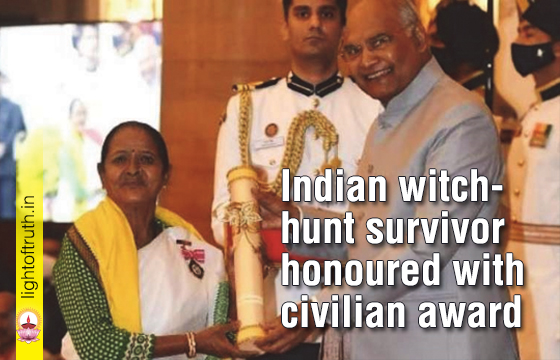
Indian witch-hunt survivor honoured with civilian award
Tribal Christians in the eastern Indian state of Jharkhand are delighted after the federal government awarded one of its highest civilian awards to Chutni Mahto for her campaign to end witchcraft.
Mahto was presented with the Padma Shri (noble one in blossom) by Indian President Ram Nath Kovind in the national capital New Delhi on Nov. 9.
Mahto, herself a victim of witch-hunting, has campaigned to create public awareness against the inhuman practice in her home state since 1995.
Data from the federal National Crime Records Bureau (NCRB) shows that between 2000 and 2016 more than 2,500 people were killed in witch hunts. An average of 156 people, mostly women and children, are killed each year across India due to the practice of witchcraft.
Rights activists say the actual numbers could be much higher as many cases are not reported to police or are reported wrongly to save those involved.
Murder driven by the belief in black magic is common in Jharkhand. In 2019, the state reported 27 deaths related to allegations of witchcraft. Up to September 2020, 19 deaths had taken place over alleged witchcraft, according to police data.
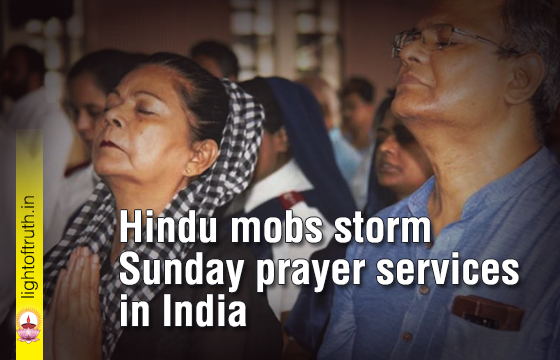
Hindu mobs storm Sunday prayer services in India
Hindu activists have disrupted Sunday prayer services in two Indian states alleging forced religious conversions that were denied by Christians.
The first incident was reported on Nov. 7 from the southern state of Karnataka, where members of the Sri Ram Sene (Ram’s army) barged into a Christian prayer hall in Maratha Colony in Belgavi (formerly Belgaum) and locked in the devotees.
Police had to rush to open doors of the locked-up hall and asked those inside to go home.
Sene members alleged that Pastor Lema Cherian was con-verting poor Hindus to Chri-stianity by organizing prayer services. Pastor Cherian denied the allegation. “We have been organizing prayer services every Sunday and all are free to join,” he said.
He said that the local police were informed about the Sun-day meeting and nobody was forced to attend it. “We are free to practice any faith of our choice and it is our fundamental right. No one can infringe upon it,” the pastor added. But Assistant Commissioner of Police Ajjol Chandrappa told media that a Hindu man who attended the prayer service had filed a complaint alleging conversion. The police were verifying the facts and may register a case, he said.

First Indian layman to become saint on May 15
Pope Francis will canonize Devasahayam Pillai, together with six others, during a canonization Mass in St Peter’s Basilica on May 15, 2022.
The announcement was made November 9 by the Congregation for the Causes of Saints. It follows the Ordinary Public Consistory of May 3 this year whereby the Pope had authorized the canonizations, without however setting a date for the ceremony because of the health emergency caused by the Covid-19 pandemic.
Blessed Lazarus (Devasahayam)
Blessed Lazar is the only martyr among those set to be canonized.
Blessed Lazarus, known as Devasahayam, was a Nair caste in India. Converted to Catholicism by a Jesuit priest in 1745, Devasahayam Pillai took the name Lazarus.