
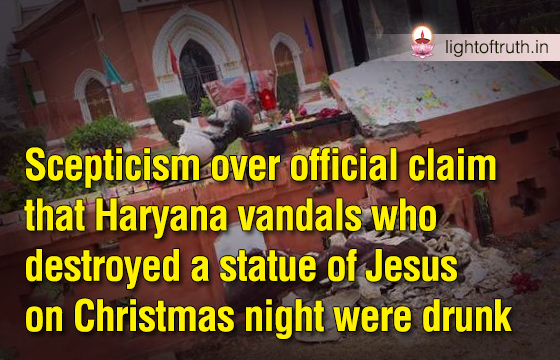
Christian leaders in India have sought an impartial probe into the destruction of a cent-ury-old statue of Jesus Christ at a British-era Catholic church in Ambala in the northern state of Haryana.
Two men were seen on CCTV footage scaling the church compound on Christ-mas night and destroying the statue after breaking open the casket.
Police arrested two suspects after three days and a court remanded them into judicial custody. But church leaders suspect the case may get diluted with the investigating officer saying the suspected vandals were drunk.
“The police officers tasked with the investigation is siding with the suspects and trying to dilute the crime on the plea that they acted under the influence of liquor,” said Father Patras Mundu, parish priest of the Holy Redeemer Church in Ambala Cantonment in the Diocese of Simla-Chandigarh.
The police did not charge the arrested suspects for viola-ting the curfew orders imposed in the city, he said, adding that one of the arrested is a government employee and hence familiar with the laws of the land.
All posts by Light of Truth
Catholic religious question silence of Indian Church on violence
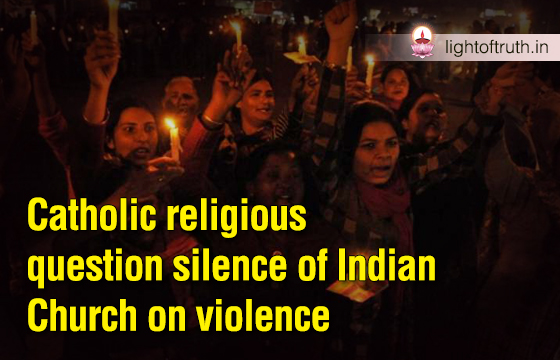
A group of progressive Catholic religious in India have questioned the silence of the official Catholic Church over the continued violent attacks on Christians and other mino-rity communities across the country.
They want the Catholic Bishops’ Conference of India (CBCI) to take up the issue with Indian Prime Minister Narendra Modi and Home Minister Amit Shah to ensure immediate action against the perpetrators of hate crimes against minorities.
They also want regional bishops’ conferences to raise the issue of Christian persecution with respective state governments.
The Forum of Religious for Justice and Peace, in a letter dated Jan. 10 addressed to Cardinal Oswald Gracias, expressed shock over the silence of the CBCI even as targeted violence against Christians continued unabated in the country.
“During the two days, Dec. 24-25, the media reported seven well-planned attacks on Christian institutions across the country,” while “in the year 2021, there were 486 incidents of violence against the Chris-tian community in India, accor-ding to the United Christian Front,” the forum said.
Naga Christians walk against Indian army abuse
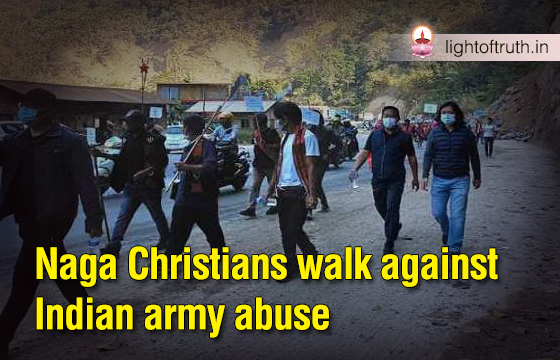
Thousands of people, mostly Christians, in India’s north-eastern state of Nagaland took part in a two-day walkathon from commercial hub Dimapur to capital Kohima demanding the repeal of the draconian Armed Forces (Special Powers) Act (AFSPA) and justice for Naga Christians killed by the Indian army last month. Protesters including civil society activists and women and children took to the streets on Jan. 10-11 and carried placards demanding the repeal of the controversial law which was enforced in Nagaland to curb secessionist groups and armed rebellion in 1956.
‘Unzen Hell’ a reminder of Christian persecution in Japan
The journey through Nagasaki Prefecture starts from a small town with a curious name, Obama, which has no relation with the former US president (but did make it globally notorious for a while) and only means a small beach.
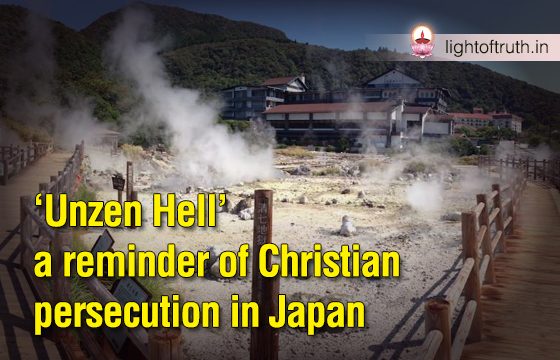
It is in fact a small spa resort on Kyushu, Japan’s third-largest island, overlooking the open ocean. From here you get on a bus that climbs the sharp curves of the mountains up to a height of 700 meters. Then you finally reach Unzen, a mountain village that sprang around its famous thermal baths, the hottest in all of Japan, they say here, with temperatures reaching 120 degrees.
At some point in the 17th century, it was the site of Christian persecution when the rulers immersed Christians in the boiling waters to force them to renounce their faith.
Touristically speaking, it is the perfect venue for all those looking for a memorable snapshot to hang in that space of fleeting self-gratification on the various social networks. From the earth rise, for 20 or 30 meters, large fumes that surround a hotel whose foundations dig right into the boiling thermal waters. One wonders what technical tricks the engineers have put in place to keep those gigantic structures, some centuries-old, standing on that incandescent quagmire.
The gargling of the continuous bubbling of water, stones and mud evokes ghosts of otherworldly landscapes. It is no coincidence that the place is known as “Unzen Hell.”
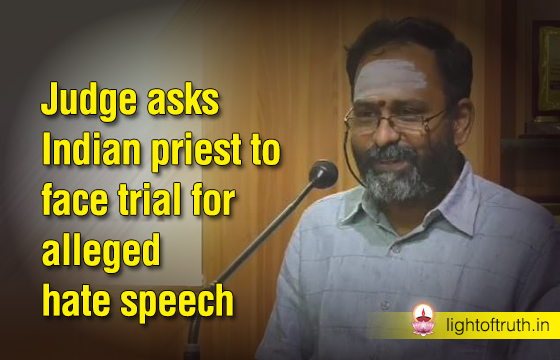
Judge asks Indian priest to face trial for alleged hate speech
The top court in southern India’s Tamil Nadu state has ordered a Catholic priest to face trial for allegedly hurting the religious sentiments of Hindus and criticized Christian missionaries claiming Jesus Christ as the only true god.
The Madras High Court on Jan. 17 said that “the offending speech” of Father George Ponnaiah, a vicar of Kuzhithurai Diocese, “prima facie attracts the offenses” under various clauses of the Indian penal code.
Catholic union seeks fair probe into Modi Punjab fiasco
The All India Catholic Union, the largest laity group in the country, has expressed concern over the aborted visit of Prime Minister Narendra Modi to Punjab. “The Catholic Union prays, as does every Indian citizen, for the long life of Narendra Modi and all others put in high offices of governance in India,” John Dayal, spokes-person of the union, told on Jan. 8.
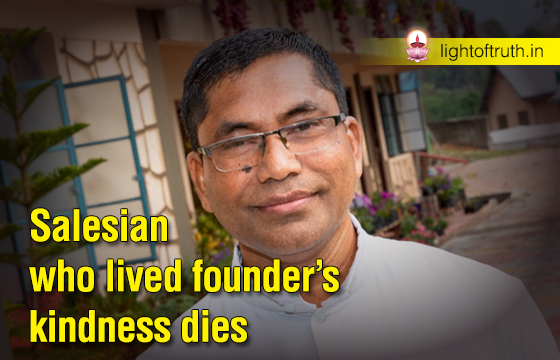
Salesian who lived founder’s kindness dies
Members of the Calcutta Salesian province has mourned the death of Father Samuel Sudorshon Mondol, a former director of Novices.
The Salesian priest died in Kolkata at 8.45 am on December 28, 2021. He was 49. Father Mondol “had been undergoing immunotherapy since two months for sicknesses related to his liver, and recently, the kidneys. Of late he was undergoing palliative care.
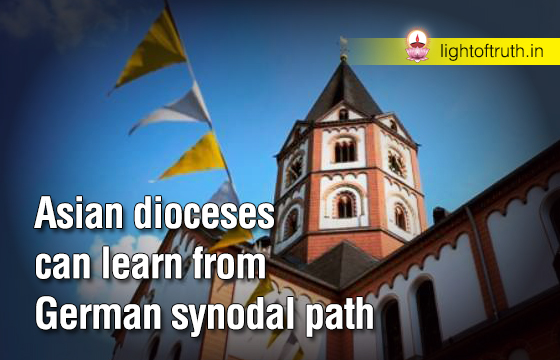
Asian dioceses can learn from German synodal path
The ongoing diocesan synods across the globe, preparing for the 2023 Synod of Bishops in Rome, can learn a few lessons from the explosive German synodal path on subjects detrimental to the long-cherished views of the hierarchical, clericalist, magisterial and male-dominated Catholic Church. The Asian Church especially has to follow thoroughly the outcome of the German synod path, which has taken up burning issues like clerical abuse for discussion. The lack of a power-sharing mechanism within the Asian Church was brought to the fore when a lay Catholic in the southern Indian state of Kerala challenged the Eastern-rite Cardinal George Alencherry’s authority to sell some pieces of land in Ernakulam-Angamaly Archdiocese.

Restoration of Teresa nuns’ FCRA license welcomed
Christians in India on January 8 expressed relief and joy over the federal government decision to restore the Missionaries of Charity’s license to receive overseas funds.
The “most welcome” news, says Sister Dorothy Fernandes, national secretary of the Forum of Religious for Justice and Peace, an advocacy group for Catholic religious, responding to the official nod for renewing the Foreign Contribution Regulation Act (FCRA) certificate of the congregation founded by Saint Mother Teresa of Kolkata.
The federal Ministry of Home Affairs on January 7 restored the 71-year-old congregation’s registration, which is mandatory to receive donations from overseas.
“If there is anyone serving selflessly the most unwanted of our society it’s the Missionaries of Charity Sisters and Brothers,” asserts Sister Dorothy, the Patna-based member of the Presentation congregation.
Brinelle D’Souza, chairperson of the Centre for Health and Mental, School of Social Work under the Mumbai-based Tata Institute of Social Sciences, too says the Teresa nuns work “with the poorest of the poor on issues where even the state is absent.”
Father Anand Mathew, a social activist in Varanasi, says the license restoration has brought “immense relief to so many of us.” The member of the Indian Missionary Society says he and other activists in Varanasi have been mobilizing the civil society to support the two homes managed by the Teresa sisters in the ancient city.
Sister Jessy Kurian, a Supreme Court lawyer, welcomed the news saying “finally justice is done.” The registration renewal shows that the government has not only recognized but reaffirmed the selfless service being rendered to humanity especially to Indian people by the Teresa nuns, she told Matters India.
The ministry December 25, 2021, stated that it had not renewed the Teresa congregation’s FCRA registration since it had received “some adverse inputs” about the nuns’ activities such as indulging in religious conversion. The registration was valid only until October 31, 2021, but extended it for two more months, the ministry added.
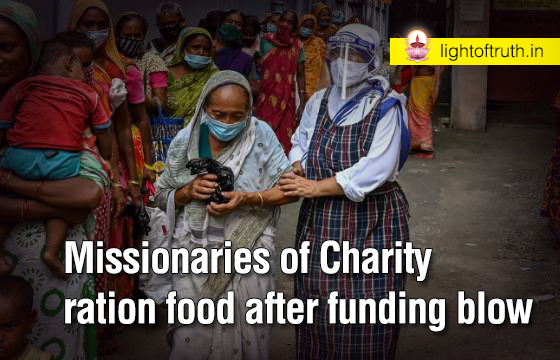
Missionaries of Charity ration food after funding blow
Since Christmas, the Missionaries of Charity have been strictly rationing the food and daily use items for their regular 600 beneficiaries at their motherhouse and Shishu Bhavan, a children’s orphanage, in Kolkata. On Jan. 2, the breakfast of tea, bread and eggs was cut short by an hour. “As long as you did it to one of these, my least brethren, you did it to me,” said Razia, a beneficiary of the Missionaries of Charity, as she waited for the nuns to give her the weekly provisions. She lives with her two sick children across the road from the motherhouse and says she visits the tomb of St. Teresa and prays for the “difficult times to pass.” Abdul Razzak, a 45-year-old beggar, stays put outside the motherhouse curled in his rags. He has been staying there since Christmas in hopes of getting his share of food and medicine. A few others like him sit along with him to receive their subsidy from the nuns. Since the pandemic began, they received their daily meal from the motherhouse, but now “sisters told us that we might not be able to collect the food any longer,” said the sick man.