

The Commission for Migrants of the Conference of Catholic Bishops of India (CCBI) will be hosting the National Jubilee for Migrants celebration at Our Lady of Good Health Basilica, Velankanni, from November 6 to 8, 2025. The event, themed “Migrants, Missionaries of Hope in the Heart of Mary”, aims to honour and celebrate the resilience, faith, and contributions of migrants across India. Cardinal Michael Czerny, Prefect of the Dicastery for Promoting Integral Human Development, will inaugurate the celebration. The CCBI Commission for Migrants, the Scalabrini Congregation, and Caritas India are jointly organising the Jubilee celebration. Over 300 migrants, as well as members of the Commission and several religious congregations, have already confirmed their participation, highlighting the scale and significance of the event. In a press statement, Fr. Jaison Vadassery, Executive Secretary of the CCBI Commission for Migrants, emphasised that the celebration will be a moment of grace, renewal, and communion. He encouraged participants from all across the country to gather in faith and hope at the feet of the Blessed Mother to celebrate the missionary spirit of migrants in the life of the Church.
All posts by Light of Truth
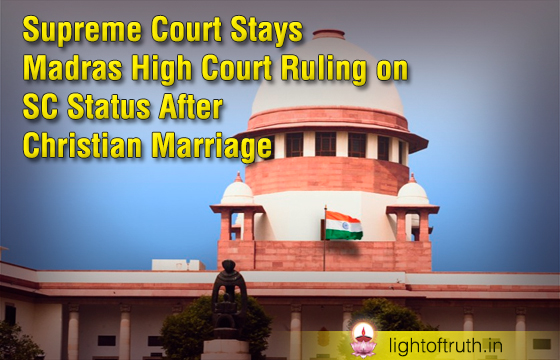
Supreme Court Stays Madras High Court Ruling on SC Status After Christian Marriage
The Supreme Court stayed the Madras High Court’s decision that marriage under the Indian Christian Marriage Act, 1872, constitutes automatic conversion to Christianity and leads to loss of Scheduled Caste (SC) status. A bench comprising Justices Vikram Nath and Prashant Kumar Mishra issued the stay order notice in response to a petition filed by Theroor Town Panchayat Chairman V. Amudharani, challenging the High Court ruling.
The controversy arose after the Madras High Court, in a verdict delivered by Justice L. Victoria Gowri, held that Amudharani, who married a Christian man in 2005 at St. Antony’s Church in Kulasekaramputhoor, ceased to retain her SC status under constitutional provisions. The High Court noted that voluntary submission to Christian marriage rites, including publication of banns, automatically changes a person’s socio-legal identity, irrespective of whether he or she has received formal baptism or not. This led the court to conclude that Amudharani now fell under the Backward Classes category and was ineligible to continue serving in the SC-reserved post of chairman of the panchayat.
The legal dispute began when petitioner V. Iyyappan challenged Amudharani’s eligibility for the post, arguing that her original status as a member of the Hindu Pallan community (SC) was nullified by her Christian marriage. The High Court emphasised that the Indian Christian Marriage Act does not allow civil interfaith marriages, and marrying under the Act effectively identifies both spouses as Christians for legal purposes. Citing the Constitution (Scheduled Castes) Order, 1950, and relevant precedents, the court directed concerned authorities to disqualify Amudharani from the post of chairman of the Theroor town panchayat and take necessary action against her under Section 50(1)(ddd) of the Tamil Nadu District Municipalities Act, 1920. The Supreme Court’s intervention now puts the High Court ruling on hold, pending further hearings on the matter. The next hearing date is expected to be scheduled after the responses to the apex court’s notice are filed.

Indian Jesuits dump fossil fuels to mitigate climate change impacts
Jesuits in the four provinces of India’s western region are leading a quiet revolution by aiming to become energy self-sufficient using only sunlight, setting an example for others to follow for sustainable, clean energy to protect the environment. About 60 institutions “have achieved zero electricity bills for quite some time and demonstrated that it is a viable project to save the only home we have — the fragile Earth,” says Father Frazer Mascarenhas, coordinator of the Ecology Platform of Jesuit West Zone Provinces in India. One of them is Vinayalaya, a Jesuit-run training centre, in western Mumbai (formerly Bombay). The centre has completely switched to solar power to generate renewable energy. The project aims to install solar panels in all 110 Jesuit residences, schools, and institutions in the four Jesuit provinces of the Western Zone — Bombay (Mumbai), Goa, Gujarat, and Pune — that together have 1,340 Jesuit priests and brothers.
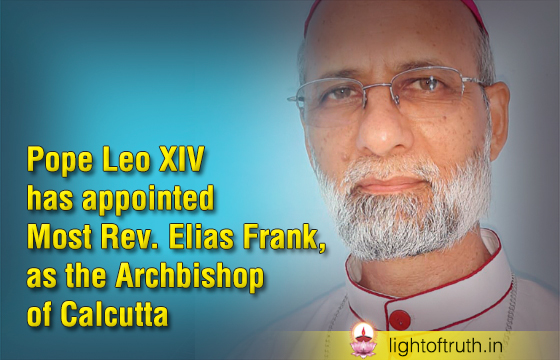
Pope Leo XIV has appointed Most Rev. Elias Frank, as the Archbishop of Calcutta
Pope Leo XIV has appointed Most. Rev. Elias Frank as the new Archbishop of Calcutta. The announcement was made today in Vatican.
Rt. Rev. Elias Frank was born on 15 August 1962 in Bantwal, Karnataka, and belongs to the Diocese of Mangalore. He completed his early education in Modankap and Shillong before entering priestly formation at St. John Mary Vianney Minor Seminary in Barasat and later studied philosophy at Morning Star Regional Seminary, Barrackpore. He pursued his theological studies at the Pontifical Urbaniana University in Rome, where he also earned a licentiate and later a doctorate in Canon Law. Ordained as a priest on 23 April 1993 for the Archdiocese of Calcutta, he served in several parishes including Sacred Heart Church in Burdwan and St. Therese of Lisieux in Durgapur. He also contributed as a judge at the Inter-Diocesan Tribunal in Kolkata. Academically accomplished, Bishop Elias Frank has served as a professor of Canon Law in Rome since 2007 and is a visiting professor at the Alfonsian Academy. He has published books and scholarly articles, and held roles as an external judge and consultor for Vatican dicasteries.
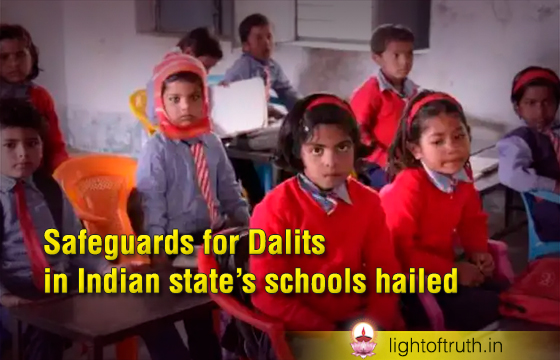
Safeguards for Dalits in Indian state’s schools hailed
A state government in southern India has issued a set of new guidelines to curb discriminatory practices based on caste and ethnicity in schools, drawing applause from several quarters, including the Church. The Tamil Nadu state school education department, in a circular last week, said teachers found promoting caste or communal sentiments among students would face a probe and disciplinary action. The guidelines have been recommended by the single-member committee of retired judge K. Chandru of the state’s Madras High Court, amid rising concerns over the rise in caste-related violence in educational institutions.
The panel was appointed after a brutal attack on a teenage boy and his sister by their schoolmates from the dominant caste in August 2023, at Nanguneri village in the state’s Tirunelveli district. “Students of Dalit [formerly untouchable] or lower castes are often discriminated against or face even physical harm in educational institutions,” said Father Z. Devasagaya Raj, former secretary of the Catholic Bishops’ Conference of India’s office for Dalits and backward classes. Dalits are considered the lowest in the caste hierarchy within India’s Hindu society, and many Dalits have converted to Christianity and Islam over the decades. Some 60 percent of India’s 25 million Christians are said to be of Dalit and indigenous tribal origin. According to the last national census held in 2011, some 201 million of India’s 1.2 billion people belong to these socially deprived groups.
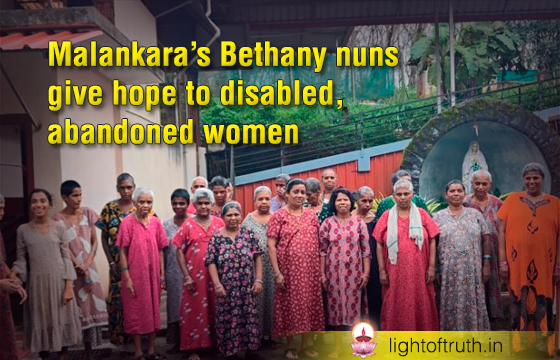
Malankara’s Bethany nuns give hope to disabled, abandoned women
A woman with an intellectual disability, known only as Sangeetha, was abused by a group of lorry drivers and abandoned at Nelyady, a town in the southern Indian state of Karnataka. Some Catholic nuns noticed Sangeetha roaming the town and brought her to their convent.
Sangeetha prompted the Sisters of the Imitation of Christ, also known as the Bethany sisters, to open Asha Bhavan (abode of hope), a home for disabled and abandoned women, at Ichilampady, an interior village near Nelyady, which is approximately 230 miles west of Bengaluru, the state capital.
Didi was the second woman the nuns picked up. Since they did not know her name, the nuns called her “Didi” (elder sister). When Global Sisters Report visited the centre on August 1, Sangeetha and Didi, both Hindus, shared their traumatic experiences and sang together, revealing their improved state of mind.
Sister Bhagya Thalichirayil, Asha Bhavan director, said that women’s empowerment is their congregation’s main charism, sharing that Asha Bhavan is among 29 centres her century-old Syro-Malankara congregation manages for disabled and abandoned women in various parts of India.
“Like Sangeeta, we have picked up several women from places where truck drivers usually stop for their food, rest or bath,” said the 49-year-old nun, who prefers to be called by her first name. Truck drivers plying long routes on highways often pick up destitute women and girls and drop them at various locations after sexually exploiting them. Asha Bhavan has 31 such residents. The Bethany leader said they have 369 mission centres for catechesis, women’s empowerment and rural development, in addition to special schools for children with intellectual and physical disabilities. They also conduct programs for migrant workers, form disaster response teams and provide trauma-informed pastoral care.

Goa High Court Quashes FIR Against Christian Pastor Accused of Forced Conversion
The Goa Bench of the Bombay High Court on September 23 dismissed a 2022 FIR against Pastor Dominic D’Souza and his wife, Joan D’Souza, founders of the Five Pillars Church in Siolim, Goa. The case, which alleged that the couple had coerced two individuals into converting to Christianity, was dropped after the additional public prosecutor admitted there was no evidence to support the claims.
The FIR in the case was filed in May 2022 by a man named Prakash Khobrekar, who alleged that the couple had induced two people to give up their faith and convert to Christianity, offering cash and promising to cure them of their ailments. The pastor was arrested after the complaint was filed and released on bail the same day. With the passing of the High Court’s judgement, the case has now been proved false. The Five Pillars Church in Siolim village has been facing trouble since the present state government, led by the Bharatiya Janata Party, was re-elected to power in 2022. In January 2024, Pastor Dominic was arrested in a separate case filed by Balasubramaniam Vadivel, who accused him of attempted conversion. The pastor was subsequently granted bail, and the FIR related to the case has been contested by the pastor and his spouse in the High Court, with a hearing scheduled for next month. In December 2022, the then North Goa District Collector Dr. Sneha Gitte had passed an order banning all activities of the church following complaints of alleged illegal conversions against it. However, the church successfully appealed the decision, and the Bombay High Court at Goa quashed and set aside the ban in May 2024.

Archbishop John Moolachira Unveils Communio Sunday 2025 Poster
Archbishop John Moolachira of Guwahati officially unveiled the poster for Communio Sunday 2025 at the Archbishop’s House, Guwahati. This year, Communio Sunday will be observed across India on 30 November 2025, the first Sunday of Advent. In his message, Archbishop John Moolachira underlined the heart of the Church’s vocation: “Mission is the very life and identity of the Church. Every baptized person is called to live and witness Christ in the world, carrying His light to those in the peripheries. Through Communio, we are reminded that mission is not optional but essential to our Christian life.” The projects supported by Communio are strengthening parishes, communities, and especially the marginalized, enabling the Church to remain a beacon of hope.” Observed annually, Communio Sunday invites the faithful to renew their missionary zeal through prayer, solidarity, and contributions. It is a reminder that every Catholic is a missionary disciple, called to live out communion and share the Good News in daily life. The release of the Communio Sunday 2025 poster in Guwahati marks the beginning of this year’s celebrations and reaffirms the Church’s commitment to being a Communion in Mission. With the blessing of Archbishop John Moolachira and the leadership of Communio, the faithful are encouraged to embrace this call and actively participate in the evangelizing mission of the Church in India.
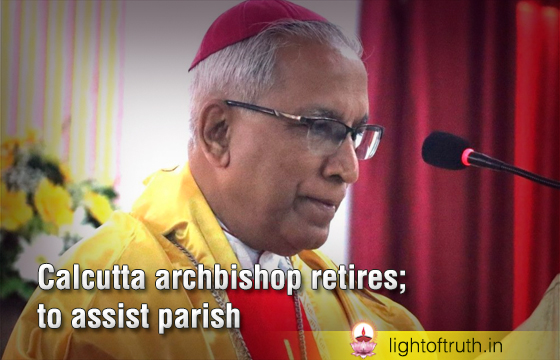
Calcutta archbishop retires; to assist parish
Pope Leo XIV has accepted the resignation of Archbishop Thomas D’Souza from the pastoral governance of the Archdiocese of Calcutta, effective September 20. With this, Coadjutor Archbishop Elias Frank has automatically succeeded him as the tenth archbishop of the archdiocese, based in Kolkata, the capital city of West Bengal state. He is the sixth Indian prelate of the archdiocese.
In a message, Archbishop D’Souza thanked the archdiocese’s priests, religious and laity for their support during his tenure that began on February 23, 2012. He also shared that he would assist in Our Lady of Lourdes Parish, Barasat, from September 29. “I will reside in the parish presbytery,” he added. The parish is in North 24 Parganas district, some 25 km northeast of Kolkata.
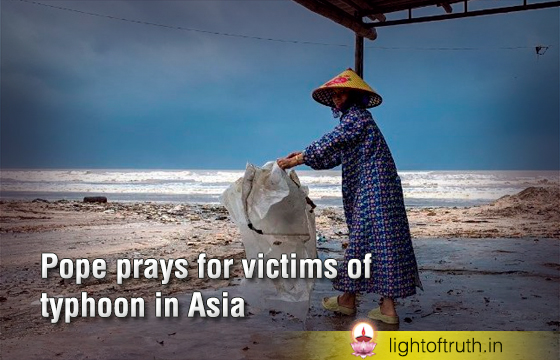
Pope prays for victims of typhoon in Asia
Towards the end of the Mass for the Jubilee of Catechists, and before reciting the noonday Angelus prayer on 28 September, Pope Leo addressed the faithful gathered in St Peter’s Square. His thoughts turned in particular to Asia, where, he said, “a very powerful typhoon” has struck several regions, “in particular the Philippines, the island of Taiwan, the city of Hong Kong, the Guangdong region and Vietnam”
“I assure the affected populations,” the Pope continued, “especially the poorest, of my closeness and my prayers for the victims, the missing, the many displaced families, the countless people who have suffered hardship, as well as the rescue workers and civil authorities.” “I invite everyone to put their trust in God and to show solidarity with others. May the Lord give strength and courage to overcome every adversity.” Typhoon Ragasa, which said to be the strongest so far this year, has forced the evacuation of over two million people in Guangdong alone. In addition to extensive damage, flooding, power outages and landslides, it has caused at least 25 deaths in the Philippines and 14 in Taiwan.